Taxco Mexico Silver Shops Santa Prisca and Cable Car Views
Taxco is one of the most photogenic colonial towns in Mexico, a silver town on a steep hillside in the state of Guerrero. Its pink baroque church, winding stone lanes and shops full of silver jewelry make it an easy and rewarding trip from Mexico City. This guide covers the best places to visit, what to eat, where to stay and how to plan your days.
By WiserMap TravelUpdated October 20268 places12 min read
Best timeNovember to April is dry and comfortable, while Holy Week is the most dramatic.
How longTwo days cover the main sights and a third adds the caves.
Getting thereTake a bus or drive about 170 kilometers southwest of Mexico City.
Ad
Why visit Taxco
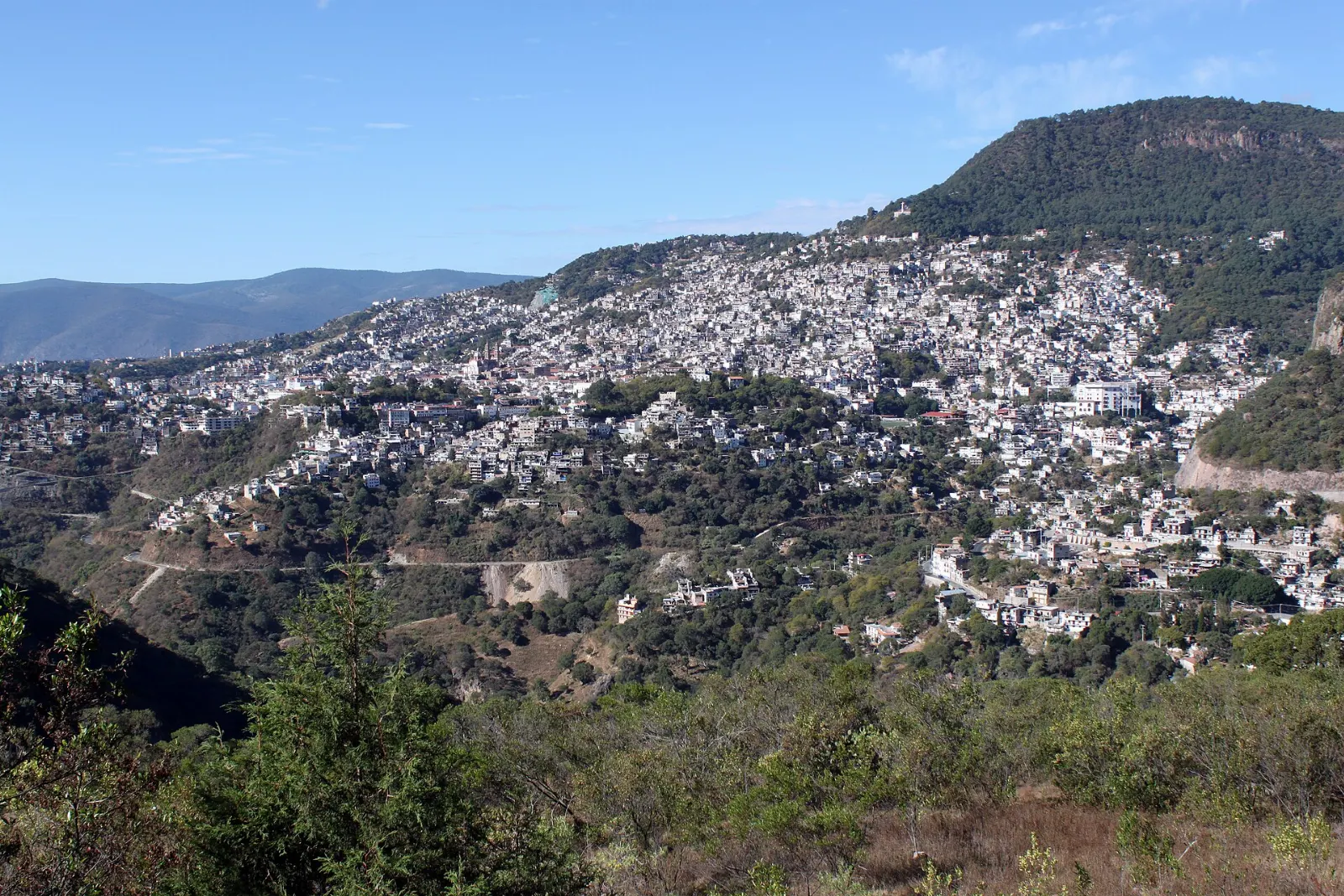
Taxco climbs a steep hillside in northern Guerrero, a tangle of cobbled lanes, red-tile roofs and white walls that rise toward a pink baroque church. The town grew rich on silver after the Spanish found lodes here around 1532, and silver is still the reason most visitors come. Hundreds of workshops and shops sell jewelry, often stamped with a "925" mark.
The pull goes beyond shopping. Taxco is a Pueblo Mágico with a compact historic center, a few good museums, a hilltop viewpoint and a cave system close by. It is an easy side trip from Mexico City or Cuernavaca, and a quieter alternative to the Guerrero coast.
The historic center around Plaza Borda
Santa Prisca Church
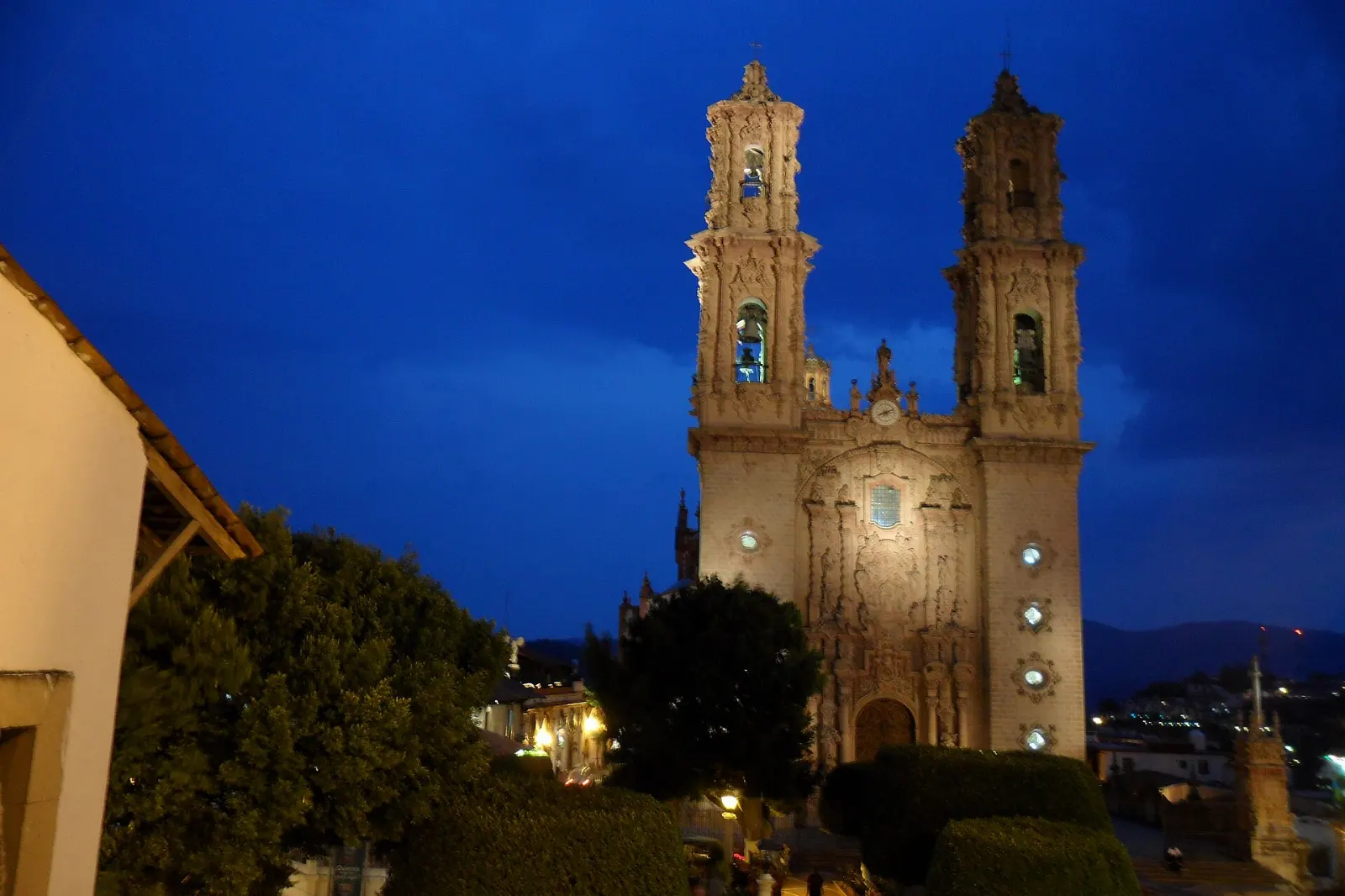
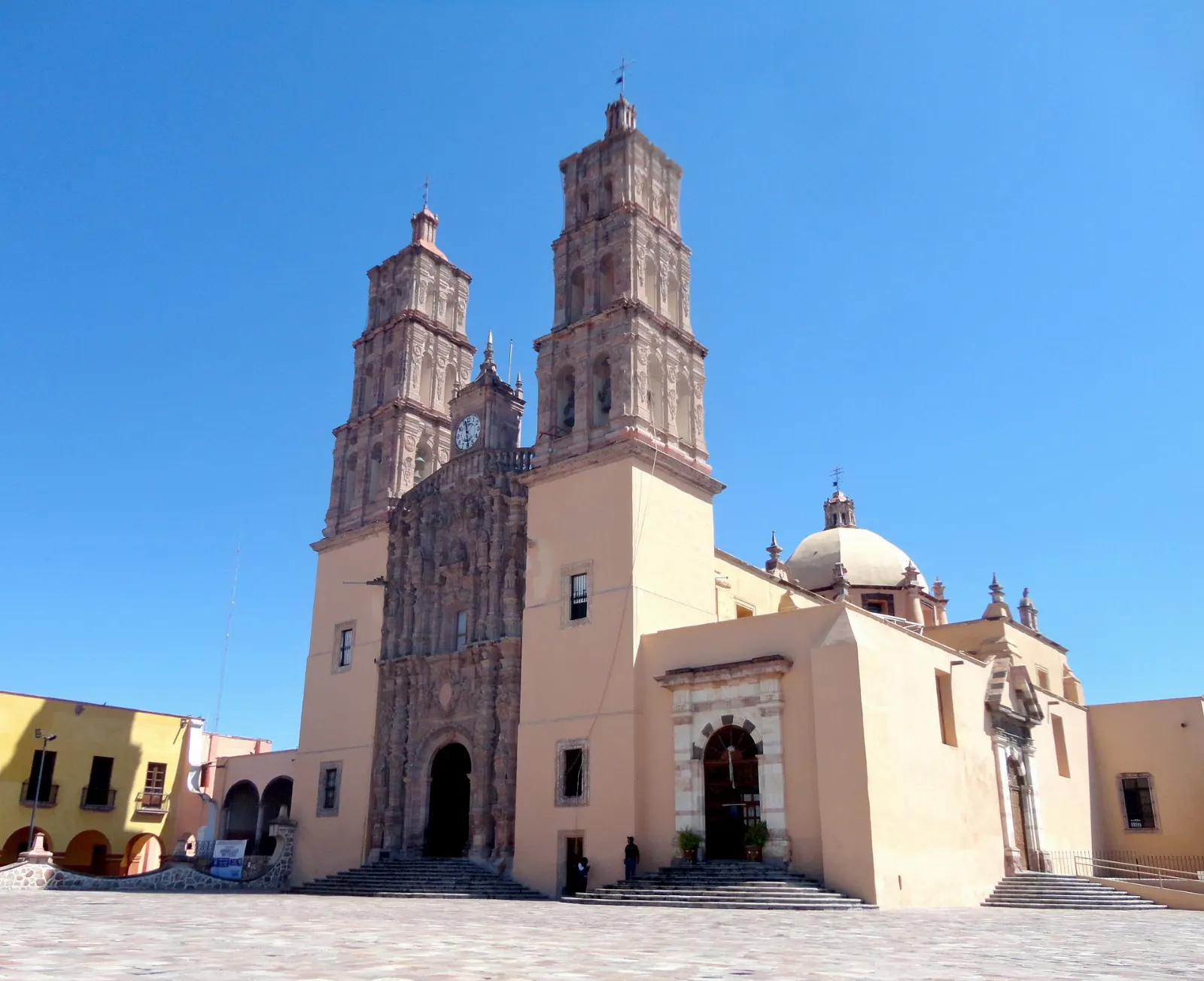
The Parroquia de Santa Prisca y San Sebastián is the icon of Taxco and one of the few baroque buildings in Guerrero. José de la Borda, who made his fortune in the local silver mines, had it built between 1751 and 1758. The pink stone facade, the two tall towers and the tiled dome look striking from almost any lane in town. Inside, the gilded altarpieces climb from floor to ceiling. Allow 30 to 45 minutes, and dress modestly because it is a working church.
The baroque church of Santa Prisca y San Sebastián was built between 1751 and 1758. Photo: Ryuusuke Tameiki, Wikimedia Commons, CC BY-SA 3.0
Plaza Borda
Plaza Borda, usually called the Zócalo, sits in front of the church and works as the town living room. Silver shops, restaurants and bars ring the square, and benches under the trees are the best place to watch the town go by. The street paving nearby has small white-stone designs, including a bull sign near the church that once marked the butchers. Come in the early evening when the light turns the church warm and the square fills with families.
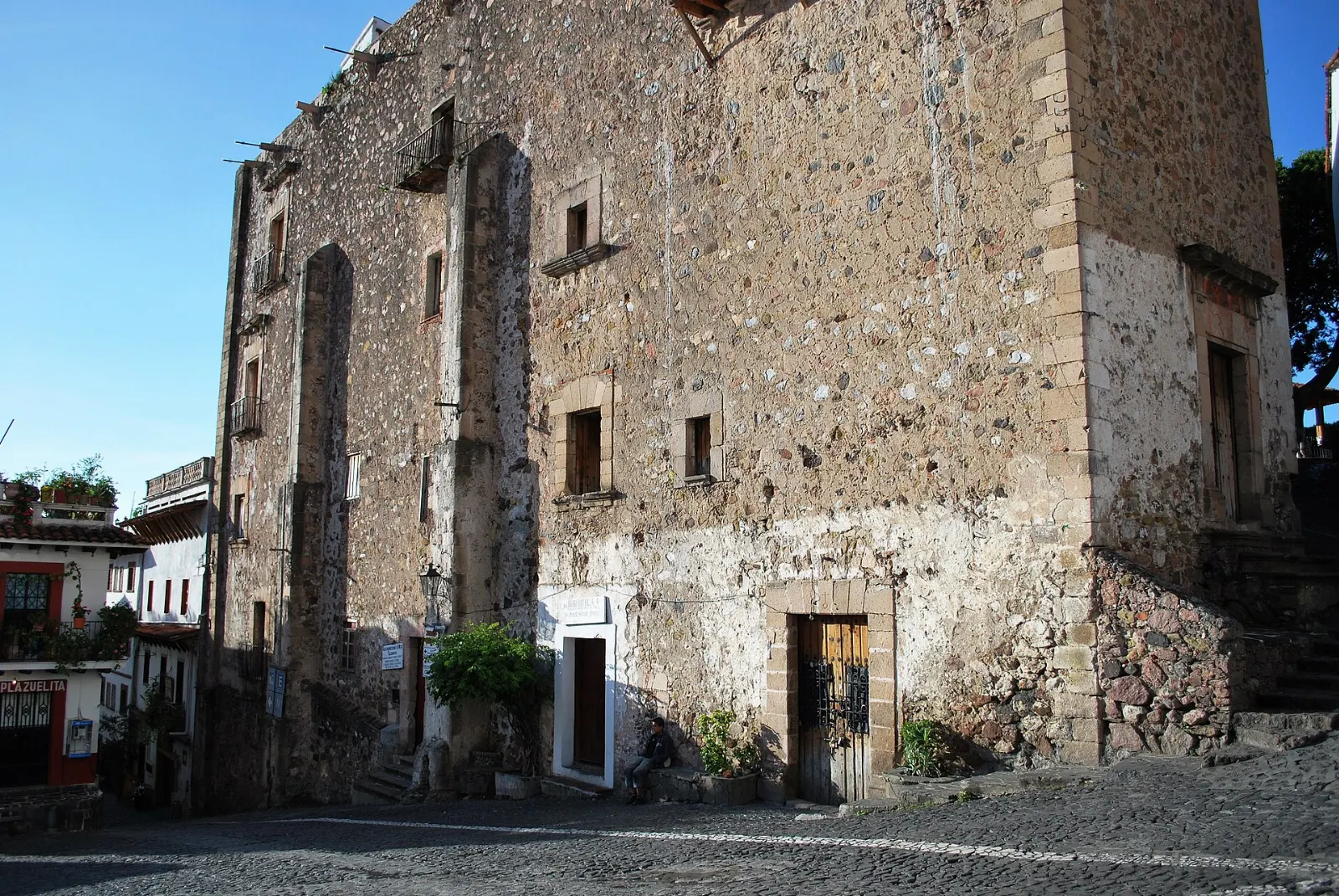
Casa Borda is the most important non-religious building in Taxco, on the north side of the plaza. The front has two stories, while the back, facing the Plaza de Bernal, has five because of the sloping ground. Part of it is used as a cultural center with exhibitions of local art, so check the official schedule before you plan a visit. Even a short look at the architecture is worth the detour.
Casa Borda is the most important civil building in the historic center. Photo: Microstar, Wikimedia Commons, CC BY-SA 4.0
Museo Guillermo Spratling
Just behind Santa Prisca, this museum honors William Spratling, the American artist who settled in Taxco in 1929 and helped revive its silver design. You will find pre-Hispanic pieces from his collection and examples of his own work. Plan about an hour. It is a good way to understand why Taxco silver became known beyond Mexico.
Museo de Arte Virreinal
The Museum of Viceregal Art occupies the Casa Humboldt, where the German naturalist Alexander von Humboldt spent a night in 1803. The restored house holds colonial paintings and objects, some of which belonged to Borda. It is small, so 30 minutes is enough, and it adds welcome context to the churches you see outside.
Church of San Bernardino de Siena
This is the oldest church in the area, built at the end of the sixteenth century and restored after a fire in the nineteenth. The Holy Week processions in Taxco date back to at least 1622 and began in the atrium of this former monastery. Visit it on a quiet morning for a calmer side of the town. It also makes a pleasant stop on the way to the upper streets.
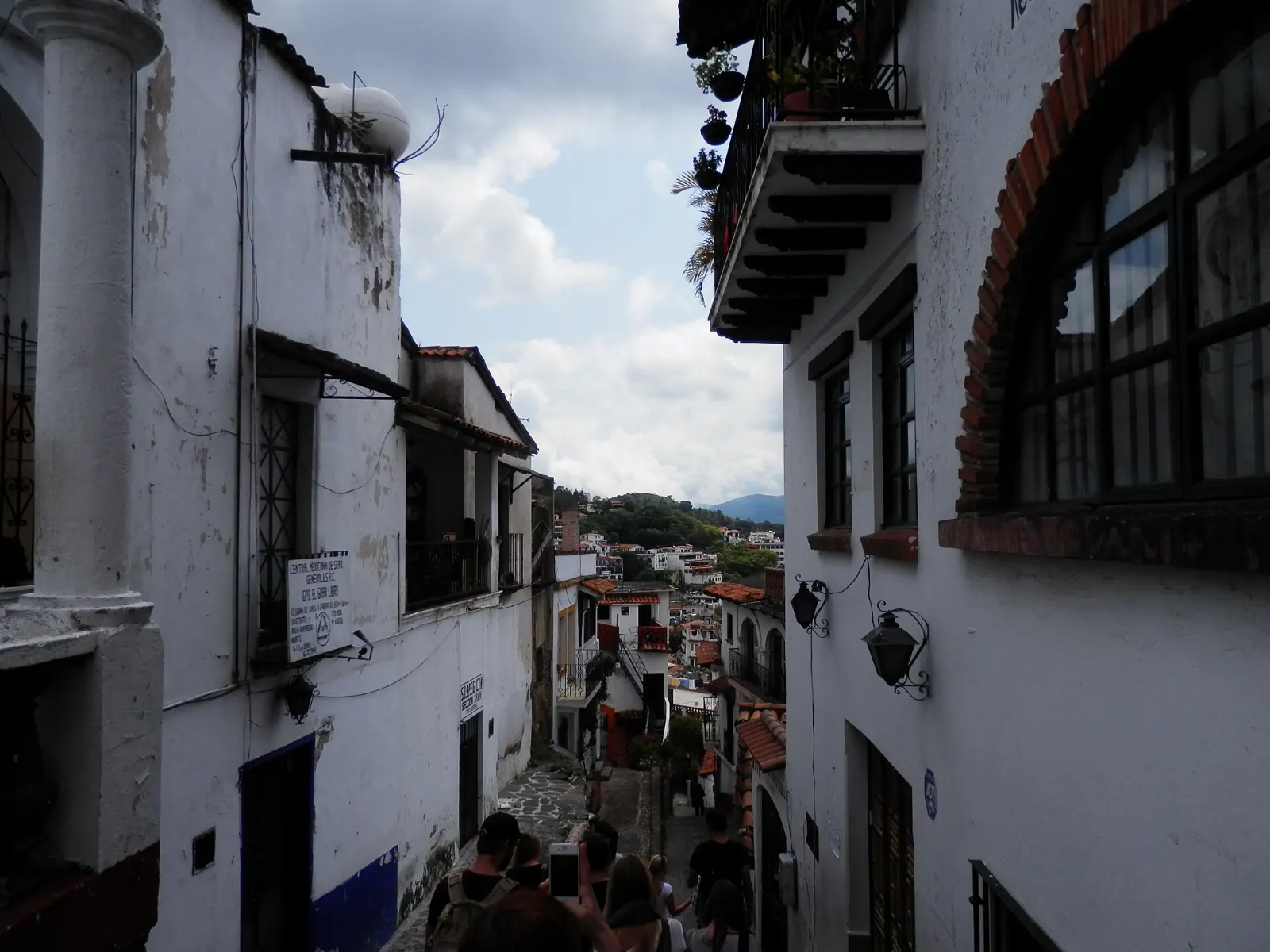
Steep cobbled streets with white walls and tile roofs define Taxco. Photo: Obrienl11, Wikimedia Commons, CC BY-SA 3.0
Ad
Viewpoints, silver and old mines
Teleférico to Monte Taxco
A cable car carries visitors from the edge of town up to the Monte Taxco hotel, where a terrace restaurant and bar look over the whole valley. There is little else to do at the top, so treat it as a short viewpoint outing of about an hour. Go late in the afternoon for the best light over the roofs.
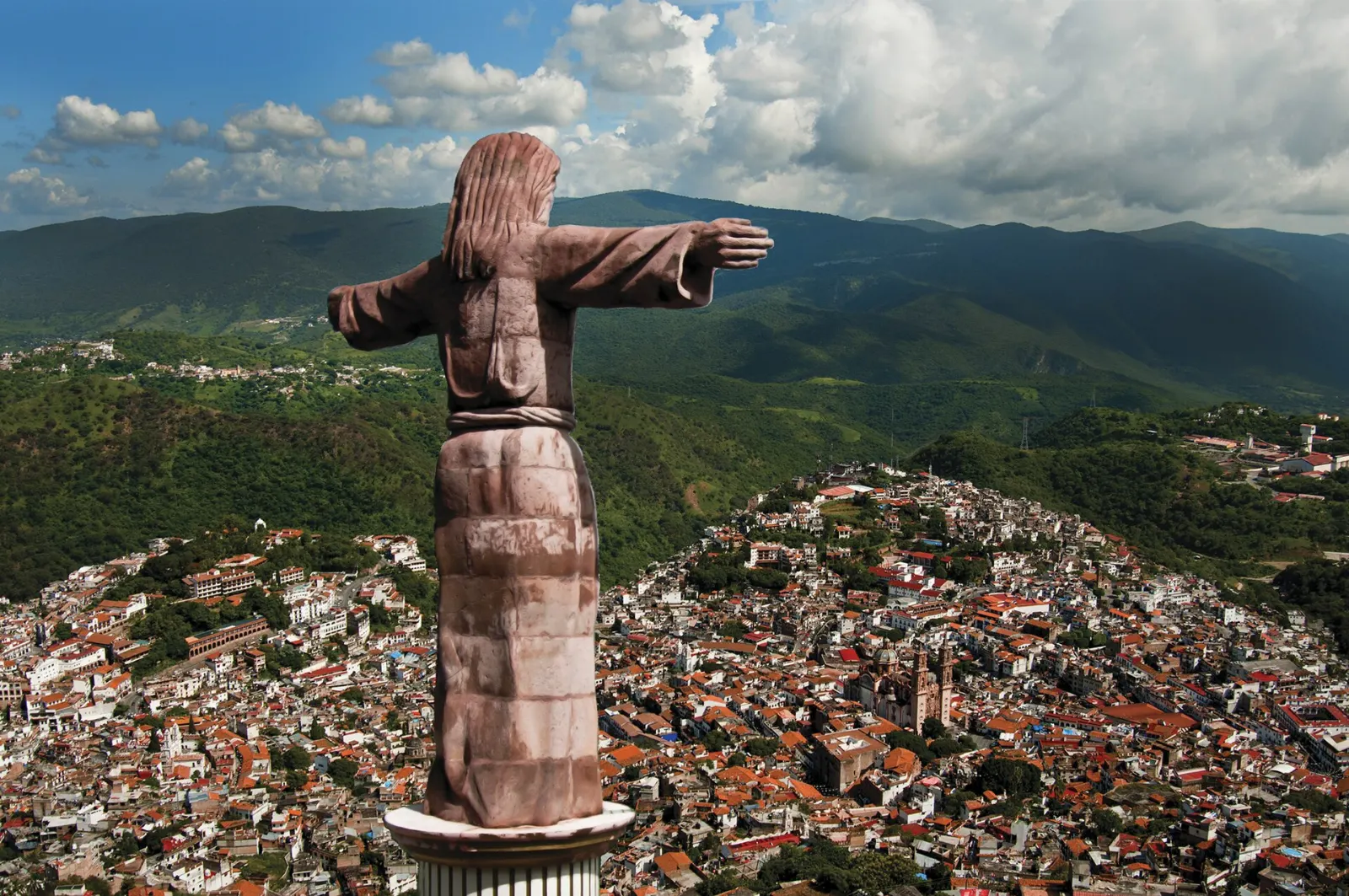
A large statue of Christ stands at the highest point of town, and the view from there covers the city, its domes and the surrounding mountains. The streets that lead up are steep and narrow, so wear comfortable shoes and take a taxi if the heat is strong. Allow 45 minutes including the climb or ride.
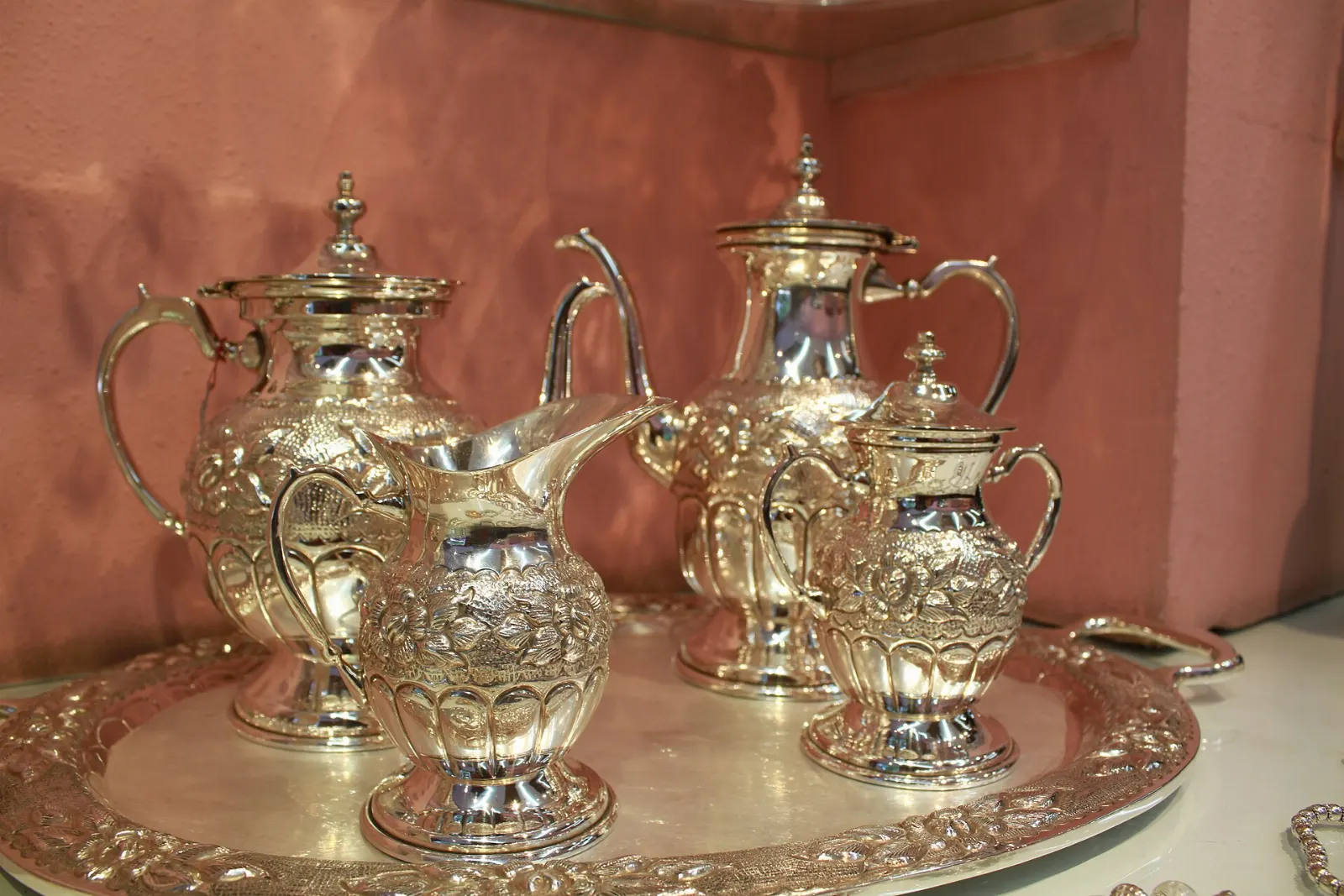
Shopping is the main activity. Look for the "925" stamp, which marks sterling silver, and compare several shops before buying. Stalls and shops around Plaza Borda are the easiest to reach, while shops farther from the center are where bargaining is more common. Plan a few hours, and note that the National Silver Fair in late November and early December brings extra displays.
When a hotel on Calle de la Misión was remodeled in 2013, workers found an opening into a cavern that proved to be a mine dug by the Chontal people. Guides lead visitors through tunnels where veins of metal can be seen. Reserve about an hour, and confirm tour times locally because they can change.
Ex Hacienda del Chorrillo
On the north side of town stands one of the oldest silver haciendas, built by knights of Hernán Cortés. Part of its aqueduct, dating from 1534, still survives. It is a quick photo stop of 20 to 30 minutes, best combined with a walk through the upper neighborhoods.
A day trip from Taxco
Grutas de Cacahuamilpa
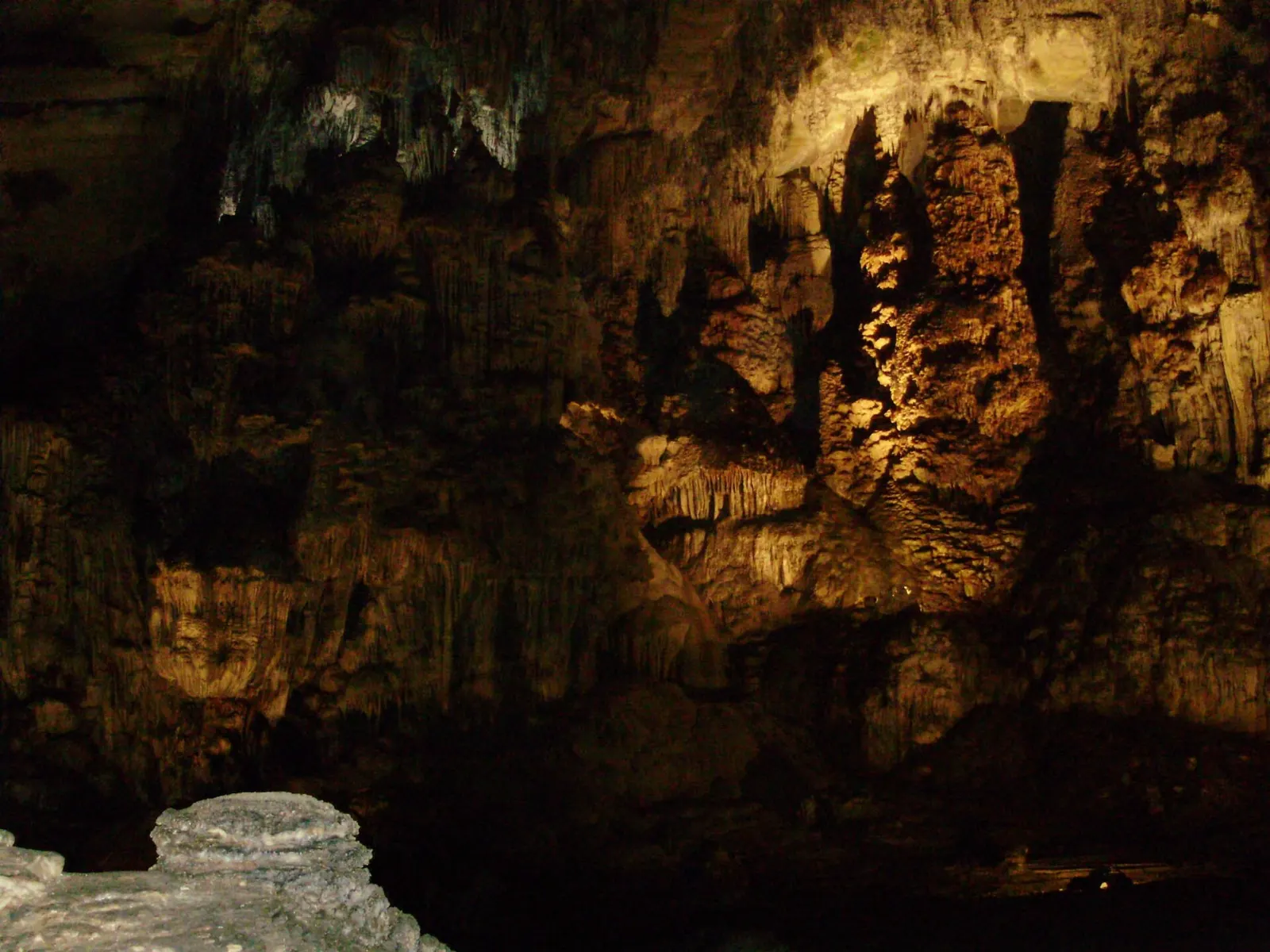
About 30 kilometers from Taxco, Cacahuamilpa National Park protects a huge system of caverns and tunnels that connect large chambers and underground halls. Guided visits walk through illuminated galleries full of rock formations. Plan half a day, and check the park website for current access, seasonal conditions and the underground river, which can be explored only at certain times of year.
The Cacahuamilpa caves lie about 30 kilometers from Taxco. Photo: Mexicah, Wikimedia Commons, CC BY-SA 4.0
Ad
Food and local flavors in Taxco
Maize runs through Taxco cooking, and the town is known for pozole, a hominy stew with pork that is often served in red, green or white versions. Thursdays are traditionally pozole days, when the red and green styles appear. Try a bowl in the small eateries near the covered silver market uphill from the plaza.
More adventurous eaters can order tacos de jumiles, made with small edible stink bugs that are sold in the markets during the cooler months and celebrated at a Jumil Festival in October. Other local items include cecina, a cured meat usually served with criollo cheese, and plum and bean tamales. To drink, ask for a berta, a honey margarita that Taxco claims as its own. Browse the central market for fruit, cheeses and snacks, and let the smell of grilled meat guide you to a busy counter.
Popular dishes to try in Taxco
Pozole Food and local flavors in TaxcoMaize runs through Taxco cooking, and the town is known for pozole, a hominy stew with pork that is often served in red, green or white versions.Photo: El Nuevo Doge, Wikimedia Commons, CC0Cecina Other local items include cecina, a cured meat usually served with criollo cheese, and plum and bean tamales.Photo: Xemenendura, Wikimedia Commons, CC BY-SA 4.0Berta To drink, ask for a berta, a honey margarita that Taxco claims as its own.Photo: Alexey, Wikimedia Commons, CC BY-SA 2.0
Where to stay
Most visitors sleep within a few steps of Plaza Borda. This is the heart of the old town, so you can walk to Santa Prisca, the museums and the evening square without a taxi. The trade-off is noise from the plaza and steep lanes with stairs, so ask about luggage access before booking. Couples and short-stay travelers will enjoy it most, and many guesthouses here are in old colonial buildings with courtyards and roof terraces.
Avenida de los Plateros, the main road that runs along the lower part of town, suits travelers arriving by bus or car. The bus stations and plenty of restaurants are close, and parking is easier to find than in the center. Expect a taxi or a steep walk up to the square.
For something calmer, Taxco el Viejo lies about ten kilometers south. It was the original pre-Hispanic settlement and gives a quiet base for travelers who prefer a slower pace and do not mind taking a taxi into town.
Where to stay in Taxco
Plaza Borda Where to stayMost visitors sleep within a few steps of Plaza Borda.Photo: AlejandroLinaresGarcia, Wikimedia Commons, CC BY-SA 4.0Avenida de los Plateros Avenida de los Plateros, the main road that runs along the lower part of town, suits travelers arriving by bus or car.Photo: Historia Apostólica, Wikimedia Commons, CC BY-SA 4.0Taxco el Viejo For something calmer, Taxco el Viejo lies about ten kilometers south.Photo: Fribae, Wikimedia Commons, CC BY-SA 3.0
Ad
Best time to visit
Taxco has a mild climate year-round, with average highs around 27 degrees Celsius and lows near 17. The dry season runs from November to April, which makes it the most comfortable time for walking the steep streets. Rain falls mostly between June and September, often in short afternoon storms that leave the cobbles slippery.
Holy Week, between Palm Sunday and Easter Sunday, is the best-known event, with ten large processions that wind through the lanes and gather around Santa Prisca. It is spectacular and very crowded, so book lodging well ahead. The Jumil Festival in October and the National Silver Fair in late November and early December are other good reasons to plan around the calendar.
Getting there and getting around
Taxco has no airport. The nearest major airport is Mexico City, about 170 kilometers to the northeast, and the city of Cuernavaca is a common stopover. The Mexican federal toll road 95D passes close to town and connects Mexico City with Acapulco, and the drive is scenic but winding near the end.
Buses are the simplest option. Services run regularly from the Terminal Sur in Mexico City and from Cuernavaca, and Taxco has two long-distance stations, one operated by Estrella de Oro and one by Estrella Blanca. Check the current schedule, especially for the last departure of the day.
Once in town, walking is the best way to get around, though the hills are steep. Small white Volkswagen Beetle taxis and combi minibuses link the neighborhoods, and most combis pass through the Zócalo. Narrow streets make driving and parking stressful, so leave the car at your lodging if you can.
Ad
A suggested itinerary
First day
Arrive in the morning, walk uphill to Plaza Borda and visit Santa Prisca. Follow with Casa Borda, the Spratling museum and lunch of pozole. In the afternoon browse the silver shops, then ride the cable car to Monte Taxco for sunset and finish with a berta on the plaza.
Second day
Head to the Church of San Bernardino de Siena and the Museo de Arte Virreinal, then take a taxi up to the Cristo statue. Spend the afternoon at the Ex Hacienda del Chorrillo or the Mina Prehispánica, and keep time for last-minute silver shopping.
Third day
Take a full-day excursion to the Grutas de Cacahuamilpa, returning to Taxco or continuing on to Cuernavaca or Mexico City.
Practical tips
Wear shoes with good grip because the cobbled streets are steep and can be slippery when wet.
Look for the "925" stamp on silver and compare several shops before you buy.
Carry some cash for small markets, taxis and tips, since not every stall takes cards.
Book lodging well ahead for Holy Week and the silver fair.
Confirm museum days and tour times locally because they change.
Pack a light layer for cool evenings and a rain jacket from June to September.
Check your government current travel advisory before you go.