Stockholm Sweden Gamla Stan Vasa Ship and Archipelago
Stockholm is built on fourteen islands where Lake Mälaren meets the Baltic Sea, and water is part of almost every view. Bridges link medieval lanes to grand boulevards, ferries double as public transport, and more than a third of the city is parks and green space.
By WiserMap TravelUpdated October 20269 places11 min read
This guide takes you through the city area by area, from the cobbled streets of Gamla stan to the museums of Djurgården, the hilltop views of Södermalm and the islands of the archipelago.
At a glance Stockholm
Best timeMay to September for long days and archipelago boats; December for Christmas markets.
How longThree to four days for the city, plus a day for Drottningholm or the archipelago.
Getting thereFly into Arlanda, then take the airport express train to Stockholm Central in about twenty minutes.
Ad
Why visit Stockholm
The city's first written mention dates from 1252, when a fortress was built on the island now called Gamla stan to guard the passage between Mälaren and the sea.
Stockholm also does modern life well. It hosts the Nobel Prize ceremony every December, the metro stations double as one of the longest art galleries in the world, and the harbor water is clean enough for swimming in summer.
And just beyond the city lies the Stockholm archipelago, tens of thousands of islands, islets and skerries reachable by regular passenger boats.
Gamla stan and the royal center
The historic core is compact and best explored on foot. Give yourself a full day to wander here and across the water to City Hall.
Gamla stan
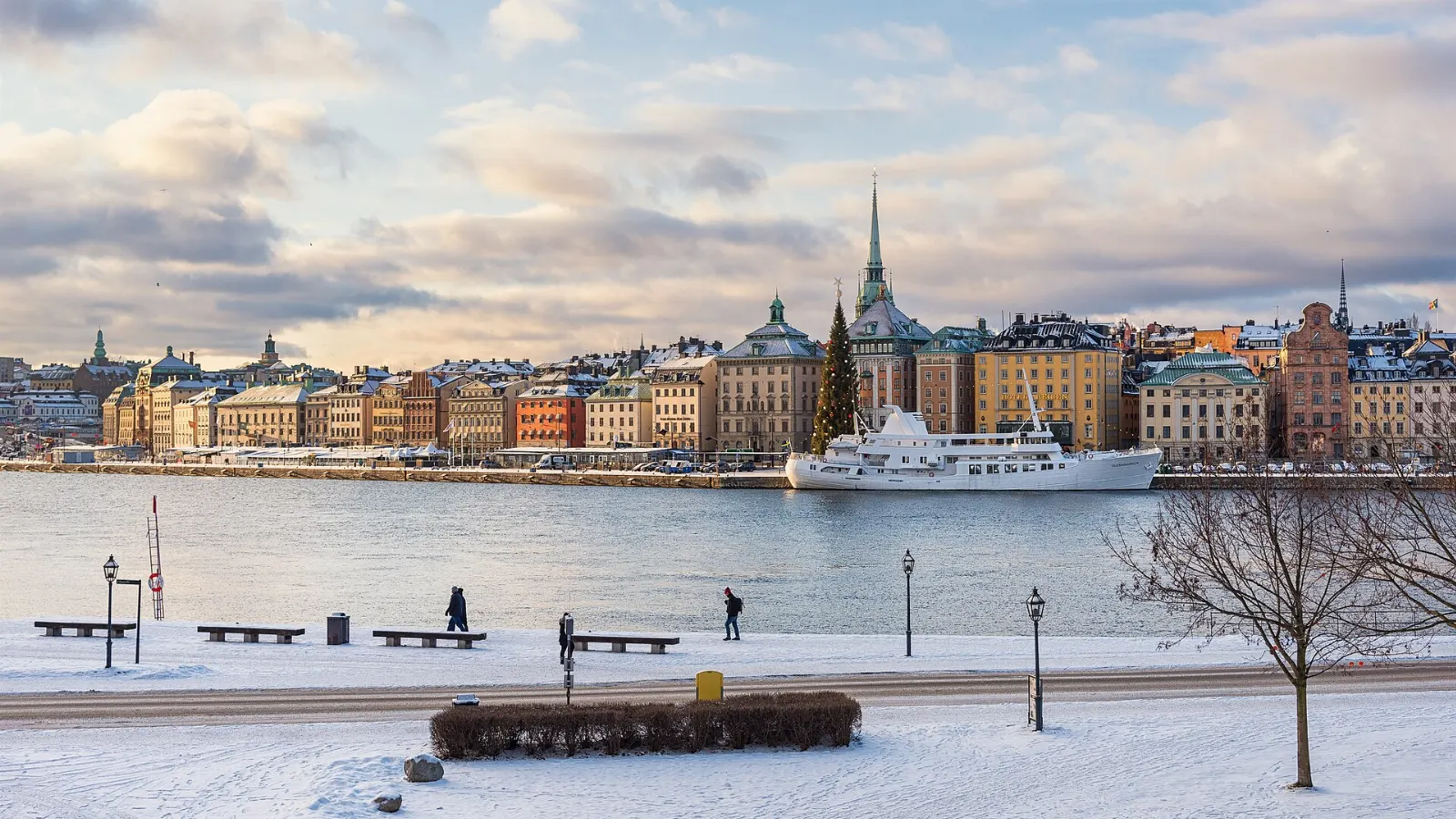
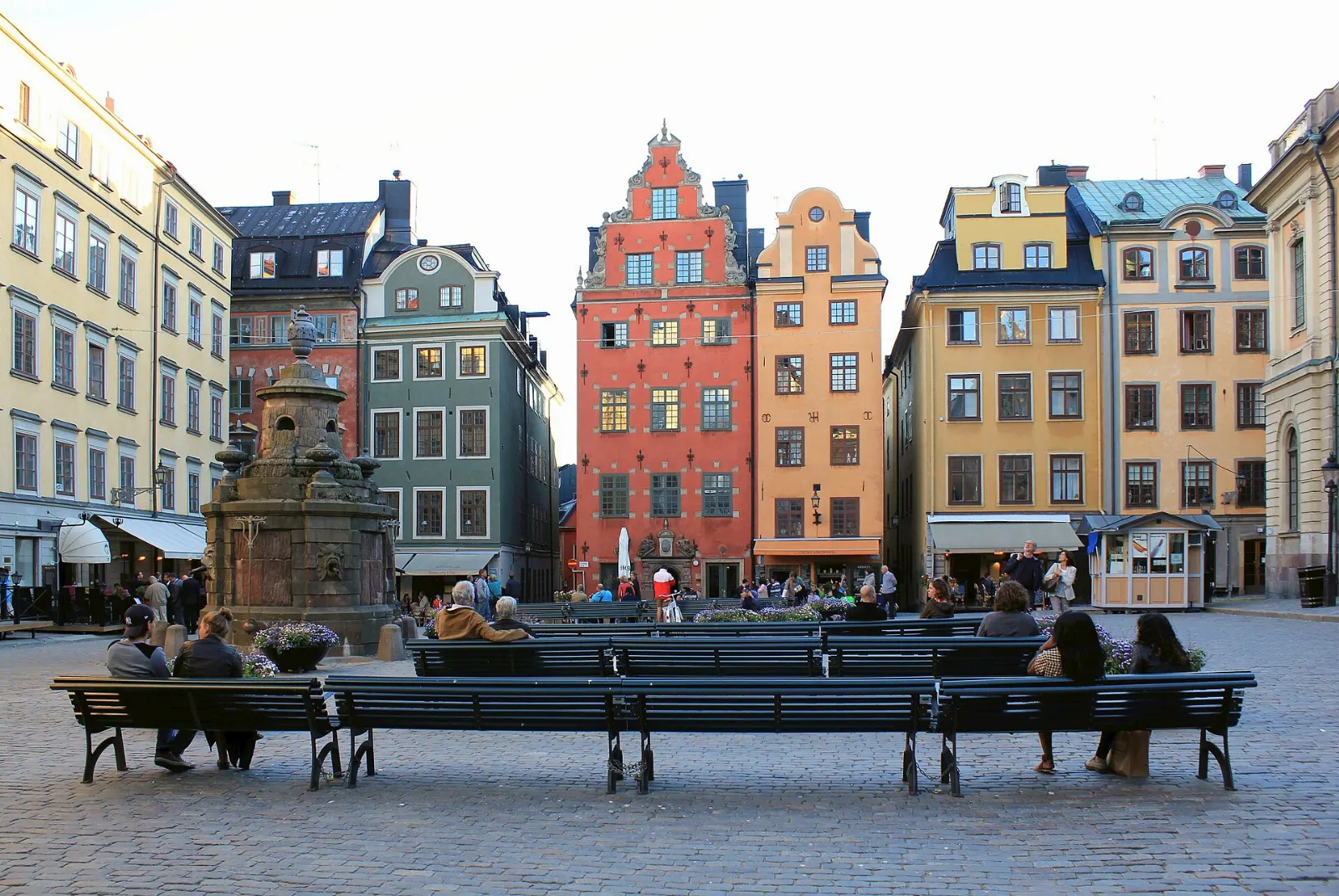
Stockholm's old town occupies the island of Stadsholmen and a few neighboring islets. Narrow lanes such as Västerlånggatan and Österlånggatan are lined with shops and cafés, while side streets climb between ochre and rust-red buildings.
Stortorget, the oldest square in Stockholm, is lined with colorful merchant houses in Gamla stan. Photo: Øyvind Holmstad, Wikimedia Commons, CC BY-SA 3.0
Stockholm Palace
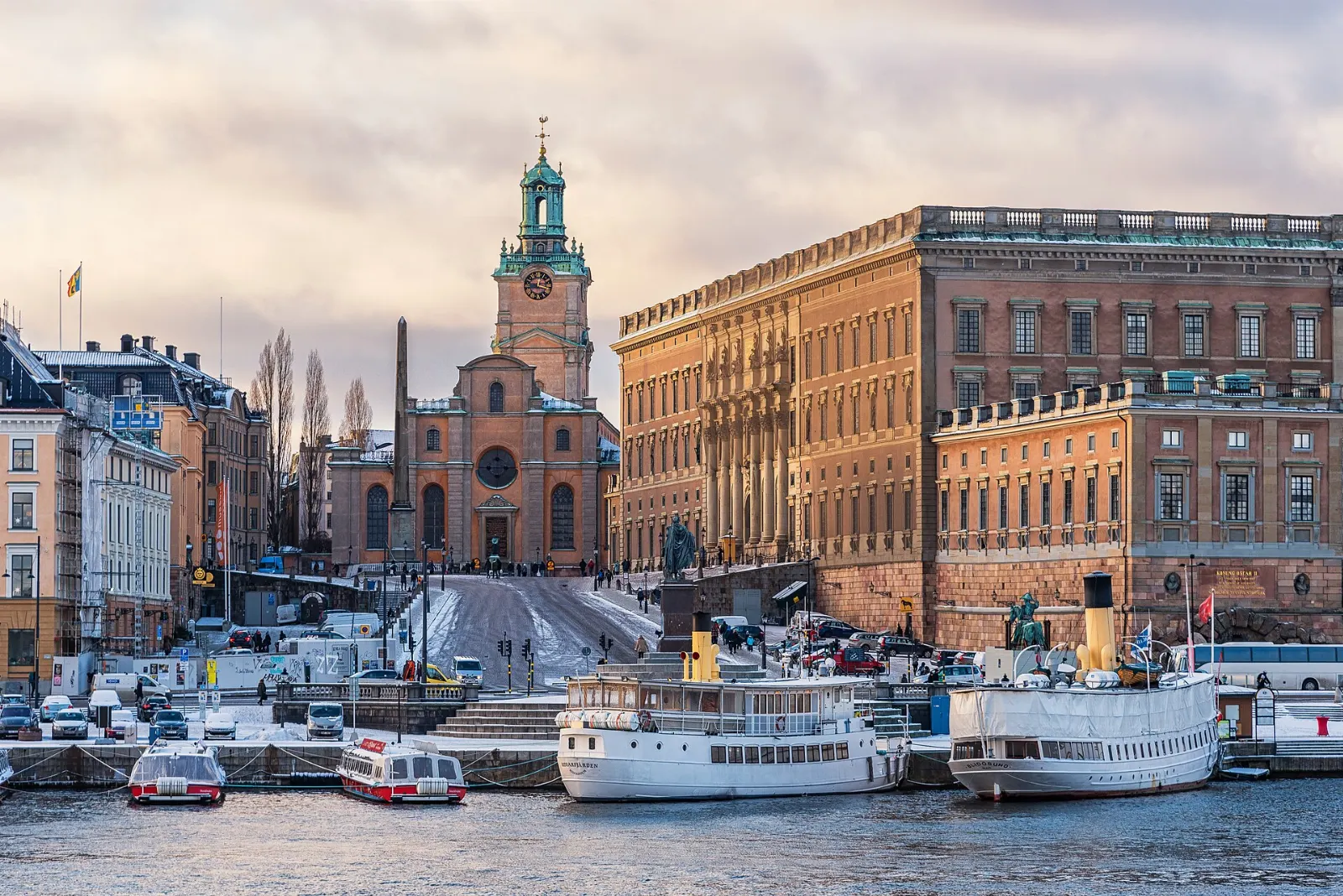
The Royal Palace, designed by Nicodemus Tessin the Younger and built on the site of the medieval Tre Kronor castle, is the official residence of the Swedish monarch, though the royal family lives at Drottningholm. Inside you can visit the Royal Apartments, the Treasury with the regalia, and the Tre Kronor Museum, which tells the story of the castle that burned in 1697.
Stockholm Palace, designed by Nicodemus Tessin the Younger, is the official residence of the Swedish monarch. Photo: Julian Herzog (Website), Wikimedia Commons, CC BY 4.0
Stockholm City Hall
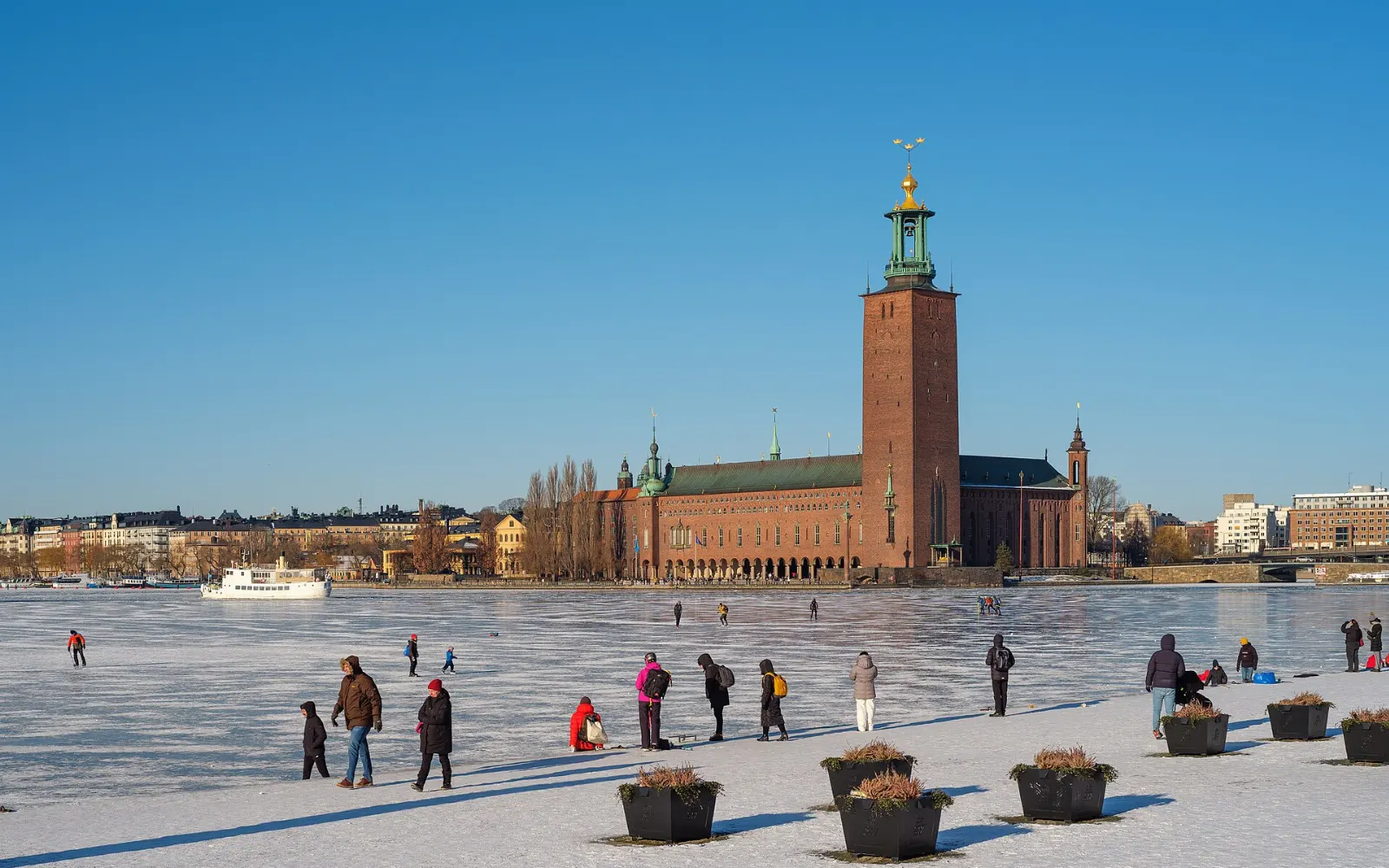
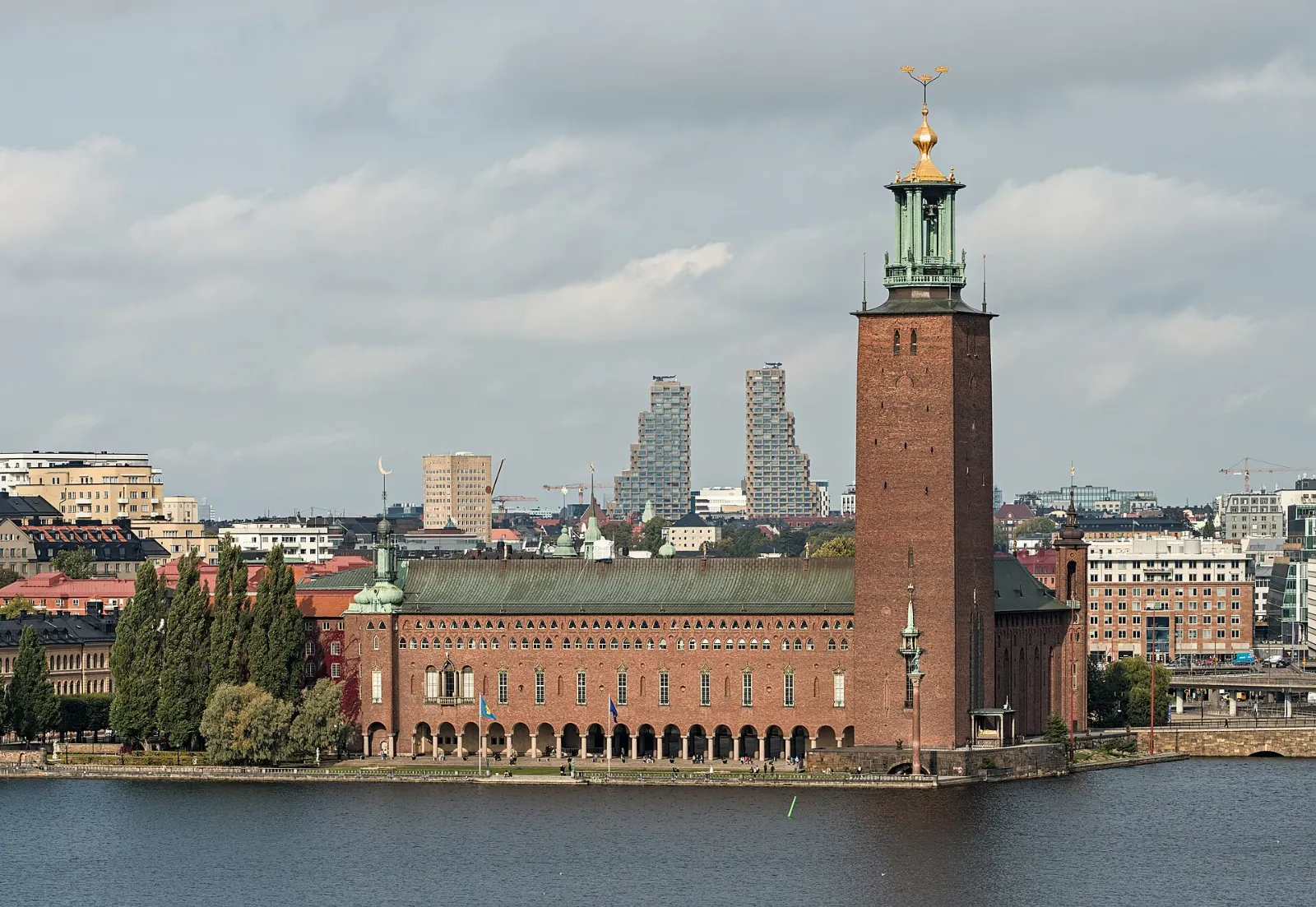
Across the water on the tip of Kungsholmen, City Hall is one of the city's defining buildings, a red-brick landmark with a tall tower crowned by three golden crowns. It was designed by Ragnar Östberg and completed in the 1920s.
Stockholm City Hall on Kungsholmen hosts the Nobel Prize banquet each December. Photo: ArildV, Wikimedia Commons, CC BY-SA 4.0
Ad
Djurgården and its museums
The green island of Djurgården is a former royal hunting ground that now holds some of Stockholm's most popular attractions alongside woodland paths and waterfront walks. Reach it by tram, bus or the short ferry from Slussen.
Vasa Museum
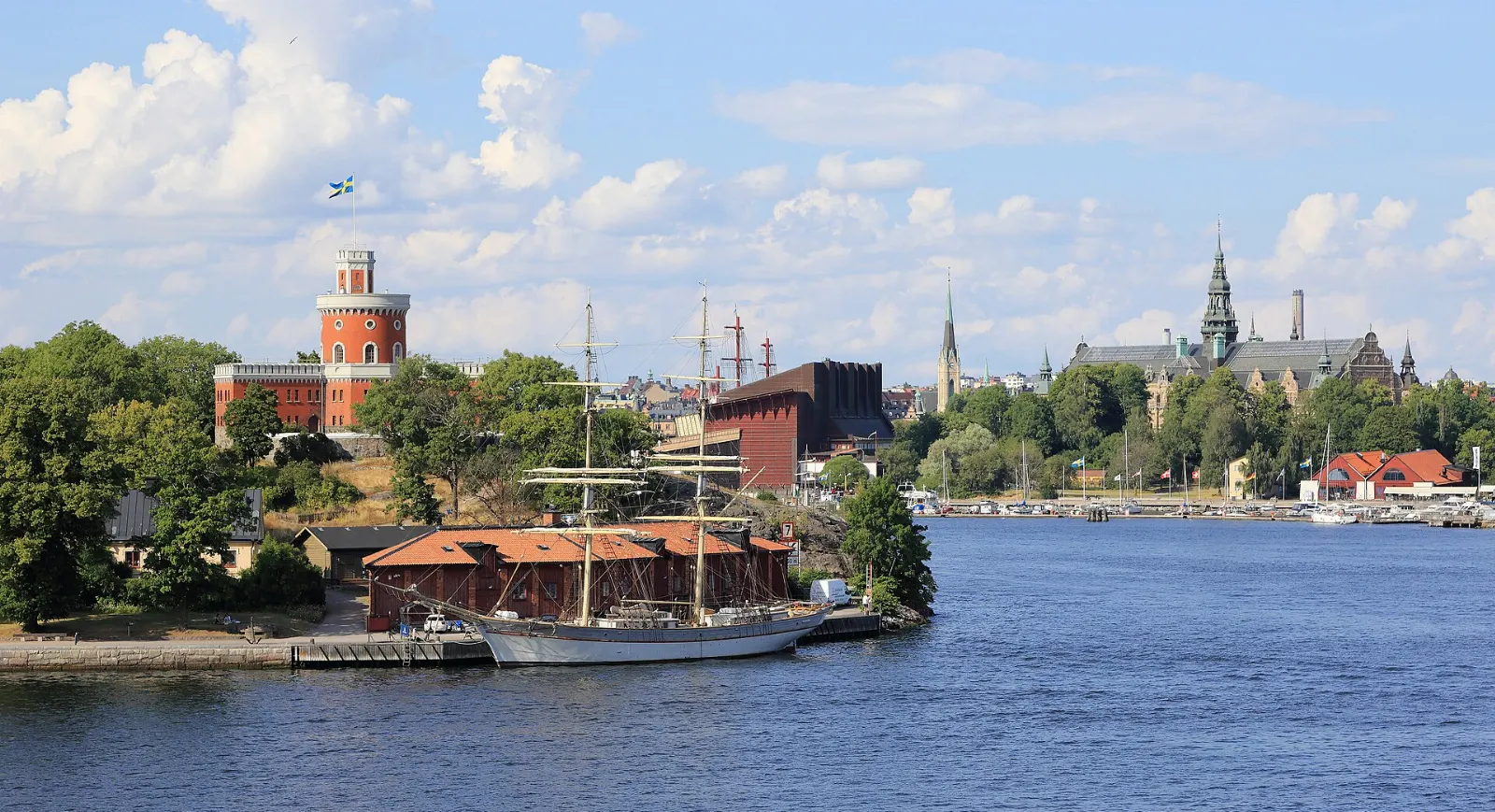
The warship Vasa sank on her maiden voyage in 1628, just minutes after setting sail, and lay on the seabed until she was raised in 1961.
The warship Vasa sank on its maiden voyage in 1628 and is now displayed almost fully intact. Photo: Martin Falbisoner, Wikimedia Commons, CC BY-SA 4.0
Skansen
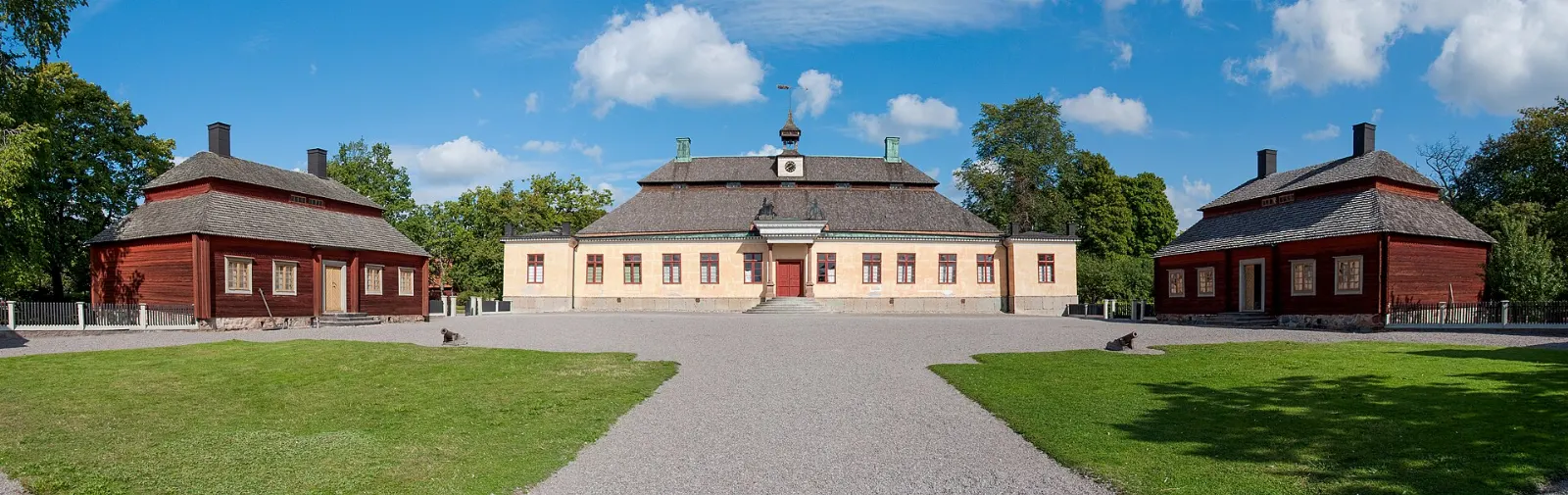
Founded in 1891 by Artur Hazelius, Skansen is the oldest open-air museum in Sweden and the model for many others around the world. Historic farmhouses, manor houses and workshops from across the country have been moved here, staffed in summer by guides in period dress.
Skansen, opened in 1891, is Sweden's oldest open-air museum and shows rural life before industrialization. Photo: Chme82, Wikimedia Commons, CC BY-SA 4.0
Södermalm, Skeppsholmen and the art scene
South of Gamla stan, the hilly island of Södermalm is Stockholm's creative district, full of vintage shops, independent cafés and viewpoints.
Monteliusvägen
This short walking path runs along the northern cliffs of Södermalm and offers one of the best views in the city, across Riddarfjärden to City Hall, Riddarholmen Church and the spires of Gamla stan.
The Monteliusvägen path on Södermalm looks across Riddarfjärden to City Hall and Gamla stan. Photo: ThibautRe, Wikimedia Commons, CC BY-SA 4.0
Fotografiska
Founded in 2010 in a former customs building on the Södermalm waterfront, Fotografiska presents rotating exhibitions of photography by established and emerging artists.
Moderna Museet
Opened in 1958 on Skeppsholmen, Moderna Museet holds one of Europe's leading collections of modern and contemporary art, with works by Picasso, Dalí, Duchamp, Matisse and Louise Bourgeois, as well as a model of Tatlin's Tower.
Ad
Day trips: palaces, cemeteries and islands
Some of Stockholm's best experiences lie just outside the center, and all are easy to reach by public transport or boat.
Drottningholm Palace
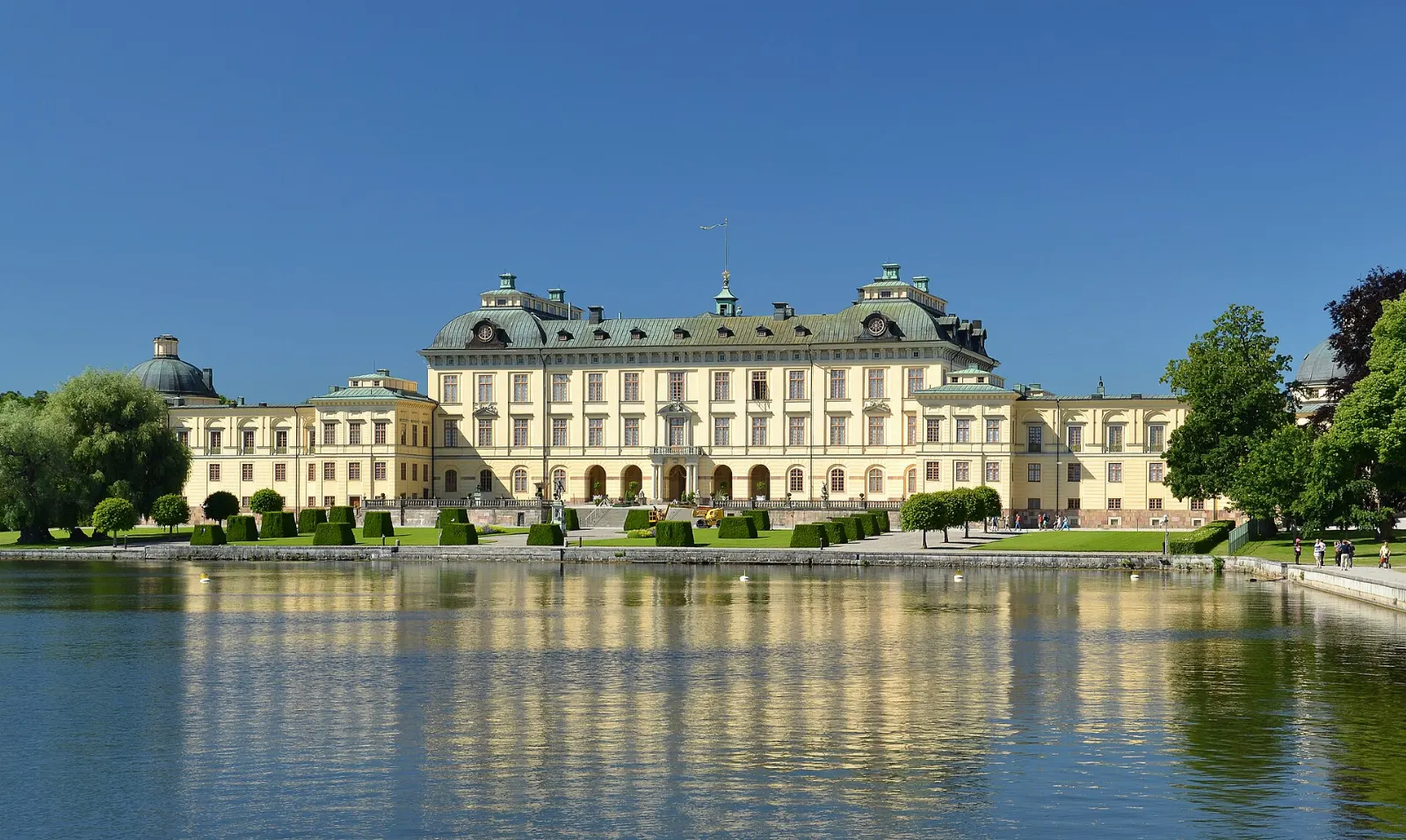
On the island of Lovön in Lake Mälaren, Drottningholm Palace was begun in 1662 and served as the summer residence of the royal court for much of the eighteenth century.
Drottningholm Palace, begun in 1662, is a UNESCO World Heritage Site and the home of the Swedish royal family. Photo: Pudelek, Wikimedia Commons, CC BY-SA 4.0
Skogskyrkogården
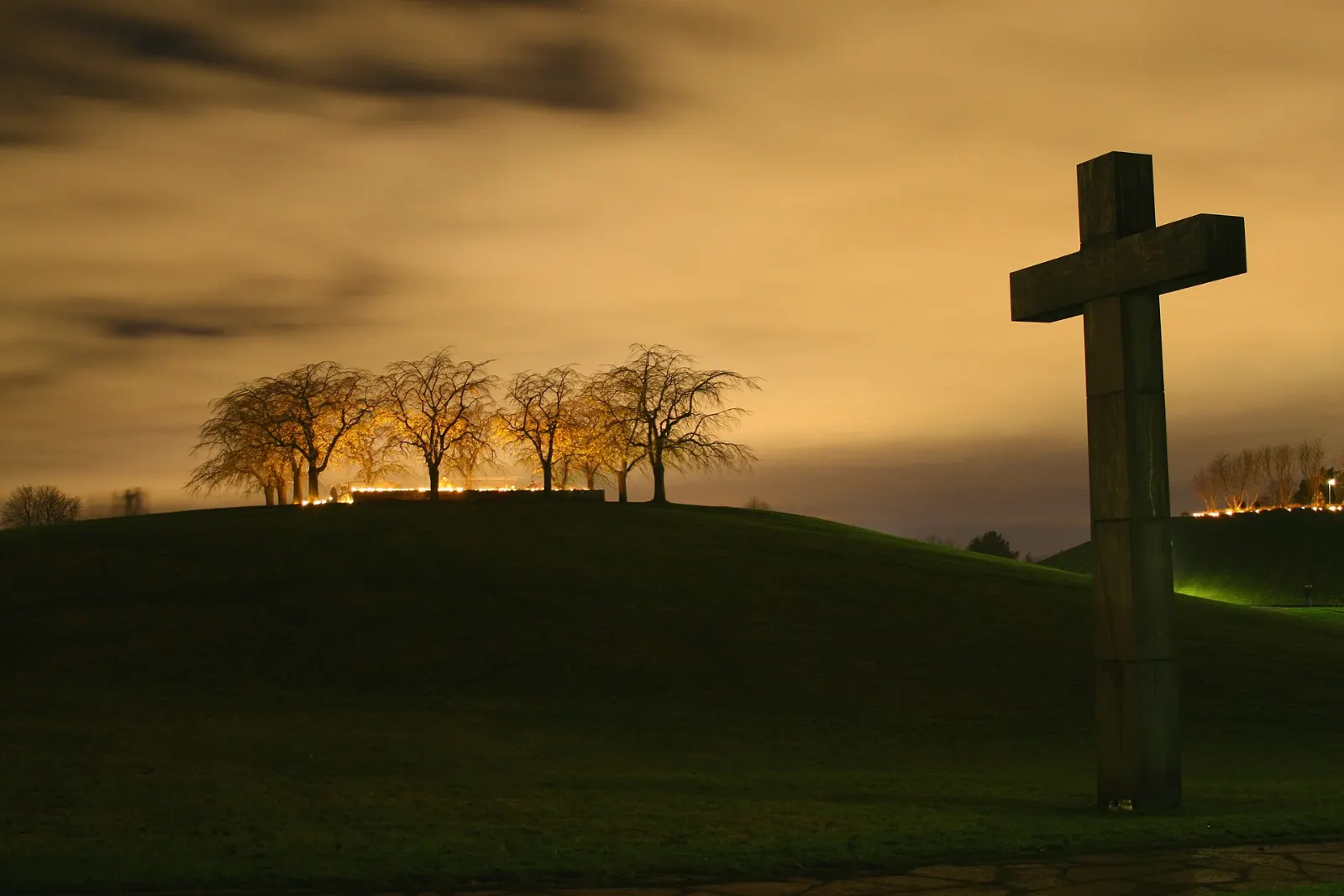
The Woodland Cemetery, south of the center in Enskede, was designed by Gunnar Asplund and Sigurd Lewerentz and inaugurated in 1920. Its calm landscape of pine forest, open lawns, chapels and a great granite cross had a deep influence on cemetery design worldwide, and it was added to the UNESCO World Heritage List in 1994.
Skogskyrkogården, the Woodland Cemetery designed by Gunnar Asplund and Sigurd Lewerentz, is a UNESCO World Heritage Site. Photo: BloodIce, Wikimedia Commons, CC BY-SA 3.0
The Stockholm archipelago
Passenger boats leave from the center for the archipelago throughout the year, with many more departures in summer. Vaxholm, with its fortress and wooden houses, is an easy half-day trip, while islands farther out such as Grinda and Sandhamn suit a full day of swimming, walking and seafood.
Vaxholm is one of the most popular stops in the Stockholm archipelago and is easy to reach by boat. Photo: ArildV, Wikimedia Commons, CC BY-SA 4.0
Food and local flavors
Swedish food is built on seasonal produce, fish from the Baltic and North Sea, and baking.
Classic home cooking includes köttbullar, meatballs served with creamy gravy, mashed potatoes, pickled cucumber and lingonberries.
For browsing and tasting, visit Östermalms Saluhall, a historic market hall dating from the 1880s with fish counters and small eateries, or Hötorgshallen beneath Hötorget square for international food stalls.
Popular dishes to try in Stockholm
Kanelbulle Start with fika, the coffee break that Swedes take seriously, ideally with a kanelbulle, a cinnamon bun flavored with cardamom.Photo: MOs810, Wikimedia Commons, CC BY 4.0Köttbullar Classic home cooking includes köttbullar, meatballs served with creamy gravy, mashed potatoes, pickled cucumber and lingonberries.Photo: JIP, Wikimedia Commons, CC BY-SA 4.0Gravlax Pickled herring in many flavors appears at every traditional buffet, alongside gravlax, cured salmon with sweet mustard sauce, and toast Skagen, shrimp in mayonnaise and dill…Photo: Charles Haynes, Wikimedia Commons, CC BY-SA 2.0Semlor In late winter, look for semlor, cardamom buns filled with almond paste and whipped cream.Photo: US Embassy Sweden, Wikimedia Commons, CC BY 2.0
Ad
Where to stay
Norrmalm, the modern city center around Stockholm Central, suits first-time visitors and short stays, with direct airport trains, shopping streets and easy access to every metro line.
Södermalm is the choice for travelers who want a local feel, with cafés, vintage shops, bars and some of the best views. Östermalm is elegant and quieter, with grand apartment buildings, upscale shopping and quick access to Djurgården, good for families and those who prefer a calmer base.
Where to stay in Stockholm
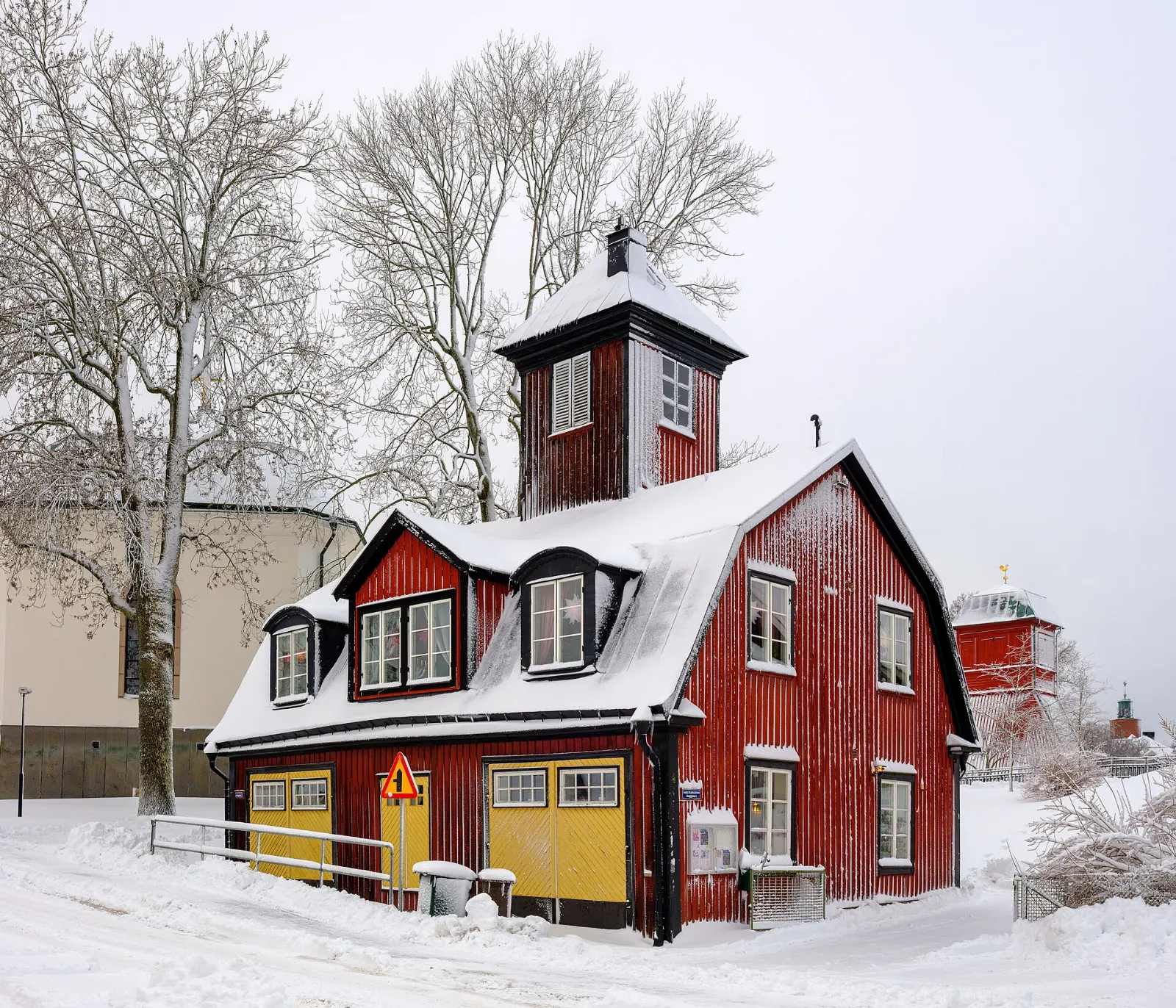
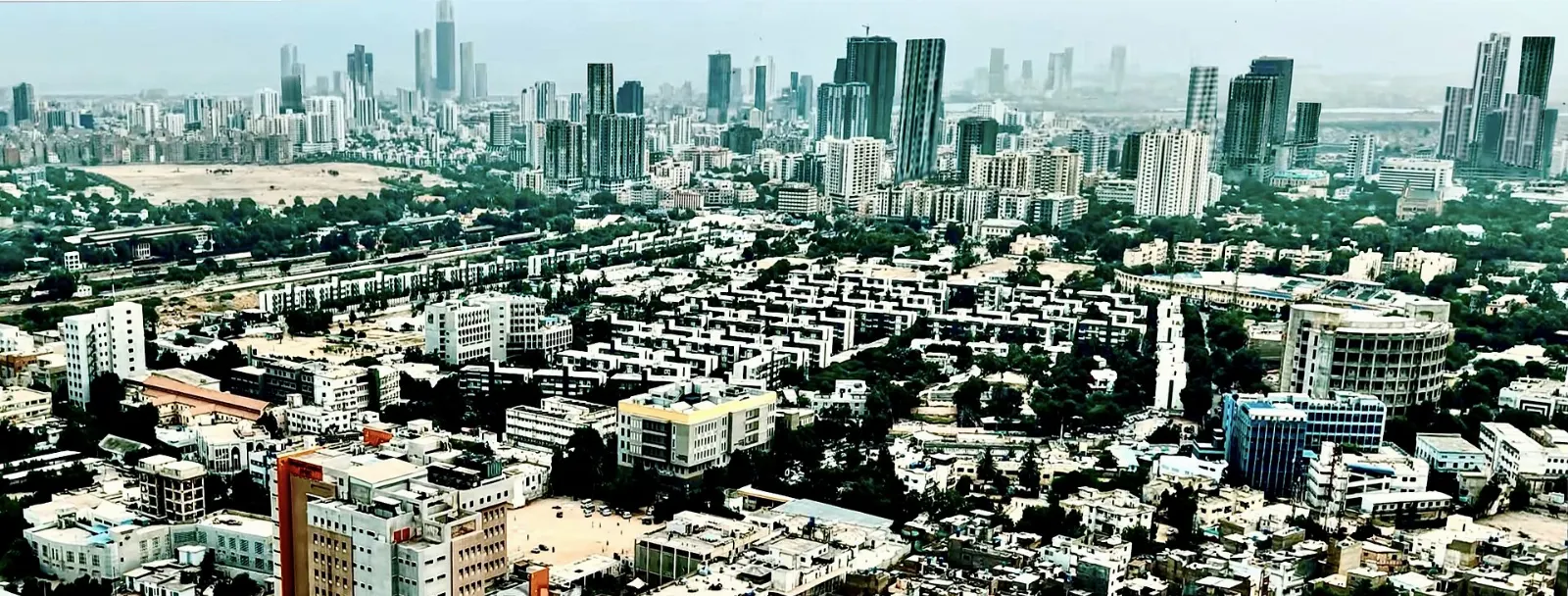
Djurgården Östermalm is elegant and quieter, with grand apartment buildings, upscale shopping and quick access to Djurgården, good for families and those who prefer a calmer base.Photo: ArildV, Wikimedia Commons, CC BY-SA 4.0City Hall Kungsholmen, home to City Hall, has waterfront walks and a residential feel at slightly lower prices.Photo: ArildV, Wikimedia Commons, CC BY-SA 4.0Stockholm old town One of the best areas to base yourself in Stockholm.Photo: Liberaler Humanist, Wikimedia Commons, CC BY-SA 3.0Stockholm downtown One of the best areas to base yourself in Stockholm.Photo: Szilas, Wikimedia Commons, CC BY-SA 4.0
Best time to visit
Summer, June to August, is peak season, with daylight from very early morning until late evening around Midsummer, warm days and full archipelago boat schedules.
Late spring and early autumn, May and September, are excellent compromises, with mild weather, outdoor dining and smaller crowds.
Ad
Getting there and getting around
By air: Stockholm Arlanda, about 40 kilometres north of the city, is Sweden's largest airport.
By train and ferry: Stockholm Central has direct trains from Gothenburg, Malmö, Copenhagen and Oslo, plus overnight services from northern Sweden and seasonal sleepers from Germany.
Getting around: The SL network of metro, commuter trains, trams, buses and some ferries covers the whole region on one ticket system.
A suggested itinerary
First day
Spend the morning in Gamla stan, exploring Stortorget and the lanes before the crowds arrive, then tour the Royal Palace.
Second day
Head to Djurgården for the Vasa Museum at opening time, then spend the afternoon at Skansen.
Third day
Visit Moderna Museet on Skeppsholmen, then cross to Södermalm for lunch and an afternoon at Fotografiska.
Fourth day
Take a boat to Drottningholm Palace in the morning, or catch an archipelago boat to Vaxholm.
Ad
Practical tips
Sweden is largely cashless; carry a card that works for contactless payments, as many places do not accept cash.
Book City Hall tours, popular restaurants and summer archipelago trips in advance.
Many museums change hours by season and some close on certain weekdays, so check the official website for current hours and fees.
Pack layers and a light rain jacket even in summer, as weather on the water changes quickly.
Stand on the right and walk on the left on escalators, and let passengers off before boarding trains.
Tap water is excellent, so carry a refillable bottle.