Cappadocia Türkiye Balloon Flights and Fairy Chimneys
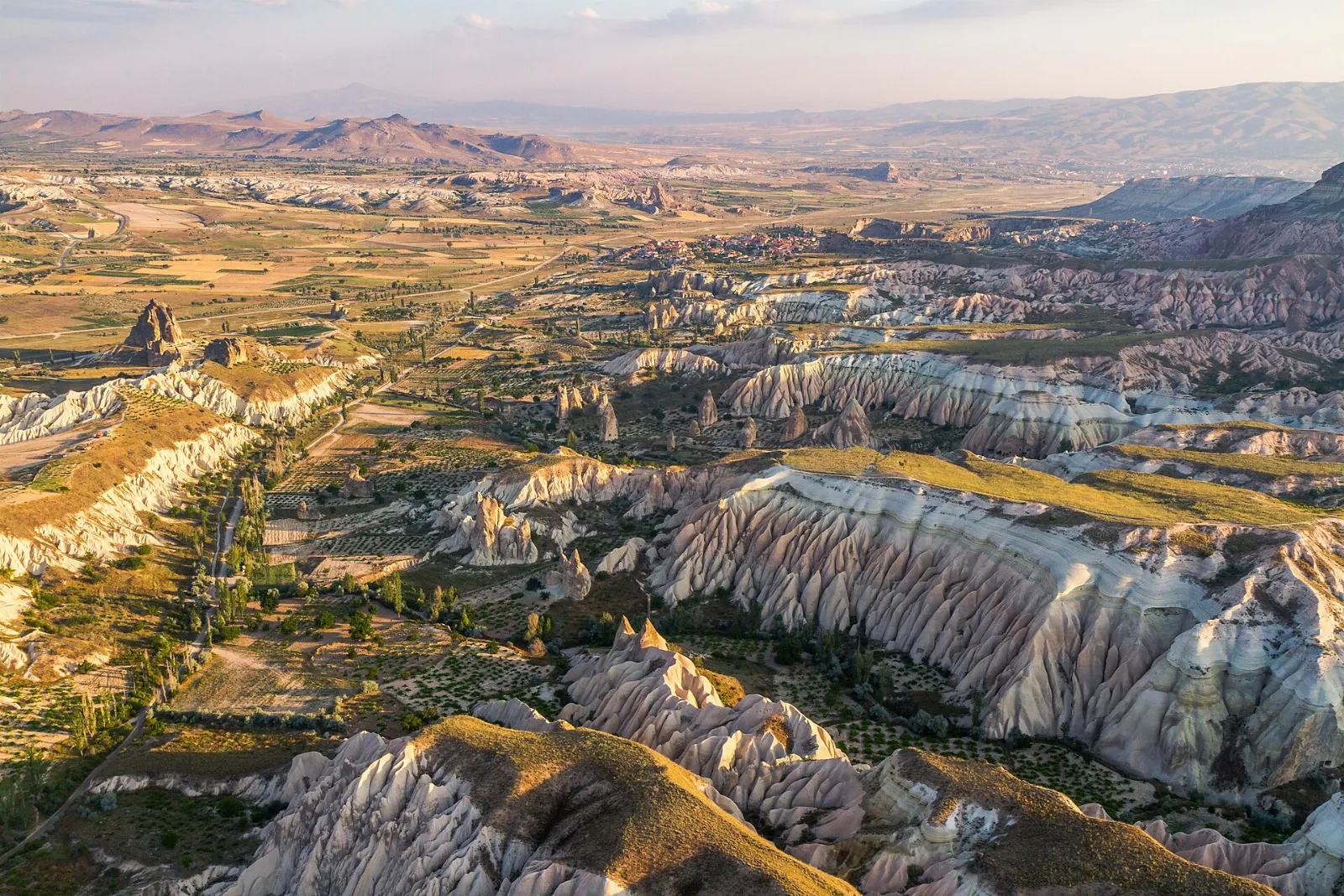
Cappadocia is a region in central Anatolia where volcanic ash, wind and water have sculpted a landscape of cones, pillars and rippled valleys. For centuries, people carved homes, monasteries, churches and entire underground cities into the soft rock.
By WiserMap TravelUpdated October 20269 places11 min read
This guide covers the best places to visit in Cappadocia, from the frescoed churches of Göreme and the citadel of Uçhisar to Paşabağ, Zelve, Avanos, the underground cities and Ihlara Valley.
At a glance Cappadocia
Best timeApril to June and September to October for mild weather and steadier balloon flights.
How longThree nights covers the main valleys, museums and an underground city.
Getting thereFly to Nevşehir Kapadokya or Kayseri airport, then transfer by shuttle or car.
Ad
Why visit Cappadocia
Millions of years ago, volcanoes such as Erciyes and Hasan covered this plateau with thick layers of ash, which hardened into a soft rock called tuff.
The human story is just as remarkable. Early Christian communities carved monasteries and churches into the cliffs and decorated them with Byzantine frescoes, while people across the region dug multilevel underground cities for shelter.
Cappadocia is also a place for slow travel. Most of its best moments, from a dawn balloon sky to an evening walk through Rose Valley, are about light and landscape, and the region rewards those who stay several nights.
Göreme, Uçhisar and the central valleys
The village of Göreme sits at the heart of the region, and many of the most famous sights are within walking distance or a short drive.
Hot air balloons over Göreme
On calm mornings, balloons launch from fields around Göreme just before sunrise and float over the valleys for roughly an hour.
Göreme Open-Air Museum
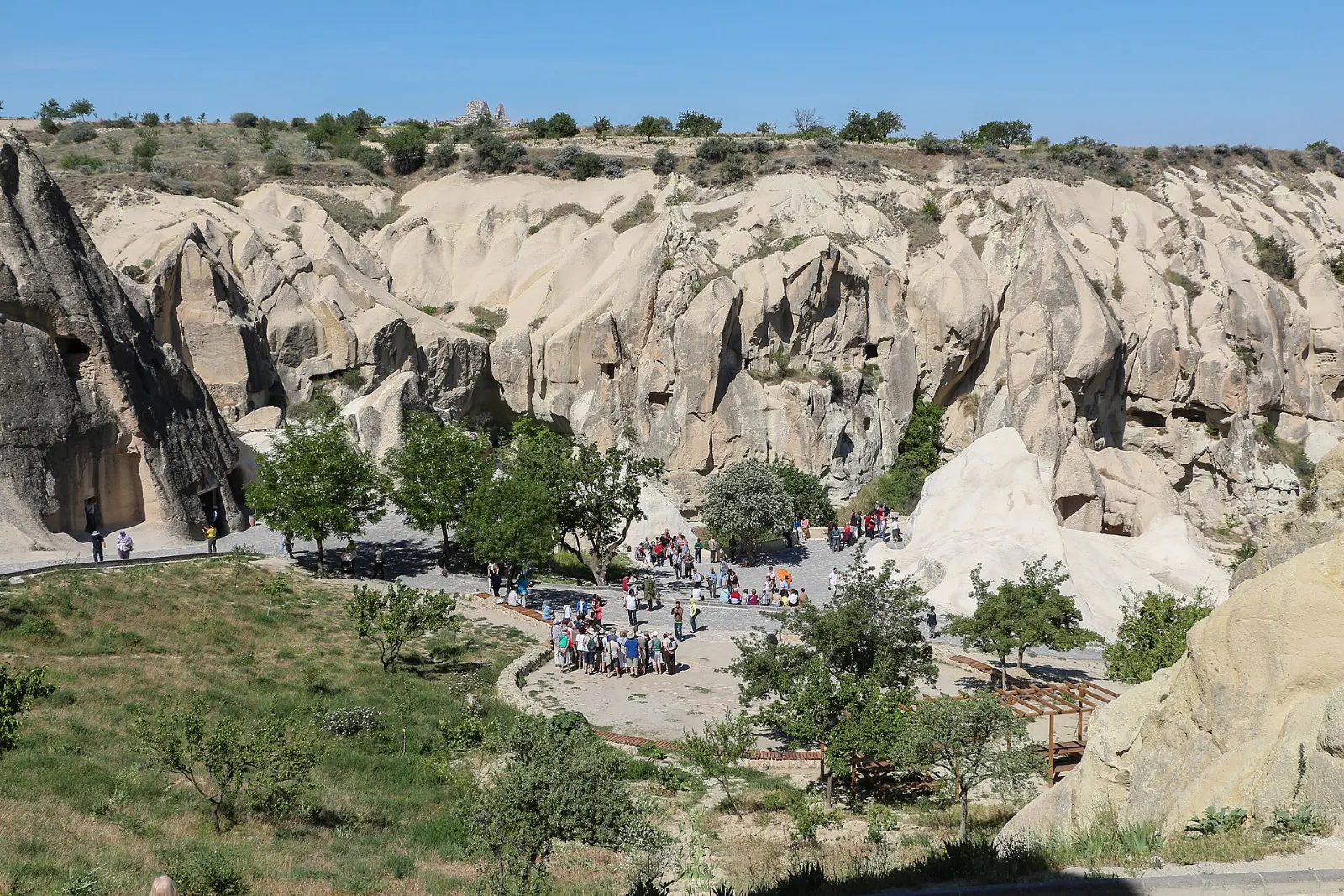
Just outside the village, this former monastic complex holds a cluster of rock-cut churches, chapels and refectories, many decorated with frescoes from roughly the tenth to twelfth centuries. The Dark Church, named for its small window, preserves especially vivid paintings and requires a separate ticket.
The Göreme Open-Air Museum preserves a monastic complex of rock-cut churches decorated with Byzantine frescoes. Photo: Bernard Gagnon, Wikimedia Commons, CC BY-SA 3.0
Uçhisar Castle
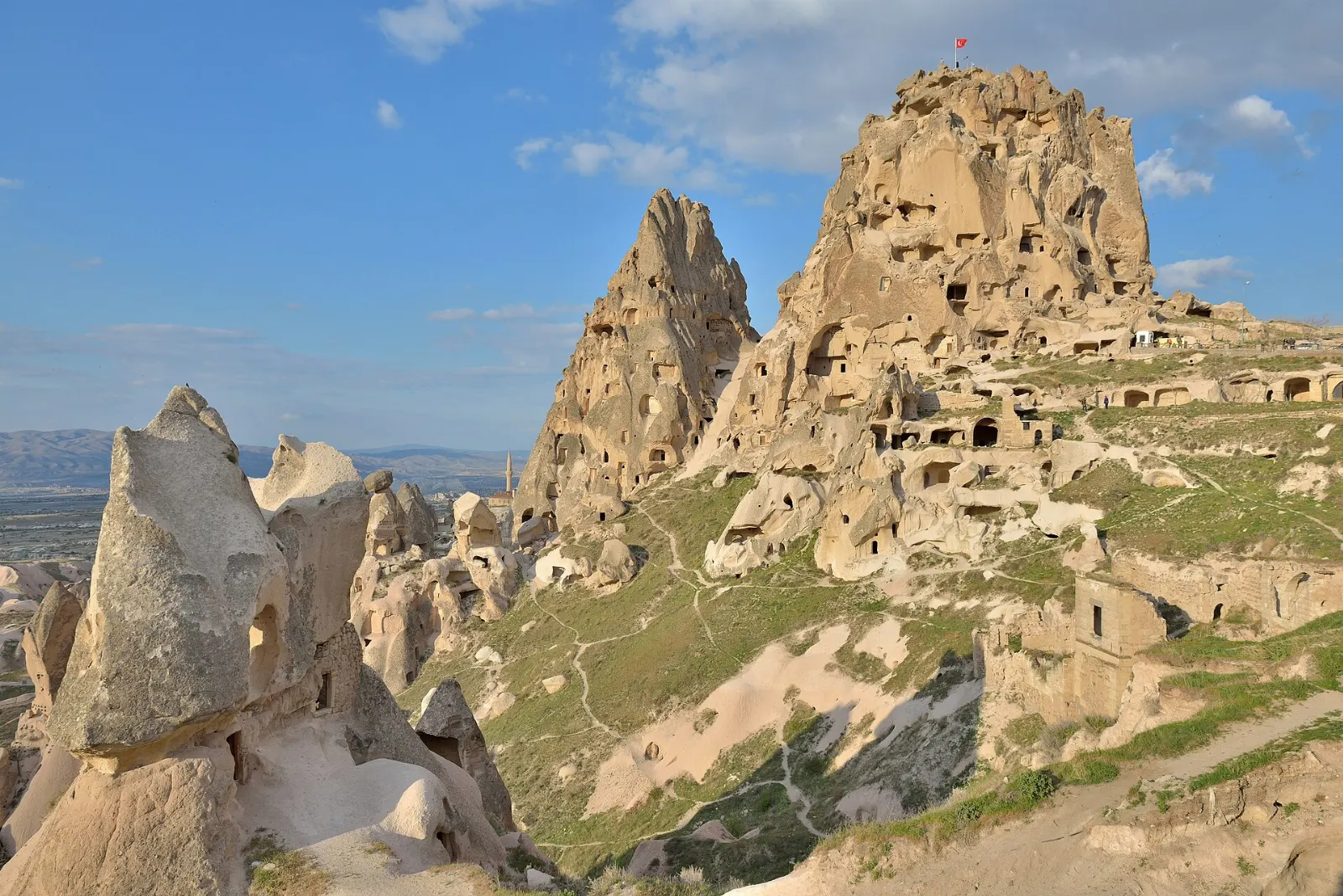
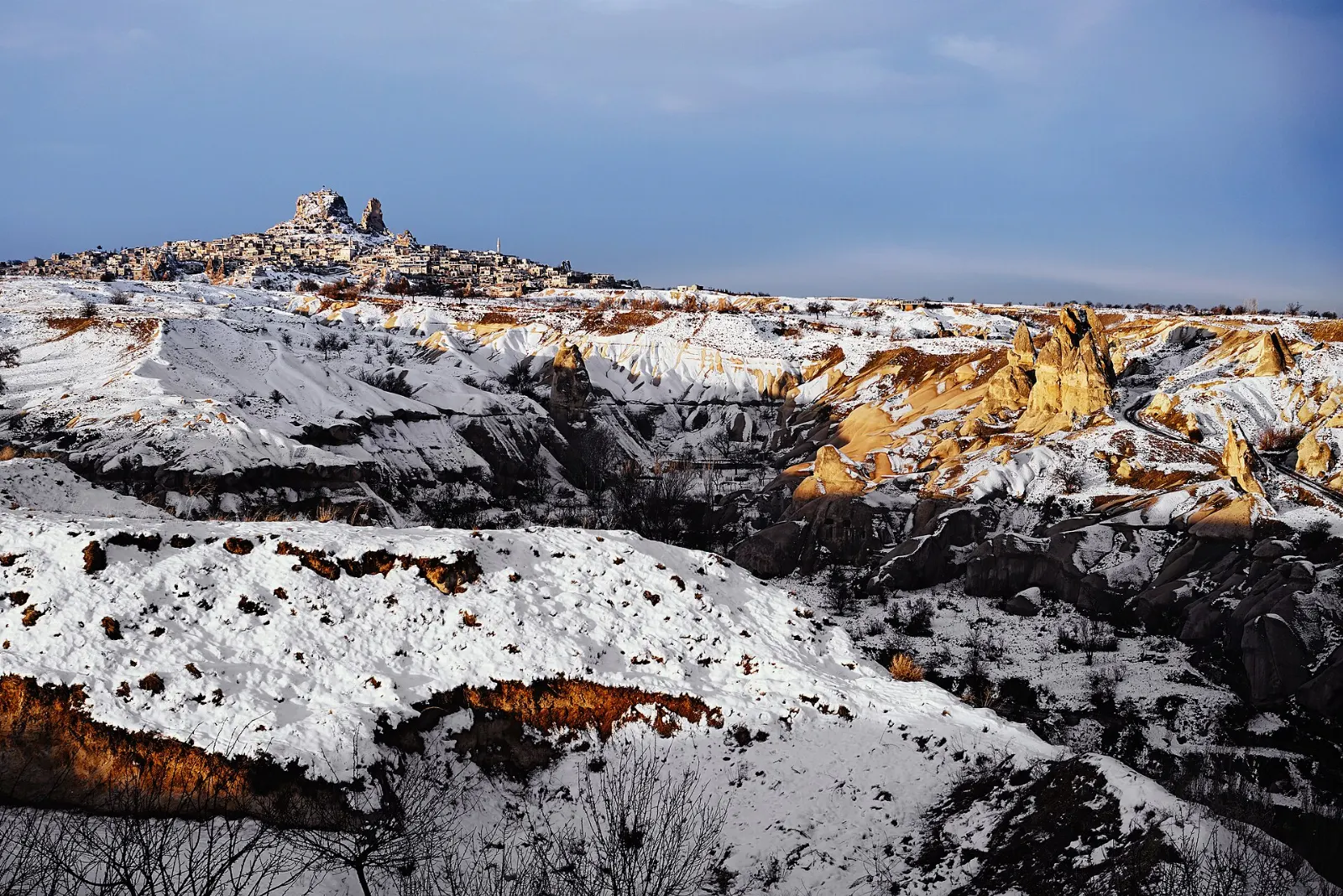
Uçhisar Castle is a towering natural rock pinnacle riddled with rooms, tunnels and windows, rising above the village of Uçhisar a few kilometers from Göreme.
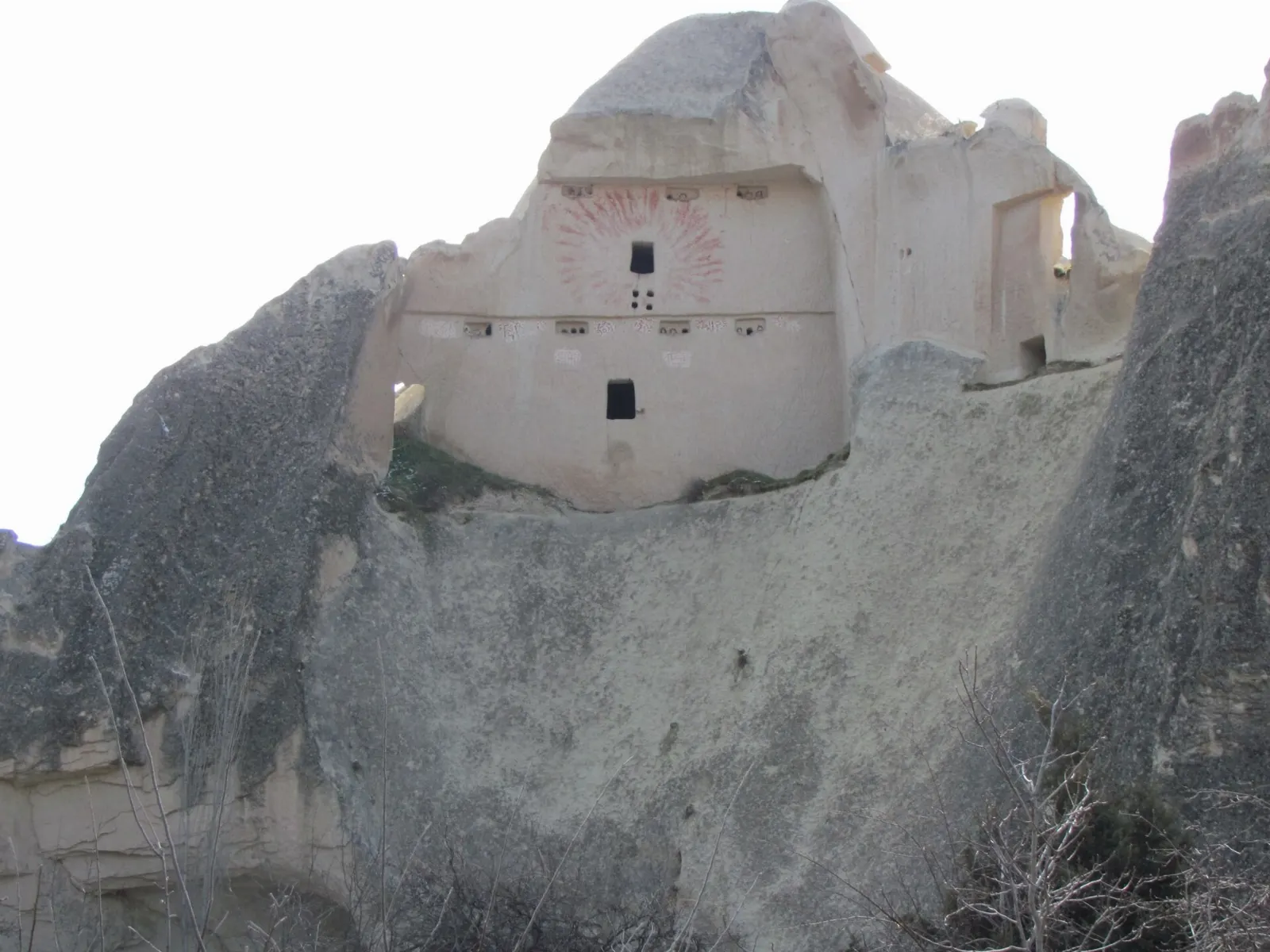
Pigeon Valley links Uçhisar and Göreme, and a walking trail of around four kilometers runs along its floor between white rock walls carved with hundreds of dovecotes. Local farmers once collected pigeon droppings from these to fertilize vineyards and orchards.
Pigeon Valley takes its name from the many dovecotes carved into its cliffs to collect pigeon droppings for fertilizer. Photo: Slyronit, Wikimedia Commons, CC BY-SA 4.0
Love Valley
North of Göreme, Love Valley is famous for its tall, smooth pillars of rock, some reaching dozens of meters high. A rim viewpoint gives the classic view, and trails lead down into the valley among vineyards and fruit trees.
Ad
Rose Valley, Paşabağ, Zelve and Avanos
The area north and east of Göreme, often covered on organized tours, combines colorful hiking valleys with some of the most photographed rock formations in Cappadocia.
Red and Rose Valleys and Çavuşin
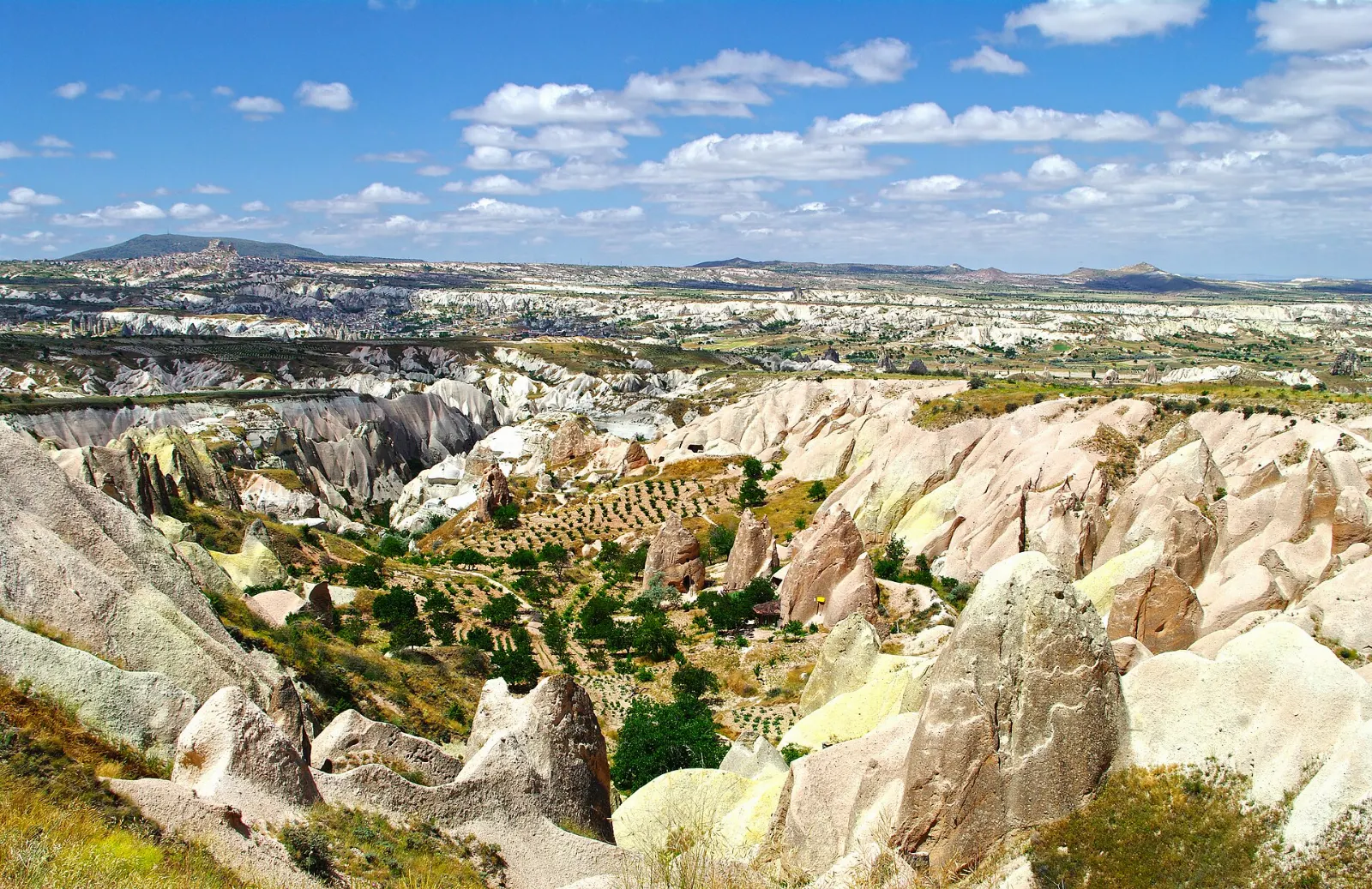
These neighboring valleys are known for ridges striped in pink, cream and red, which glow at sunset.
The bands of color in Rose Valley come from layers of volcanic ash laid down at different times. Photo: Zeynel Cebeci, Wikimedia Commons, CC BY-SA 4.0
Paşabağ, also called Monks Valley
Paşabağ has some of the most distinctive fairy chimneys in the region, with two or three caps stacked on a single stem. Hermits once lived in these columns, and one is associated with a chapel dedicated to Saint Simeon.
Paşabağ is known for fairy chimneys with several caps, some of which hermits once carved into cells. Photo: Emrahuygun, Wikimedia Commons, CC BY-SA 4.0
Zelve
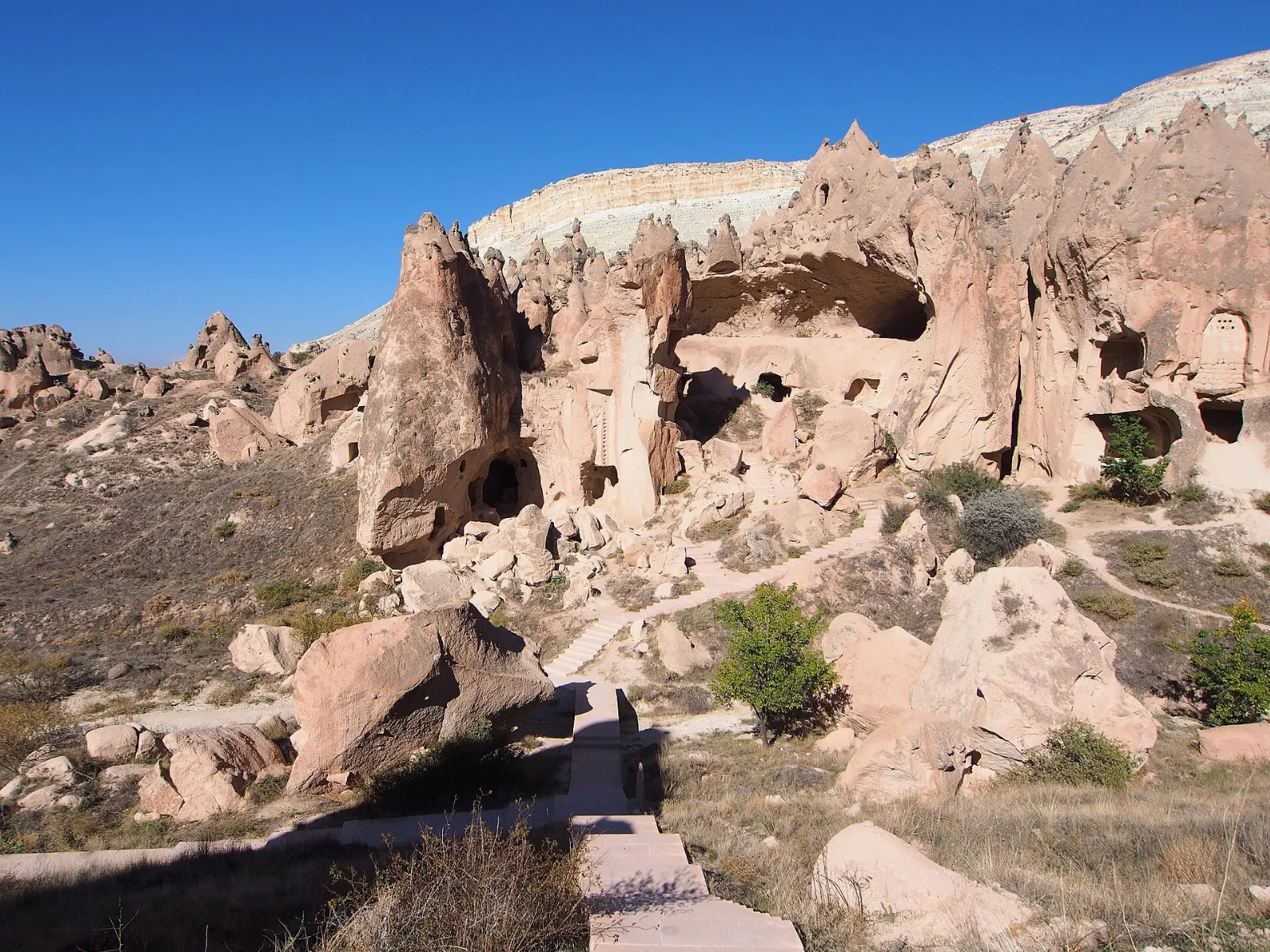
Zelve spreads across three valleys where monks and later villagers lived in cave dwellings, churches, a mill and even a rock-cut mosque. The settlement was abandoned in the mid twentieth century when erosion made it unsafe, and its crumbling cliffs give it a lost-city atmosphere.
Zelve's cave village was inhabited until the mid twentieth century, when erosion made it unsafe. Photo: rheins, Wikimedia Commons, CC BY 3.0
Avanos
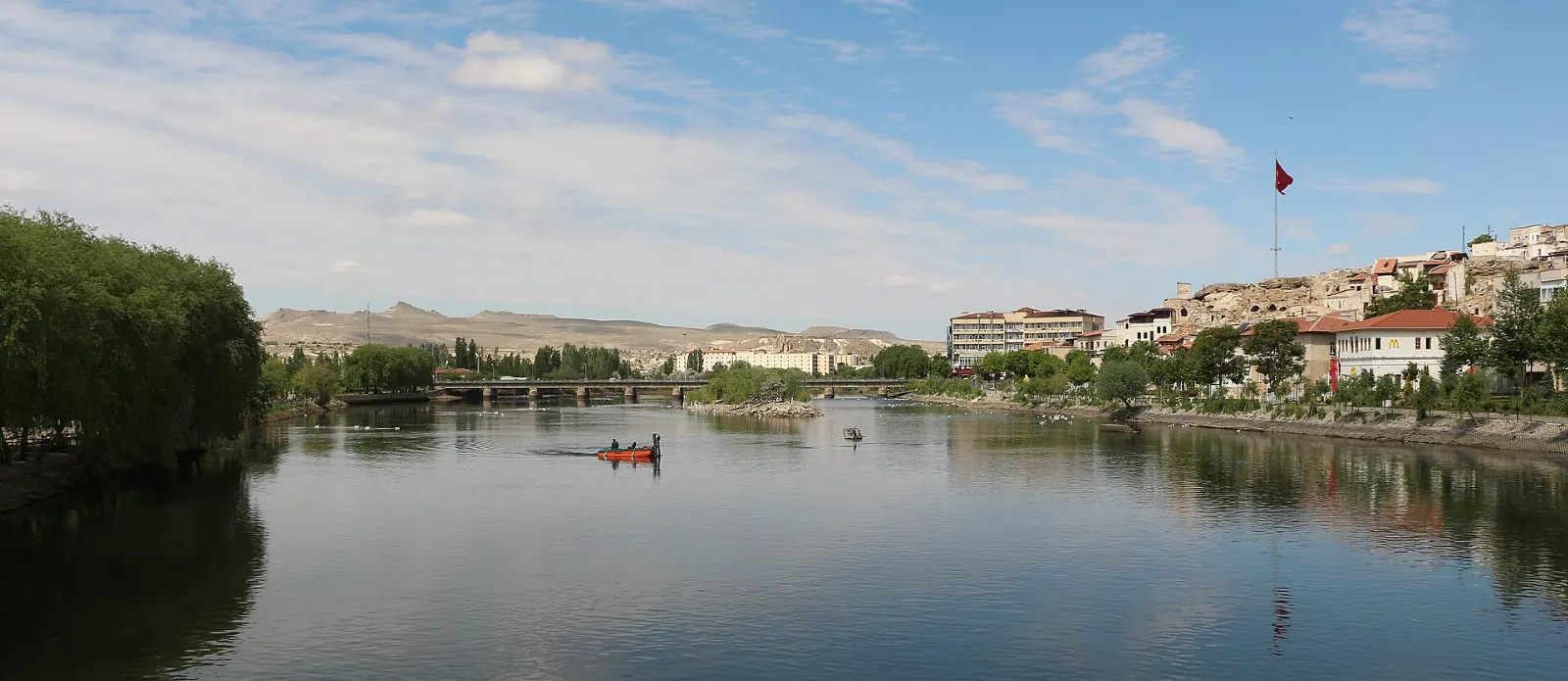
Avanos sits on the banks of the Kızılırmak, Türkiye's longest river, whose red clay has supported pottery making since ancient times. Family workshops demonstrate the kick wheel and sell ceramics, and the riverside promenade is pleasant for an evening walk.
Avanos sits on the Kızılırmak, Türkiye's longest river, whose red clay supports a long pottery tradition. Photo: Bernard Gagnon, Wikimedia Commons, CC BY-SA 3.0
Underground cities, Ihlara Valley and Ürgüp
South of Göreme, the landscape opens into farmland, with underground cities beneath its villages and a deep canyon farther west.
Derinkuyu and Kaymaklı underground cities
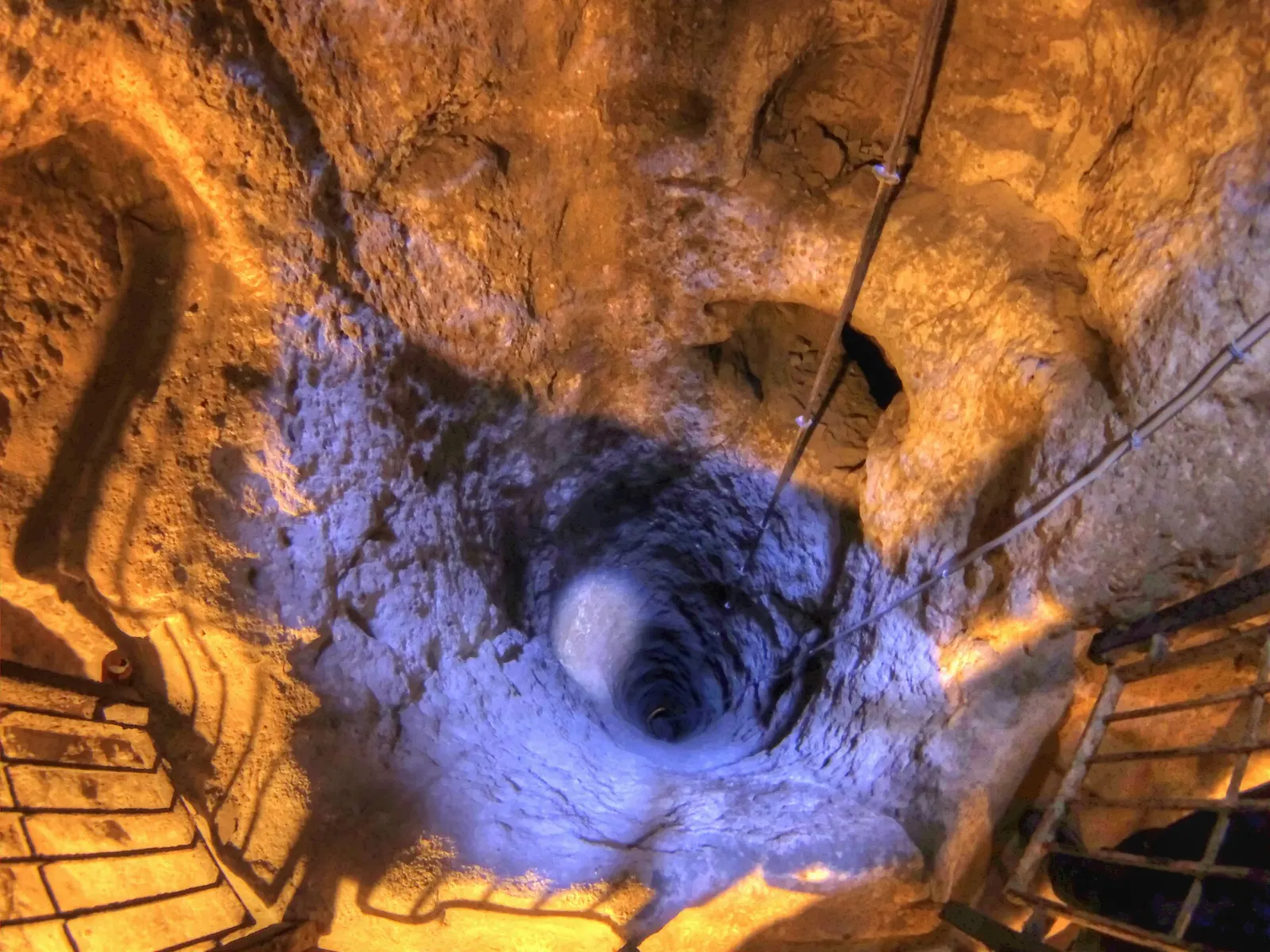
Cappadocia has dozens of underground cities, but Derinkuyu and Kaymaklı are the most visited. Derinkuyu goes down many levels and includes ventilation shafts, wells, stables, chapels and huge round stone doors that could be rolled shut.
Derinkuyu is one of the deepest underground cities in Cappadocia, with multiple levels open to visitors. Photo: Nevit Dilmen (talk), Wikimedia Commons, CC BY-SA 3.0
Ihlara Valley and Selime Monastery
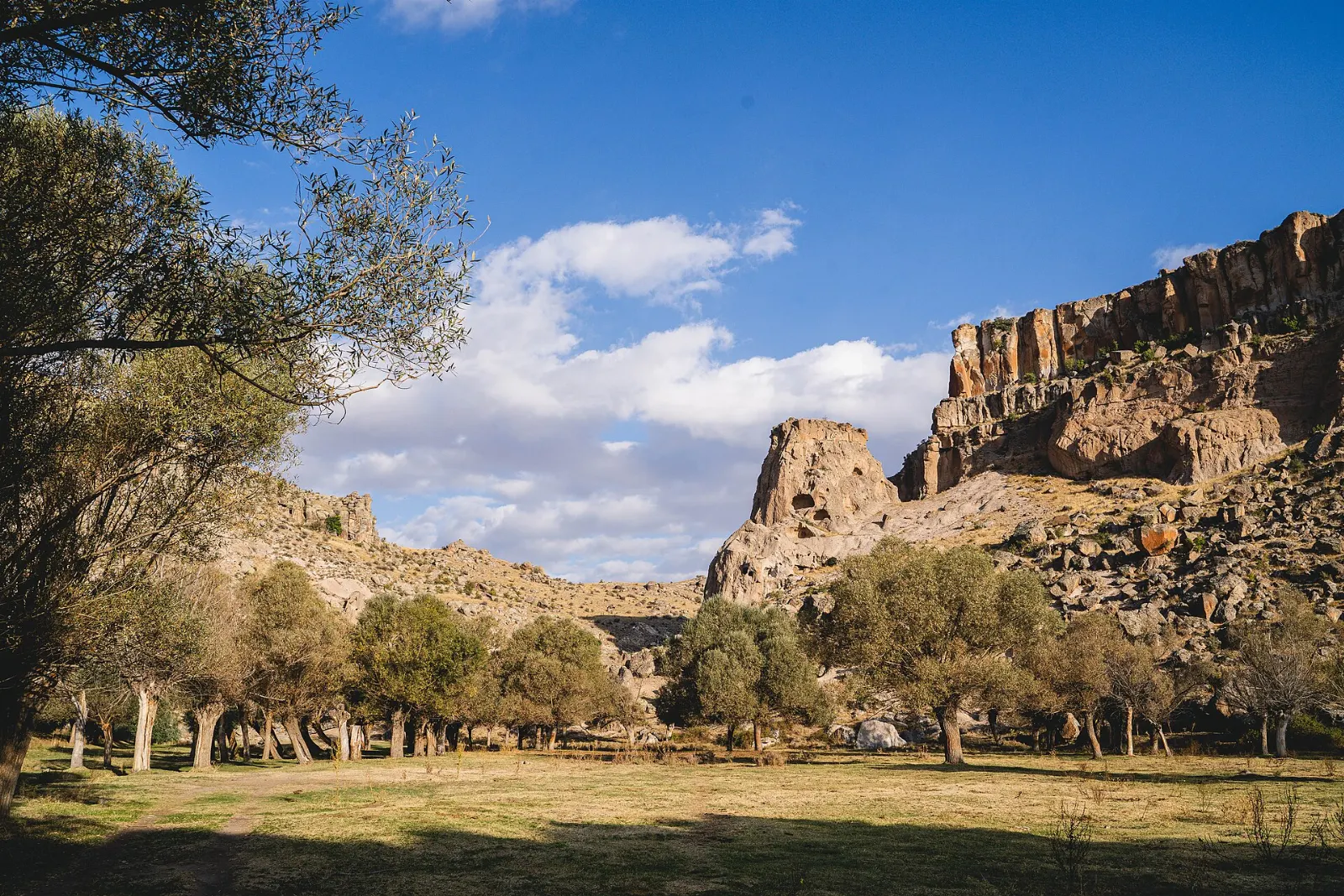
Ihlara Valley is a canyon of around fourteen kilometers carved by the Melendiz River, its walls lined with rock-cut churches, many decorated with frescoes. The most popular walk runs from the stairway near Ihlara village to Belisırma, where riverside restaurants serve trout and grilled dishes.
The Melendiz River runs through Ihlara Valley, whose walls hide dozens of rock-cut churches. Photo: Andrada Boldis, Wikimedia Commons, CC BY-SA 4.0
Ürgüp, Mustafapaşa and Ortahisar
Ürgüp is a larger town with stone mansions, wine shops and a hilltop viewpoint at Temenni Hill. Nearby Mustafapaşa, once a Greek village called Sinasos, has elegant carved stone houses and quiet streets, while Ortahisar has its own rock castle and old storage caves used for citrus and potatoes.
Ad
Food and local flavors
The signature dish of Cappadocia is testi kebabı, a stew of meat or vegetables slow-cooked in a sealed clay pot, which is cracked open at the table.
The volcanic soil has supported vineyards for millennia, and local wineries produce whites from the Emir grape and reds from varieties such as Kalecik Karası and Öküzgözü. Grape molasses, called pekmez, appears at breakfast with tahini.
Popular dishes to try in Cappadocia
Testi kebab Food and local flavorsThe signature dish of Cappadocia is testi kebabı, a stew of meat or vegetables slow-cooked in a sealed clay pot, which is cracked open at the table.Photo: Niels Elgaard Larsen, Wikimedia Commons, CC BY-SA 3.0Gözleme Village restaurants serve gözleme, thin flatbread filled with cheese, spinach or potato and cooked on a griddle.Photo: JB Macatulad, Wikimedia Commons, CC BY-SA 4.0Pastırma Look also for mantı, small dumplings topped with yogurt and spiced butter, a specialty of nearby Kayseri, along with pastırma, the city's cured beef, and spicy sucuk sausage.Photo: E4024, Wikimedia Commons, CC BY-SA 4.0Pekmez Grape molasses, called pekmez, appears at breakfast with tahini.Photo: E4024, Wikimedia Commons, CC BY-SA 4.0
Where to stay
Göreme is the most popular base and the most practical for first-time visitors, with cave hotels, guesthouses, restaurants and tour operators within walking distance of trails and balloon views.
Uçhisar, on higher ground, is quieter and has sweeping views across the valleys, making it ideal for couples and anyone seeking a calmer stay. Ürgüp is a real town with more shops and a strong wine culture, which suits travelers with a car.
Where to stay in Cappadocia
Göreme Where to stayGöreme is the most popular base and the most practical for first-time visitors, with cave hotels, guesthouses, restaurants and tour operators within walking…Photo: Brocken Inaglory, Wikimedia Commons, CC BY-SA 3.0Ürgüp Ürgüp is a real town with more shops and a strong wine culture, which suits travelers with a car.Photo: Aquinoxmedia, Wikimedia Commons, CC BY-SA 4.0Uçhisar Uçhisar, on higher ground, is quieter and has sweeping views across the valleys, making it ideal for couples and anyone seeking a calmer stay.Photo: This Photo was taken by Wolfgang Moroder. Feel free to use my photo…, Wikimedia Commons, CC BY-SA 3.0Mustafapaşa Ortahisar and Mustafapaşa are smaller and more traditional, offering restored stone houses away from crowds.Photo: Bernard Gagnon, Wikimedia Commons, CC BY-SA 3.0
Ad
Best time to visit
Spring, from April to early June, brings wildflowers, green vineyards and comfortable hiking weather.
Summer is hot and dry during the day but cool at night thanks to the region's elevation of more than a thousand meters, and it is the busiest time for tour groups.
Getting there and getting around
Two airports serve the region. Nevşehir Kapadokya Airport is the closer, about forty minutes from Göreme, while Kayseri Erkilet Airport has more flights and lies roughly an hour or more away.
Once you arrive, you have several options. Local minibuses link Göreme, Uçhisar, Avanos, Ürgüp and Nevşehir, but they are less useful for sights such as Ihlara Valley and the underground cities.
Ad
A suggested itinerary
First day
Take a sunrise balloon flight or watch from a Göreme viewpoint. After breakfast, visit the Göreme Open-Air Museum and the Dark Church, then walk through Love Valley.
Second day
Visit Paşabağ early, then explore Zelve and stop at Devrent Valley. Have lunch in Avanos and visit a pottery workshop.
Third day
Drive or take a tour south to Derinkuyu or Kaymaklı underground city, then continue to Ihlara Valley for the walk to Belisırma and a riverside lunch.
Practical tips
Book balloon flights with licensed operators and schedule them early in your stay.
Wear sturdy shoes for valley trails, which are sandy, steep and sometimes poorly marked.
Download offline maps; valley trails branch often and signs can be sparse.
Dress warmly for sunrise viewpoints, as mornings are chilly even in summer.
Carry some Turkish lira in cash for small shops, villages and minibuses.
Dress modestly and remove shoes when entering a mosque.