This guide covers the best places to visit in Helsinki, from the UNESCO-listed sea fortress of Suomenlinna to the city's churches, museums, saunas and market halls, with practical advice on timing, transport and where to base yourself.
At a glance Helsinki
Best timeJune to August for long light and terraces; September for autumn color and fewer visitors.
How longThree days covers the center, Suomenlinna and a sauna; add a day for Porvoo, Nuuksio or Tallinn.
Getting thereHelsinki Airport in Vantaa links to the center by commuter train in about half an hour.
Ad
Why visit Helsinki
Helsinki was founded in 1550 by King Gustav Vasa of Sweden as a trading post, but it only grew into a true city after 1812, when Finland had become a Grand Duchy of the Russian Empire and the capital moved here from Turku.
What sets Helsinki apart is how easily city life blends with nature. Forested islands are a short ferry ride away, the shoreline is lined with walking and cycling paths, and public saunas let you warm up before a dip in the Baltic.
Senate Square and the historic waterfront
The core of the old city lies between the Central Station and the South Harbour, and nearly everything here is within a fifteen-minute walk.
Senate Square and Helsinki Cathedral
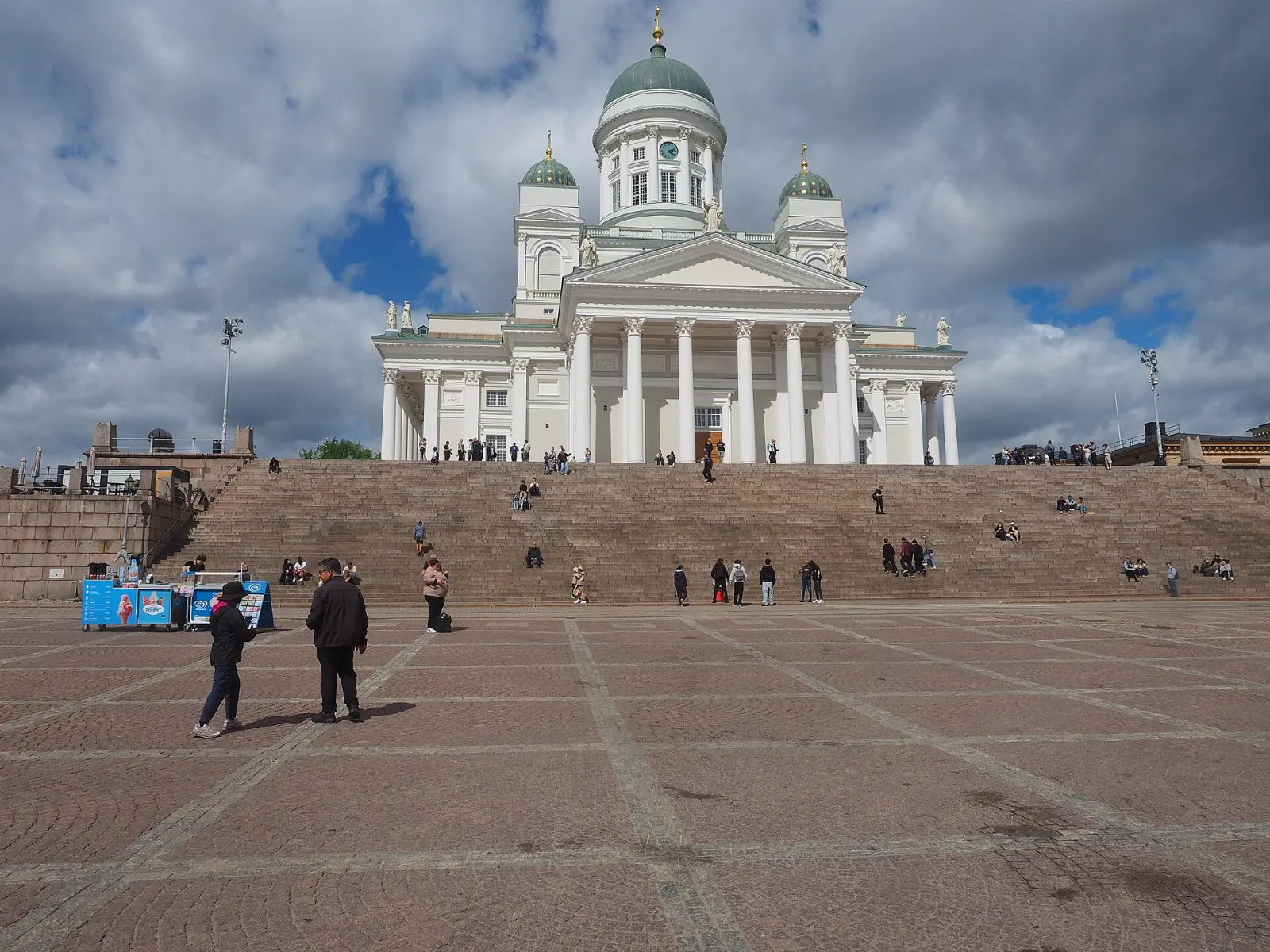
Engel's Senate Square is the city's ceremonial heart, framed by the Government Palace, the main building of the University of Helsinki and, above a broad flight of steps, the white Lutheran cathedral with its green domes, completed in 1852. A statue of Emperor Alexander II stands in the center.
Uspenski Cathedral and Katajanokka
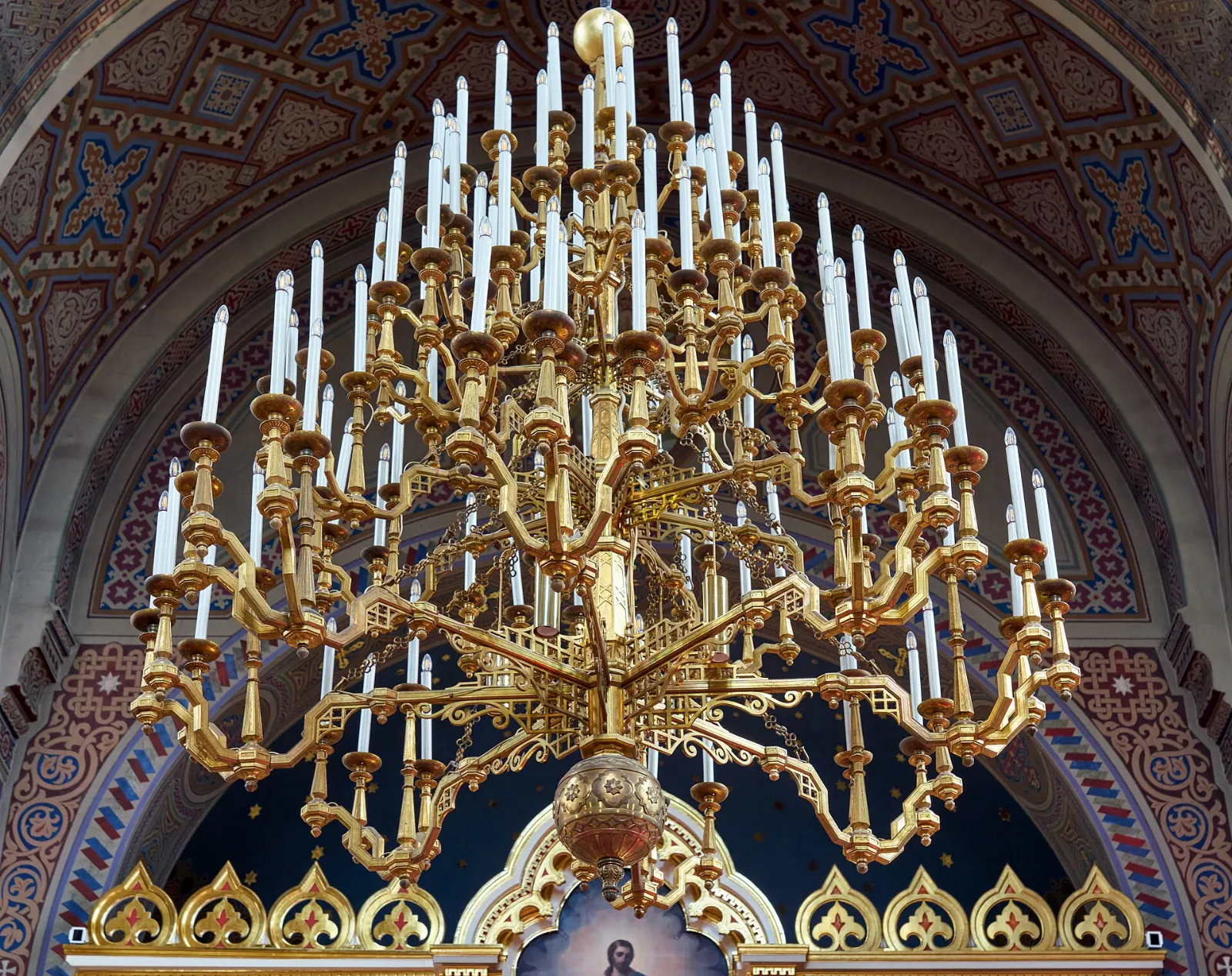
A short walk east across a small bridge, the red brick Uspenski Cathedral stands on a rocky hill on the Katajanokka peninsula. It is the main cathedral of the Orthodox Church of Finland and the largest Orthodox church in Northern Europe, with gilded onion domes and an interior rich in icons.
Uspenski Cathedral on the Katajanokka peninsula is the largest Orthodox church in Northern Europe. Photo: Virtual-Pano, Wikimedia Commons, CC BY-SA 4.0
Market Square, Esplanadi and the Old Market Hall
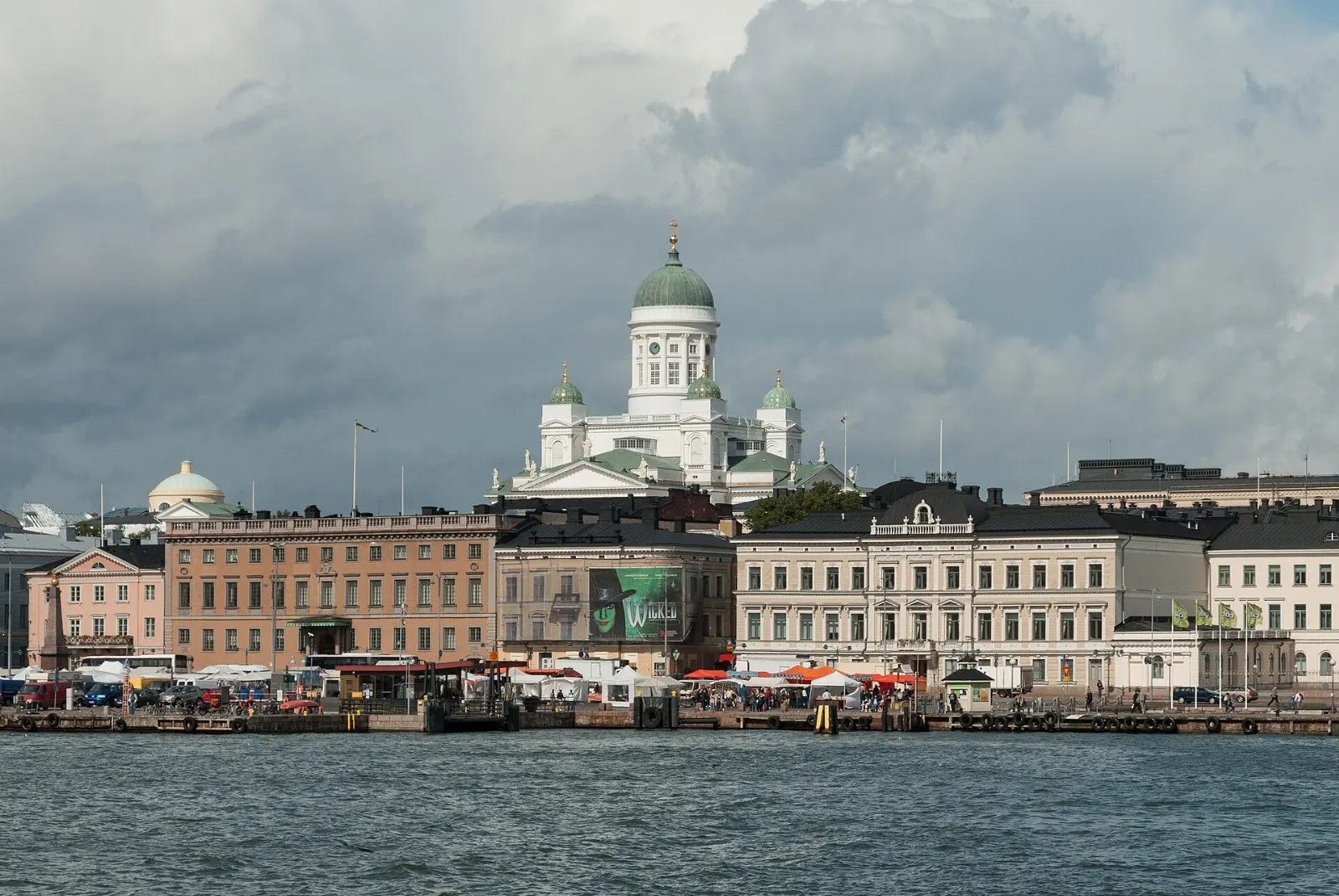
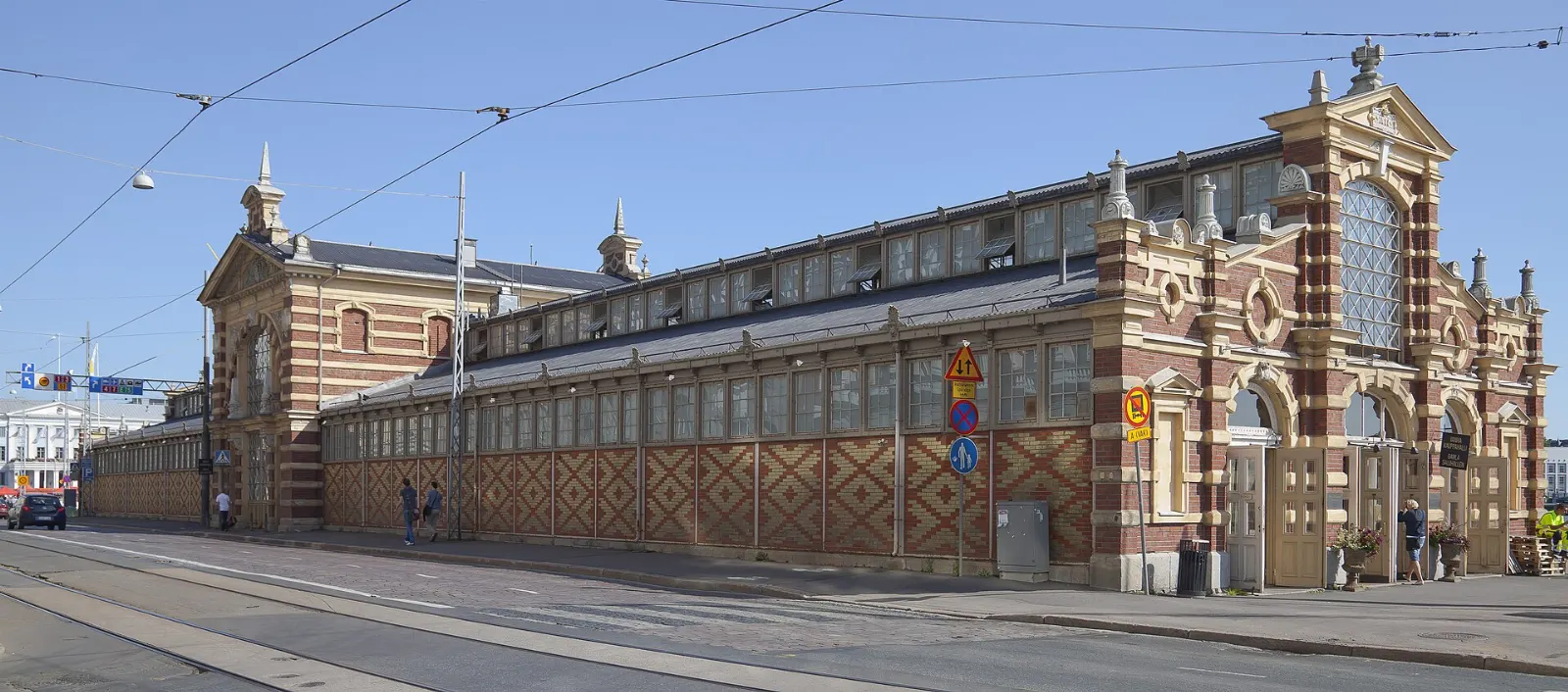
Down on the South Harbour, Market Square fills with stalls selling berries, fish, crafts and coffee, especially in summer. Beside it, the brick Old Market Hall is the oldest market hall in the city, with counters selling smoked fish, cheeses, pastries and soups.
Market Square on the South Harbour is the departure point for ferries to Suomenlinna and the islands. Photo: DXR, Wikimedia Commons, CC BY-SA 4.0
Suomenlinna
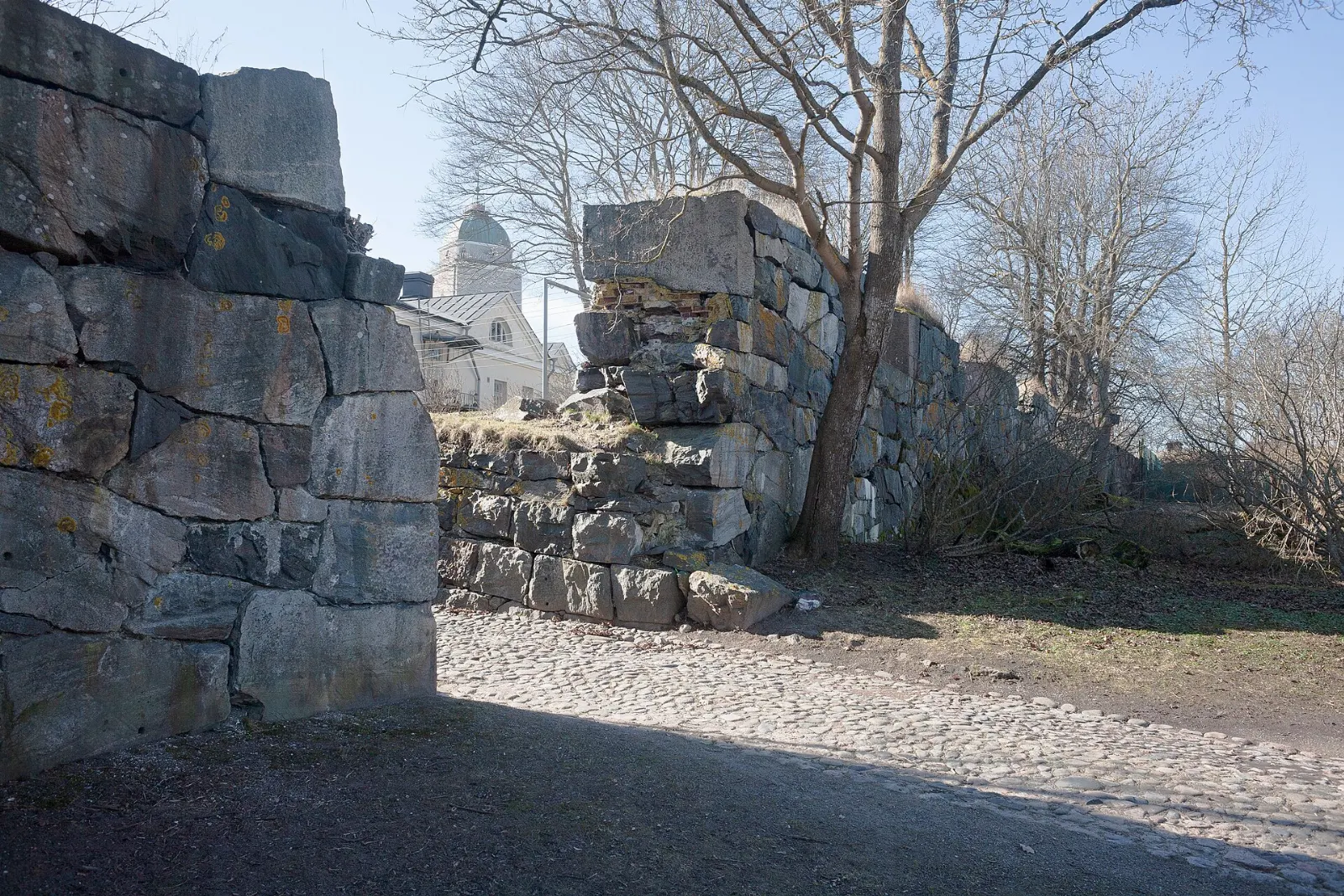
The single most rewarding sight in Helsinki is Suomenlinna, a sea fortress spread across a cluster of islands about four kilometers southeast of the center.
Suomenlinna, begun in 1748 under the Swedish Crown, spreads across a group of islands off Helsinki. Photo: Jisis, Wikimedia Commons, CC BY-SA 4.0
Ad
Töölö, museums and modern Helsinki
North and west of the station, wide streets lead to Töölö Bay, the city's cultural institutions and some of its most original architecture.
Temppeliaukio Church
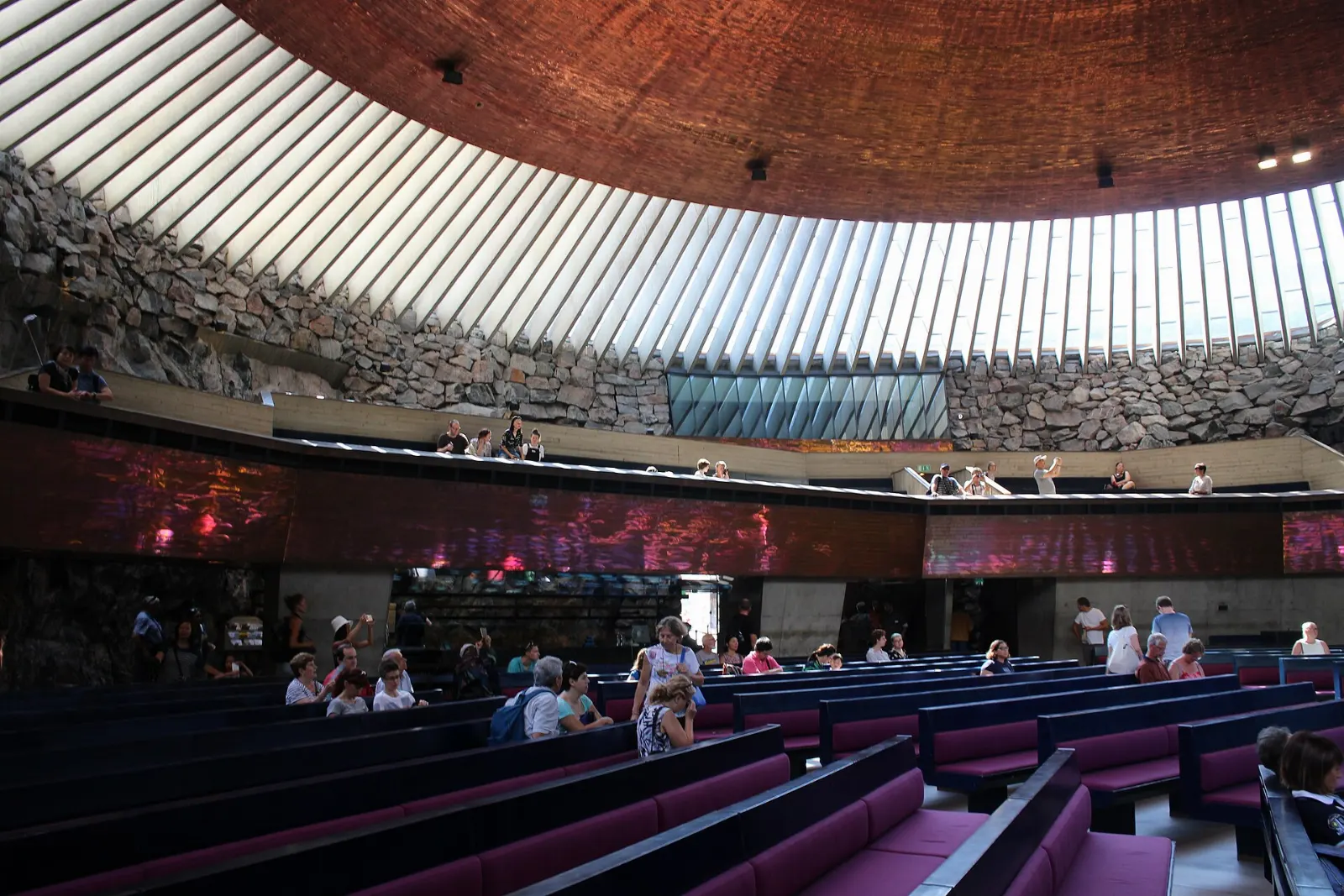
Known as the Rock Church, this Lutheran church in the Töölö district was designed by brothers Timo and Tuomo Suomalainen and completed in 1969.
Temppeliaukio Church, completed in 1969, was excavated directly into the granite bedrock of Töölö. Photo: Suicasmo, Wikimedia Commons, CC BY-SA 4.0
Sibelius Monument and Sibelius Park
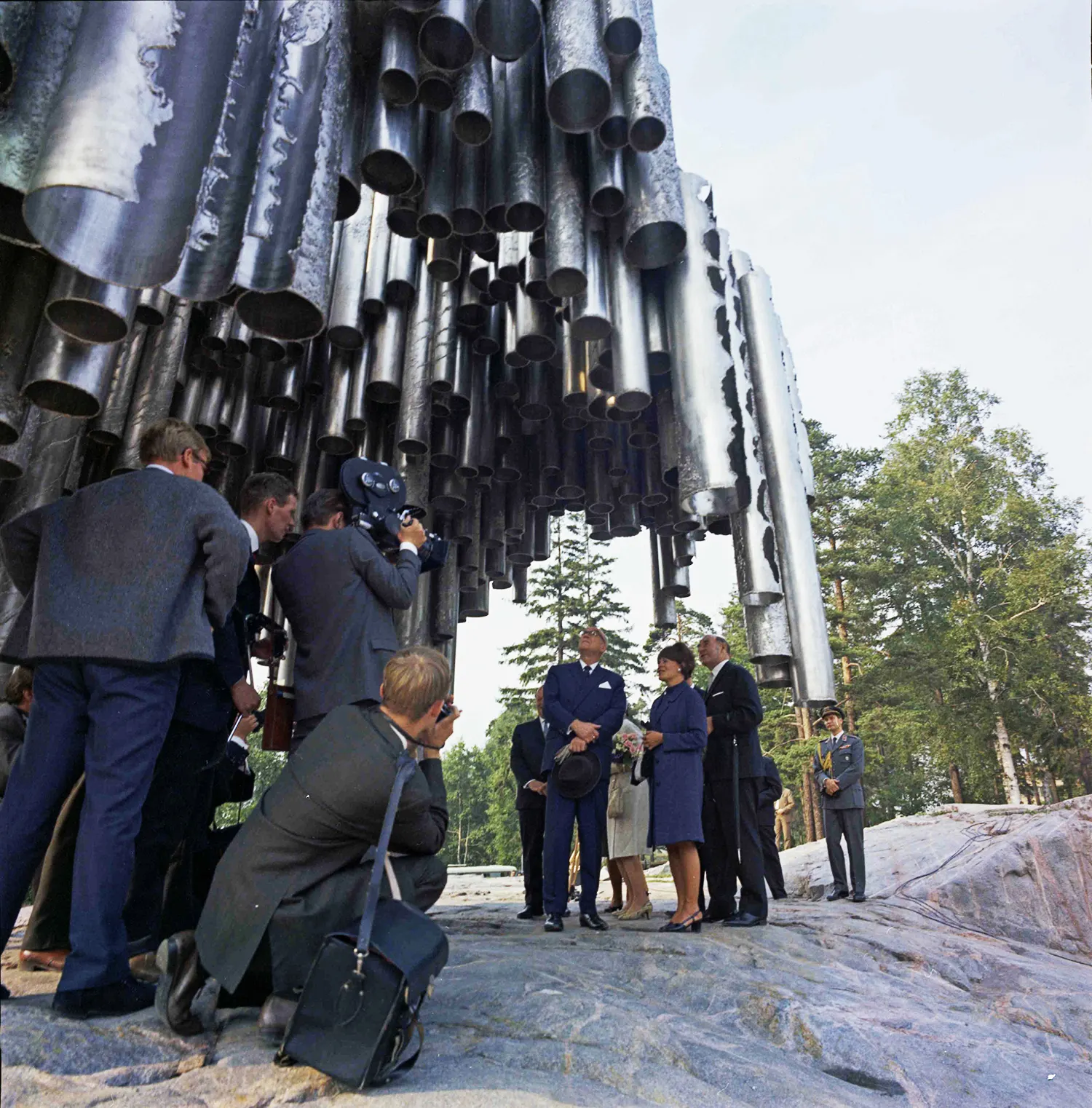
A pleasant walk northwest of the Rock Church, Sibelius Park holds Eila Hiltunen's monument to composer Jean Sibelius, unveiled in 1967. More than five hundred welded stainless steel pipes rise in an undulating cluster, with a portrait relief of the composer beside it.
Eila Hiltunen's Sibelius Monument, unveiled in 1967, is made of more than five hundred steel pipes. Photo: Aarne Tynnilä / Pietinen Mainosvalokuvaamo, Wikimedia Commons, Public domain
Seurasaari Open-Air Museum
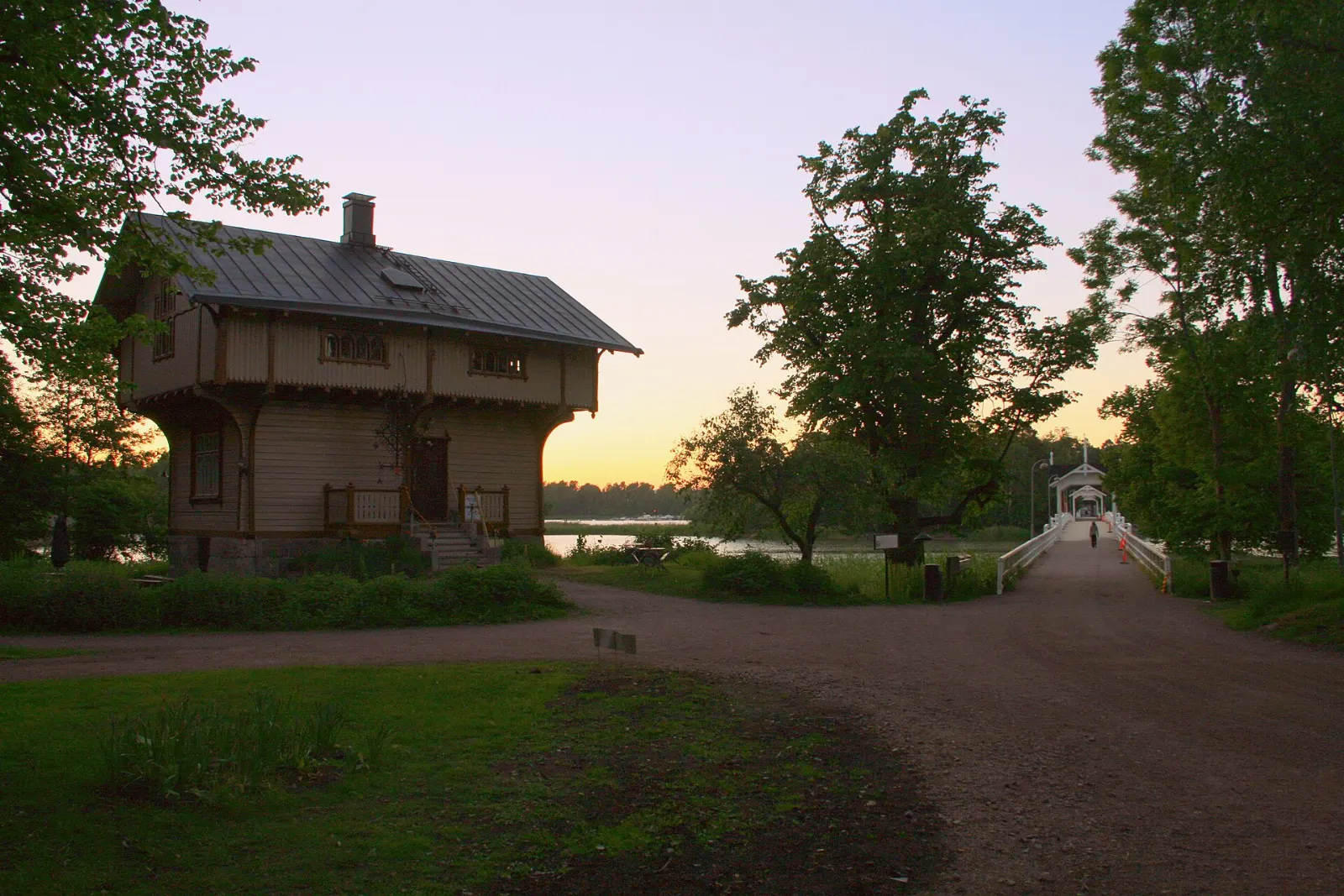
Reached by a wooden footbridge, the forested island of Seurasaari holds an open-air museum of historic wooden buildings moved from across Finland, including farmhouses, manors and a church. The buildings open in summer, while the island's trails, red squirrels and seaside rocks are lovely year round.
The Seurasaari Open-Air Museum gathers historic wooden buildings moved from across Finland. Photo: Tevfik Teker, Wikimedia Commons, CC BY 3.0
Oodi, Kiasma and the Töölö Bay cultural strip
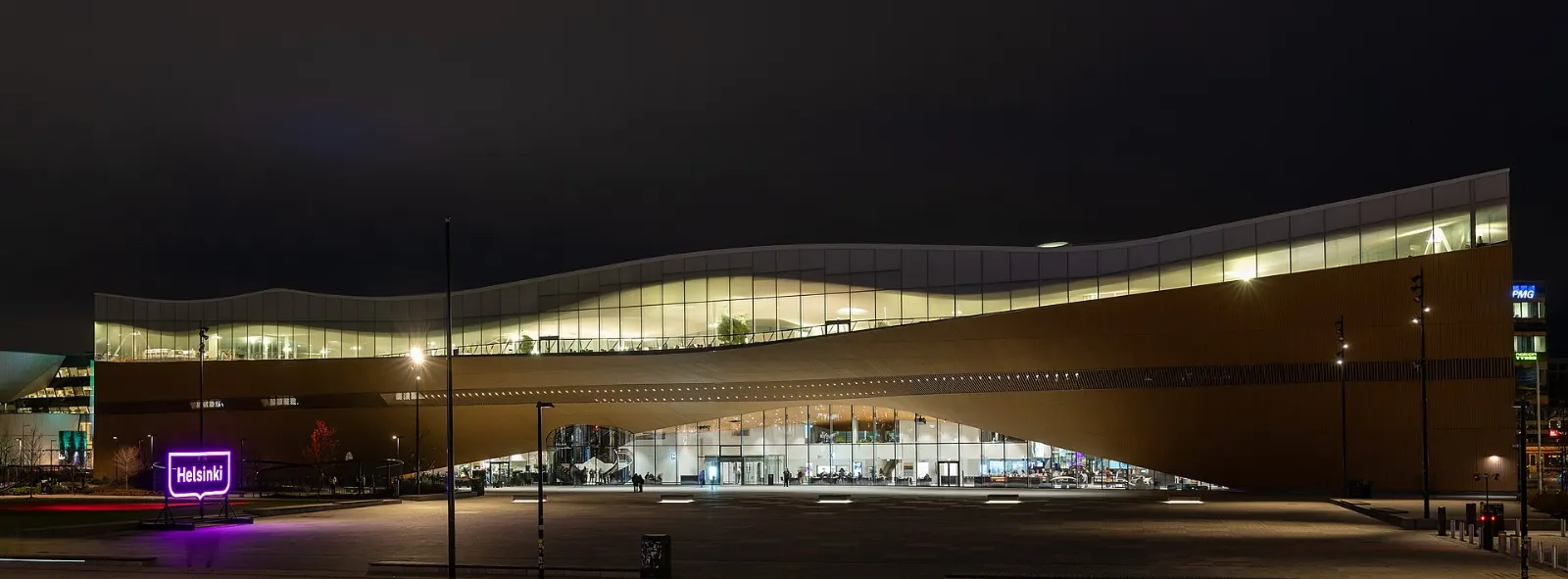
Across the square from Parliament House, Oodi is a free public library opened in December 2018 whose curving wooden facade and open top floor have made it one of the most visited buildings in the city.
Oodi, opened in December 2018, sits near the Central Station beside the Music Centre and Kiasma. Photo: ArildV, Wikimedia Commons, CC BY-SA 4.0
Ateneum
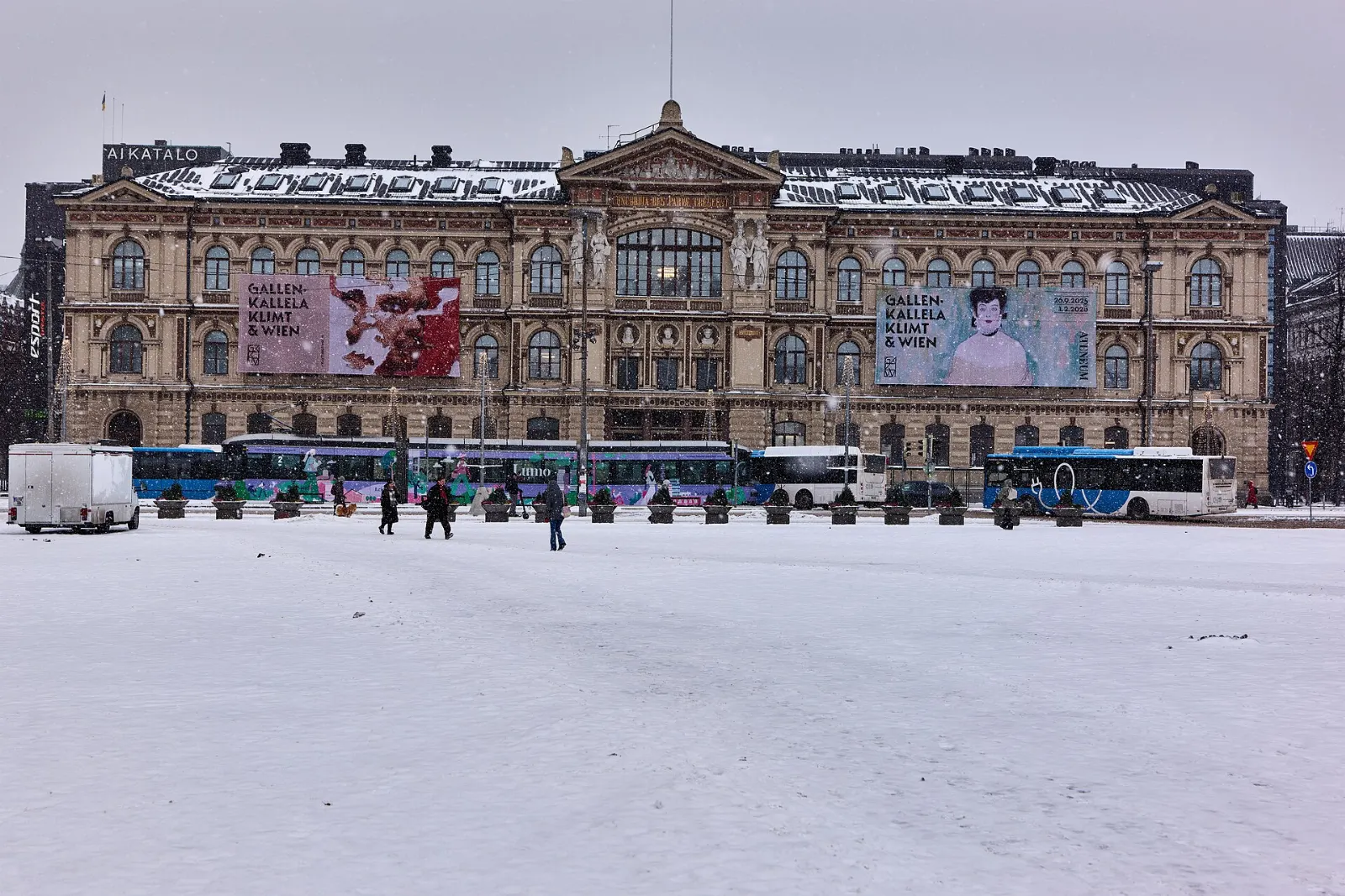
Facing Railway Square, the Ateneum is part of the Finnish National Gallery and holds the country's largest collection of classical art, including works by Akseli Gallen-Kallela, Albert Edelfelt and Helene Schjerfbeck that shaped Finnish national identity.
The Ateneum on Railway Square holds the largest collection of classical art in Finland. Photo: Leonhard Lenz, Wikimedia Commons, CC0
Design District and Kallio
South of Esplanadi, the streets of Punavuori and Ullanlinna form the Design District, full of small boutiques, galleries and vintage shops.
Food and local flavors
Finnish cooking draws on the sea, the forest and the farm. Try creamy salmon soup, often flavored with dill, and fresh or smoked fish such as salmon, whitefish and fried Baltic herring.
The Old Market Hall and the Hakaniemi market hall are the best places to sample local produce and ready-made dishes, while Market Square sells fresh berries, peas and new potatoes in season.
The Old Market Hall on Eteläranta is the oldest market hall in Helsinki.Photo: Diego Delso, Wikimedia Commons, CC BY-SA 3.0
Popular dishes to try in Helsinki
Salmon soup Try creamy salmon soup, often flavored with dill, and fresh or smoked fish such as salmon, whitefish and fried Baltic herring.Photo: Marty B, Wikimedia Commons, CC BY-SA 2.0Karelian pies Karelian pies, thin rye crusts filled with rice porridge and topped with egg butter, make a classic snack, while dense dark rye bread accompanies most meals.Photo: JIP, Wikimedia Commons, CC BY-SA 4.0Rye bread Karelian pies, thin rye crusts filled with rice porridge and topped with egg butter, make a classic snack, while dense dark rye bread accompanies most meals.Photo: JIP, Wikimedia Commons, CC BY-SA 3.0Cinnamon buns For something sweet, look for cardamom-scented cinnamon buns, blueberry pies in summer and the salty liquorice that Finns love.Photo: Andy Li, Wikimedia Commons, CC0
Ad
Where to stay
Kluuvi and Kaartinkaupunki, the streets around the Central Station, Esplanadi and Senate Square, are ideal for first-time visitors who want to walk to the main sights and catch the airport train easily.
Kamppi, west of the station, suits travelers on a budget and those arriving by long-distance bus, with a large shopping center and a metro stop.
Punavuori and Ullanlinna in the Design District appeal to couples and design lovers who want quieter streets, boutiques and good restaurants close to the sea.
Where to stay in Helsinki
Kaartinkaupunki Where to stayKluuvi and Kaartinkaupunki, the streets around the Central Station, Esplanadi and Senate Square, are ideal for first-time visitors who want to walk to the main…Photo: Ximonic (Simo Räsänen), Wikimedia Commons, CC BY-SA 4.0Senate Square Where to stayKluuvi and Kaartinkaupunki, the streets around the Central Station, Esplanadi and Senate Square, are ideal for first-time visitors who want to walk to the main…Photo: Scott Edmunds, Wikimedia Commons, CC BY 2.0Ullanlinna Punavuori and Ullanlinna in the Design District appeal to couples and design lovers who want quieter streets, boutiques and good restaurants close to the sea.Photo: Photographer: Mosbatho, Wikimedia Commons, CC BY 4.0Design District Punavuori and Ullanlinna in the Design District appeal to couples and design lovers who want quieter streets, boutiques and good restaurants close to the sea.Photo: Tomisti, Wikimedia Commons, Public domain
Best time to visit
Summer, from June to August, is the high season. Daytime temperatures are usually mild to warm, the sun barely sets around Midsummer, terraces fill the streets and island ferries run frequently.
Winter is long, dark and chilly, often with slush rather than deep snow near the sea, though January to March can bring clear, cold days and frozen bays.
Ad
Getting there and getting around
Helsinki Airport lies in Vantaa, about twenty kilometers north of the center, and commuter trains on the ring line run frequently to the Central Station in about thirty minutes.
Within the city, the regional transport authority HSL runs trams, buses, a metro, commuter trains and the Suomenlinna ferry on a single ticket system, with tickets sold through its mobile app and machines.
A suggested itinerary
First day
Start at Senate Square and Helsinki Cathedral, then cross to Uspenski Cathedral and Katajanokka.
Second day
Take a morning ferry from Market Square to Suomenlinna and spend most of the day exploring the islands.
Third day
Visit Temppeliaukio Church in the morning, walk to the Sibelius Monument and continue to Seurasaari.
Fourth day
With extra time, take a bus to the old wooden town of Porvoo, hike the forest trails of Nuuksio National Park west of the city, or ride the ferry across the Gulf of Finland to Tallinn for the day.
Ad
Practical tips
Download the HSL app before you arrive to buy transport tickets, including for the Suomenlinna ferry.
Card payments are accepted almost everywhere, including for small purchases, so you rarely need cash.
Tap water is excellent, so carry a refillable bottle.
Public saunas are often mixed and require swimwear, while separate-sex saunas are usually nude; follow posted rules and shower before entering.
Tipping is not expected, though rounding up for good service is appreciated.
Pack layers and a waterproof jacket in every season, as sea winds change conditions quickly.
Book Helsinki Festival events and summer sauna sessions in advance.