WiserMap — Choose wisely. Connect locally.Choose wisely. Connect locally.Add your business
Provence, France · Travel guide

Provence France Lavender Fields and Hilltop Villages

Provence is the sunlit southeast corner of France, stretching from the Rhone valley to the foothills of the Alps.

By WiserMap TravelUpdated October 2026 9 places10 min read
FacebookXLinkedIn

This guide groups the best places to visit by area, from Avignon and the Luberon to Arles, the Camargue, Aix-en-Provence and the Verdon gorge, with timings and tips for each stop.

At a glance Provence
  1. Best timeMay, June and September for warm weather and fewer crowds; late June to mid-July for lavender.
  2. How longFive to seven days to cover the main towns and villages at an easy pace.
  3. Getting thereHigh-speed train from Paris to Avignon or Aix, or fly into Marseille, then rent a car.

Why visit Provence

Few regions pack so much history and beauty into such a compact area. The Romans left amphitheatres, theatres and aqueducts here, several of them listed by UNESCO.

Provence is also about a rhythm of life. Mornings start at the market, lunches stretch out under plane trees, and evenings bring a glass of rose as the swifts circle above the village square.

Avignon and the Rhone valley

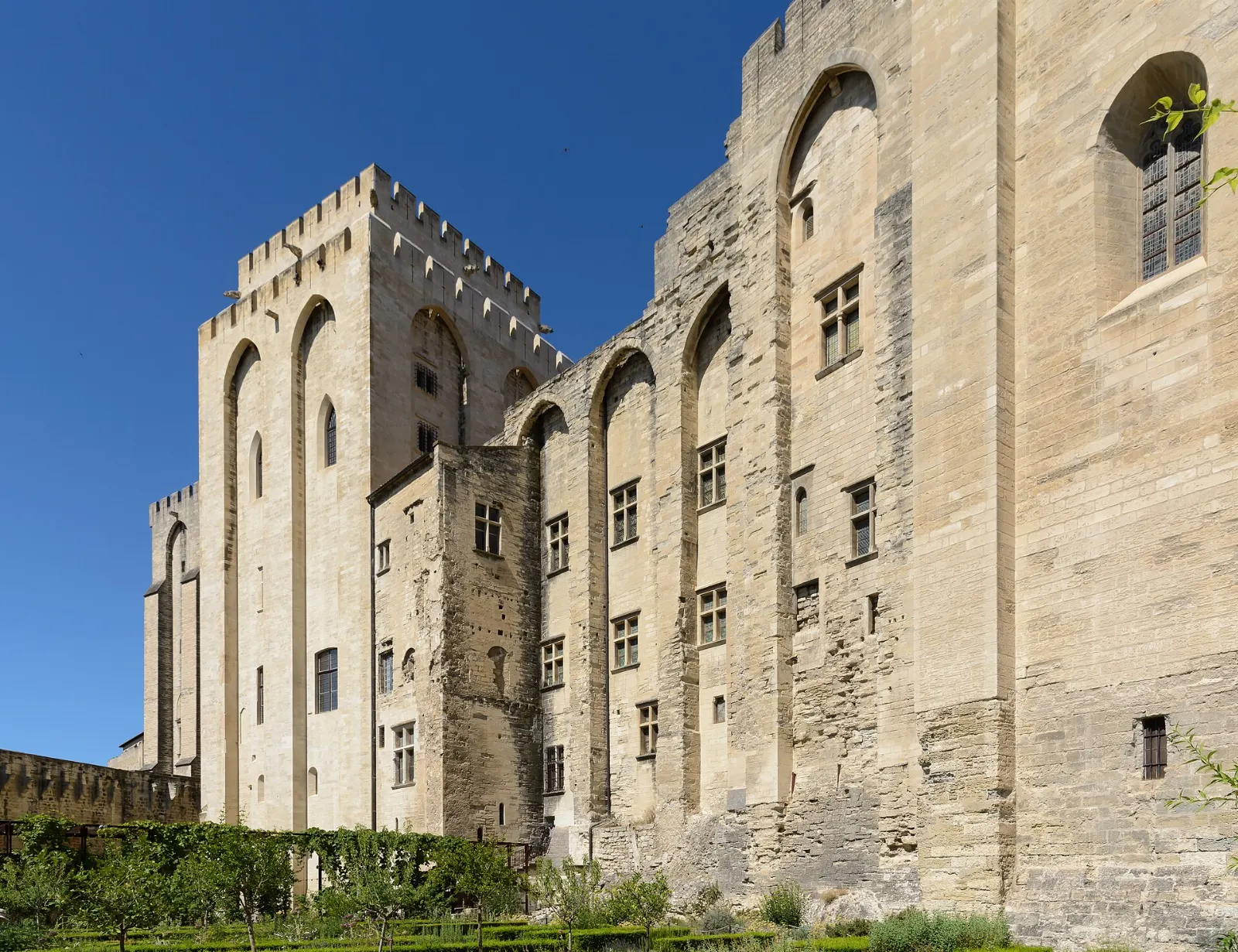
Massive Gothic facade of the Palais des Papes rising above a square in Avignon, Provence, France

Avignon and the Palais des Papes

Avignon is enclosed by medieval ramparts and dominated by the Palais des Papes, the vast palace built when the papacy was based here in the fourteenth century. Inside you can walk through ceremonial halls, chapels and private apartments, with tablets that recreate the original decoration.

The Palais des Papes was the seat of the popes in Avignon during the fourteenth century. Photo: Uoaei1, Wikimedia Commons, CC BY-SA 4.0
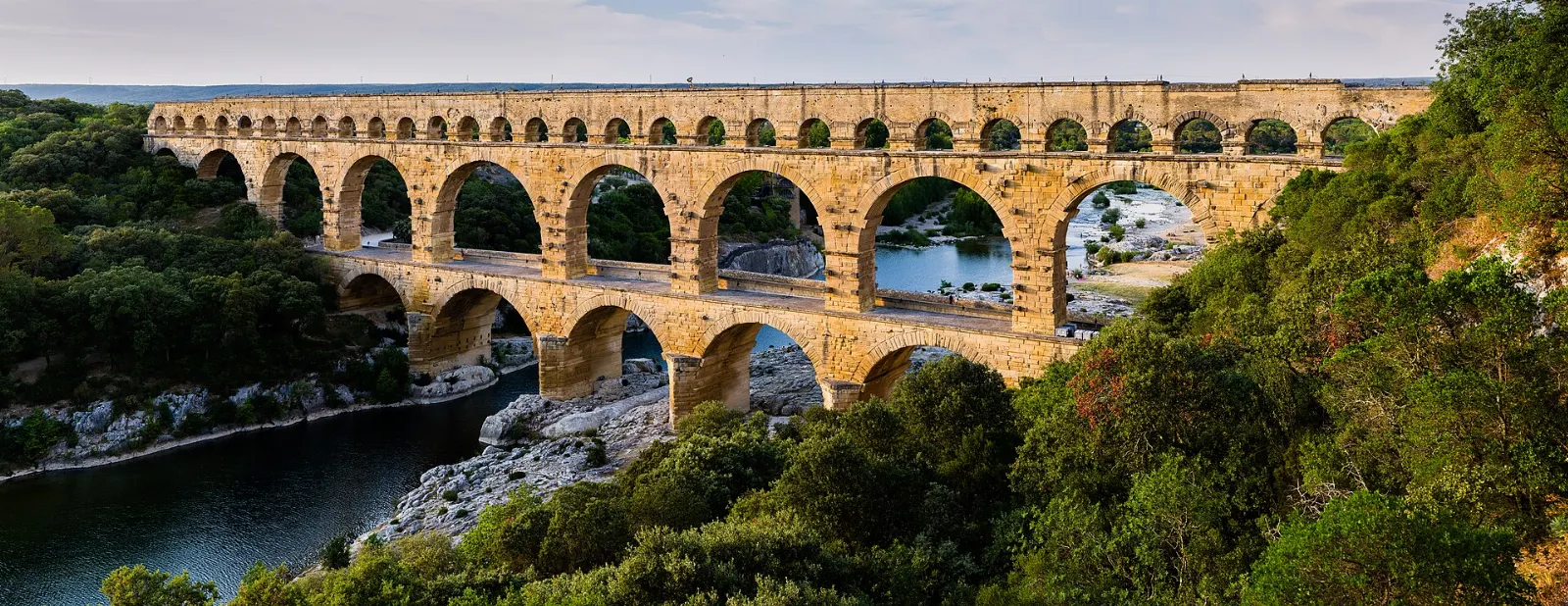
Three tiers of stone arches of the Pont du Gard spanning the Gardon river, Provence, France

Pont du Gard

About half an hour west of Avignon, just over the regional border in the Gard department, the Pont du Gard is a three-tiered Roman aqueduct bridge built in the first century AD to carry water to Nimes.

The Pont du Gard is a Roman aqueduct bridge built in the first century AD. Photo: Benh LIEU SONG (Flickr), Wikimedia Commons, CC BY-SA 3.0

Orange and Chateauneuf-du-Pape

North of Avignon, Orange has one of the best preserved Roman theatres in the world, its huge stage wall still intact, along with a triumphal arch. Nearby, Chateauneuf-du-Pape is a village of ancient vineyards where the popes once had a summer residence; today you can taste the robust red wines in family cellars.

The Luberon hill villages

East of Avignon, the Luberon is a range of limestone hills dotted with perched villages, each with its own character. It is the Provence of postcards and is best explored slowly by car.

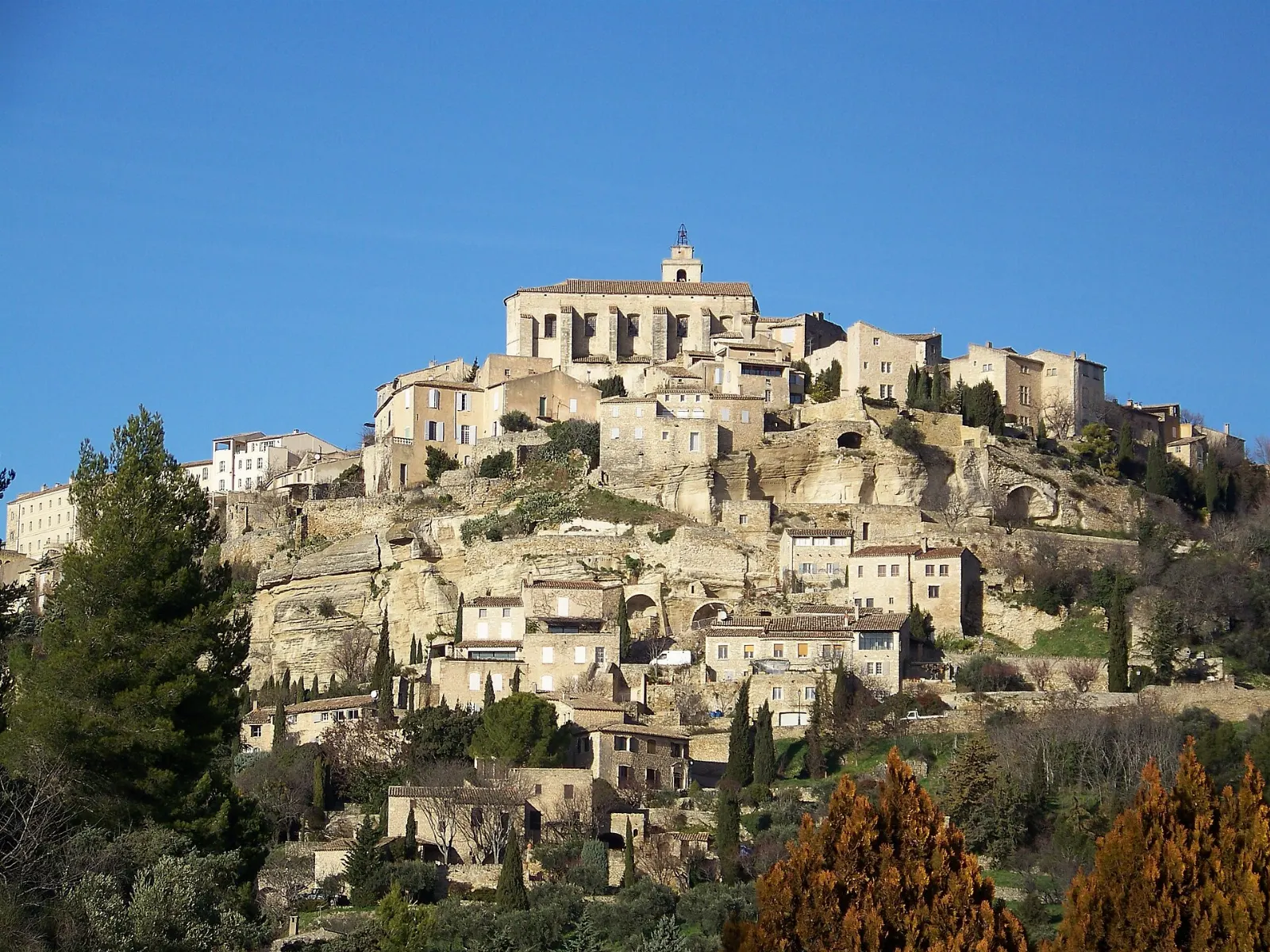
Stone houses of Gordes stacked on a hillside below a castle and church, Provence, France

Gordes and Senanque Abbey

Gordes spills down a hillside below a Renaissance castle, its stone houses glowing in the afternoon sun. The classic view is from the road as you approach from the south.

Gordes is a hilltop village of pale stone houses overlooking the Luberon valley. Photo: Einaz80, Wikimedia Commons, CC BY-SA 4.0
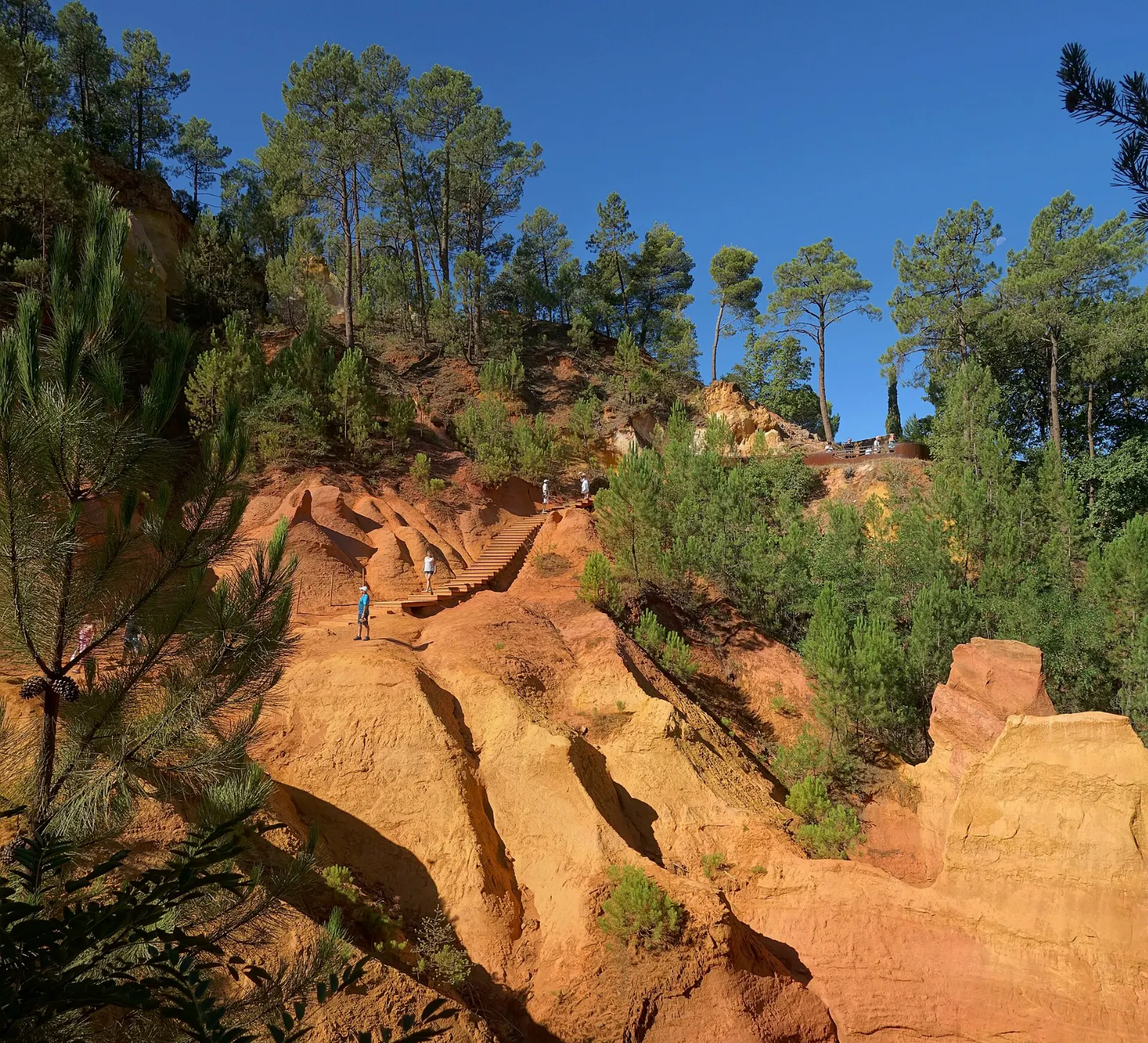
Orange and red ochre cliffs and pine trees along a walking trail in Roussillon, Provence, France

Roussillon and the Ochre Trail

Roussillon sits atop some of the largest ochre deposits in the world, and its houses are painted in every shade from pale yellow to deep red.

The Ochre Trail in Roussillon winds past cliffs of red and orange pigment-rich earth. Photo: Velvet, Wikimedia Commons, CC BY-SA 4.0
L'Isle-sur-la-Sorgue

Built around branches of the clear Sorgue river, with old water wheels still turning, L'Isle-sur-la-Sorgue is one of the largest antiques centers in France outside Paris. On Sundays the antique dealers are joined by a lively market along the canals.

The Alpilles, Arles and the Camargue

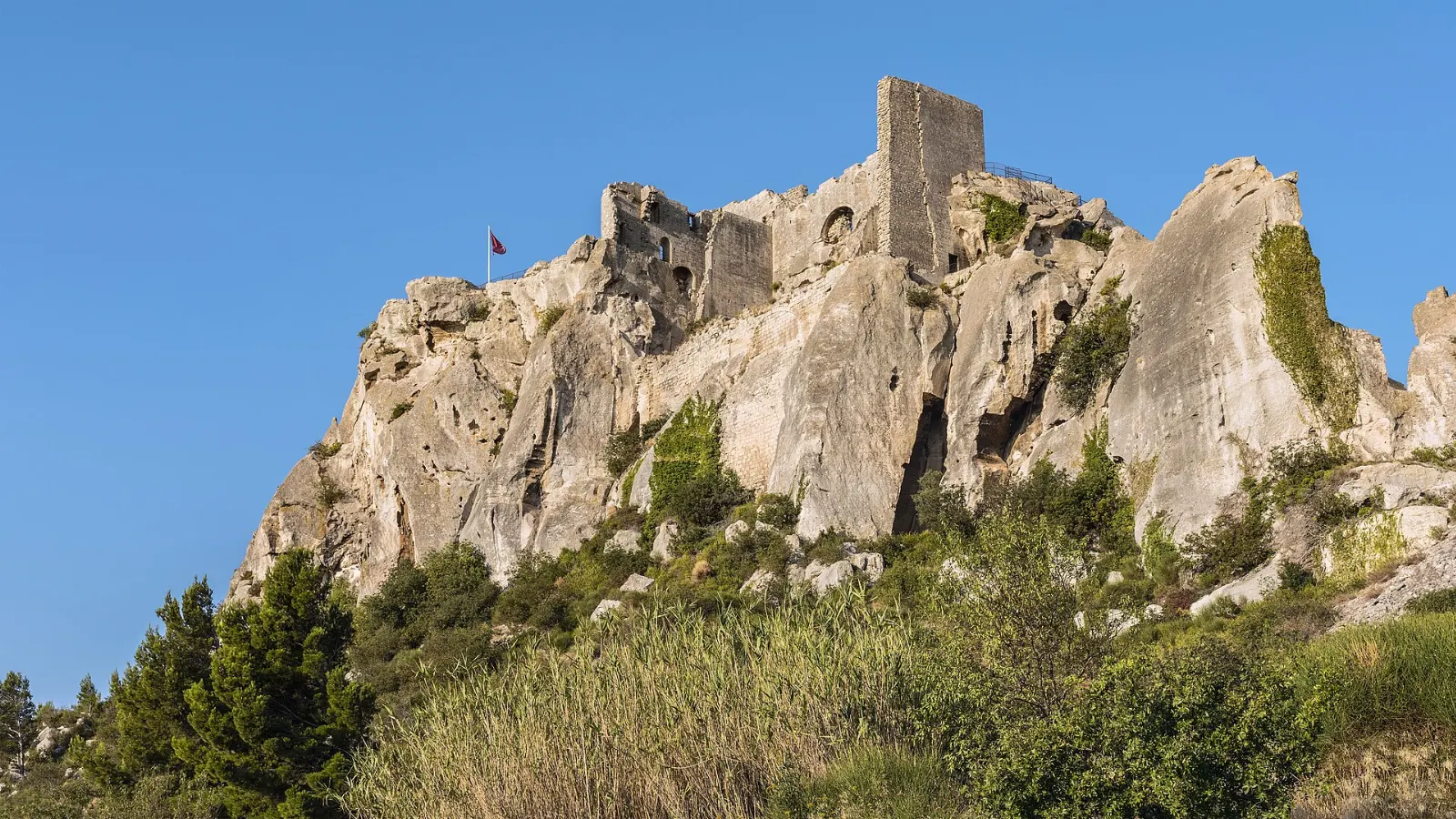
Ruins of a medieval castle on a rocky spur above the village of Les Baux-de-Provence, France

Saint-Remy-de-Provence and Les Baux

Saint-Remy is an elegant market town at the foot of the Alpilles hills. Van Gogh spent a year at the Saint-Paul-de-Mausole asylum just outside town, where he painted some of his most famous works, and you can visit the cloister and a recreation of his room. Across the road lie the ruins of Glanum, an ancient Greek and Roman town.

The ruined castle of Les Baux-de-Provence sits on a limestone outcrop in the Alpilles. Photo: Christian Ferrer, Wikimedia Commons, CC BY-SA 4.0
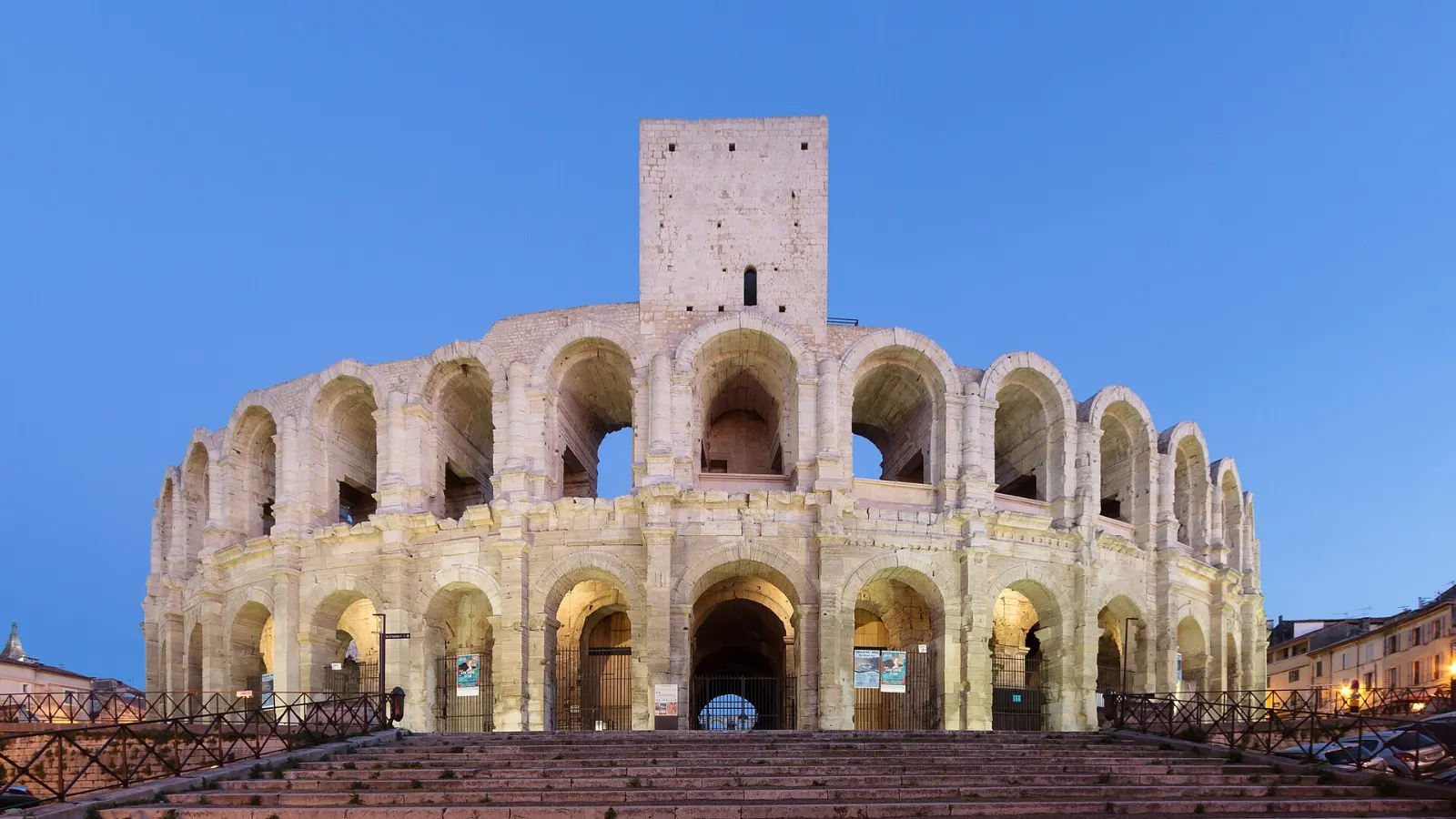
Two-tiered Roman amphitheatre with arched arcades in the center of Arles, Provence, France

Arles

Arles is a compact riverside town full of Roman monuments, including a well-preserved amphitheatre that still hosts events and an ancient theatre nearby. Van Gogh lived here in 1888 and 1889, painting hundreds of works, and a trail of panels marks the places he depicted.

The Roman amphitheatre in Arles still hosts events nearly two thousand years after it was built. Photo: PierreSelim, Wikimedia Commons, CC BY 3.0

Flock of pink flamingos wading in a shallow lagoon in the Camargue, Provence, France

The Camargue

South of Arles, the Rhone splits into a wide delta of marshes, rice fields and salt pans known as the Camargue. It is famous for pink flamingos, white horses and black bulls, and for the seaside pilgrimage town of Saintes-Maries-de-la-Mer. The Pont de Gau ornithological park offers easy walking trails among the lagoons with close views of birds.

Greater flamingos gather in the shallow lagoons of the Camargue delta. Photo: Giles Laurent, Wikimedia Commons, CC BY-SA 4.0
Aix-en-Provence and the Verdon

Tree-lined Cours Mirabeau boulevard with cafes and a mossy fountain in Aix-en-Provence, France

Aix-en-Provence

Aix is the refined university city of Provence, known for its fountains, ochre mansions and leafy Cours Mirabeau, where cafes spill onto the pavement beneath plane trees. The old town is a maze of lanes and squares with daily food and flower markets.

The Cours Mirabeau is the plane-tree-lined main avenue of Aix-en-Provence. Photo: JM Campaner, Wikimedia Commons, CC BY-SA 3.0

Valensole Plateau

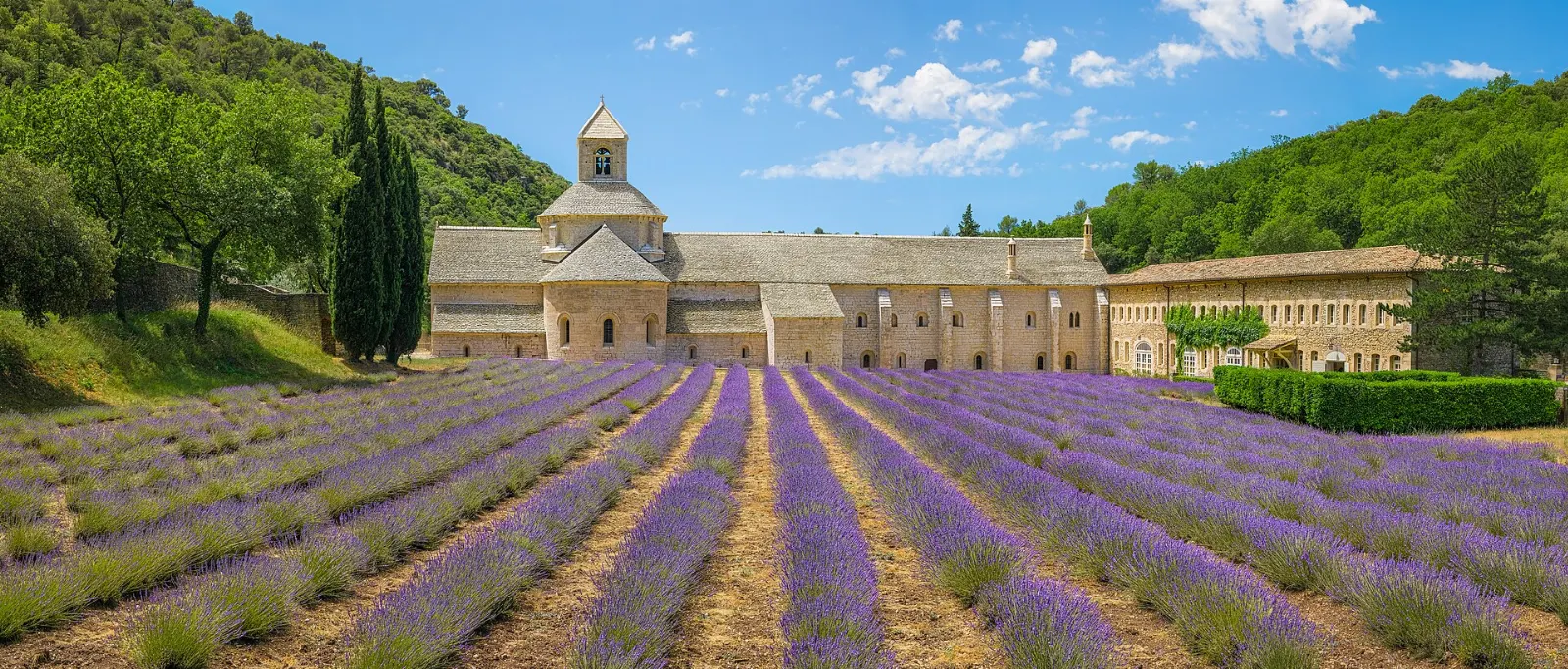
Northeast of Aix, the high Valensole plateau holds some of the most extensive lavender and lavandin fields in Provence, striped with long purple rows and fields of sunflowers. Allow two hours as part of a drive.

Turquoise river winding through the deep limestone walls of the Gorges du Verdon, Provence, France

Gorges du Verdon and Moustiers-Sainte-Marie

The Verdon river has cut a canyon hundreds of meters deep through the limestone, and its turquoise water is unforgettable. You can drive the Route des Cretes for clifftop viewpoints or rent an electric boat or kayak on the Lac de Sainte-Croix and paddle into the mouth of the gorge.

The Verdon river has carved a deep limestone canyon in upper Provence. Photo: Dirk Beyer, Wikimedia Commons, CC BY-SA 3.0

Food and local flavors

Provencal cooking is built on olive oil, garlic, tomatoes and herbs such as thyme, rosemary and savory.

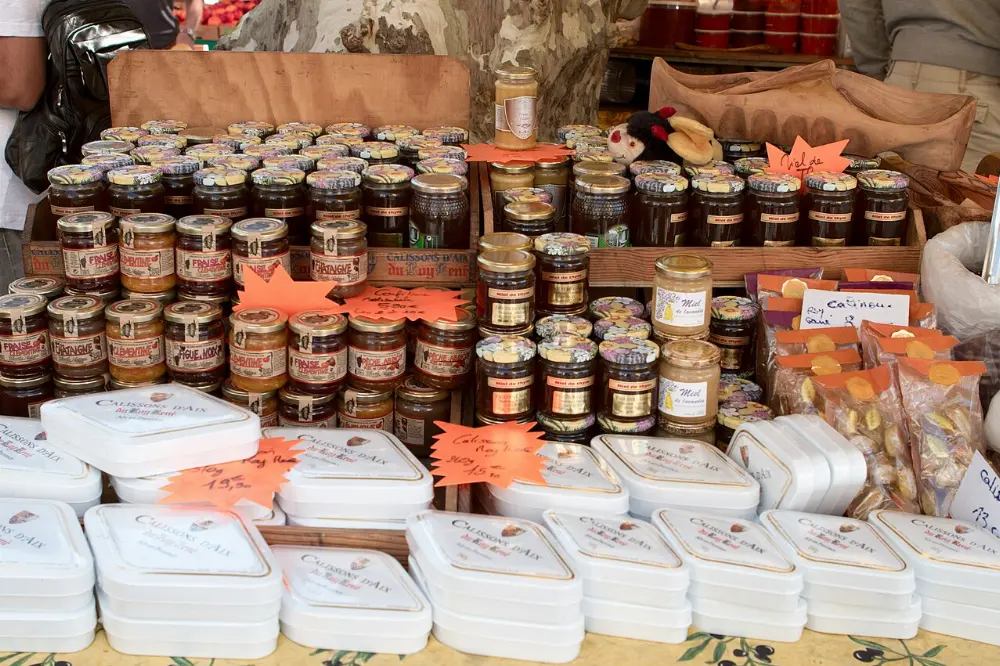
Sweet treats include calissons, almond and candied melon confections from Aix, and nougat. Cavaillon is famous for melons, Carpentras for strawberries, and winter brings black truffle markets in the Vaucluse.

Popular dishes to try in Provence

Bouillabaisse in Provence, France
Bouillabaisse On the coast, Marseille is the home of bouillabaisse, a rich fish stew.Photo: Sergey A. Demidov, Wikimedia Commons, CC BY 4.0
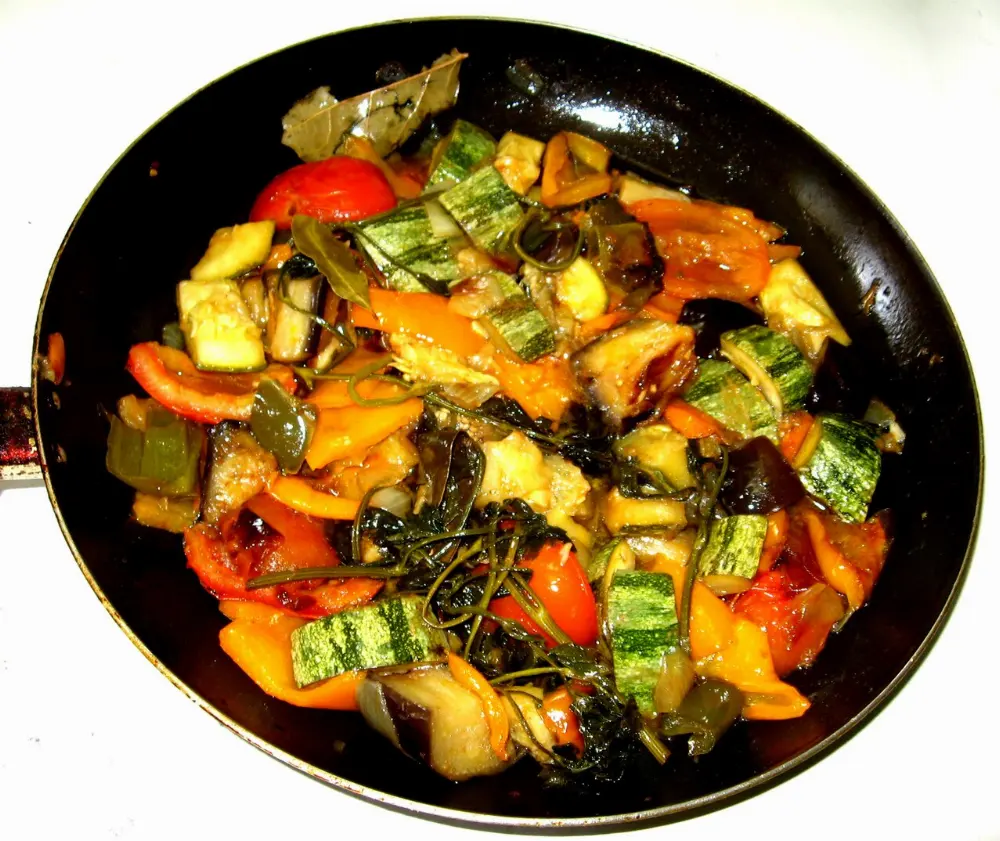
Ratatouille in Provence, France
Ratatouille Look for ratatouille and tians of baked vegetables, daube provencale, a slow-cooked beef stew with wine, and aioli, a garlicky mayonnaise traditionally served with salt cod and…Photo: Marcus Guimarães, Wikimedia Commons, CC BY 2.0
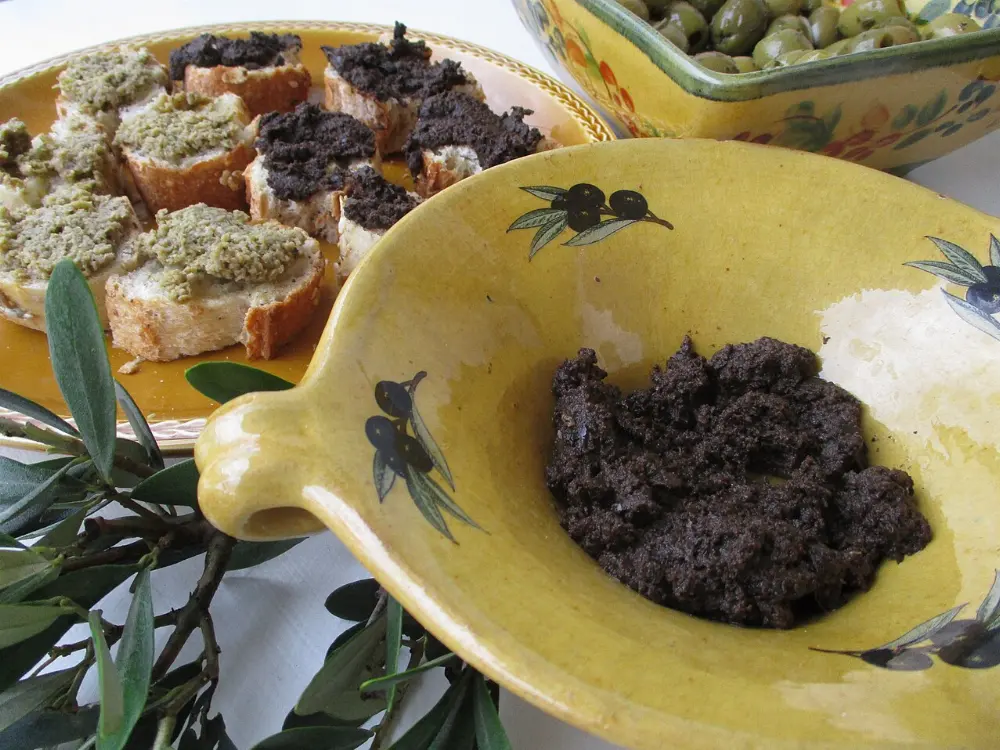
Tapenade in Provence, France
Tapenade Tapenade, made from olives and capers, appears on every aperitif table, and fougasse is the region's leaf-shaped bread.Photo: Arnaud 25, Wikimedia Commons, CC BY-SA 4.0
Calisson in Provence, France
Calisson Sweet treats include calissons, almond and candied melon confections from Aix, and nougat.Photo: Georges Seguin (Okki), Wikimedia Commons, CC BY-SA 3.0

Where to stay

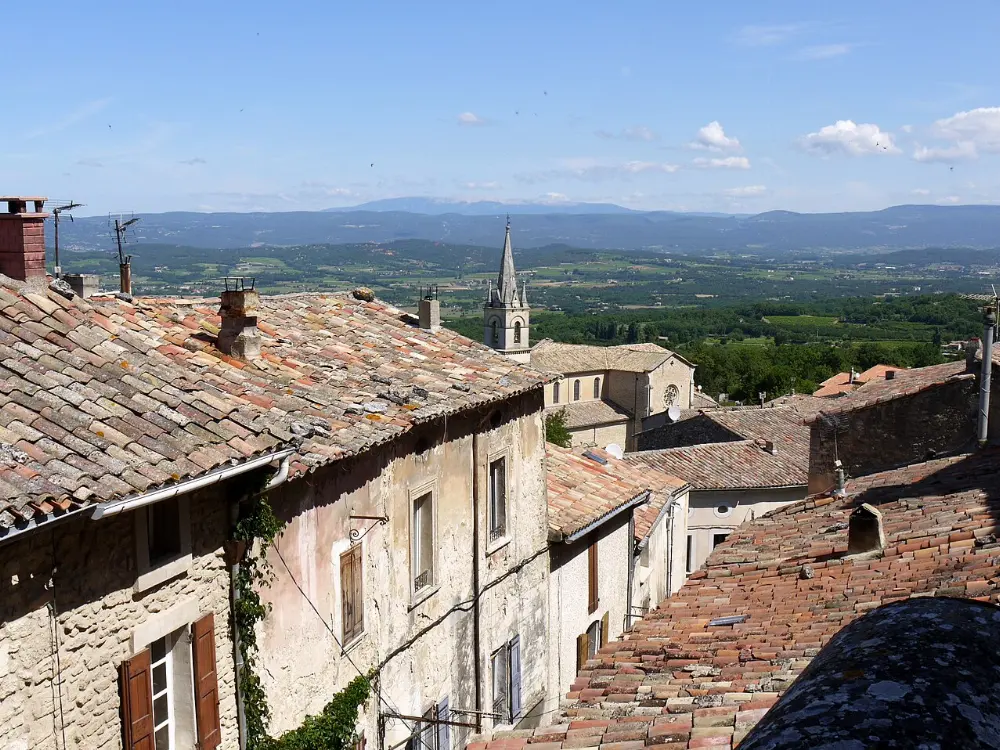
Avignon is the most practical base without a car, with train connections, restaurants and easy day trips. The Luberon villages, such as Gordes, Lourmarin and Bonnieux, suit couples looking for rural guesthouses with pools and views. Saint-Remy-de-Provence is a good central base for the Alpilles, Arles and Avignon.

Where to stay in Provence

Bonnieux, Provence, France
Bonnieux The Luberon villages, such as Gordes, Lourmarin and Bonnieux, suit couples looking for rural guesthouses with pools and views.Photo: Pline, Wikimedia Commons, CC BY-SA 3.0
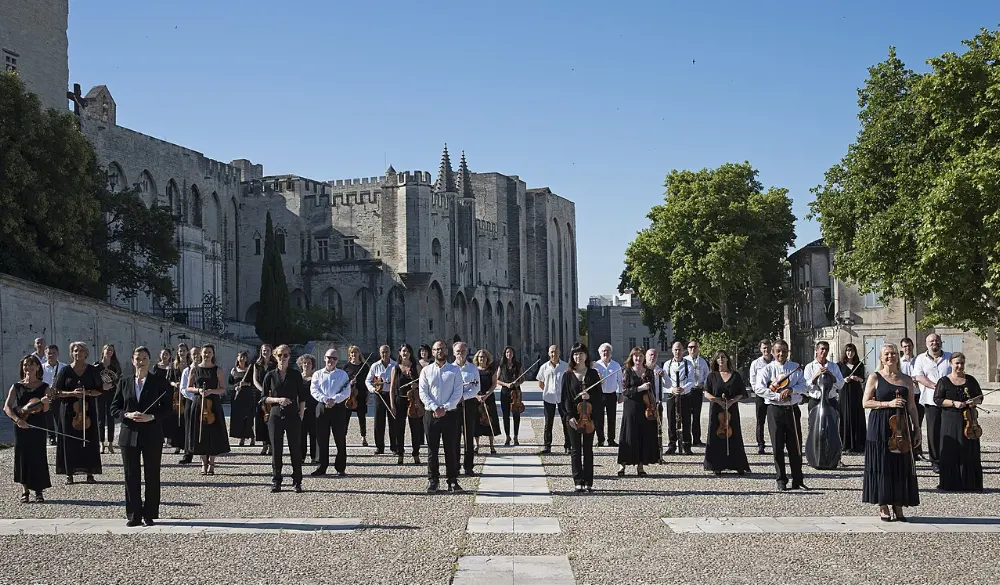
Avignon, Provence, France
Avignon Where to stayAvignon is the most practical base without a car, with train connections, restaurants and easy day trips.Photo: OrchestreAvignon, Wikimedia Commons, CC BY-SA 4.0

Camargue, Provence, France
Camargue Arles suits culture lovers and those heading to the Camargue.Photo: Giles Laurent, Wikimedia Commons, CC BY-SA 4.0
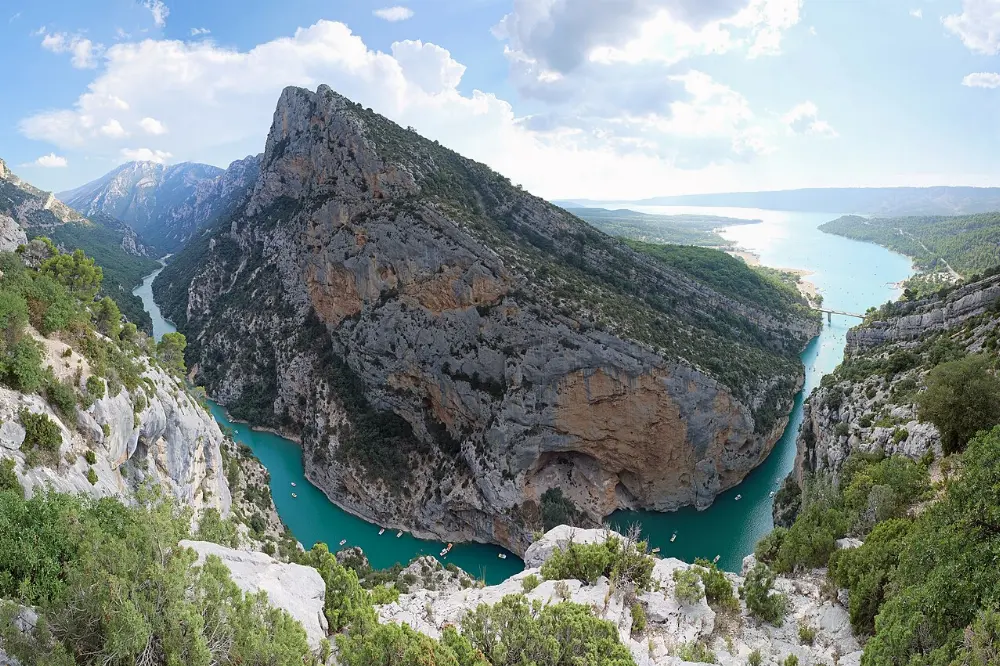
Verdon, Provence, France
Verdon Aix-en-Provence is best for city life, dining and access to the Verdon and Marseille.Photo: kallerna, Wikimedia Commons, CC BY-SA 4.0
Best time to visit

Spring (April to June) brings green hills, wildflowers and pleasant temperatures. Lavender usually blooms from late June to mid-July, with the higher Valensole plateau peaking a little later than the Luberon; most fields are harvested by early August.

Getting there and getting around

High-speed TGV trains run from Paris to Avignon TGV and Aix-en-Provence TGV stations in around three hours.

To explore the villages, a rental car is almost essential. Roads are good but narrow in the hills, and many villages require you to park in paid lots at the edge and walk in.

A suggested itinerary

First day

Explore Avignon, visiting the Palais des Papes, the Pont Saint-Benezet and the Rocher des Doms gardens, then dine in one of the old town squares.

Second day

Visit the Pont du Gard in the morning, then taste wine in Chateauneuf-du-Pape and see the Roman theatre in Orange.

Third day

Drive into the Luberon to see Gordes and Senanque Abbey, walk the Ochre Trail in Roussillon, and end with dinner in Lourmarin or Bonnieux.

Fourth day

Spend the morning at Saint-Remy and Les Baux, then continue to Arles for the afternoon and evening.

Fifth day

Explore the Camargue, then drive to Aix-en-Provence for two nights.

Sixth day

Take a full-day trip to the Valensole plateau and the Gorges du Verdon, stopping at Moustiers-Sainte-Marie.

Practical tips

  • Book accommodation and car rental well ahead for June through August.
  • Learn a few French greetings; saying bonjour when you enter a shop is expected.
  • Many shops and restaurants close in the early afternoon, and lunch is usually served from around noon until early afternoon.
  • Carry some cash for markets, small cafes and village parking machines.
  • Pack sunscreen, a hat and water in summer, as temperatures can be high.
  • Check fire-risk maps before hiking in summer, as some massifs close on dangerous days.
ProvenceWISERMAP PLACEProvence: photos, reviews & things to doSee traveler photos and reviews, or share your own →

More places to visit

All travel guides →