Plitvice Lakes National Park, Croatia · Travel guide
Plitvice Lakes Croatia Turquoise Waterfalls and Boardwalks
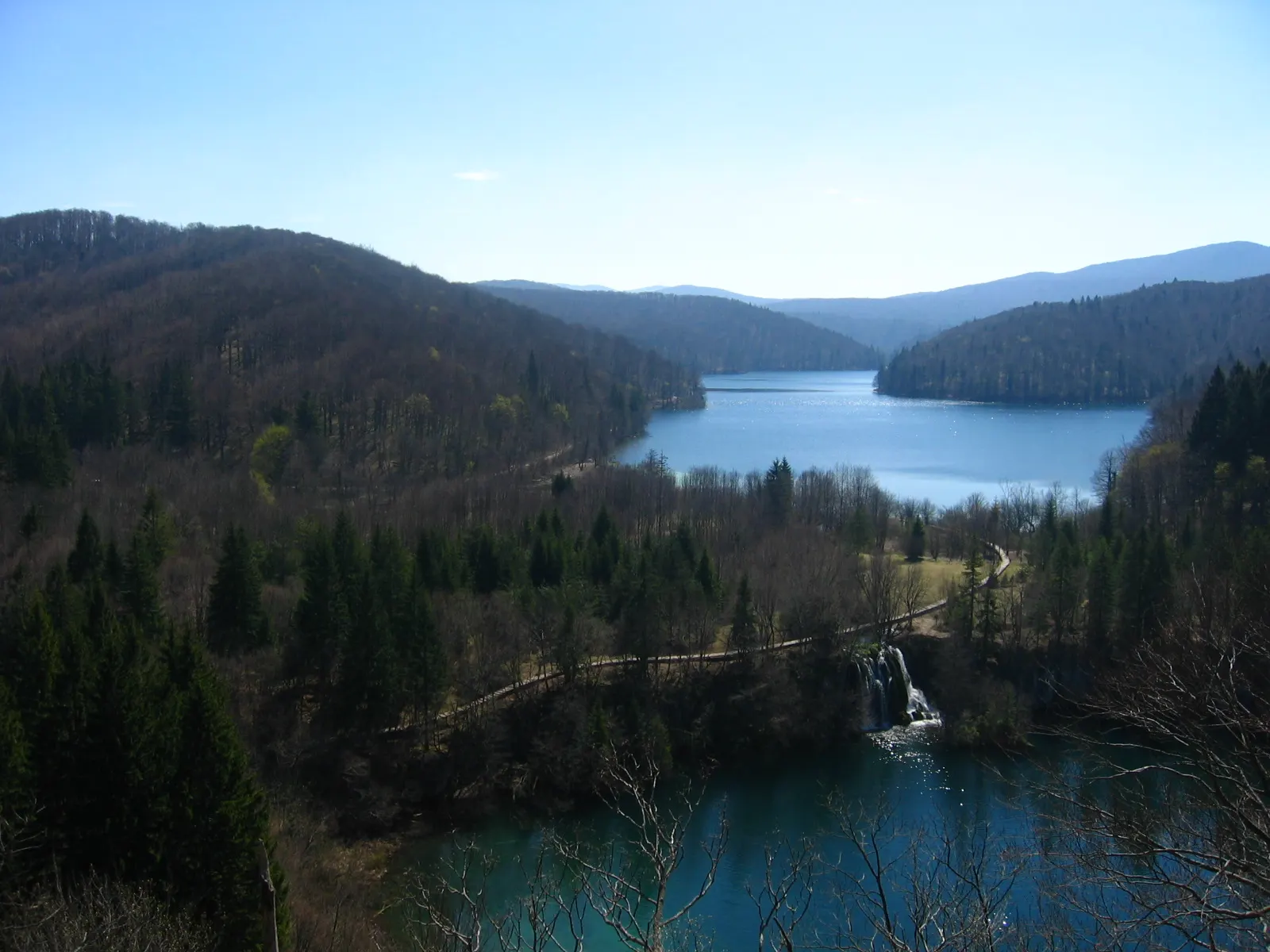
Plitvice Lakes National Park is a chain of sixteen visible lakes in the forested mountains of central Croatia, each spilling into the next over barriers of tufa, a porous rock built up by minerals and mosses.
By WiserMap TravelUpdated October 20269 places10 min read
Because the park is so popular, a good visit depends on planning: choosing the right entrance and route, arriving early, buying timed tickets and knowing what to expect in each season. This guide walks you through the best places to see inside the park and nearby, along with practical advice on food, lodging and transport.
At a glance Plitvice Lakes National Park
Best timeMay, June, September and October for strong waterfalls, mild weather and thinner crowds.
How longOne full day covers the highlights; two days lets you explore the Upper and Lower Lakes at an easy pace.
Getting thereAbout two hours by car from Zagreb or Zadar, with buses stopping at both park entrances.
Ad
Why visit Plitvice Lakes
The lakes are a living geological process. Since the end of the last ice age, calcium carbonate dissolved in the water has settled onto mosses and algae, forming tufa dams that grow a little each year.
The setting adds to the drama. The park covers nearly three hundred square kilometers of beech, fir and spruce forest in the Lika region, close to the border with Bosnia and Herzegovina, and shelters brown bears, wolves and many bird species.
The Lower Lakes and the great waterfall
Veliki Slap
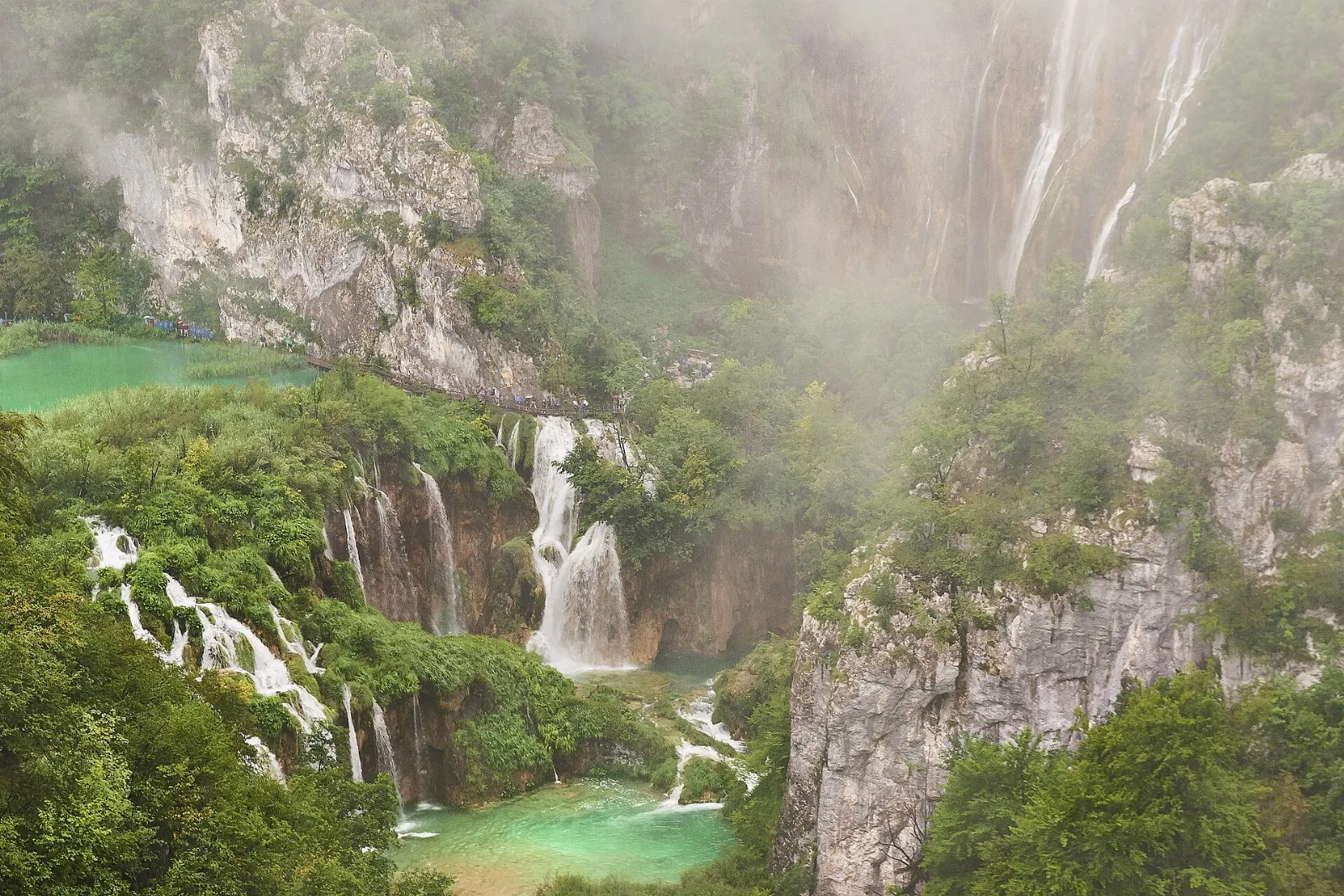
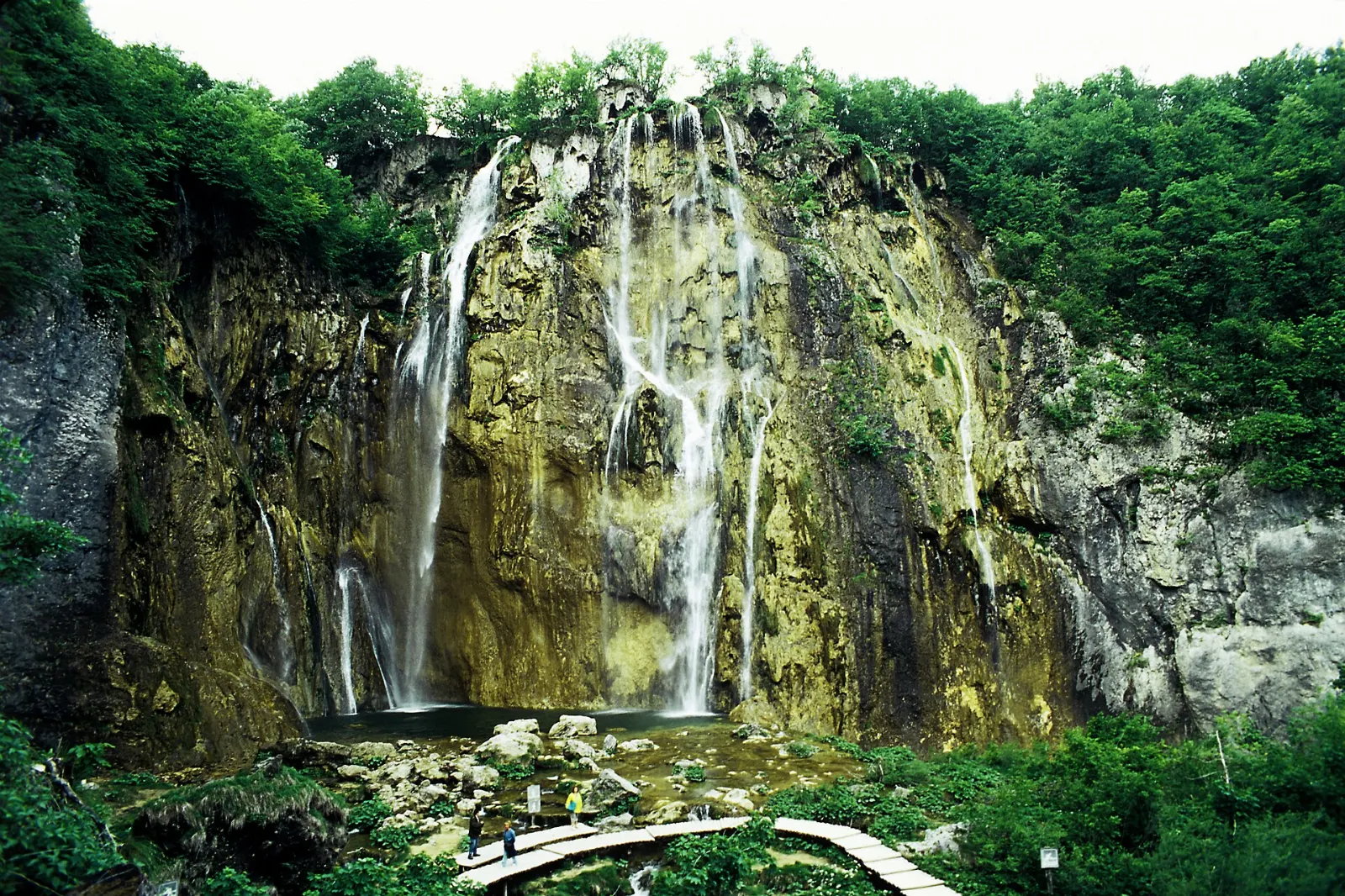
Veliki Slap, the Great Waterfall, is the park's most famous sight and the tallest waterfall in Croatia, dropping about seventy eight meters over a limestone cliff at the northern end of the lake system.
Veliki Slap, the Great Waterfall, is the tallest waterfall in Plitvice Lakes National Park. Photo: Falk2, Wikimedia Commons, CC BY-SA 4.0
The Lower Lakes canyon
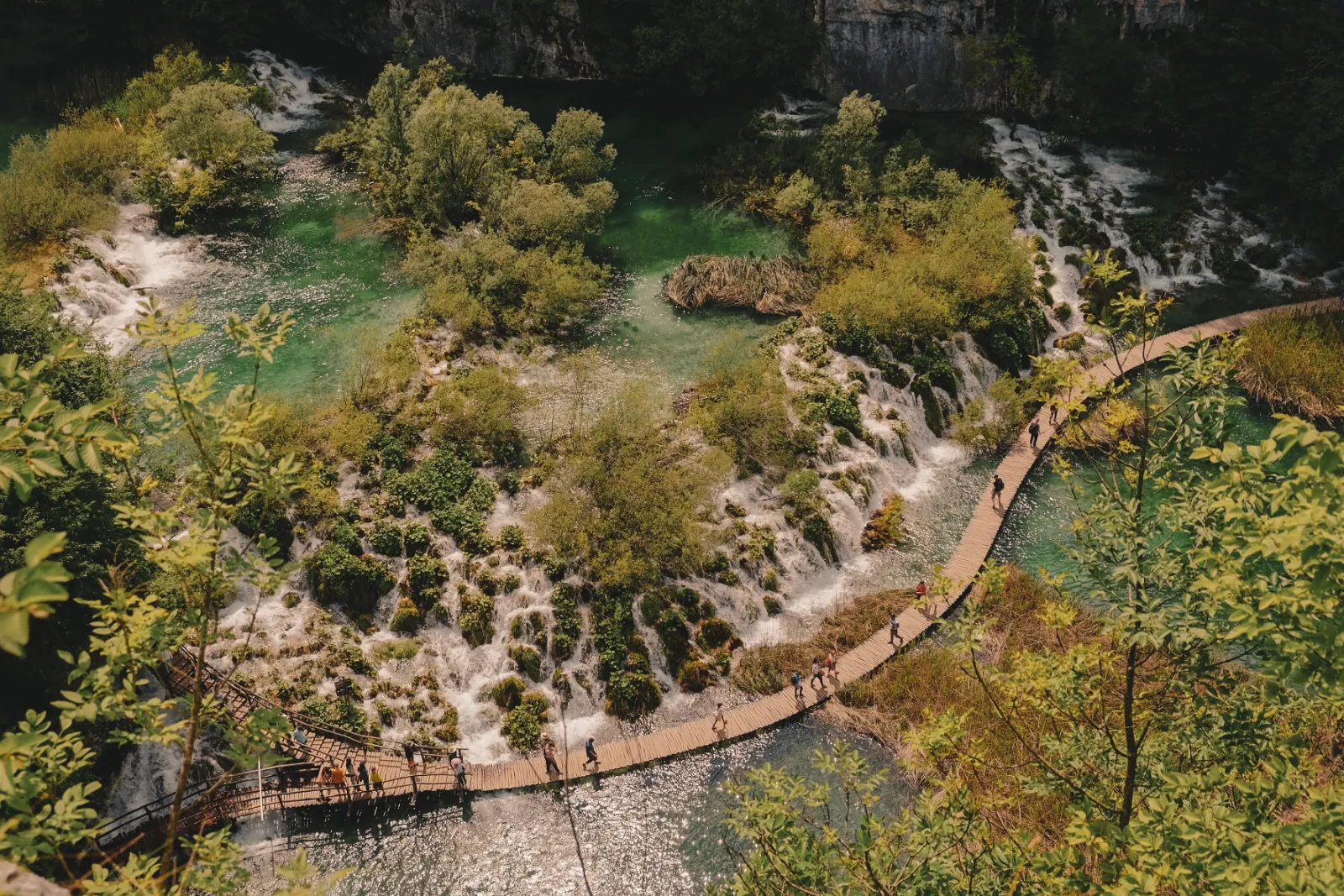
The four Lower Lakes, Novakovića Brod, Kaluđerovac, Gavanovac and Milanovac, sit in a narrow limestone canyon with steep walls, and boardwalks thread across the water just above the surface. You can see trout gliding through the clear water and small cascades on every side.
Wooden walkways lead visitors across the water through the limestone canyon of the Lower Lakes. Photo: Twiggiez, Wikimedia Commons, CC BY-SA 4.0
Kaluđerovac and Šupljara cave
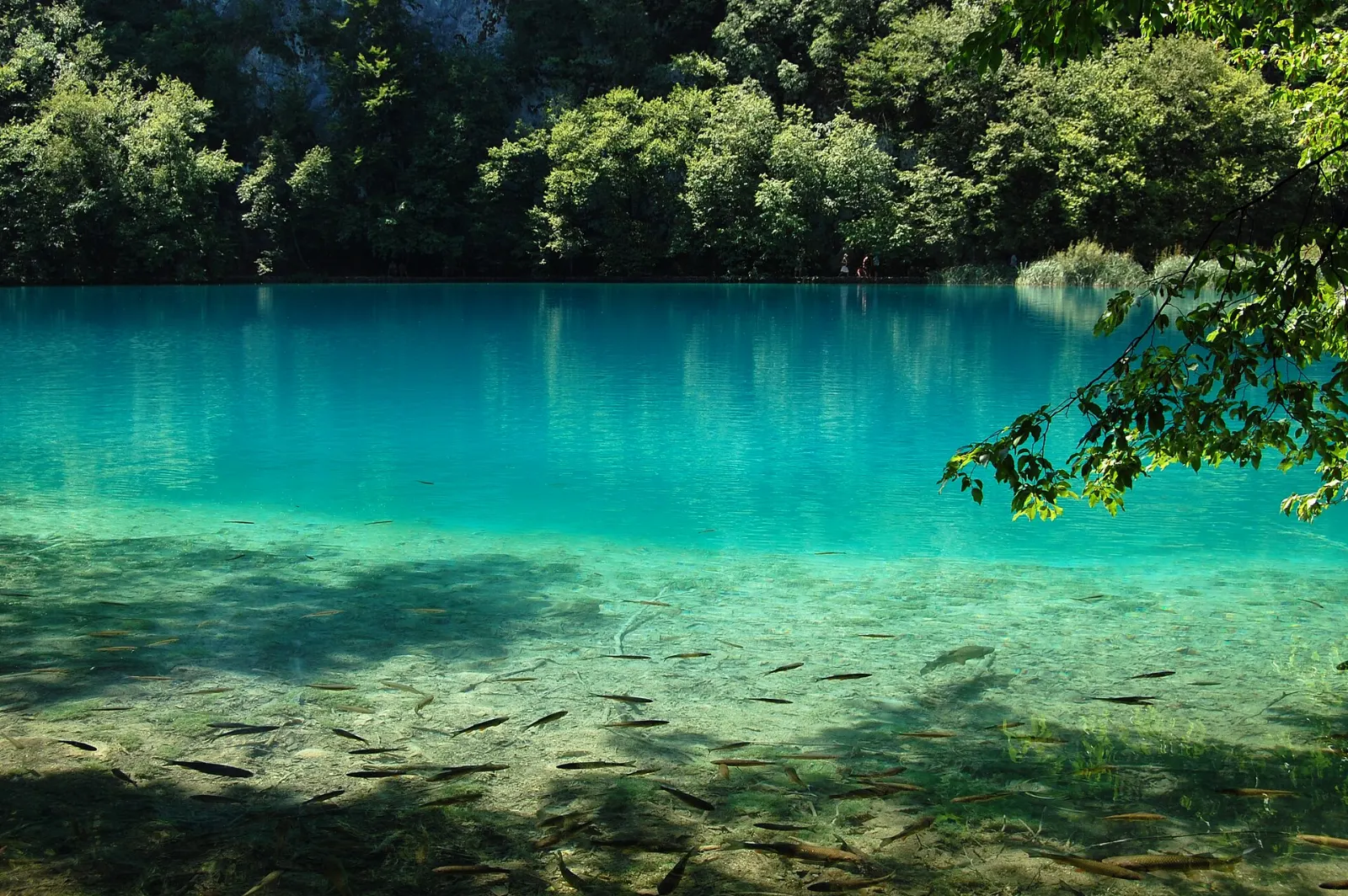
Kaluđerovac lake lies beneath tall cliffs, and above it a staircase leads into Šupljara, a cave with an opening that frames views back down over the lake. The cave and the steps give you a quick change of perspective from the lake level boardwalks.
Kaluđerovac is one of the four Lower Lakes set within a steep limestone canyon. Photo: Ferco20, Wikimedia Commons, CC BY-SA 3.0
Sastavci
At the far northern end of the park, the Sastavci cascades are where the water from the lakes tumbles out of the system and joins the Plitvica stream to form the Korana river. The falls spread across a wide, mossy rock face below Veliki Slap.
The Sastavci cascades mark the point where the lake waters flow out into the Korana river. Photo: Naval S from Berlin, Wikimedia Commons, CC BY 2.0
Ad
Kozjak and the Upper Lakes
Lake Kozjak
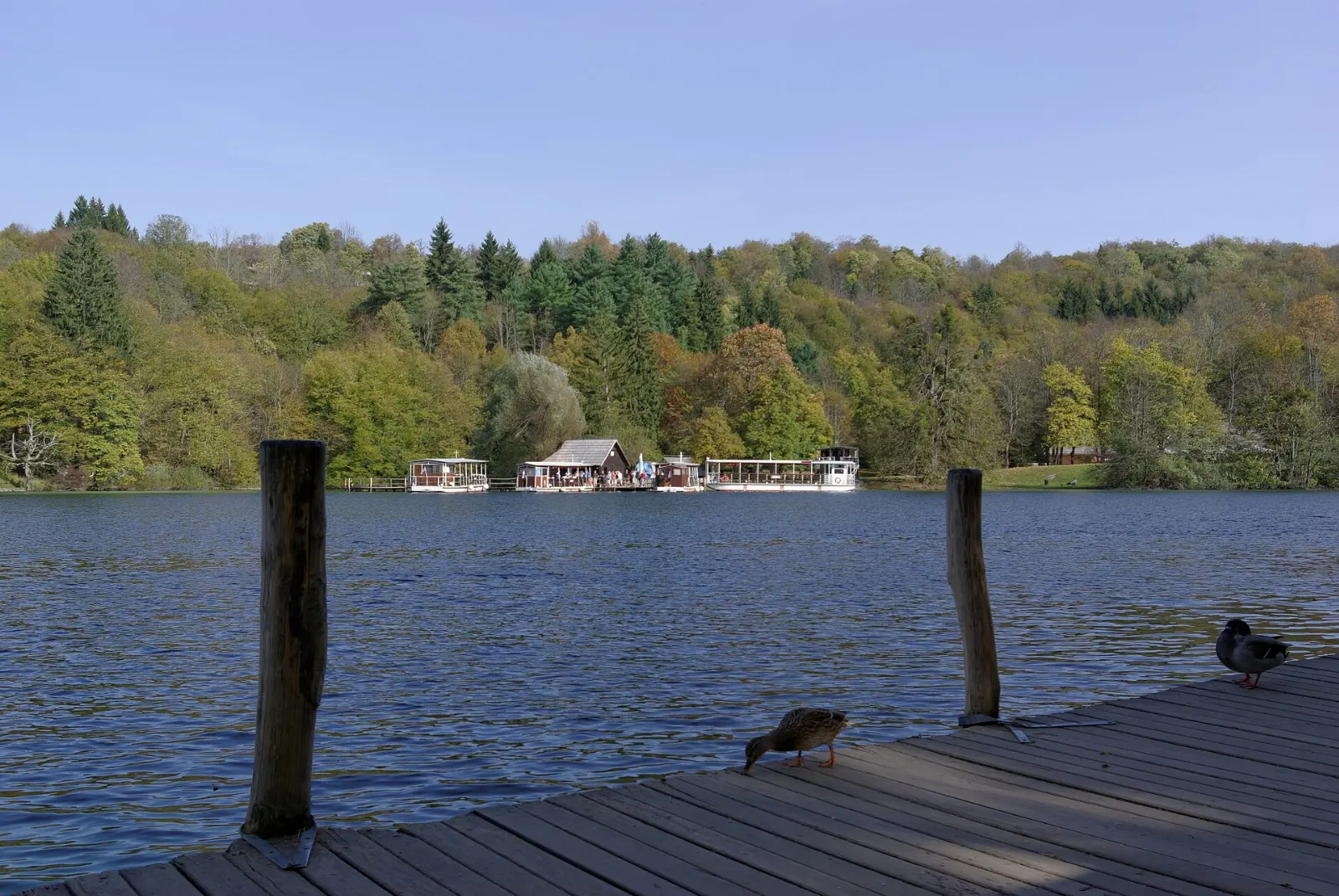
Kozjak is the largest and deepest lake in the park, at about forty seven meters deep, and it links the Lower and Upper Lakes. Quiet electric boats, included in the park ticket, cross the lake between landing points, and a shoreline trail lets you walk instead.
Electric boats cross Kozjak, the largest and deepest lake in the park. Photo: Berthold Werner, Wikimedia Commons, CC BY-SA 3.0
Galovac
The Upper Lakes are broader and more open than the Lower Lakes, set in gentle forested slopes with long chains of cascades.
Galovac in the Upper Lakes is known for its many small cascades spilling over tufa barriers. Photo: Michal Klajban, Wikimedia Commons, CC BY-SA 3.0
Veliki Prštavac and Gradinsko jezero
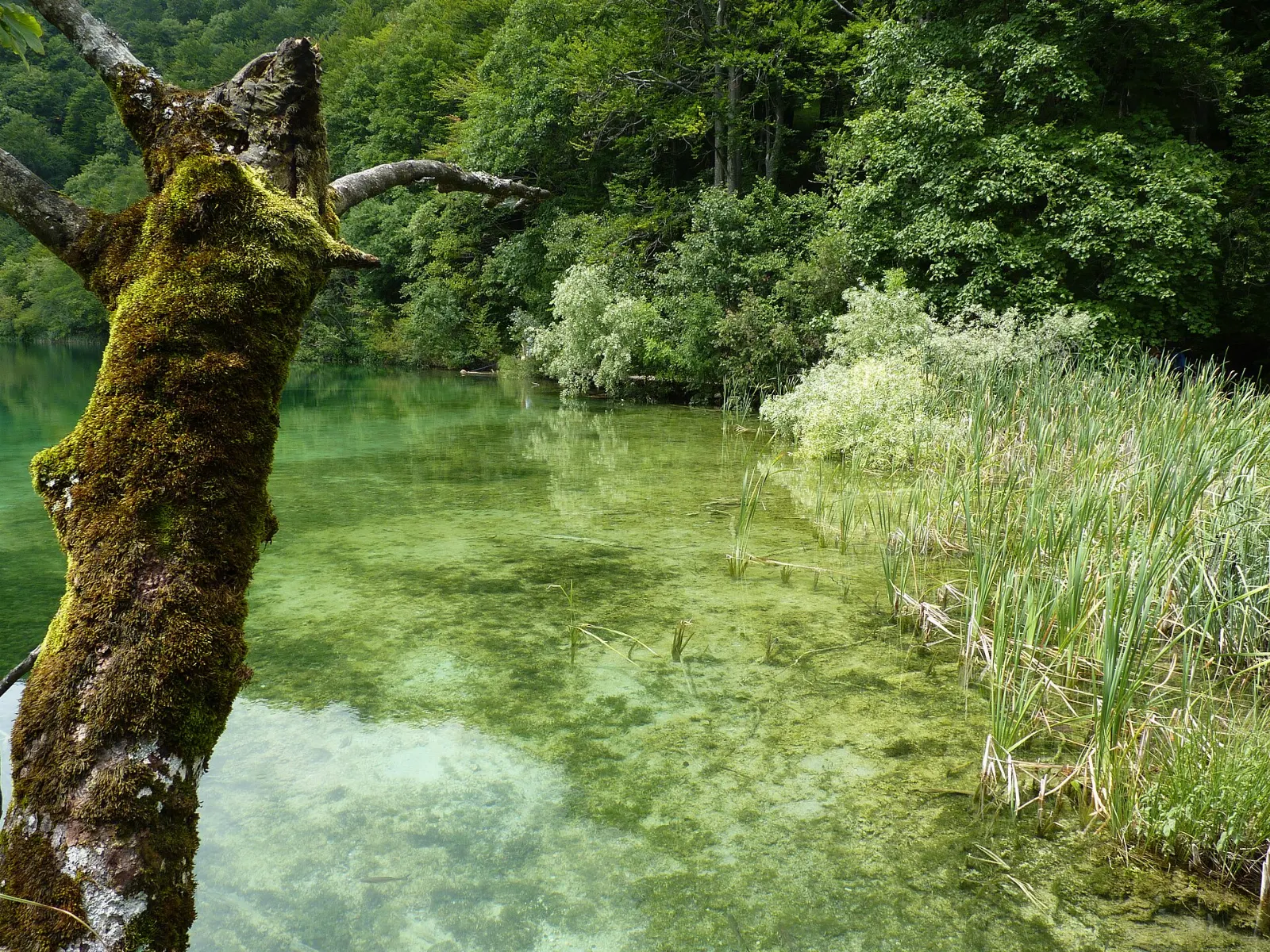
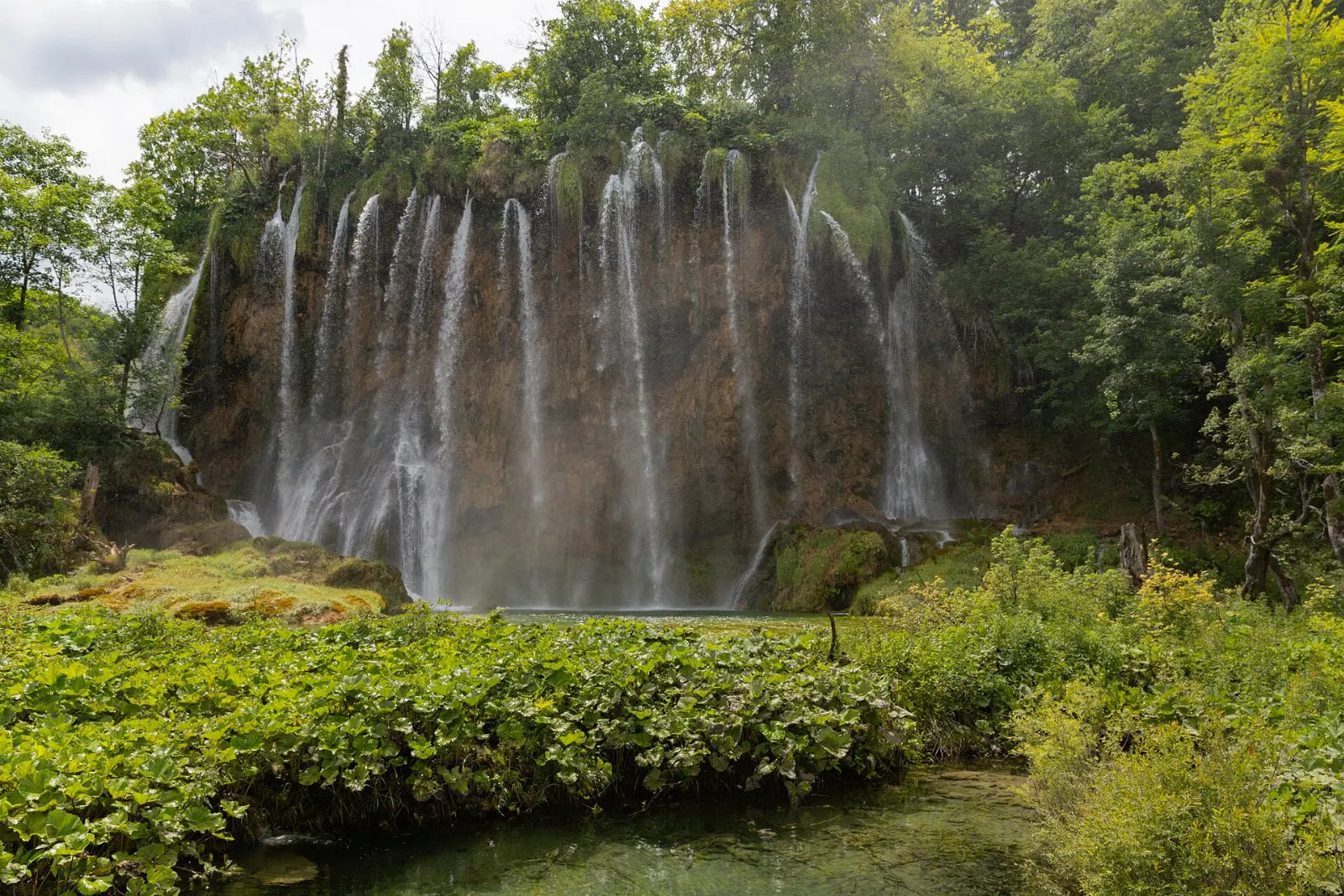
Above Galovac, the trail climbs past Gradinsko jezero, a calm lake fringed by reeds, and Veliki Prštavac, a broad waterfall that falls through the forest in white sheets. Smaller lakes such as Okrugljak and Batinovac follow in quick succession, each with its own cascade.
Veliki Prštavac is one of the most striking waterfalls among the Upper Lakes. Photo: dronepicr, Wikimedia Commons, CC BY 2.0
Prošćansko jezero and Labudovac
At the top of the system, Prošćansko jezero is the second largest lake, a long, quiet body of water surrounded by forest, and nearby Labudovac waterfall spills into the lakes below. Far fewer people walk this far, and the atmosphere is calm.
Prošćansko jezero is the highest of the large lakes and the second largest in the park. Photo: Minestrone, Wikimedia Commons, Public domain
Beyond the park
Rastoke
About thirty kilometers north of the park, the village of Rastoke in the town of Slunj sits where the Slunjčica river tumbles into the Korana over a series of small falls. Old wooden houses and restored watermills stand directly above the cascades, giving you a smaller and more intimate version of the Plitvice landscape.
Rastoke in Slunj is known for its old watermills built where the Slunjčica river meets the Korana. Photo: MarioCRO, Wikimedia Commons, CC BY 3.0
Barać Caves
Near Rakovica, a short drive north of Entrance 1, the Barać Caves are a show cave system with guided tours through chambers decorated with stalactites and stalagmites. They make a good addition on a rainy day or when the park is crowded.
Ad
Food and local flavors
The park lies in the Lika region, known for hearty mountain cooking rather than the seafood of the coast. Look for roast lamb and spit roasted meats, often cooked at roadside restaurants along the main road between Slunj, Rakovica and the park.
Freshwater trout appears on many menus, usually grilled with garlic and olive oil, and škripavac, a young, mild cow's milk cheese that squeaks when you bite it, is a local specialty.
Popular dishes to try in Plitvice Lakes National Park
Trout Freshwater trout appears on many menus, usually grilled with garlic and olive oil, and škripavac, a young, mild cow's milk cheese that squeaks when you bite it, is a local…Photo: Thomon, Wikimedia Commons, CC BY-SA 4.0Peka Lika potatoes, grown in the region's cool fields, are prized across Croatia and often served roasted with meat or cooked under a peka, a bell shaped iron lid covered with embers.Photo: Boris Kuhar, Wikimedia Commons, Public domainLamb Look for roast lamb and spit roasted meats, often cooked at roadside restaurants along the main road between Slunj, Rakovica and the park.Photo: Acabashi, Wikimedia Commons, CC BY-SA 4.0
Where to stay
Staying overnight near the park is the single best way to beat the day tour crowds, because you can be at the gate when it opens. A few hotels run by the park sit close to Entrance 2, and guests can often extend a one day ticket to cover their stay, so check the details when you book.
Villages near Entrance 2, such as Mukinje and Jezerce, suit travelers who want to start with the Upper Lakes and walk down. Villages near Entrance 1, such as Rastovača and Grabovac, put you closest to Veliki Slap and the Lower Lakes and suit early risers chasing photographs.
Where to stay in Plitvice Lakes National Park
Jezerce Villages near Entrance 2, such as Mukinje and Jezerce, suit travelers who want to start with the Upper Lakes and walk down.Photo: This file is available under Creative Commons BY-SA license. Basica…, Wikimedia Commons, CC BY-SA 4.0Grabovac Villages near Entrance 1, such as Rastovača and Grabovac, put you closest to Veliki Slap and the Lower Lakes and suit early risers chasing photographs.Photo: No machine-readable author provided. INSAR assumed (based on copyri…, Wikimedia Commons, Public domainVeliki Slap Villages near Entrance 1, such as Rastovača and Grabovac, put you closest to Veliki Slap and the Lower Lakes and suit early risers chasing photographs.Photo: dronepicr, Wikimedia Commons, CC BY 2.0Lower Lakes Villages near Entrance 1, such as Rastovača and Grabovac, put you closest to Veliki Slap and the Lower Lakes and suit early risers chasing photographs.Photo: Twiggiez, Wikimedia Commons, CC BY-SA 4.0
Ad
Best time to visit
Spring, from April to June, brings the most water, as snowmelt and rain feed the falls, along with fresh green forest.
Winter is quiet and sometimes spectacular, with snow on the trees and frozen cascades, but some trails, boats and the panoramic train may not operate, and the park can close sections because of ice.
Getting there and getting around
The park lies on the D1 road between Zagreb and the Dalmatian coast. Drivers reach it in roughly two hours from Zagreb, Zadar or Rijeka, and about three hours from Split, leaving the A1 motorway and continuing on regional roads.
The park has two main entrances about three kilometers apart. Entrance 1, in the north, is closest to Veliki Slap and the Lower Lakes and is usually busier.
Ad
A suggested itinerary
First day
Enter at Entrance 1 at your timed slot as early as possible. Take in the view of Veliki Slap from above, walk down through the Lower Lakes canyon past Kaluđerovac and Šupljara, visit Sastavci and the base of the great waterfall, then follow the trail along Kozjak and cross the lake by electric boat.
Second day
Return through Entrance 2 for the Upper Lakes. Take the shuttle or train to the top near Prošćansko jezero and Labudovac, then walk downhill past Veliki Prštavac, Gradinsko jezero and Galovac to Kozjak.
Practical tips
Buy timed tickets online in advance, particularly for summer weekends, and arrive at opening time to enjoy the boardwalks before tour groups.
Swimming in the lakes is strictly forbidden, as is feeding fish or wildlife and leaving the marked paths.
Wear sturdy, non slip shoes; boardwalks are often wet and uneven, and some sections have no railings.
Bring water, snacks and rain gear, since food stops are few and storms can arrive quickly.
Carry some cash for small purchases in villages, although cards are widely accepted at the entrances.
Check official park notices for route closures, especially in winter and after heavy rain.