Cartagena Colombia Walled City Getsemaní and Rosario Islands
Cartagena de Indias is the Caribbean city that many travellers picture when they imagine Colombia: bougainvillea spilling over wooden balconies, church bells over shaded plazas, coral-stone walls holding back the sea and evenings that stay warm long after sunset.
By WiserMap TravelUpdated October 20269 places11 min read
Beyond the walls, the city is large and modern, with high-rise beach districts, a busy port and islands scattered offshore.
At a glance Cartagena
Best timeDecember to April is driest; avoid the busiest holiday weeks if you dislike crowds.
How longThree to four days for the city, plus a day for the islands.
Getting thereRafael Núñez International Airport is only a short taxi ride from the Old Town.
Ad
Why visit Cartagena
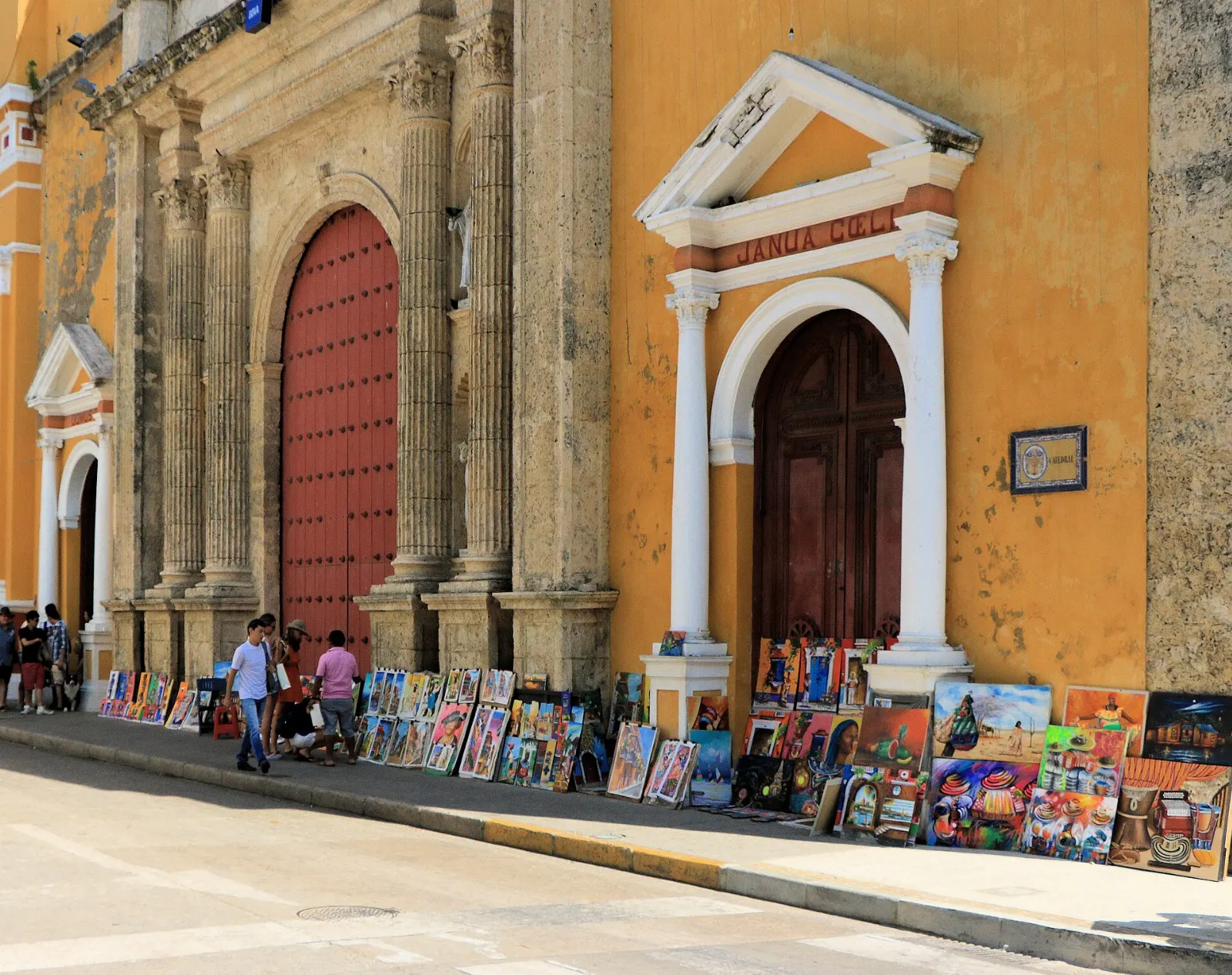
Few cities in the Americas show their colonial past as clearly as Cartagena. The port, its walls and its forts form a UNESCO World Heritage Site, and the scale of the defences tells the story of a city that pirates, privateers and rival empires all tried to take.
It is also a city with a complex history. Cartagena was a major entry point for enslaved Africans, and Afro-Colombian culture shapes its music, food and neighbourhoods to this day.
The walled city: Centro and San Diego
Puerta del Reloj and Plaza de los Coches
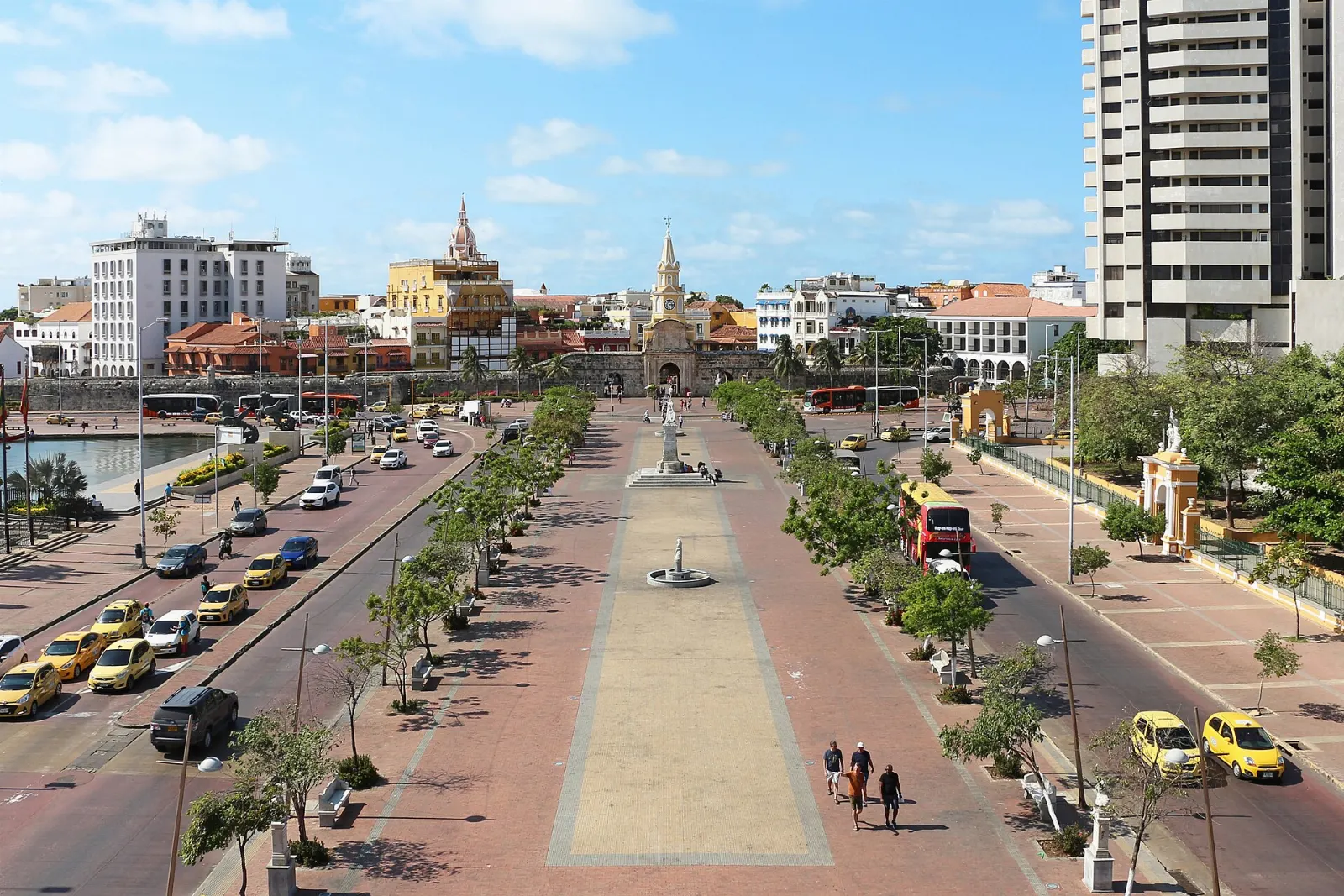
Most visits begin at the clock tower gate, the main entrance to the walled city from the busy Camellón de los Mártires.
The clock tower gate, Puerta del Reloj, is the main entrance to the walled city from Camellón de los Mártires. Photo: Bernard Gagnon, Wikimedia Commons, CC BY-SA 4.0
Plaza de Bolívar and the Palace of the Inquisition
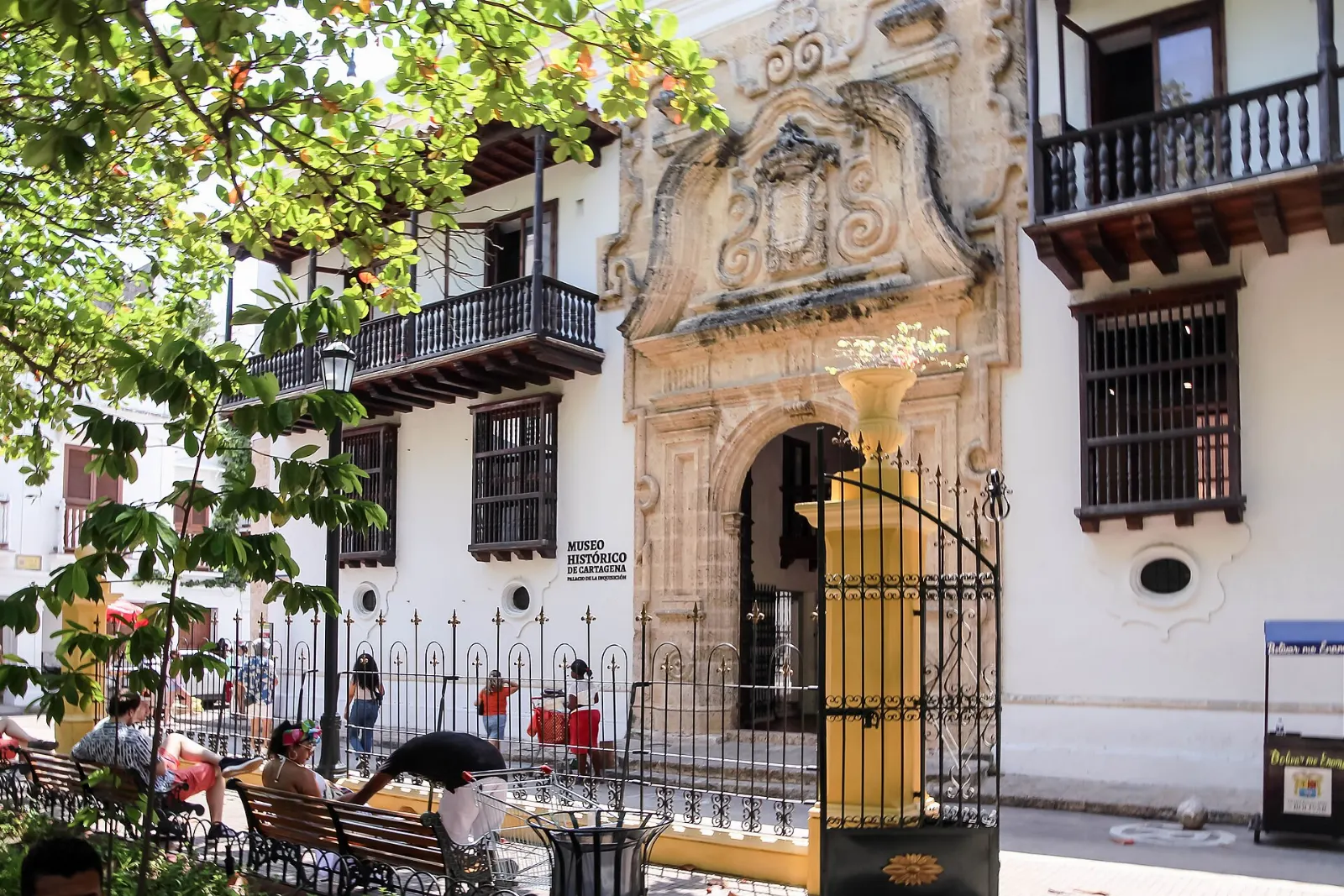
A few blocks inland, shady Plaza de Bolívar is the calmest square in the Old Town, with an equestrian statue of Simón Bolívar and benches under big trees. On one side stands the Palace of the Inquisition, where the colonial tribunal for the region sat; it is now a museum on the Inquisition and the city's history.
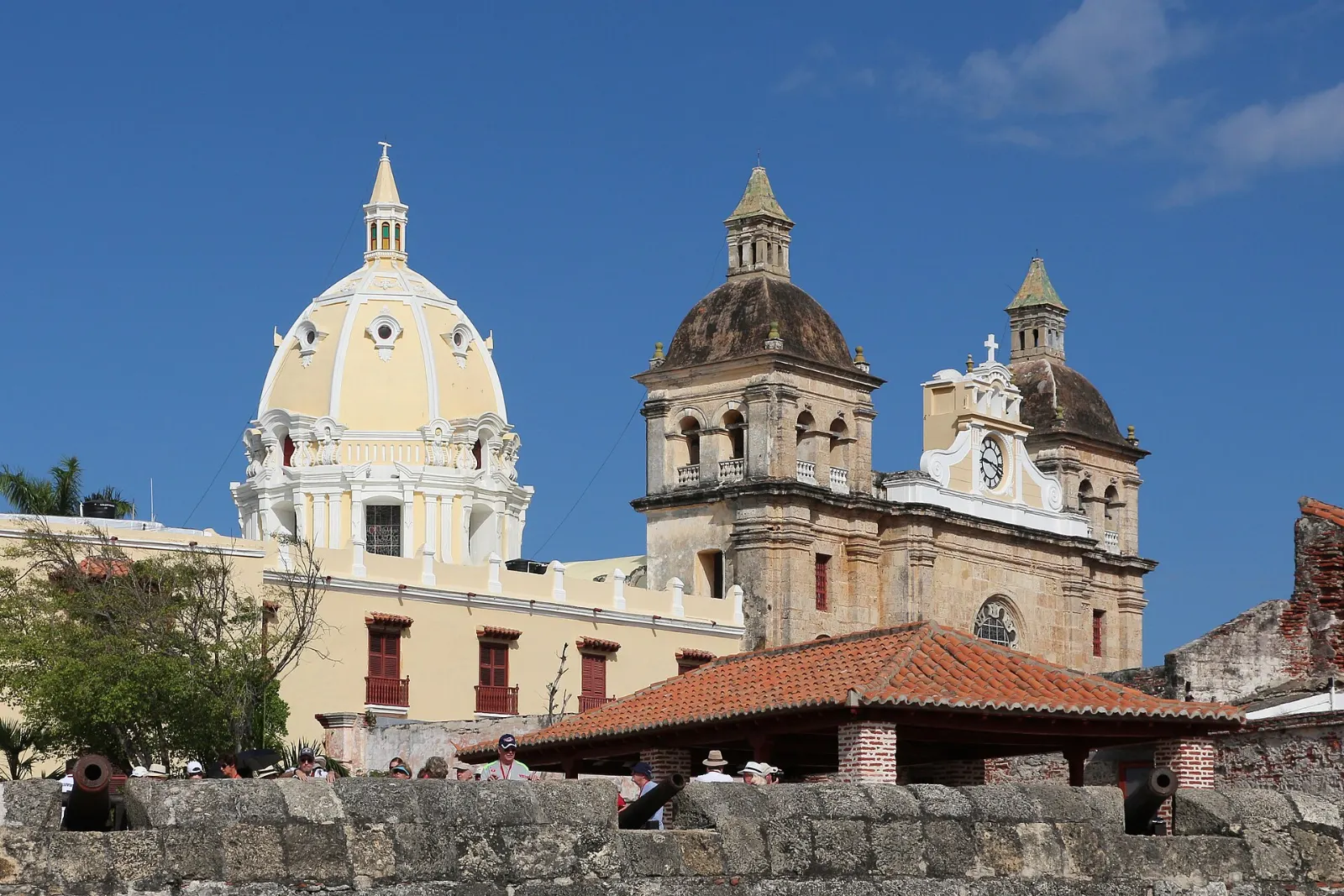
This church and former convent near the waterfront honour Pedro Claver, a Spanish Jesuit who spent decades caring for enslaved Africans arriving in the port and was later canonised. His remains rest beneath the altar, and the cloister and upper rooms hold exhibits on his life and on Afro-Caribbean art.
The Church of San Pedro Claver honours the Jesuit priest who ministered to enslaved Africans arriving in the port. Photo: Bernard Gagnon, Wikimedia Commons, CC BY-SA 4.0
The city walls and Las Bóvedas
The walls run for several kilometres around the Old Town, and you can walk along long stretches of the top for views of the sea, the skyline of Bocagrande and the rooftops of the old city.
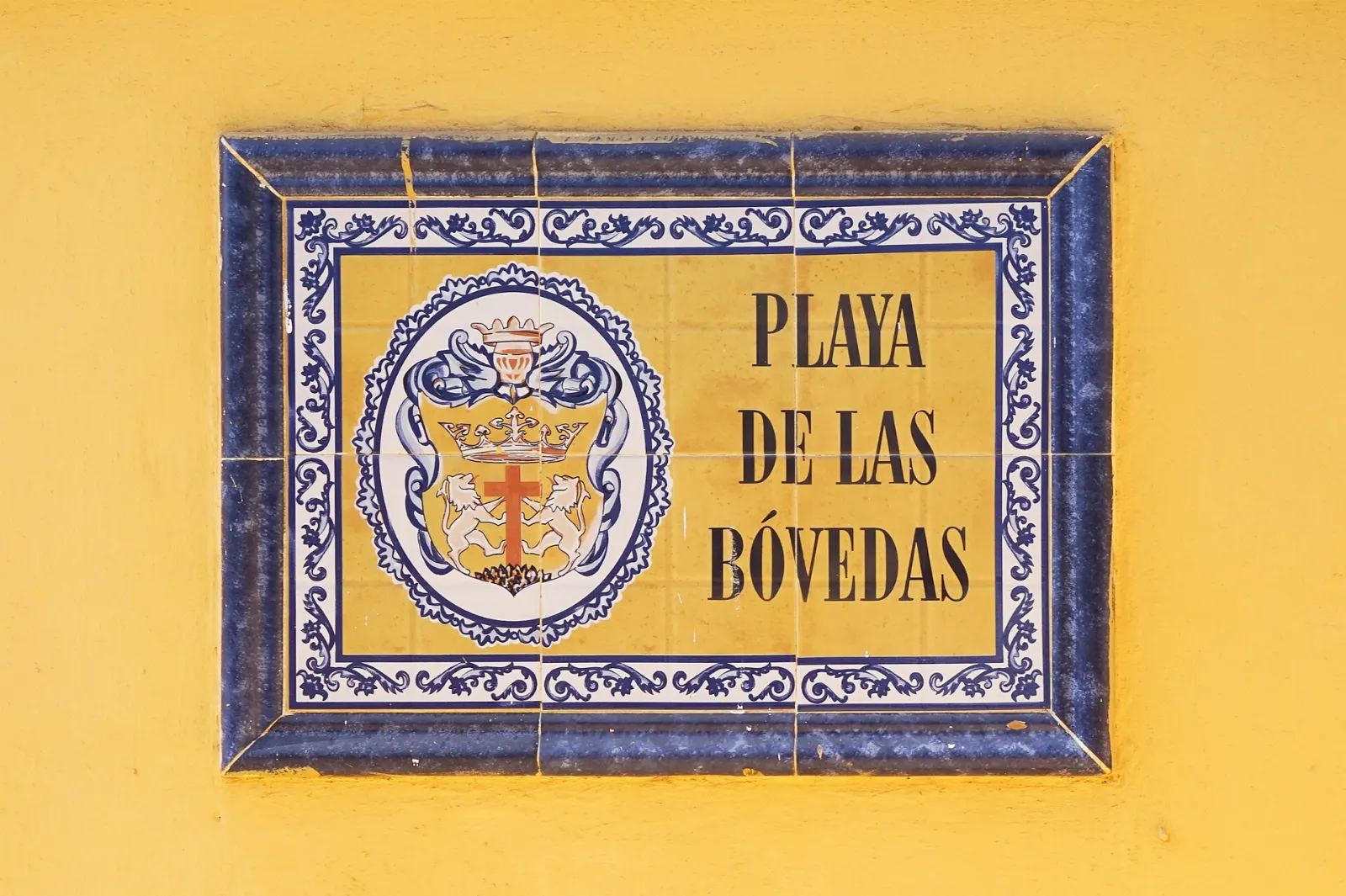
Las Bóvedas, a row of vaults built into the wall in the late eighteenth century, now hold craft shops. Photo: Bernard Gagnon, Wikimedia Commons, CC BY-SA 4.0
San Diego and Plaza de Santo Domingo
The San Diego quarter in the north of the walled city is quieter and more residential than Centro, with small plazas, boutique hotels and cafes. Plaza de Santo Domingo, beside one of the oldest churches in the city, is known for Fernando Botero's reclining woman sculpture and its outdoor dining tables.
Ad
Getsemaní, the fortress and La Popa
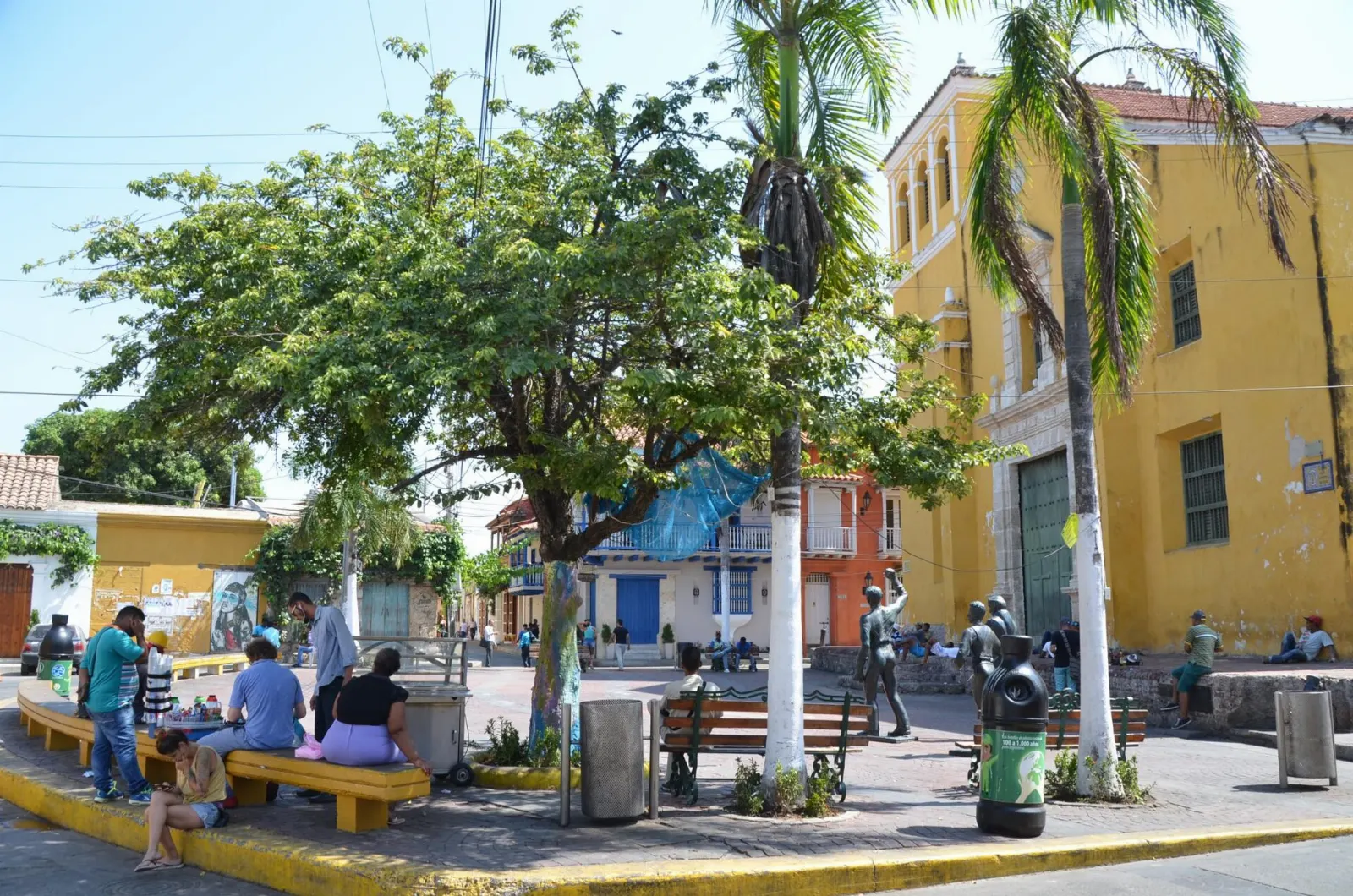
Getsemaní and Plaza de la Trinidad
Just outside the main walls, Getsemaní was historically the neighbourhood of artisans and working families, and it has become the city's most vibrant district. Its narrow streets are covered in murals, strung with flags and umbrellas, and packed with small restaurants, bars and hostels.
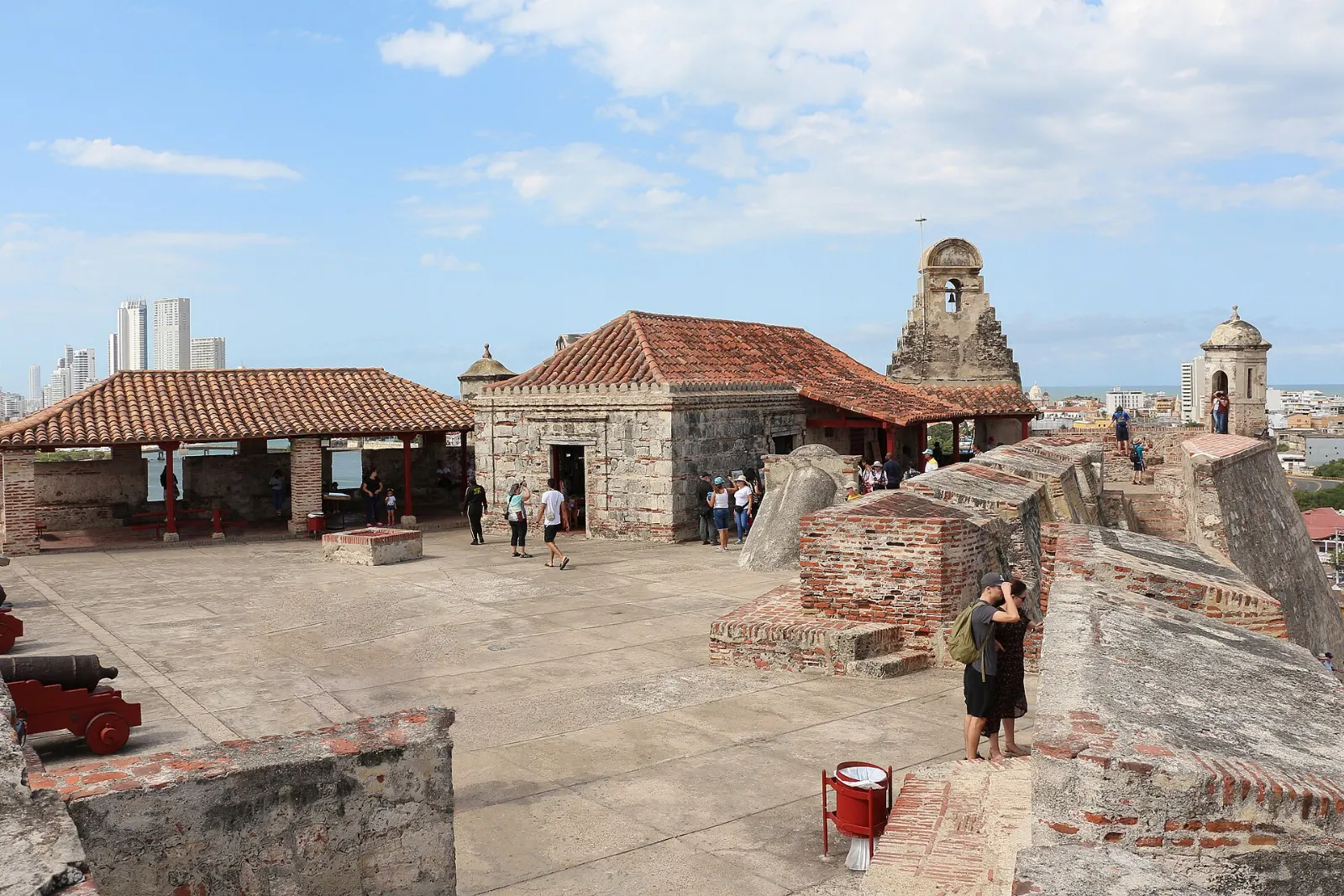
Rising from San Lázaro hill east of Getsemaní, this huge fortress was begun in the seventeenth century and expanded over the following decades to guard the city from land attack.
Castillo San Felipe de Barajas, begun in the seventeenth century, guarded the land approaches to the city. Photo: Bernard Gagnon, Wikimedia Commons, CC BY-SA 4.0
Convento de la Popa
The convent on top of La Popa, the highest hill in the city, dates back to 1607 and holds a chapel and a flower-filled cloister. The real reward is the view across Cartagena, from the old town and Bocagrande to the bay and the port.
The convent of Nuestra Señora de la Candelaria de la Popa dates back to the early seventeenth century. Photo: Bernard Gagnon, Wikimedia Commons, CC BY-SA 4.0
Beaches and islands
Bocagrande and Castillogrande
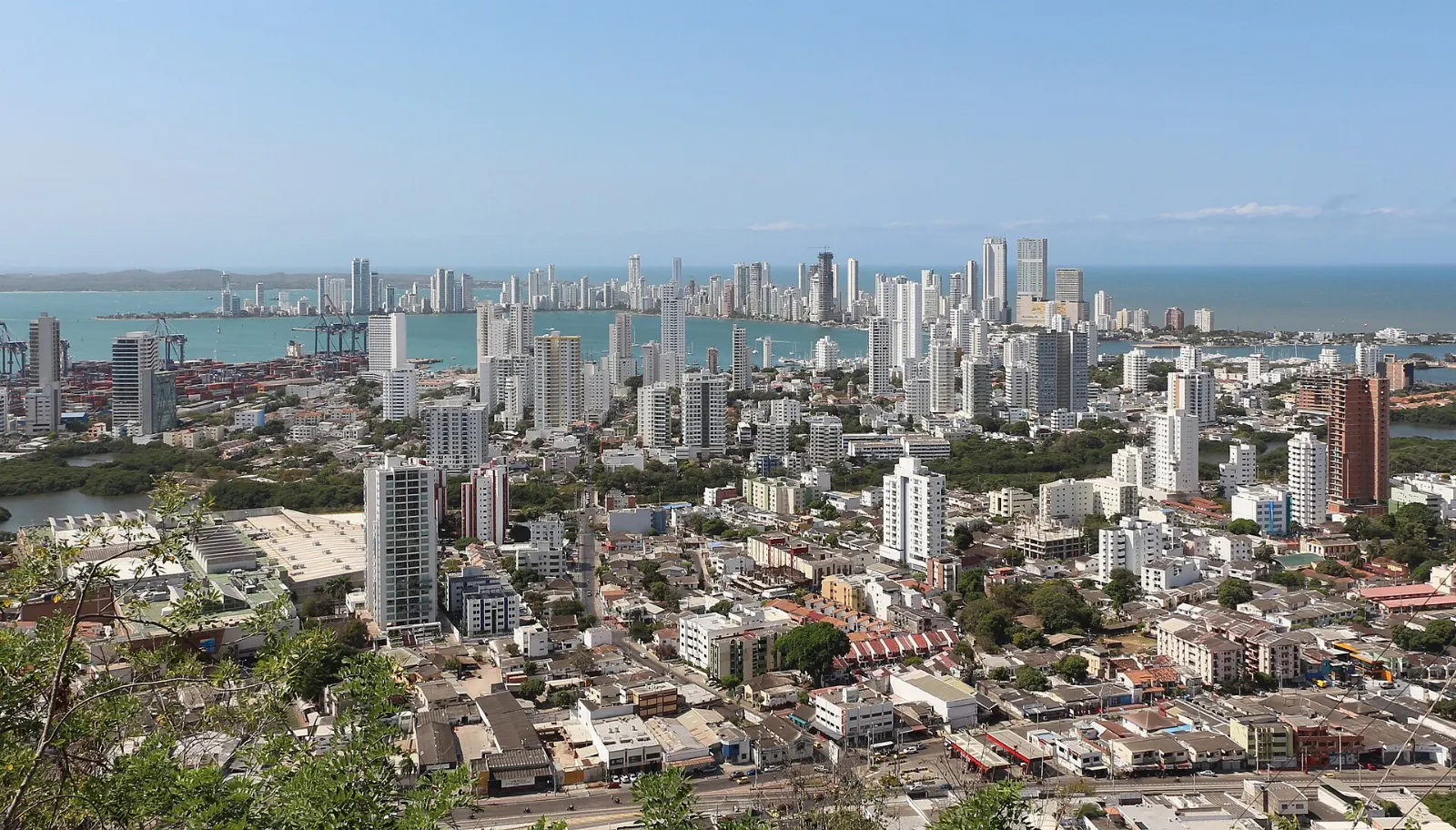
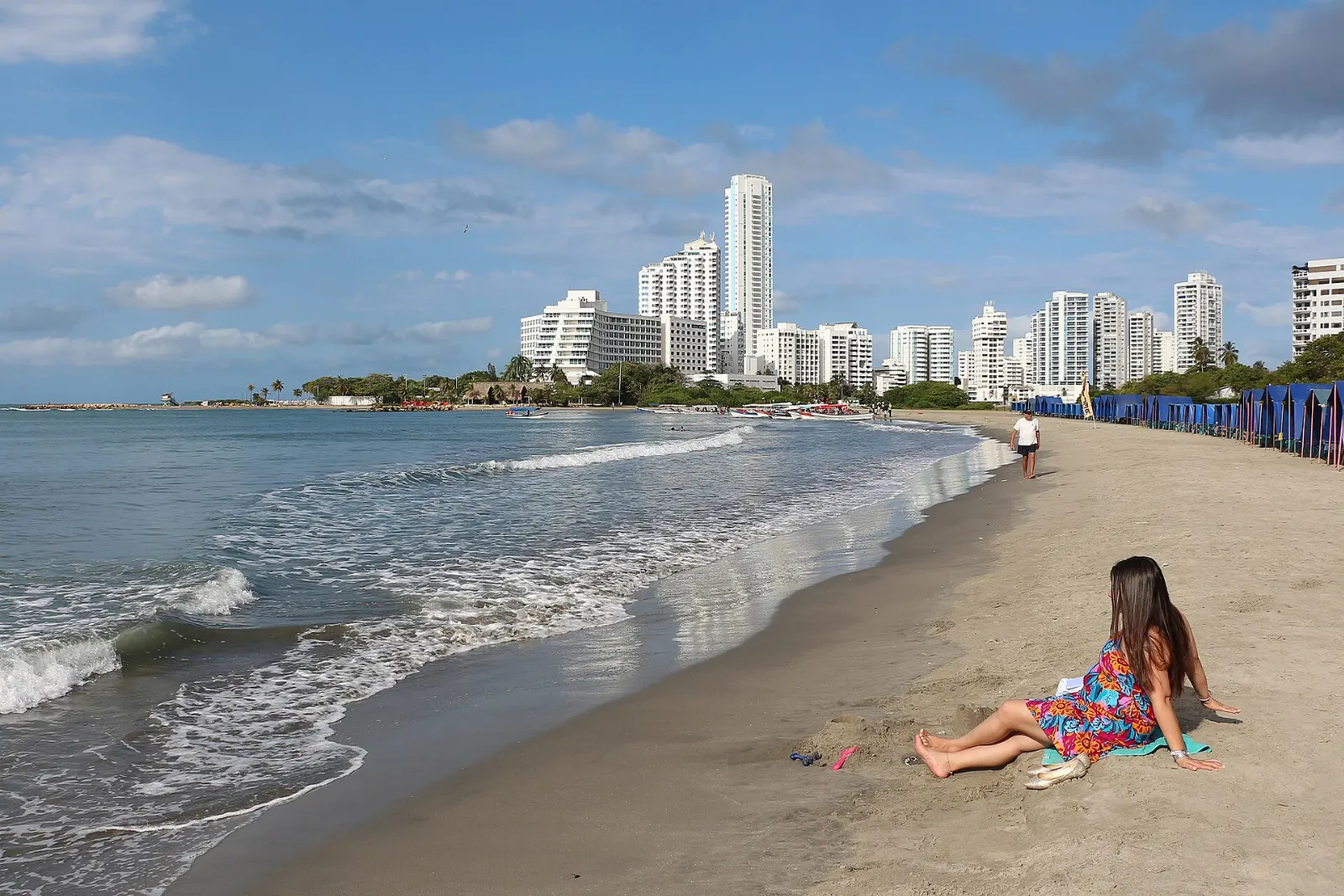
South of the old city, the Bocagrande peninsula is lined with apartment and hotel towers facing a long city beach. It is not the most beautiful sand in the region, but it is convenient for a swim, a sunset walk or a meal with a sea view.
Bocagrande is Cartagena's modern beach district of hotel and apartment towers. Photo: Bernard Gagnon, Wikimedia Commons, CC BY-SA 4.0
Rosario Islands
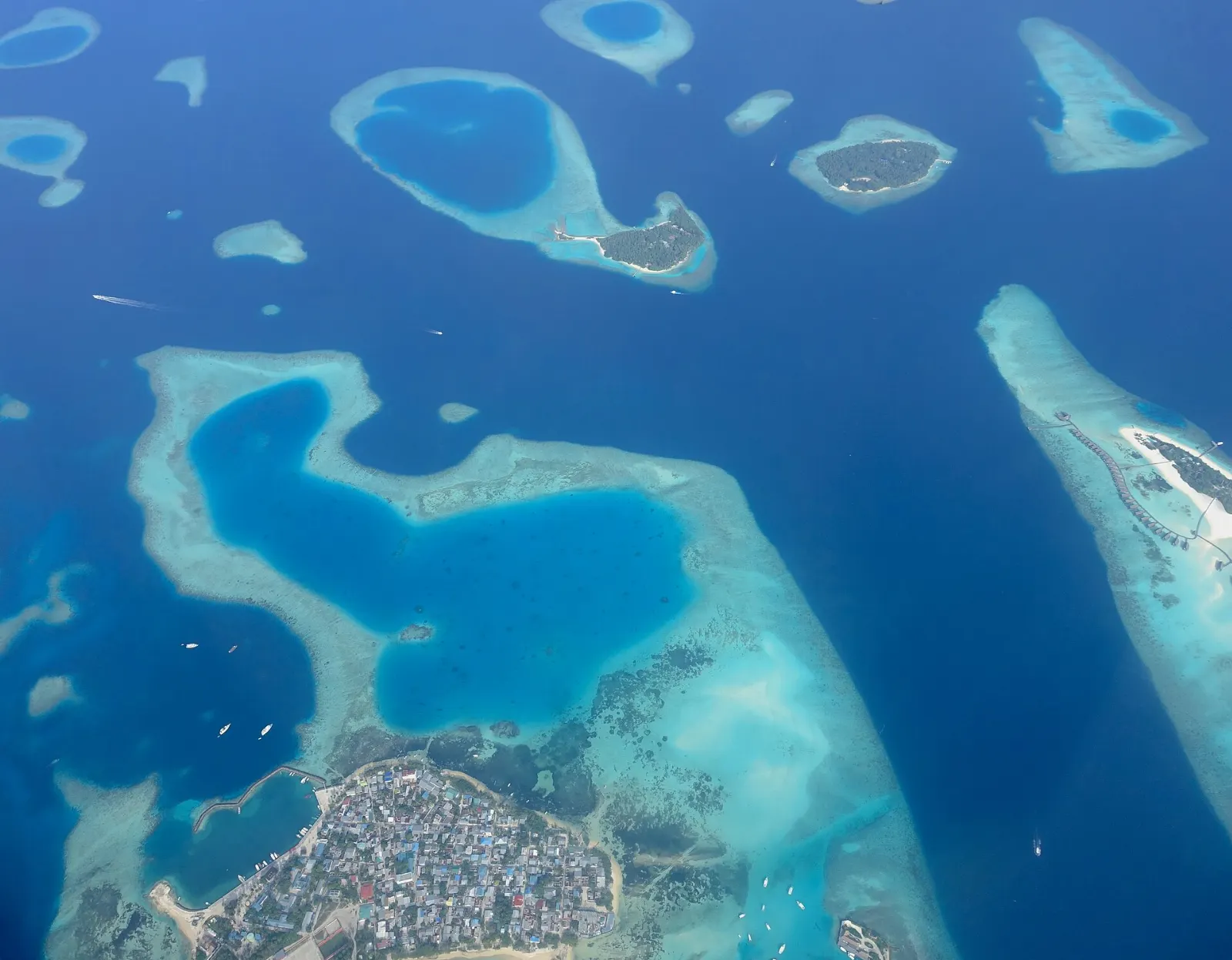
About 20 kilometres southwest of the city, the Rosario Islands form part of a national park created in 1988 to protect one of the most important coral reef systems on Colombia's Caribbean coast.
The long white beach on the Barú peninsula is the most famous beach day from Cartagena, reachable by boat or by road across a bridge. The water is clear and calm, but the beach can be extremely busy on weekends and holidays.
Ad
Food and local flavors
Cartagena's cooking is Caribbean, built on seafood, coconut, plantain and corn. The classic plate is a whole fried fish served with coconut rice, patacones (twice-fried green plantain) and a simple salad.
Street food is a highlight. Arepa de huevo, a corn arepa fried with an egg inside, is a coastal favourite, along with carimañolas (yuca fritters filled with meat or cheese), empanadas and fresh juices made from tropical fruits like lulo, maracuyá and corozo.
Popular dishes to try in Cartagena
Arepa de huevo Arepa de huevo, a corn arepa fried with an egg inside, is a coastal favourite, along with carimañolas (yuca fritters filled with meat or cheese), empanadas and fresh juices…Photo: Jdvillalobos, Wikimedia Commons, CC BY 3.0Posta negra Look for posta negra cartagenera, beef slowly cooked in a dark, sweet sauce, and for seafood stews and ceviche-style cocktails sold from carts and kiosks.Photo: Xemenendura, Wikimedia Commons, CC BY-SA 4.0Cocadas For sweets, browse the stalls of the Portal de los Dulces at Plaza de los Coches, which sell cocadas and tamarind and milk candies.Photo: Dtarazona, Wikimedia Commons, CC BY-SA 3.0Fried fish The classic plate is a whole fried fish served with coconut rice, patacones (twice-fried green plantain) and a simple salad.Photo: Wilfredor, Wikimedia Commons, CC0
Where to stay
The walled city (Centro and San Diego) is the most atmospheric base, with restored colonial houses turned into boutique hotels and guesthouses.
Getsemaní suits younger travellers, backpackers and anyone who wants nightlife and street life on the doorstep.
Bocagrande and Castillogrande suit families and beach lovers who prefer modern high-rise hotels and apartments with pools and sea views.
Manga, a residential district near the port, offers quieter streets, local character and better value, and suits longer stays.
Where to stay in Cartagena
Walled City Cartagena One of the best areas to base yourself in Cartagena.Photo: Igvir Ramirez, Wikimedia Commons, CC BY-SA 2.0Getsemaní Getsemaní suits younger travellers, backpackers and anyone who wants nightlife and street life on the doorstep.Photo: Bernard Gagnon, Wikimedia Commons, CC BY-SA 4.0Bocagrande Bocagrande and Castillogrande suit families and beach lovers who prefer modern high-rise hotels and apartments with pools and sea views.Photo: Bernard Gagnon, Wikimedia Commons, CC BY-SA 4.0San Diego Cartagena One of the best areas to base yourself in Cartagena.Photo: P4K1T0, Wikimedia Commons, CC0
Ad
Best time to visit
Cartagena is hot all year, with daytime highs typically in the low thirties Celsius and warm, humid nights. The driest months are December through April, when steady breezes make the heat more comfortable, and this is the main tourist season.
The city is busiest during the Christmas and New Year holidays and Holy Week, when Colombians and international visitors arrive in large numbers and prices rise.
Getting there and getting around
Rafael Núñez International Airport lies about three kilometres northeast of the Old Town and has direct flights from Bogotá, Medellín and other Colombian cities, as well as international routes from the United States, Panama and elsewhere.
Inside the walls and in Getsemaní, walking is by far the best way to get around. Taxis do not use meters, so agree on the fare before you get in; ride-hailing apps are widely used.
Ad
A suggested itinerary
First day
Enter through the clock tower gate in the morning and explore Plaza de los Coches, Plaza de la Aduana and the Church of San Pedro Claver.
Second day
Start early at Castillo San Felipe de Barajas, then take a taxi up to the convent of La Popa for the views.
Third day
Take a boat day trip to the Rosario Islands for snorkelling and beach time, returning in the late afternoon for a relaxed evening in the Old Town.
Fourth day
Choose a slow morning at Las Bóvedas and the San Diego quarter, a beach afternoon in Bocagrande, or a guided half-day trip to San Basilio de Palenque to learn about its Afro-Colombian heritage.
Practical tips
Plan sightseeing for early morning and late afternoon, and rest or visit air-conditioned museums in the midday heat.
Always agree on a taxi fare before getting in, and ask your hotel what a fair price is for common routes.
Carry some Colombian pesos in small notes for street food, tips and small shops, though cards are widely accepted in restaurants and hotels.
Beach vendors and touts can be persistent; a firm, polite no is usually enough, and always confirm prices before accepting any service.
Choose island tour operators carefully, check what is included, and expect national park and port fees on top.
Dress modestly for churches, covering shoulders and knees.
Keep valuables out of sight, use hotel safes, and take taxis rather than walking through unfamiliar areas late at night.