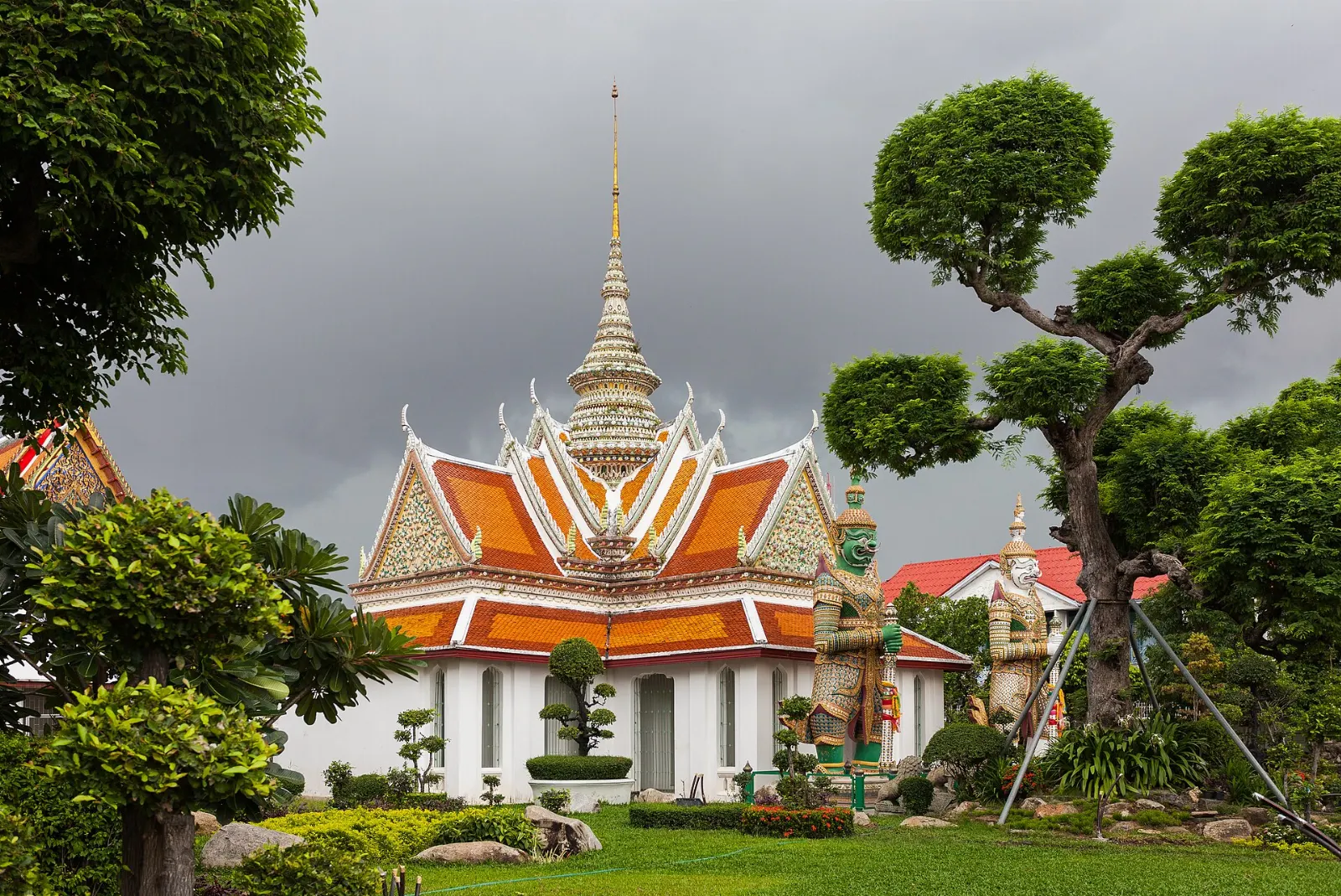
Bangkok is a city of extremes in the best sense. Gilded temples and royal halls stand a short boat ride from glass towers and rooftop bars, and some of the best food in Asia is cooked on street corners over a single burner.
AT A GLANCE
Best time
November to February, when it is drier and less humid; expect crowds and higher rates.
How long
Three to four days for the main sights, plus a day for Ayutthaya or a floating market.
Getting there
Fly into Suvarnabhumi or Don Mueang, then take the rail links, a metered taxi or a ride-hailing car.
Why visit Bangkok
Bangkok has been the capital of Thailand since 1782, when King Rama I moved the royal seat across the river and began building the Grand Palace on Rattanakosin Island.
The city is also a place to eat, shop and simply watch daily life. Morning alms rounds, flower markets, canal communities in Thonburi, vast weekend markets and neon-lit Chinatown all show different sides of a city of more than ten million people.
Rattanakosin and the riverside temples
The historic royal island of Rattanakosin holds the city's most important temples. Go early, since the heat and crowds build fast.
Grand Palace and Wat Phra Kaew
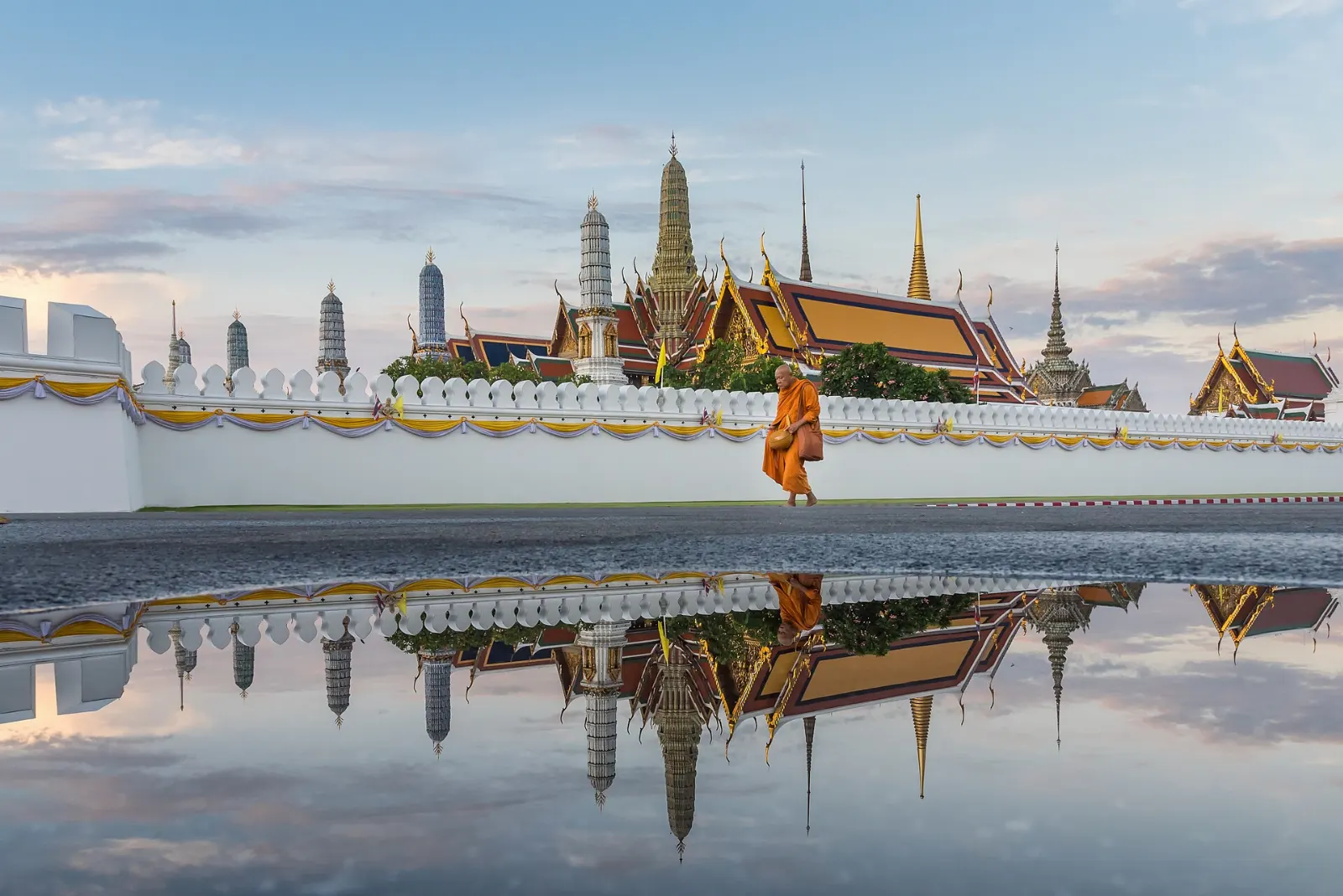
The Grand Palace was the official residence of the kings of Siam from the late eighteenth century, and its walled grounds combine Thai and European architecture. Within the complex, Wat Phra Kaew, the Temple of the Emerald Buddha, enshrines a small jade figure that is the most sacred Buddha image in Thailand.
Wat Pho
Just south of the palace, Wat Pho is one of the oldest and largest temple complexes in Bangkok. Its famous Reclining Buddha is about forty-six meters long and covered in gold leaf, with the soles of its feet inlaid with mother-of-pearl symbols.
Wat Arun
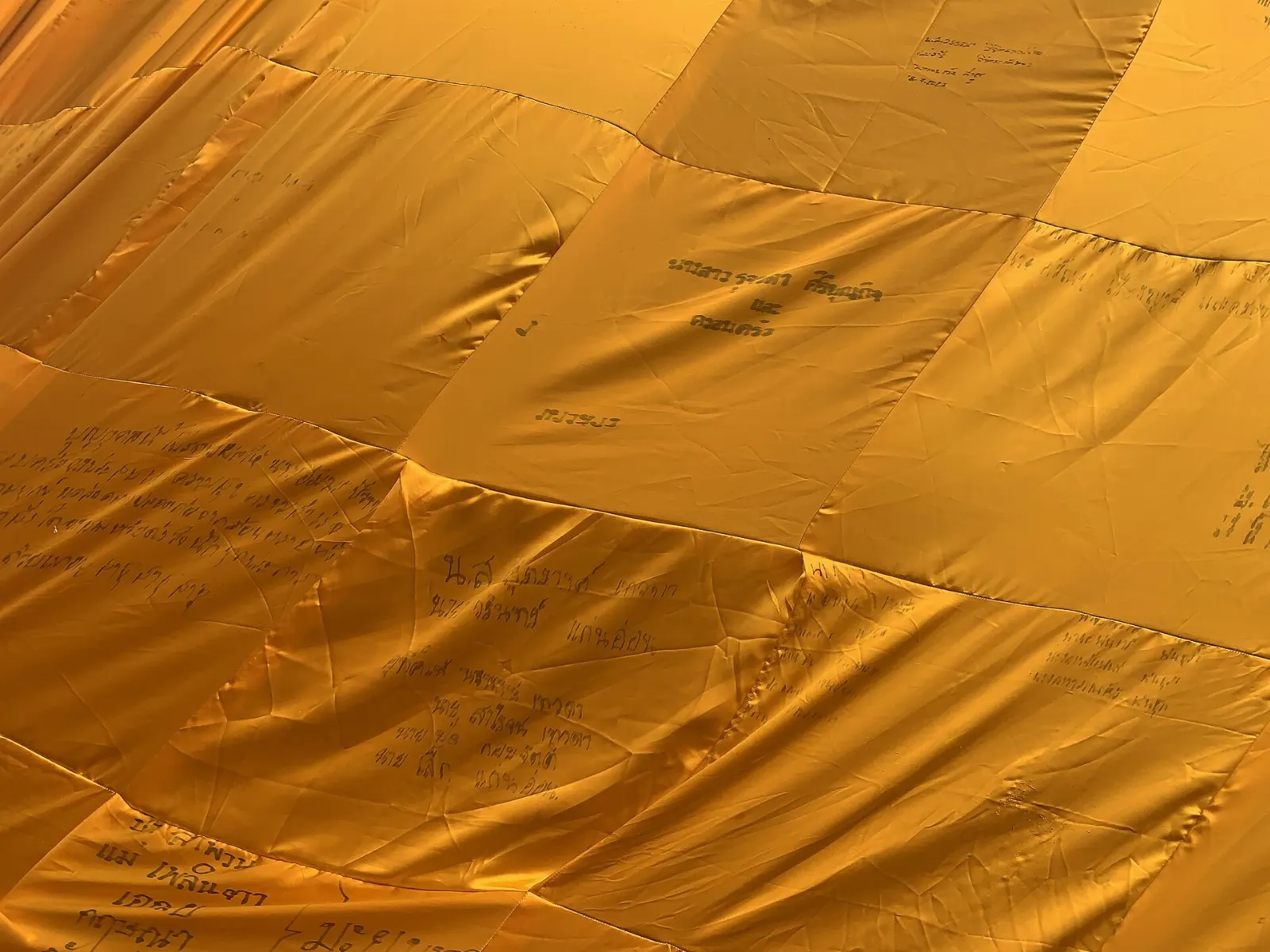
Across the river on the Thonburi bank, Wat Arun is known for its central prang, a tall Khmer-style tower decorated with pieces of colored porcelain. You can climb part of the way up its steep steps for river views. Allow about an hour.
Golden Mount at Wat Saket
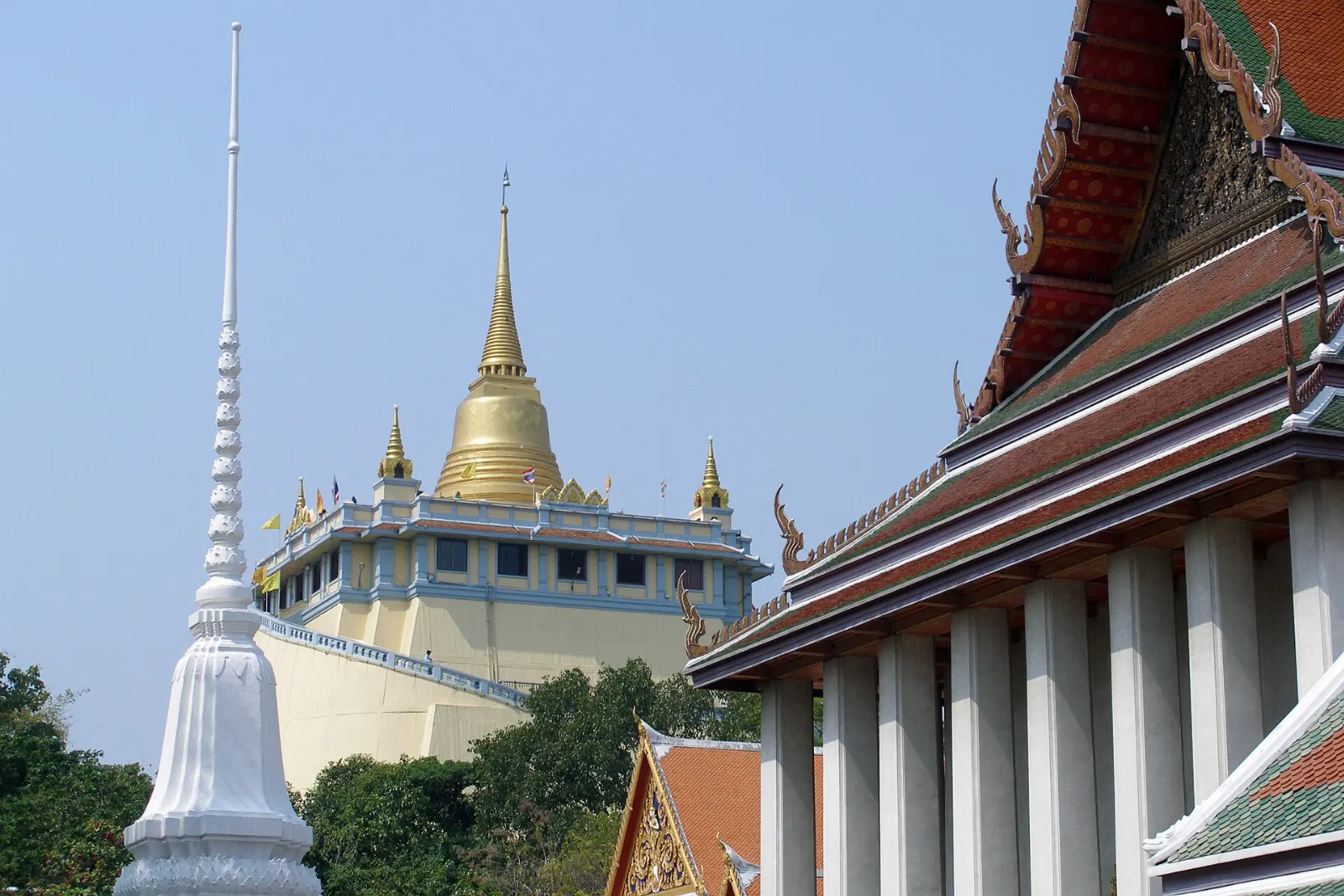
East of the old city, the Golden Mount is an artificial hill crowned by a gold chedi. A spiral path with around three hundred steps climbs past bells, small shrines and gardens to a terrace with panoramic views of the old town. Allow about an hour.
Chinatown, markets and city green spaces
Chinatown and Yaowarat Road
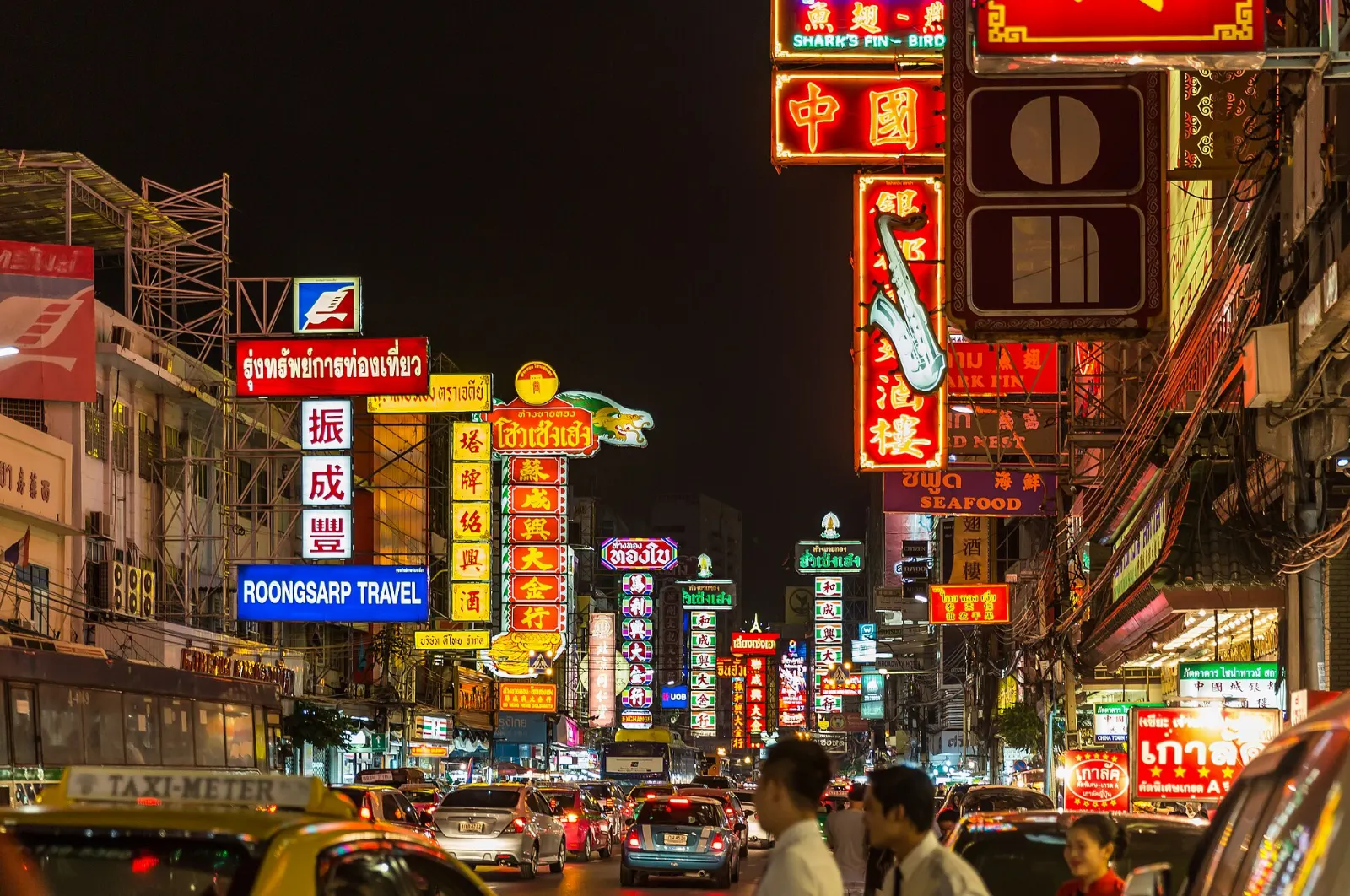
Bangkok's Chinatown grew up along Yaowarat Road and the narrow lane of Sampeng, and it remains a dense web of gold shops, herbal medicine stores, wholesale markets and shrines. Wat Traimit holds a seated Golden Buddha cast in solid gold.
Jim Thompson House
American silk entrepreneur Jim Thompson revived the Thai silk industry after the Second World War and assembled this home from traditional teak houses moved from elsewhere in Thailand. Today it is a museum filled with his collection of Asian art, set in a lush garden beside a canal.
Chatuchak Weekend Market
With thousands of stalls across sprawling covered sections, Chatuchak sells everything from vintage clothing and ceramics to plants, home decor and street food. It is busiest on Saturdays and Sundays.
Lumphini Park
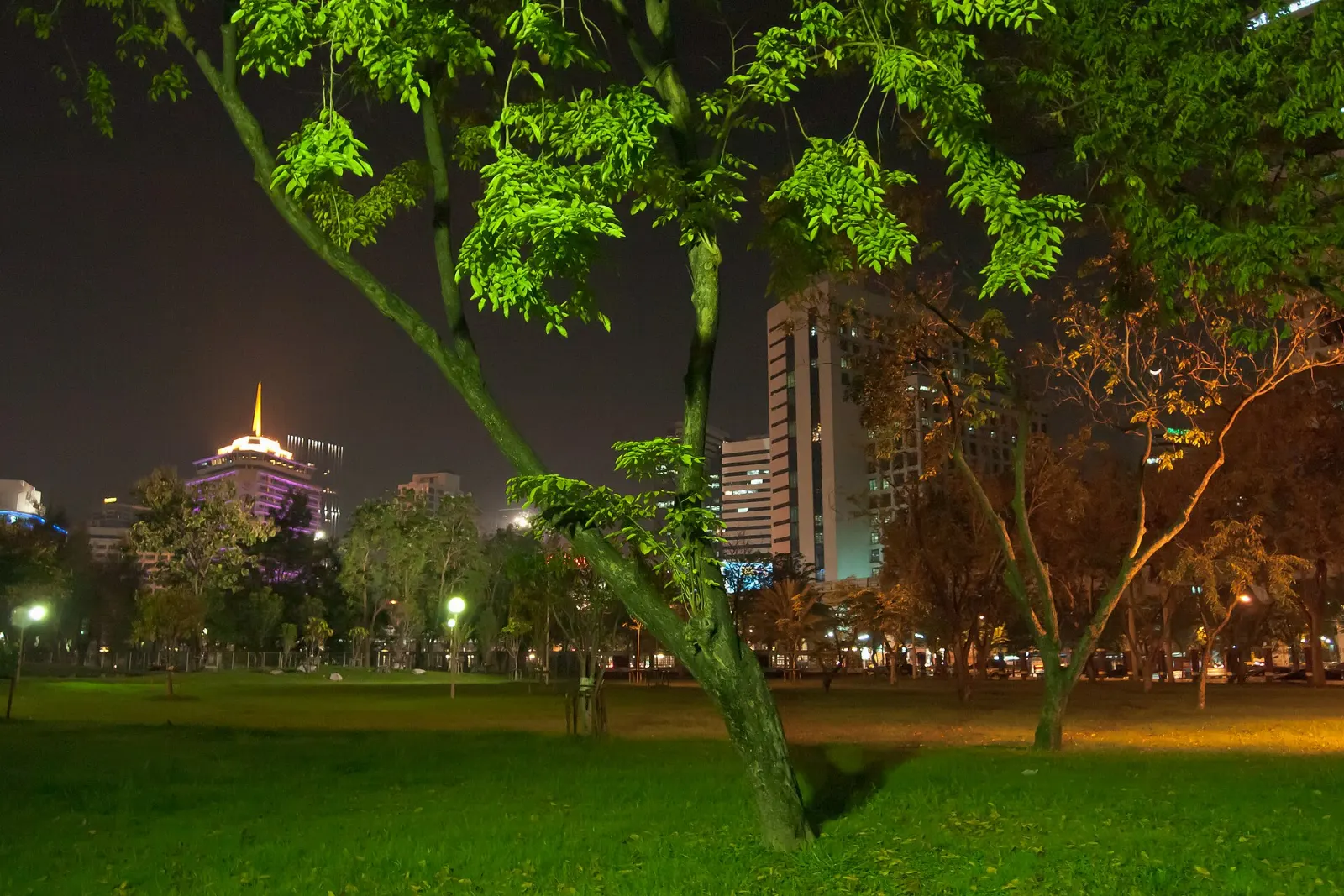
Lumphini Park is the green lung of central Bangkok, with a lake where you can rent paddle boats, shaded jogging paths and open-air aerobics classes at dusk. Large water monitor lizards wander its lawns and lake edges.
Canals and day trips
Thonburi canals
West of the river, the khlongs of Thonburi still give a glimpse of the city's past as a waterborne capital, with wooden stilt houses, small temples and floating vendors. Long-tail boat tours leave from piers along the river.
Ayutthaya
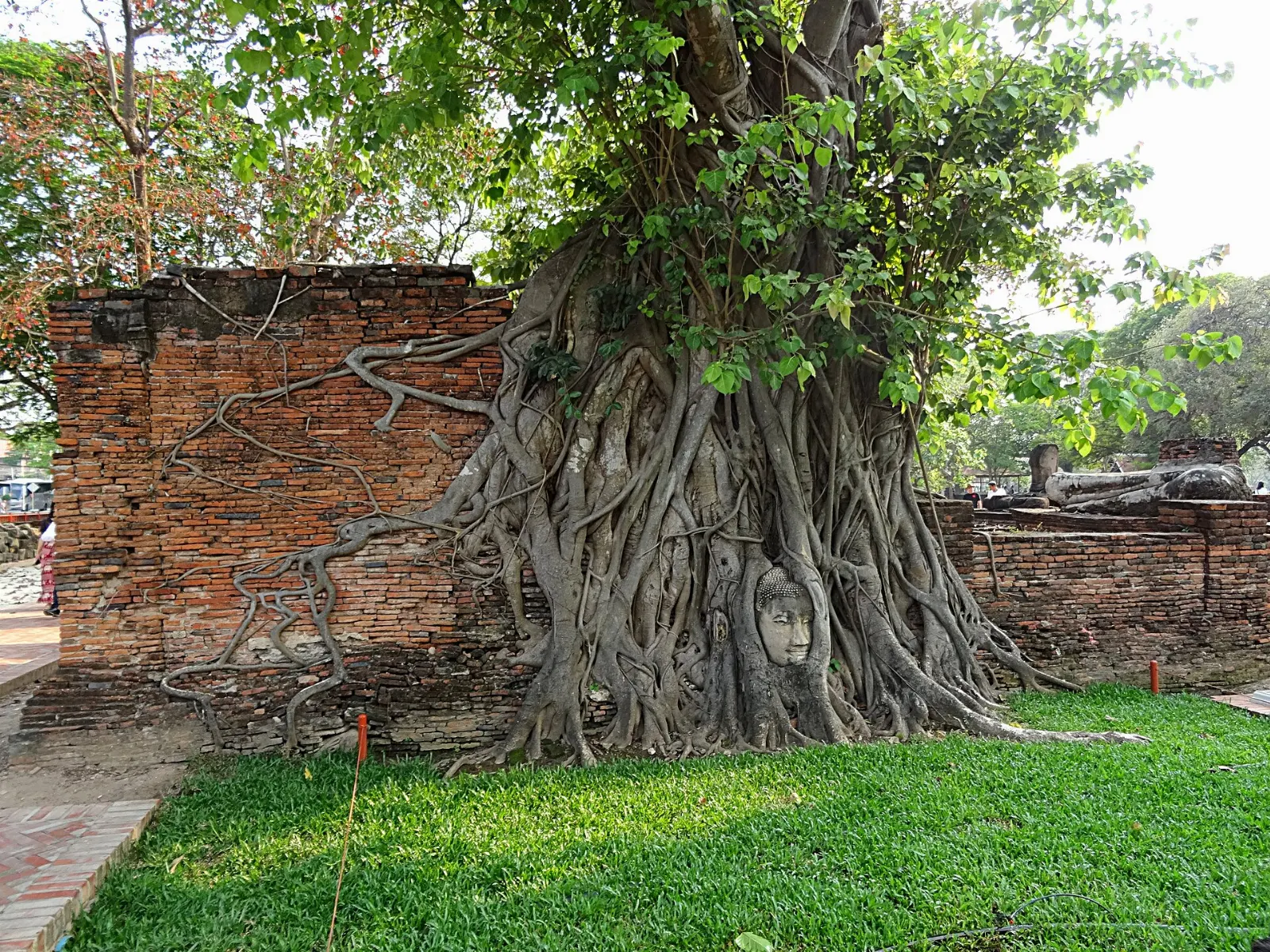
About eighty kilometers north of Bangkok, Ayutthaya was the capital of the Siamese kingdom for four centuries until its destruction in 1767. Its UNESCO-listed historical park is full of brick prangs and ruined monasteries, including Wat Mahathat, where a stone Buddha head is wrapped in the roots of a tree, and Wat Phra Si Sanphet with its row of tall chedis.
Food and local flavors
Bangkok is one of the world's great street food cities.
Chinatown is the classic place to eat after dark. Or Tor Kor Market near Chatuchak is known for high-quality fresh produce and prepared dishes, and the lanes around Victory Monument are known for boat noodles.
Popular dishes to try in Bangkok


Where to stay
Rattanakosin and Banglamphu, including the area around Khao San Road, put you within walking distance of the old city temples and suit budget travelers and those focused on sightseeing, though there is no rail line to some parts. The Riverside, along the Chao Phraya near Saphan Taksin, suits travelers who want river views and easy boat access. Siam and Chit Lom are central, close to malls and on the BTS, which suits families and shoppers.
Where to stay in Bangkok


Best time to visit Bangkok
Bangkok has three broad seasons. The cool, dry season from about November to February is the most comfortable and the busiest, with warm days and lower humidity.
Festivals are worth planning around. Songkran, the Thai New Year in mid-April, turns the streets into a giant water fight, especially around Khao San Road and Silom.
Getting there and getting around
Most international flights land at Suvarnabhumi Airport, east of the city, which connects to central Bangkok by the Airport Rail Link to Phaya Thai. Many regional and low-cost flights use Don Mueang Airport to the north, which is linked to the SRT Red Line.
Within the city, the BTS Skytrain and MRT metro are the fastest way to beat the traffic.
A suggested itinerary
First day
Arrive at the Grand Palace when it opens, then walk to Wat Pho and book a massage at the temple school.
Second day
Take a long-tail boat tour through the Thonburi canals in the morning.
Third day
If it is a weekend, spend the morning at Chatuchak Weekend Market and Or Tor Kor Market. Otherwise, explore Talat Noi and the riverside.
Fourth day
Take the train to Ayutthaya for a full day among the ruins of the old capital, returning to Bangkok for a final evening of street food.
Practical tips
- Cover shoulders and knees at temples, remove your shoes before entering halls, and never point your feet at a Buddha image.
- Show respect for the monarchy at all times; criticism of the royal family is a serious criminal offense in Thailand.
- Be wary of strangers who say a sight is closed or offer a cheap tuk-tuk tour, which often ends at gem or tailor shops.
- Carry small notes and coins for street food, boats and markets, although QR payments and cards are increasingly common.
- Women should avoid touching monks or handing objects directly to them.
- Drink bottled or filtered water and use sunscreen, a hat and a small umbrella for both sun and rain.