WiserMap — Choose wisely. Connect locally.Choose wisely. Connect locally.Add your business
Reykjavik, Iceland · Travel guide

Reykjavik Iceland Geothermal Pools and Northern Lights

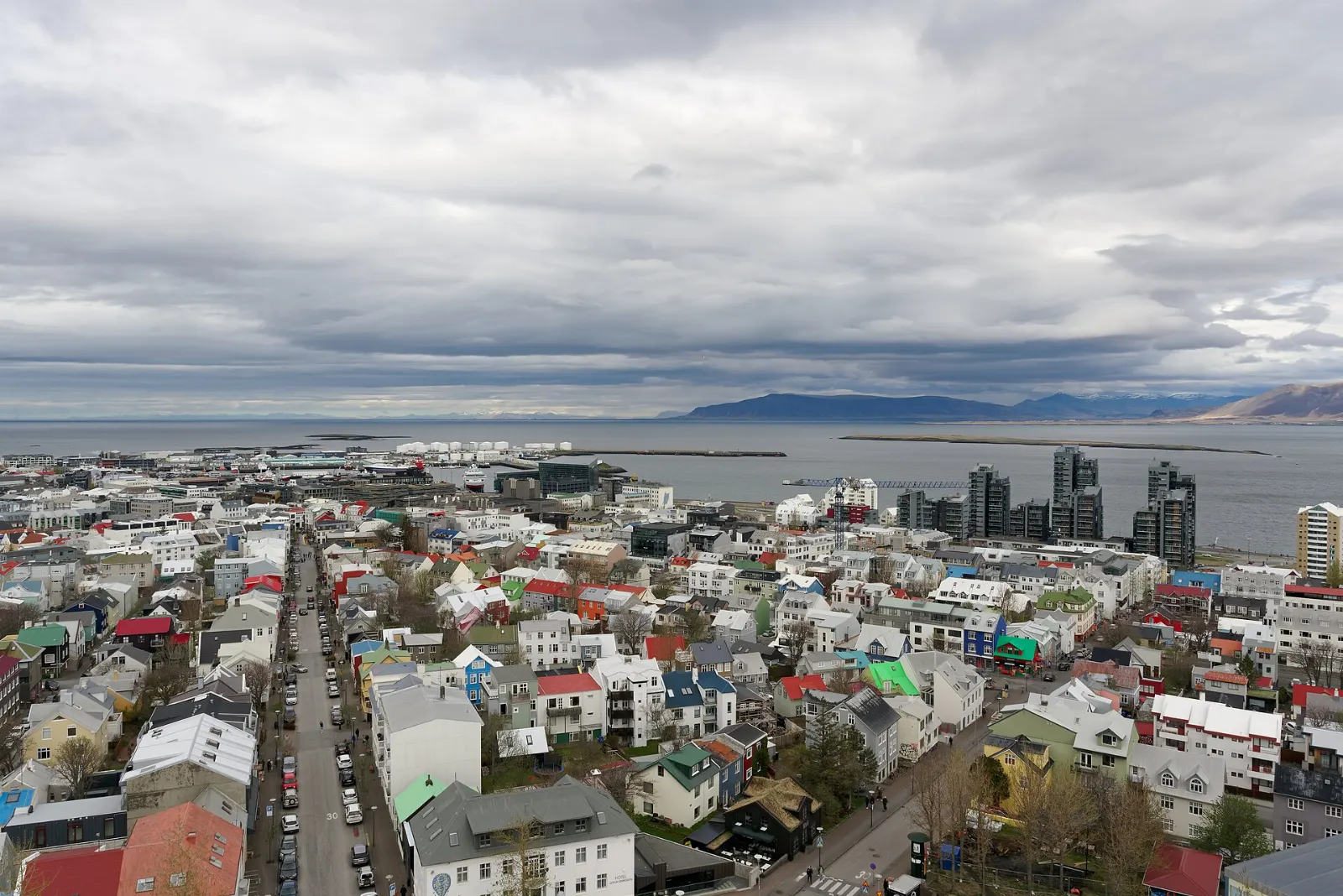
Reykjavik is the world's northernmost capital of a sovereign state, a small, walkable city of brightly painted houses set between the North Atlantic and a ring of snow-streaked mountains. Around two thirds of Iceland's population lives in the capital region, yet downtown still feels like a large town, with a cathedral spire, a city pond and a working harbour all within a short walk of one another.

By WiserMap TravelUpdated October 2026 9 places11 min read
FacebookXLinkedIn

For most travellers it is also the starting point for exploring Iceland, from the Golden Circle to the south coast. It is worth giving the city itself time, though.

At a glance Reykjavik
  1. Best timeJune to August for long days; September to March for the northern lights.
  2. How longTwo to three days for the city, plus extra days for trips into the countryside.
  3. Getting thereFly into Keflavík International Airport, about 50 km southwest, then take an airport bus.

Why visit Reykjavik

According to the sagas, the first permanent settler, Ingólfur Arnarson, made his home here in the ninth century, and archaeology confirms people lived on this spot around 870. The name means smoky bay, after the steam rising from hot springs.

Nature is never far away. Mount Esja rises across the bay, whales feed in Faxaflói, puffins nest on nearby islands in summer, and on clear winter nights the aurora can appear right over the city. Geothermal water heats homes and fills dozens of public pools, which are the centre of local social life.

Downtown and the old town

Hallgrímskirkja

Designed by state architect Guðjón Samúelsson and inspired by the basalt columns found in Icelandic landscapes, Hallgrímskirkja took decades to build and was completed in 1986.

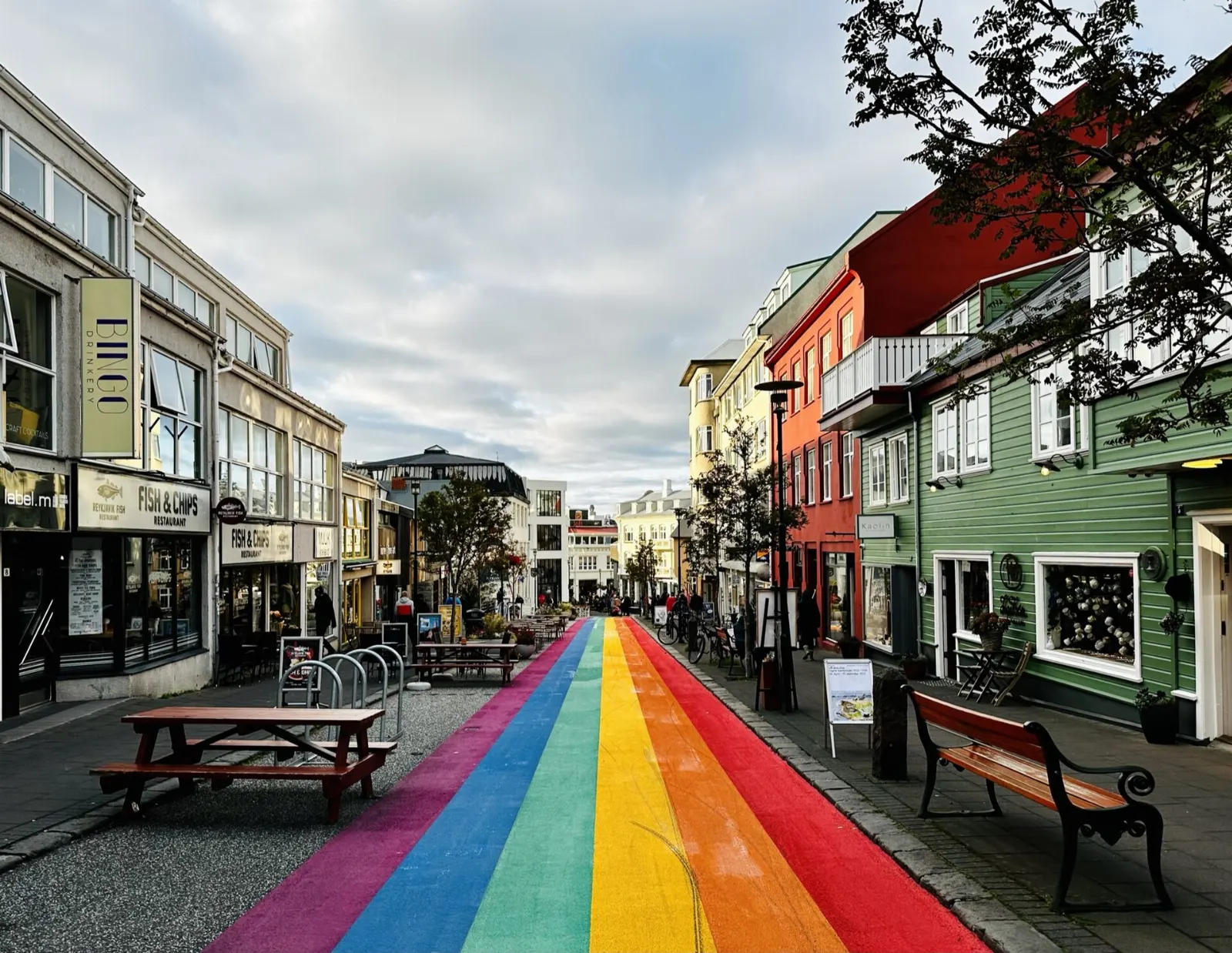
A downtown shopping street with a painted rainbow on the pavement leading uphill towards Hallgrímskirkja, Reykjavik, Iceland

Laugavegur and Skólavörðustígur

Laugavegur is the main shopping street, running east from the old centre, and Skólavörðustígur climbs from it towards Hallgrímskirkja, with a rainbow painted on its pavement. Both are lined with design shops, bookshops, wool stores, cafés and bars.

Skólavörðustígur leads uphill from the shopping streets of downtown Reykjavik to Hallgrímskirkja. Photo: APK, Wikimedia Commons, CC BY-SA 4.0
Colourful houses reflected in the calm water of Tjörnin pond in central Reykjavik, Iceland

Tjörnin and City Hall

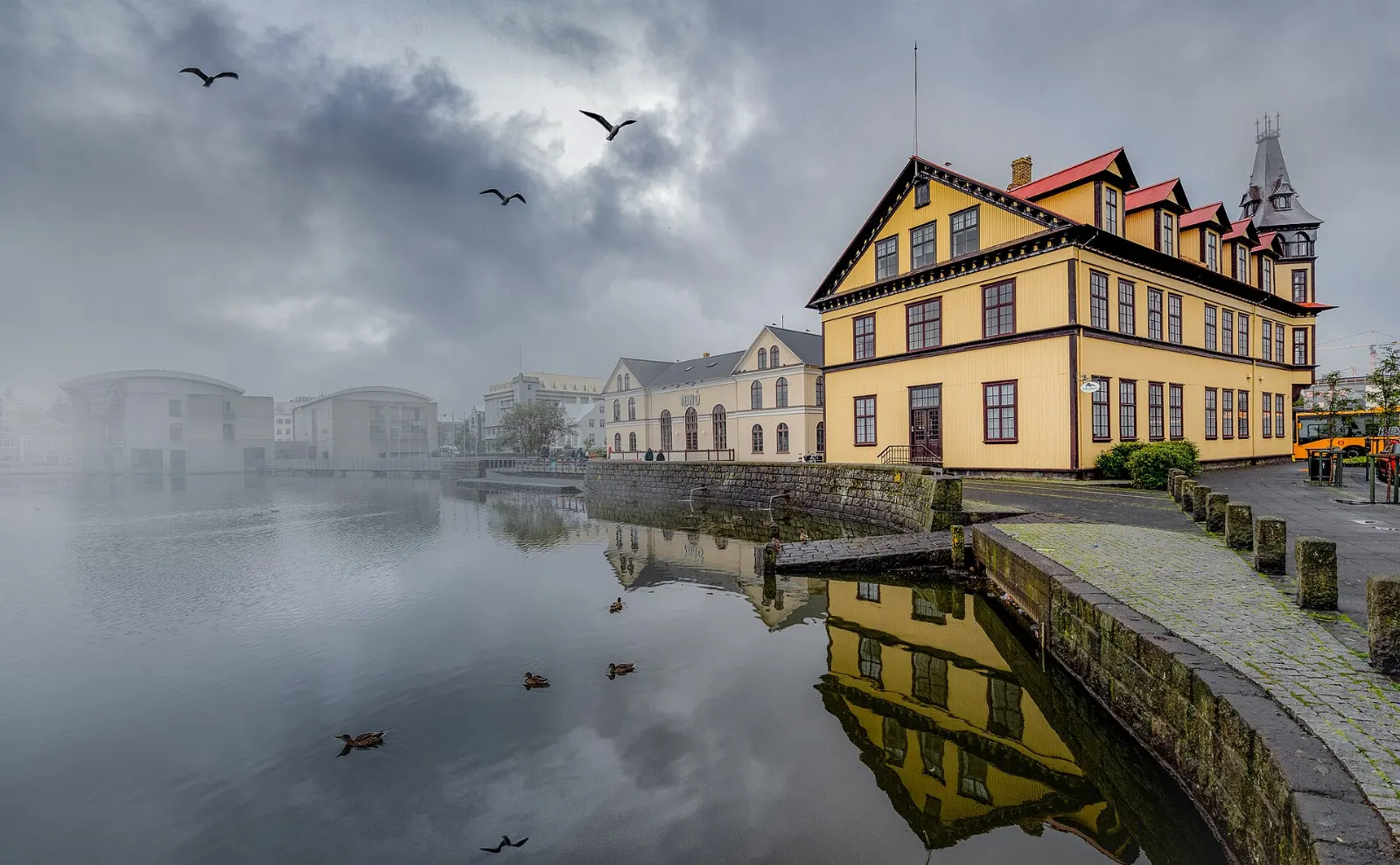
The city pond, Tjörnin, sits in the heart of the old town, surrounded by timber houses, the Free Church and the modern City Hall, which rises from the water's edge. Swans, ducks and geese gather here year round, and in cold winters parts of the pond freeze for skating.

Tjörnin, the city pond, is ringed by old timber houses, churches and the modern City Hall. Photo: Bernd Thaller from Graz, Austria, Wikimedia Commons, CC BY 2.0

The Settlement Exhibition

Under the streets of the old centre on Aðalstræti, the Settlement Exhibition, part of Reykjavik City Museum, is built around the excavated remains of a Viking-age longhouse. A fragment of wall here lies below a layer of volcanic ash dated to around 871, among the oldest evidence of human presence in the city.

The exterior of the National Museum of Iceland building in Reykjavik

National Museum of Iceland

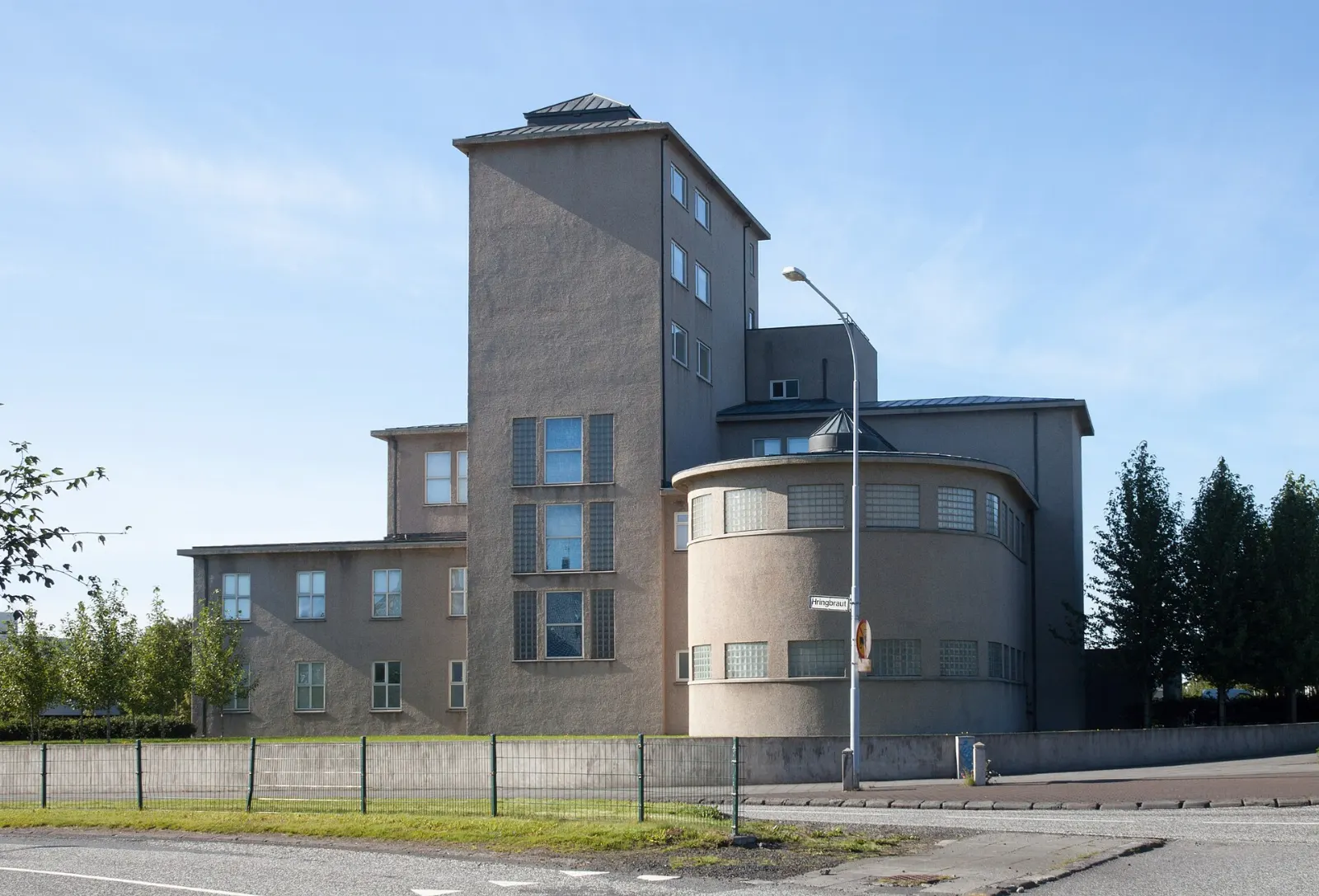
For a broader view of the nation's history, the National Museum on Suðurgata covers everything from the Viking settlers and medieval church art to the struggles of rural life and twentieth-century change. Highlights include the carved Valþjófsstaður church door and early Christian artefacts.

The National Museum of Iceland traces the country's history from the settlement era to the present. Photo: Szilas, Wikimedia Commons, Public domain

The waterfront and harbour

The faceted glass facade of the Harpa concert hall catching light beside the harbour, Reykjavik, Iceland

Harpa

Opened in 2011, Harpa is the city's concert hall and conference centre, and home to the Iceland Symphony Orchestra. Its geometric glass facade, created with the artist Olafur Eliasson, shifts colour with the light by day and glows with LED patterns after dark.

Harpa, opened in 2011, has a glass facade designed with the artist Olafur Eliasson. Photo: H. Zell, Wikimedia Commons, CC BY-SA 3.0

The steel Sun Voyager sculpture shaped like a skeletal ship on the seafront with Mount Esja beyond, Reykjavik, Iceland

Sun Voyager

A short walk east along the seafront path, Sólfar, the Sun Voyager, is a steel sculpture by Jón Gunnar Árnason that resembles the skeleton of a ship pointing out to sea. The artist described it as a dream boat and an ode to the sun.

Jón Gunnar Árnason's Sun Voyager sculpture stands on the seafront along Sæbraut. Photo: Jakec, Wikimedia Commons, CC BY-SA 3.0

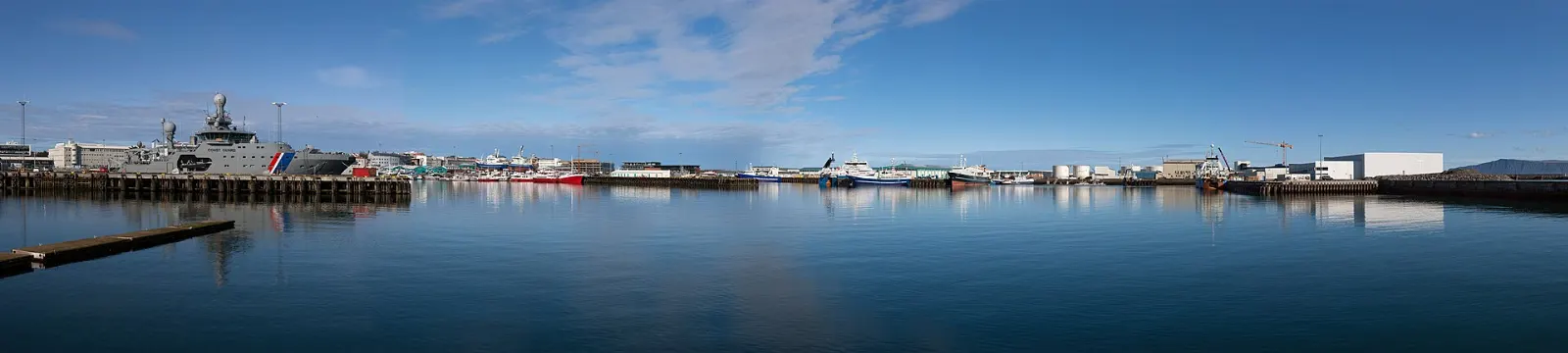
Whale-watching boats and fishing vessels moored in Reykjavik's Old Harbour, Iceland

The Old Harbour and Grandi

Reykjavik's Old Harbour is still a working port and the departure point for whale-watching trips, puffin cruises in summer and sea-angling tours. West of it, the former industrial area of Grandi has been transformed with museums, galleries, design studios and a food hall.

The Old Harbour is the departure point for whale-watching and puffin tours. Photo: Richard Bartz, Wikimedia Commons, CC BY-SA 3.0

Beyond the centre: hills, pools and islands

The glass dome of Perlan resting on hot water tanks on a wooded hill above the city, Reykjavik, Iceland

Perlan

On top of the wooded Öskjuhlíð hill, Perlan is a glass dome built on hot water tanks that supply the city. It now houses Wonders of Iceland, a nature exhibition with a man-made ice cave, a planetarium show about the northern lights and an observation deck with views across the city and the bay.

Perlan's glass dome sits on top of hot water storage tanks on Öskjuhlíð hill. Photo: Guilhem Vellut from Annecy, France, Wikimedia Commons, CC BY 2.0

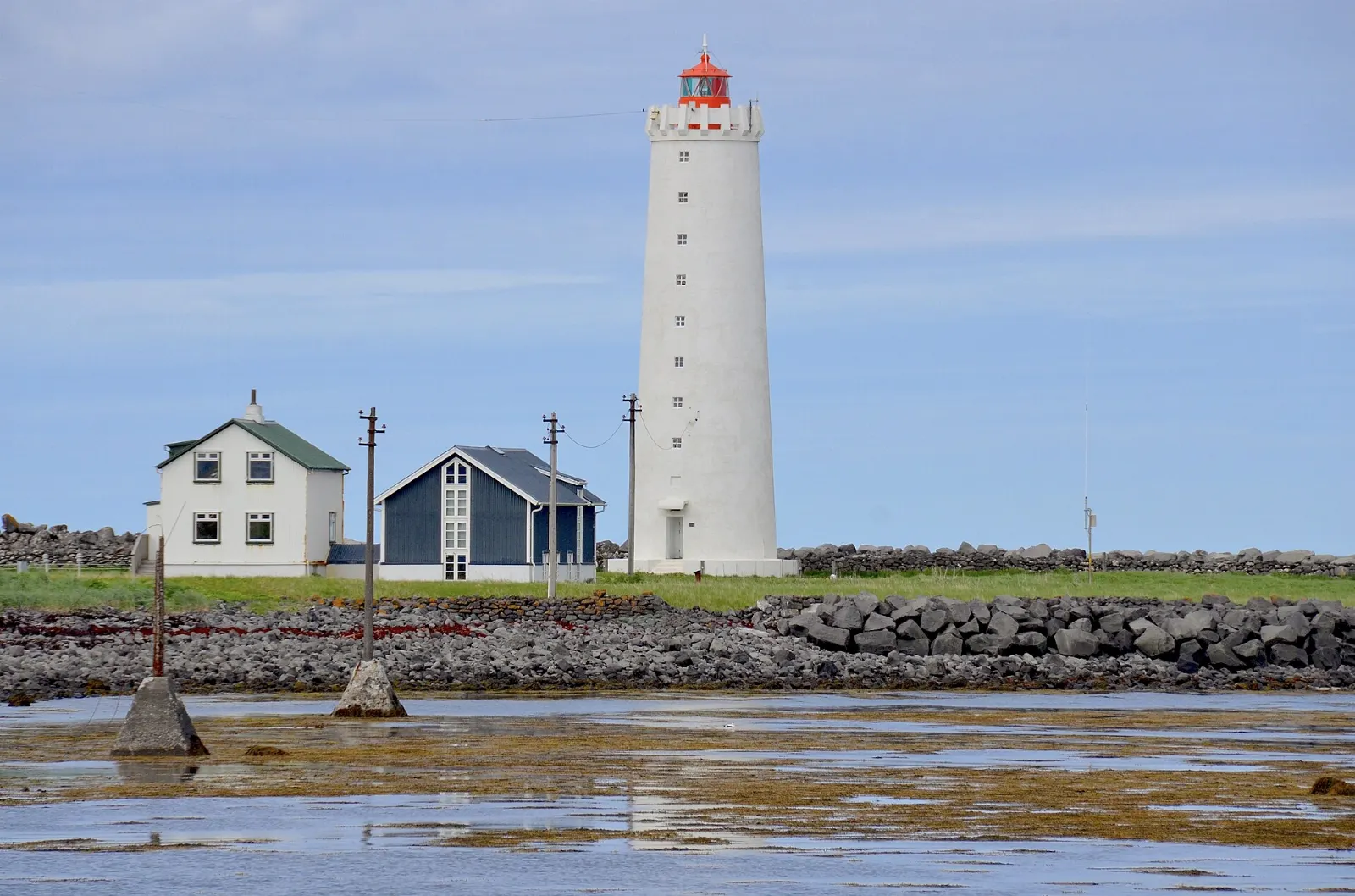
A white lighthouse on a low island reached by a causeway at low tide, Reykjavik, Iceland

Grótta Lighthouse

At the western tip of the Seltjarnarnes peninsula, Grótta is a tied island with a white lighthouse that you can reach on foot only at low tide.

Grótta lighthouse stands on a tidal island at the tip of the Seltjarnarnes peninsula. Photo: Olga Ernst, Wikimedia Commons, CC BY-SA 4.0

Laugardalslaug and the city pools

Swimming pools are central to Icelandic life, and Laugardalslaug in the Laugardalur valley is the largest in the city, with outdoor lanes, hot tubs, a steam bath and water slides. Vesturbæjarlaug in the west and Sundhöll Reykjavíkur near Hallgrímskirkja are smaller local favourites.

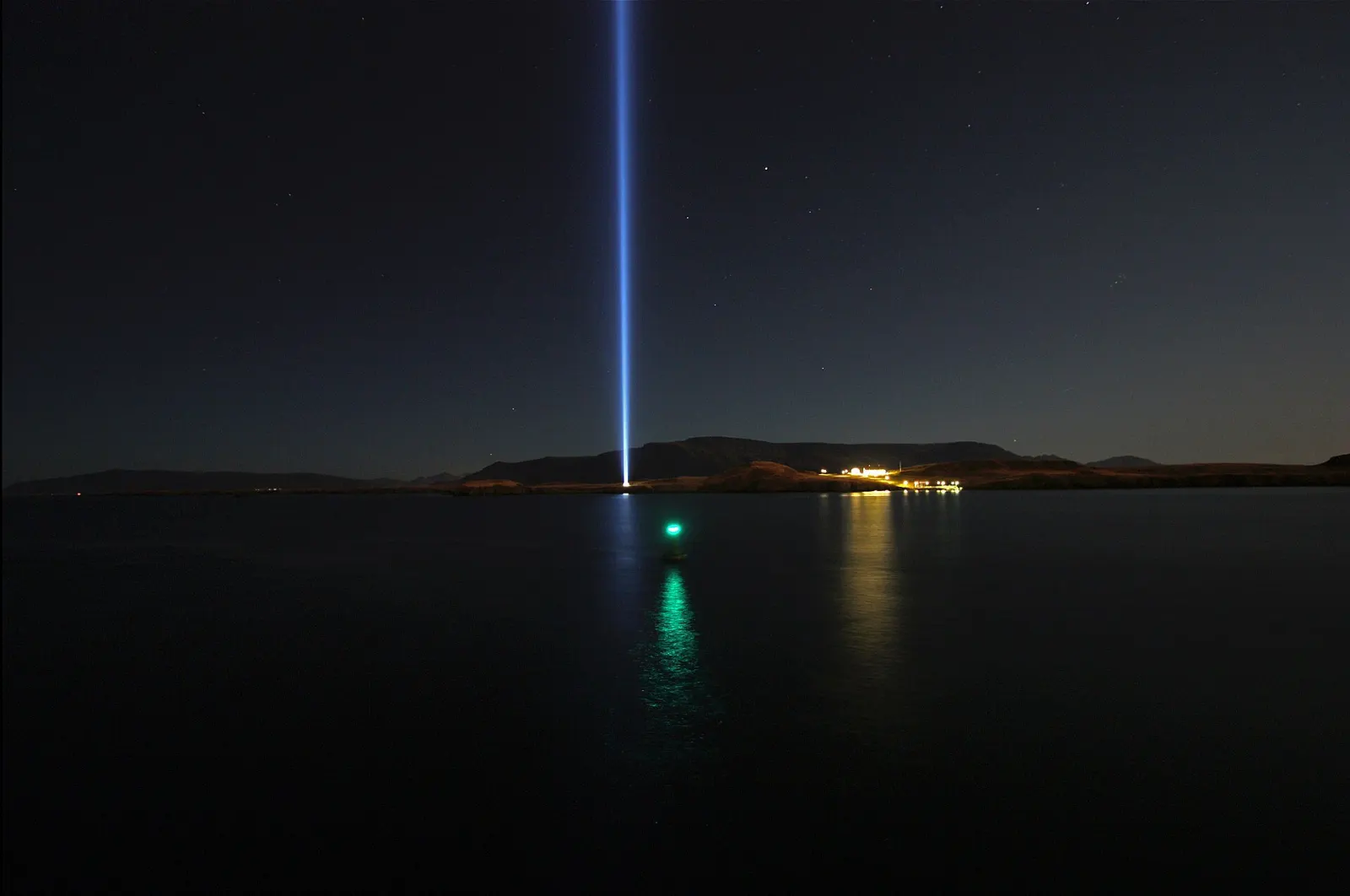
A column of light rising into the night sky from Viðey island across the water from Reykjavik, Iceland

Viðey Island

A short ferry ride from the city, Viðey is a grassy island with walking trails, artworks and one of the oldest buildings in Iceland, Viðeyjarstofa, an eighteenth-century stone house.

Yoko Ono's Imagine Peace Tower on Viðey island projects a beam of light into the sky in autumn and winter. Photo: Helgi Halldórsson from Reykjavík, Iceland, Wikimedia Commons, CC BY-SA 2.0

Food and local flavors

Icelandic cooking is built on lamb, fish and dairy. Try kjötsúpa, a hearty lamb and vegetable soup, and plokkfiskur, a creamy fish and potato stew often served with dark, sweet rye bread that is traditionally baked slowly in geothermal ground.

A Reykjavik hot dog, made with lamb and topped with crispy and raw onions and sweet mustard, is a local institution, and the small stand Bæjarins Beztu Pylsur near the harbour has been serving them since the 1930s.

Popular dishes to try in Reykjavik

Hot dog in Reykjavik, Iceland
Hot dog A Reykjavik hot dog, made with lamb and topped with crispy and raw onions and sweet mustard, is a local institution, and the small stand Bæjarins Beztu Pylsur near the harbour…Photo: Wilhelm Thomas Fiege, Wikimedia Commons, CC BY-SA 3.0
Skyr in Reykjavik, Iceland
Skyr Skyr, a thick cultured dairy product, comes plain, flavoured or in desserts.Photo: moohaha, Wikimedia Commons, CC BY 2.0
Plokkfiskur in Reykjavik, Iceland
Plokkfiskur Try kjötsúpa, a hearty lamb and vegetable soup, and plokkfiskur, a creamy fish and potato stew often served with dark, sweet rye bread that is traditionally baked slowly in…Photo: Jasnaah, Wikimedia Commons, CC BY-SA 4.0
Kjötsúpa in Reykjavik, Iceland
Kjötsúpa Try kjötsúpa, a hearty lamb and vegetable soup, and plokkfiskur, a creamy fish and potato stew often served with dark, sweet rye bread that is traditionally baked slowly in…Photo: Ypsilon from Finland, Wikimedia Commons, CC0

Where to stay

Downtown, known by its postal code 101, is the best choice for a first visit, with most sights, restaurants and nightlife on your doorstep; streets near Laugavegur can be noisy on weekend nights.

Further out, the Hlíðar and Laugardalur districts are calmer, closer to the big pools and the botanic garden, and often cheaper, with frequent buses to downtown. Vesturbær, the western residential area, gives you a local feel near the university and the sea.

Where to stay in Reykjavik

Laugavegur, Reykjavik, Iceland
Laugavegur Where to stayDowntown, known by its postal code 101, is the best choice for a first visit, with most sights, restaurants and nightlife on your doorstep; streets near Laugavegur…Photo: Chmee2/Valtameri, Wikimedia Commons, CC BY 3.0
Hallgrímskirkja, Reykjavik, Iceland
Hallgrímskirkja The area around Hallgrímskirkja and Skólavörðuholt is slightly quieter while still central.Photo: Andreas Tille, Wikimedia Commons, CC BY-SA 4.0
Skólavörðuholt, Reykjavik, Iceland
Skólavörðuholt The area around Hallgrímskirkja and Skólavörðuholt is slightly quieter while still central.Photo: allen watkin from London, UK, Wikimedia Commons, CC BY-SA 2.0
Grandi, Reykjavik, Iceland
Grandi The Old Harbour and Grandi suit travellers who like waterfront walks and the area's food and gallery scene.Photo: Jabbi, Wikimedia Commons, CC BY-SA 3.0

Best time to visit

Summer, from June to August, brings very long days around the solstice, mild temperatures and the best conditions for whale watching, puffin trips and road trips. It is also the busiest and most expensive season.

The northern lights season runs roughly from September to March, when skies are dark enough; you need clear skies and solar activity, so sightings are never guaranteed.

Getting there and getting around

International flights arrive at Keflavík International Airport, about 50 km southwest of the city on the Reykjanes peninsula. Airport buses, timed to meet flights, take around three quarters of an hour to the BSÍ bus terminal and offer transfers to many hotels; public Strætó buses and taxis are other options.

Downtown is compact and best explored on foot. Strætó buses cover the wider city and can be paid for through the official app.

A suggested itinerary

First day

Start at Hallgrímskirkja and ride up the tower, then wander down Skólavörðustígur and Laugavegur.

Second day

Join a morning whale-watching trip from the Old Harbour, then explore Grandi's museums and food hall. Visit Harpa in the late afternoon and stay for a concert or walk along the harbour in the evening light.

Third day

Spend the morning at the National Museum, then head up to Perlan for the exhibition and views.

Practical tips

  • Cards, including contactless payments, are accepted almost everywhere, so you rarely need cash.
  • Check the official websites for current hours and fees, especially outside the summer season.
  • Pack windproof and waterproof layers, a hat and gloves in every season.
  • Book whale-watching, Golden Circle tours and lagoon visits ahead in summer.
  • Follow pool etiquette: shower without a swimsuit before entering and leave shoes at the changing room entrance.
  • Check road conditions and weather warnings on Iceland's official services before any drive out of the city.
ReykjavikWISERMAP PLACEReykjavik: photos, reviews & things to doSee traveler photos and reviews, or share your own →

More places to visit

All travel guides →