This guide walks you through the places that reward a visit most, from the easygoing capital of Sapporo to the remote Shiretoko Peninsula, along with what to eat, where to base yourself, when to come and how to move around an island that is much bigger than most first-time visitors expect.
At a glance Hokkaido
Best timeLate June to September for flowers and hiking; January and February for snow, festivals and drift ice.
How longA week covers Sapporo, Otaru, Furano and Biei, and one southern area. Ten to fourteen days lets you add the far east.
Getting thereFly into New Chitose Airport near Sapporo, or take the Hokkaido Shinkansen from Tokyo to Shin-Hakodate-Hokuto.
Ad
Why visit Hokkaido
Hokkaido gives you a side of Japan built around landscape rather than temples and crowds. It holds several national parks, including Daisetsuzan, the largest in the country, and the Shiretoko Peninsula, which was added to the UNESCO World Heritage list in 2005 for its unbroken chain of ecosystems running from sea to mountain.
The island is also one of Japan's great food regions. Its cold waters supply crab, sea urchin, salmon roe and scallops, and its dairy farms, potato fields and melon growers stock kitchens across the country.
Sapporo and Otaru
Most trips start in Sapporo, a planned city laid out on a grid in the Meiji era. It is easy to navigate, has excellent food and makes a comfortable base for day trips.
Odori Park and central Sapporo
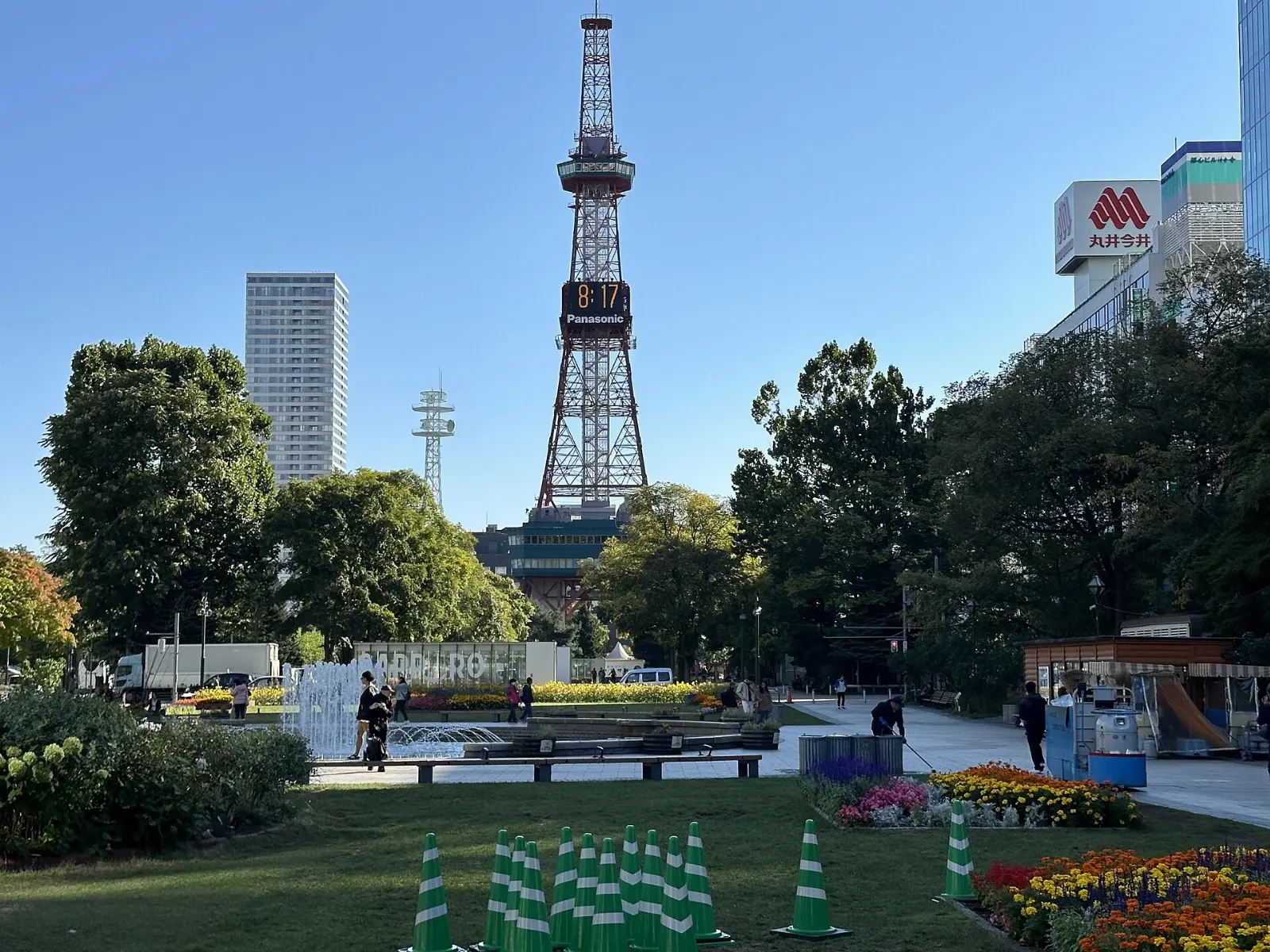
Odori Park is a long strip of lawns, fountains and flower beds that cuts across the middle of the city, with the Sapporo TV Tower at its eastern end.
Odori Park runs east to west through central Sapporo and hosts the main venue of the Sapporo Snow Festival. Photo: ノボホショコロトソ, Wikimedia Commons, CC BY 4.0
Moerenuma Park and the Sapporo Beer Museum
If you have an extra half day, head out to Moerenuma Park, a large park designed by the sculptor Isamu Noguchi, with a glass pyramid, a sculpted hill and wide lawns. Closer in, the Sapporo Beer Museum sits in a red brick building and tells the story of brewing in Japan's north.
Otaru Canal
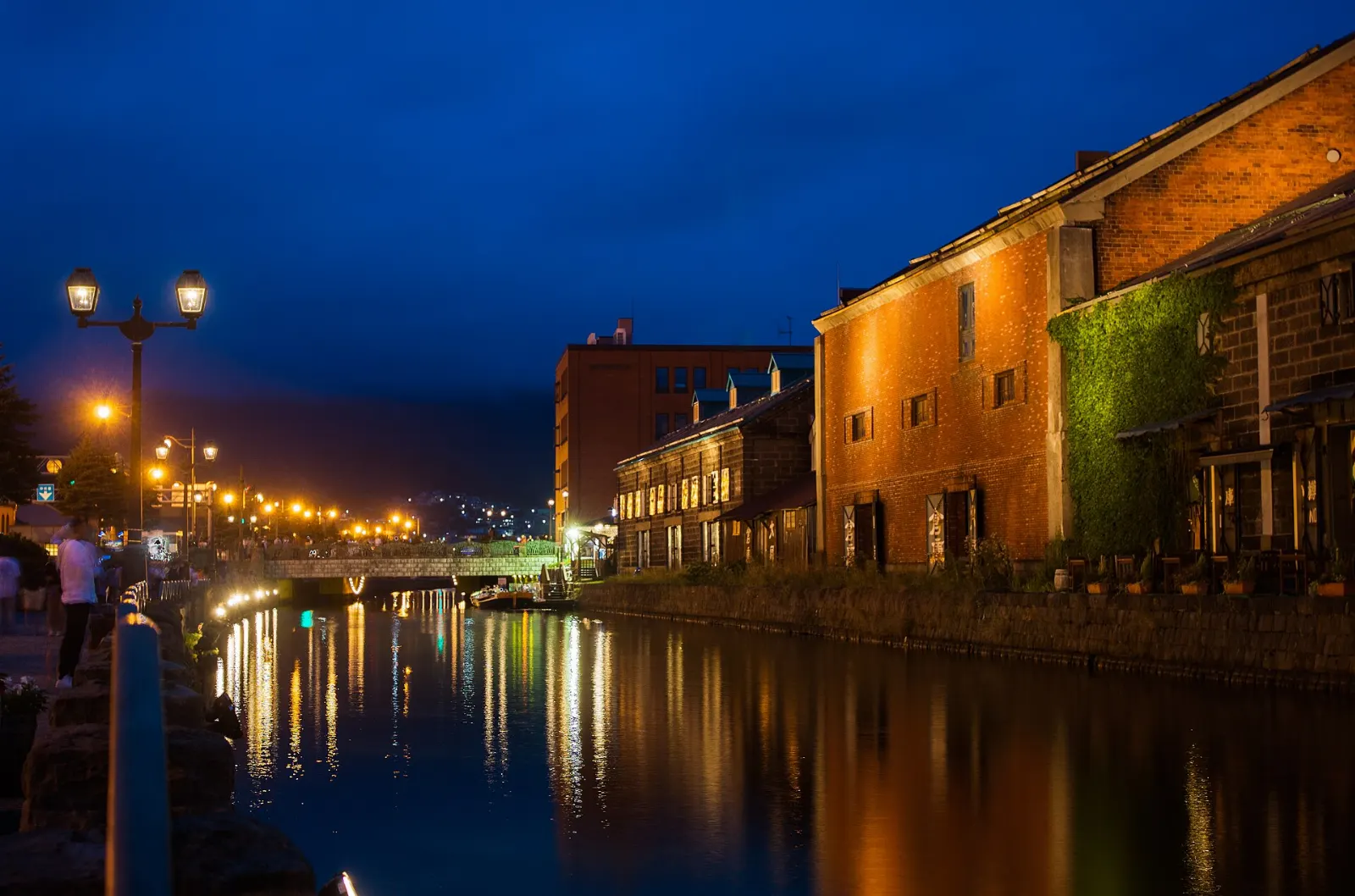
Otaru, a former herring and trading port about forty minutes from Sapporo by train, is the most popular day trip from the city. The canal is lined with stone warehouses that now hold shops and restaurants, and gas lamps come on in the evening.
The restored stone warehouses along the Otaru Canal date from the port city's commercial heyday. Photo: Tan Wei Liang Byorn, Wikimedia Commons, CC BY-SA 4.0
Ad
Furano, Biei and the central mountains
The farm country around Furano and Biei, two to three hours northeast of Sapporo, is where many of the island's best known images come from: rolling fields, flower farms and the Tokachi mountain range behind them.
Farm Tomita and the Furano flower fields
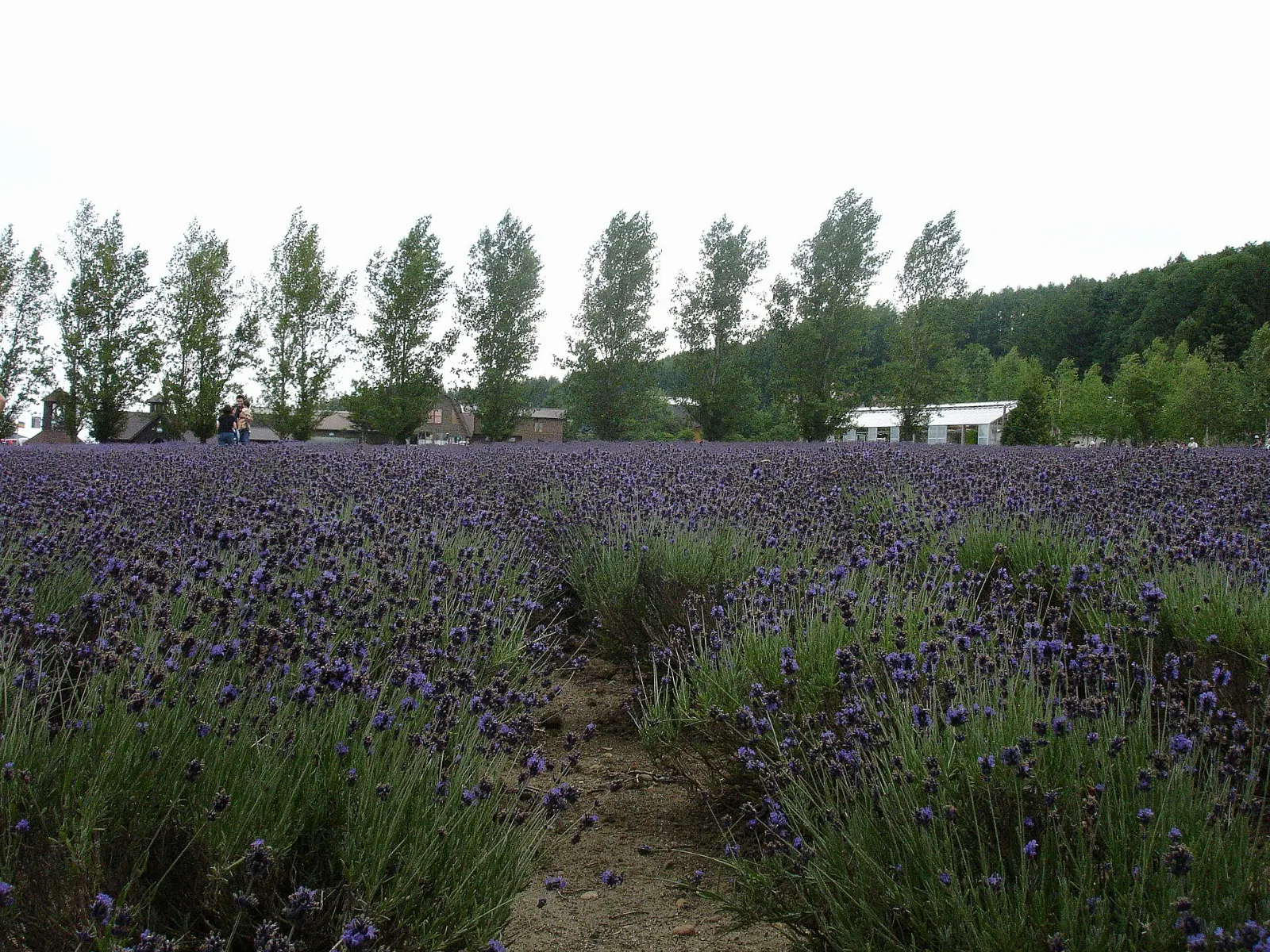
Farm Tomita in Nakafurano is the best known of the flower farms, with lavender fields and long stripes of red, white, pink and orange blooms. Lavender usually peaks in July, which is also when the area is busiest.
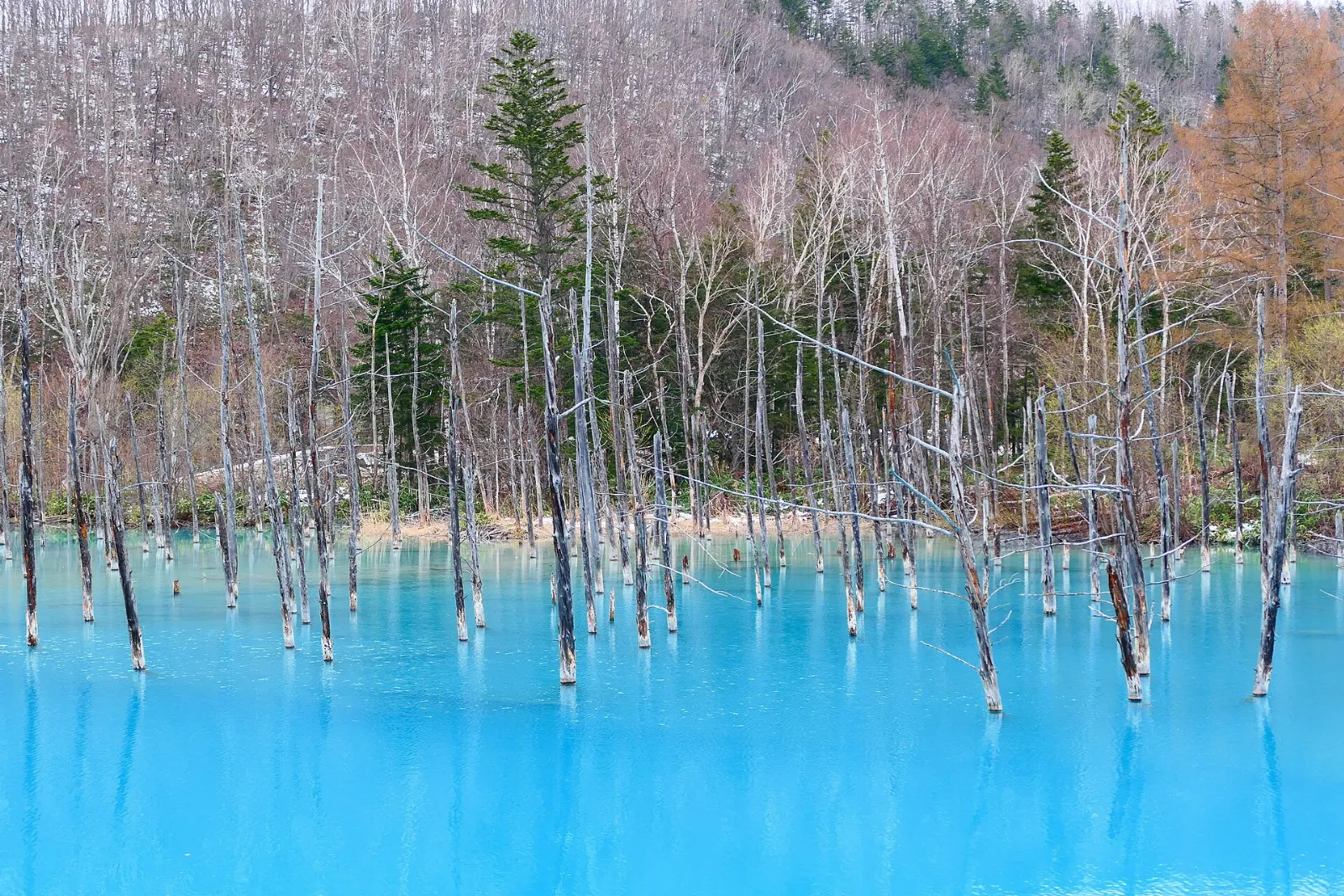
Biei and the Blue Pond
Biei is a gentler, quieter landscape of patchwork hills, lone trees and roadside viewpoints, best explored by car or rented bicycle along the Patchwork Road and Panorama Road.
The Blue Pond near Shirogane Onsen gets its color from minerals carried into the water. Photo: MaedaAkihiko, Wikimedia Commons, CC BY-SA 4.0
Asahiyama Zoo
In Asahikawa, Hokkaido's second city, Asahiyama Zoo is famous for enclosures that let you watch animals from unusual angles, such as tunnels through the penguin and seal tanks. In winter, keepers lead the penguins on a short walk through the snow.
Asahidake and Daisetsuzan National Park
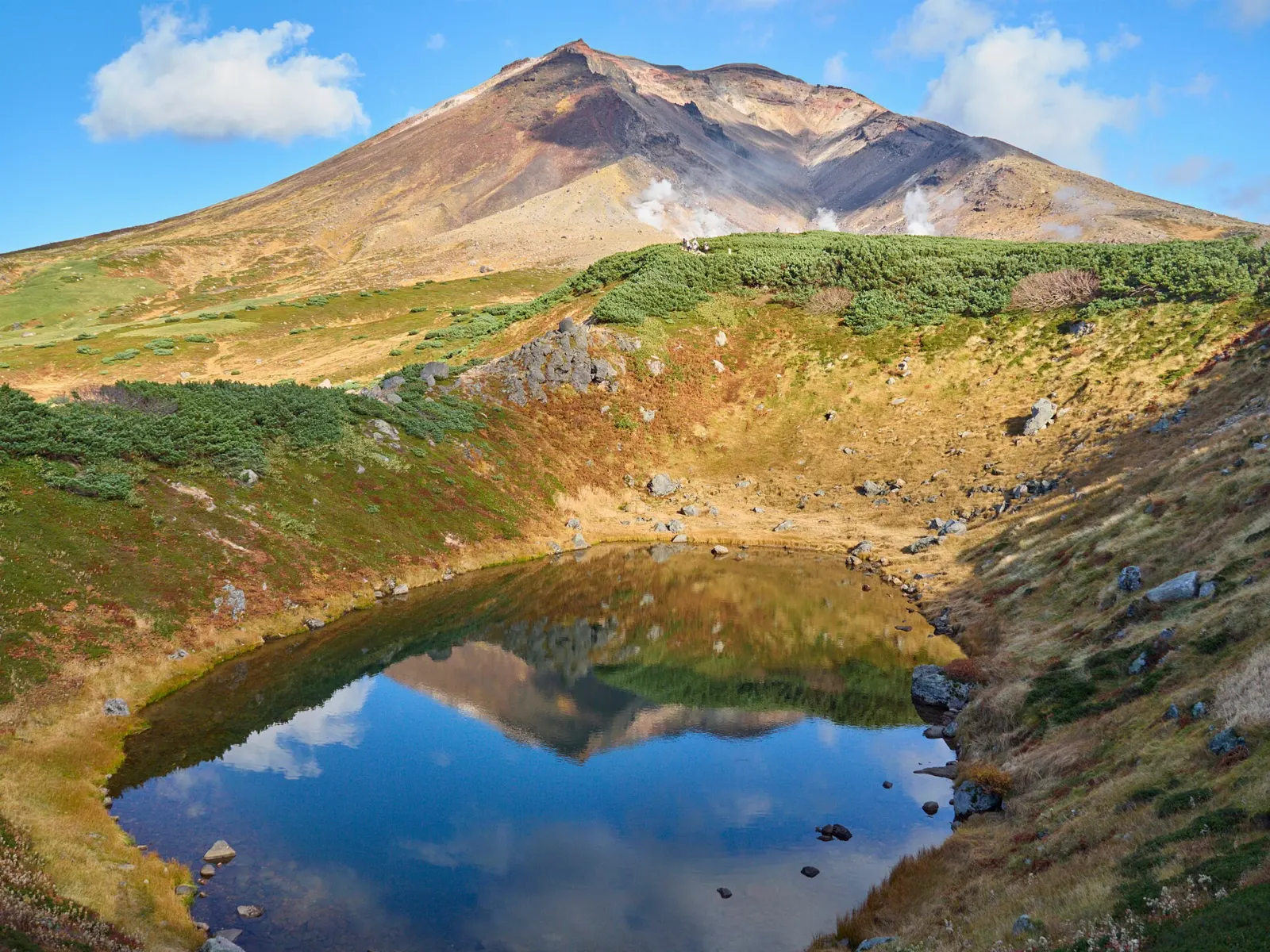
Asahidake, the highest mountain in Hokkaido, is reached by a ropeway from Asahidake Onsen. From the upper station a loop trail circles a pond past steaming fumaroles, and alpine flowers bloom in midsummer.
Asahidake is the highest peak in Hokkaido and rises within Daisetsuzan National Park. Photo: lumoplank, Wikimedia Commons, CC0
Shiretoko, the hot spring towns and Hakodate
Shiretoko Five Lakes
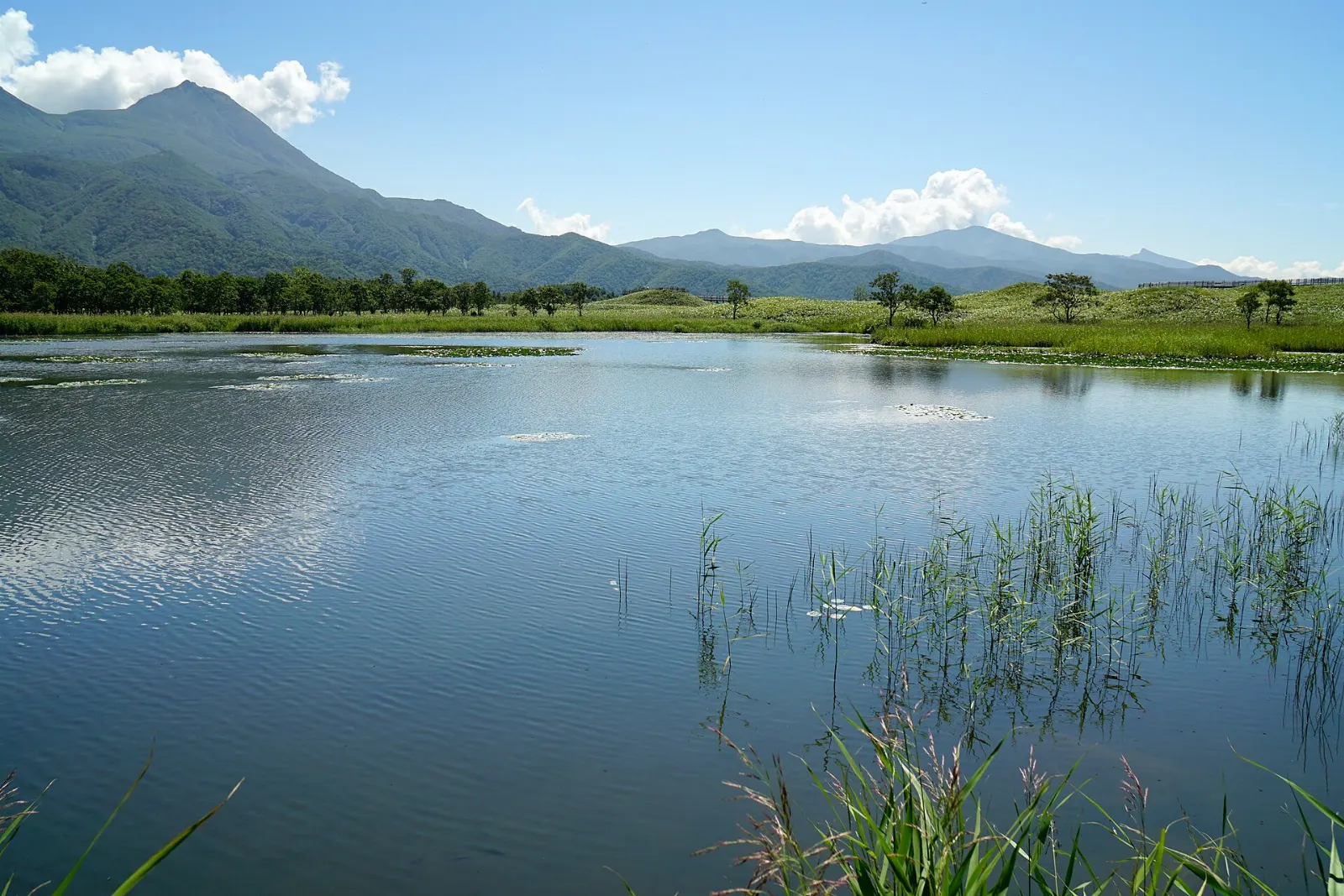
On the remote eastern tip of the island, the Shiretoko Five Lakes offer the easiest way into the peninsula's wilderness. An elevated wooden boardwalk leads to a viewpoint over the first lake with the Shiretoko mountains behind it, and is built high enough to keep you safe from bears.
The Shiretoko Five Lakes sit below the mountains of the Shiretoko Peninsula, a UNESCO World Heritage Site. Photo: 663highland, Wikimedia Commons, CC BY 2.5
Noboribetsu Jigokudani
Noboribetsu is Hokkaido's best known hot spring town, about an hour from New Chitose Airport. Its source is Jigokudani, or Hell Valley, a crater of yellow and rust colored rock where steam and bubbling water rise from the ground.
Jigokudani, or Hell Valley, is the volcanic source of the hot spring water used in Noboribetsu Onsen. Photo: Frank Schulenburg, Wikimedia Commons, CC BY-SA 4.0
Lake Toya
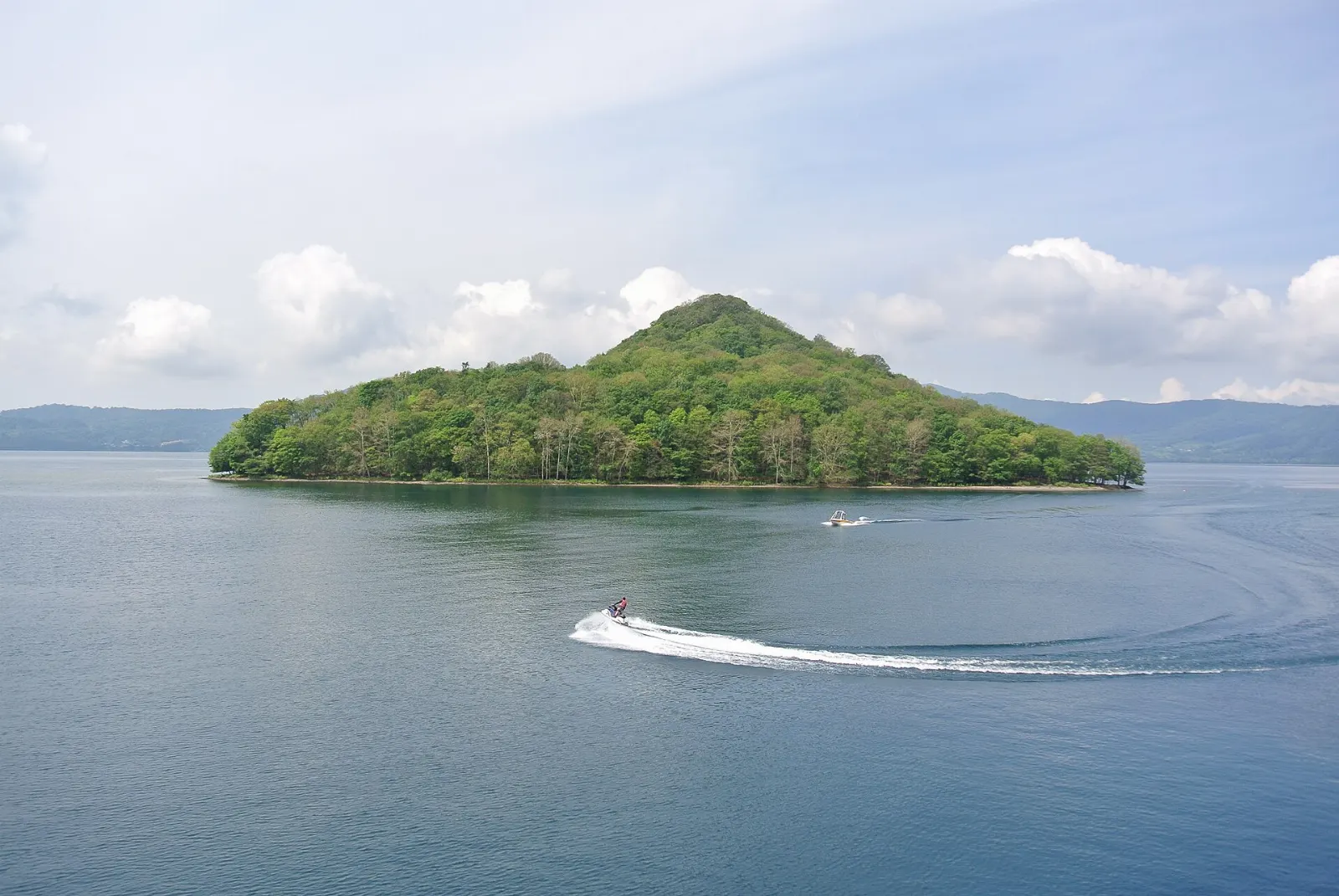
Nearby, Lake Toya is a nearly round caldera lake with islands in the middle and an active volcano, Mount Usu, on its southern shore. You can ride a ropeway up Mount Usu, see Showa-shinzan, a lava dome that rose out of farmland in the 1940s, and walk trails through areas damaged by the 2000 eruption.
Lake Toya is a caldera lake in Shikotsu-Toya National Park with a cluster of islands at its center. Photo: Suicasmo, Wikimedia Commons, CC BY-SA 4.0
Hakodate
Hakodate, at the southern tip of the island, was one of the first Japanese ports opened to foreign trade in the 1850s, and its Motomachi slopes are lined with Western-style churches and old consulate buildings.
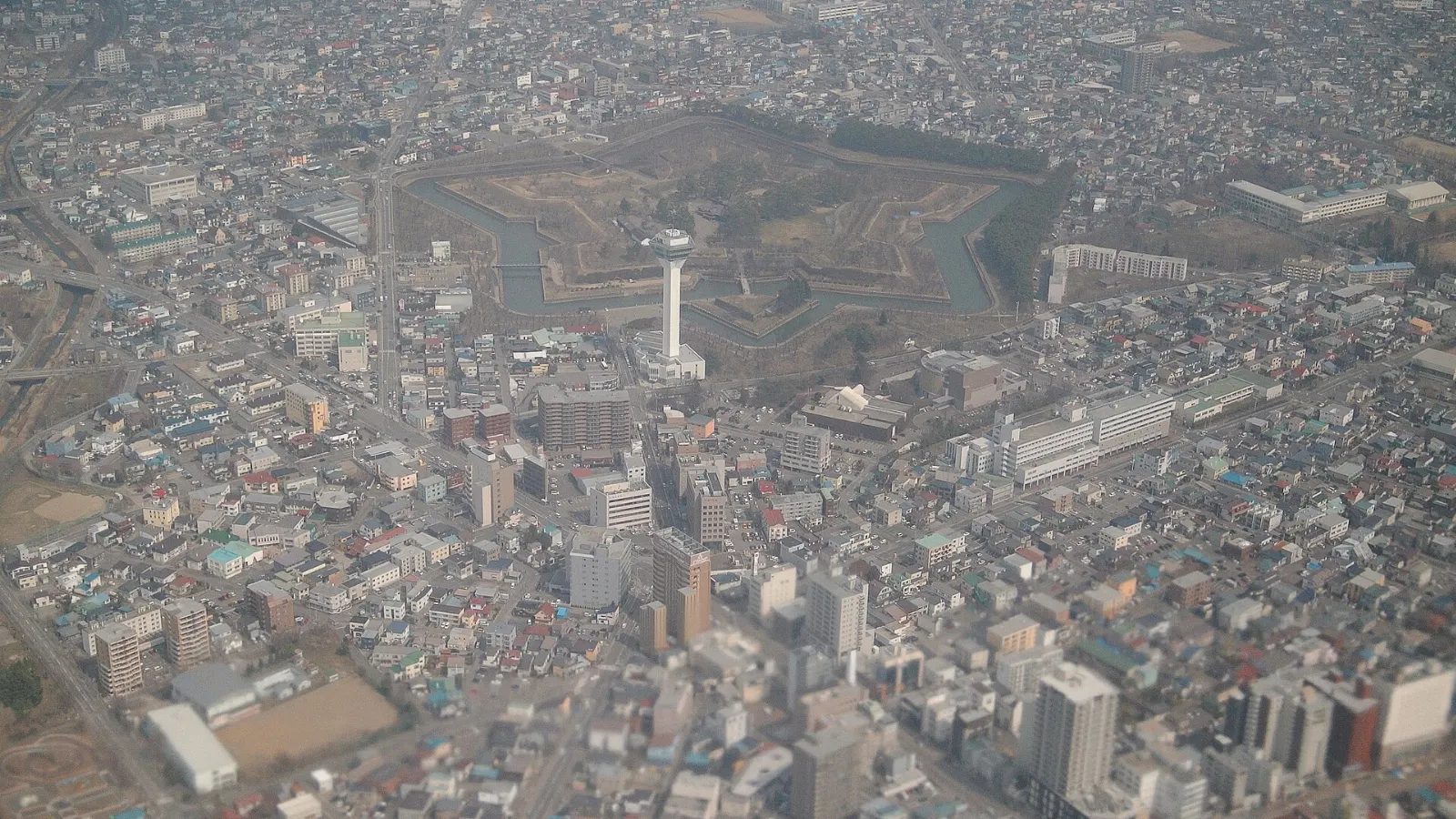
Don't miss Goryokaku, a star-shaped fort completed in the 1860s that was the site of the last battle of the Boshin War. Today its moat and walls are a park famous for cherry blossoms in spring, and Goryokaku Tower beside it gives the best view of the star shape.
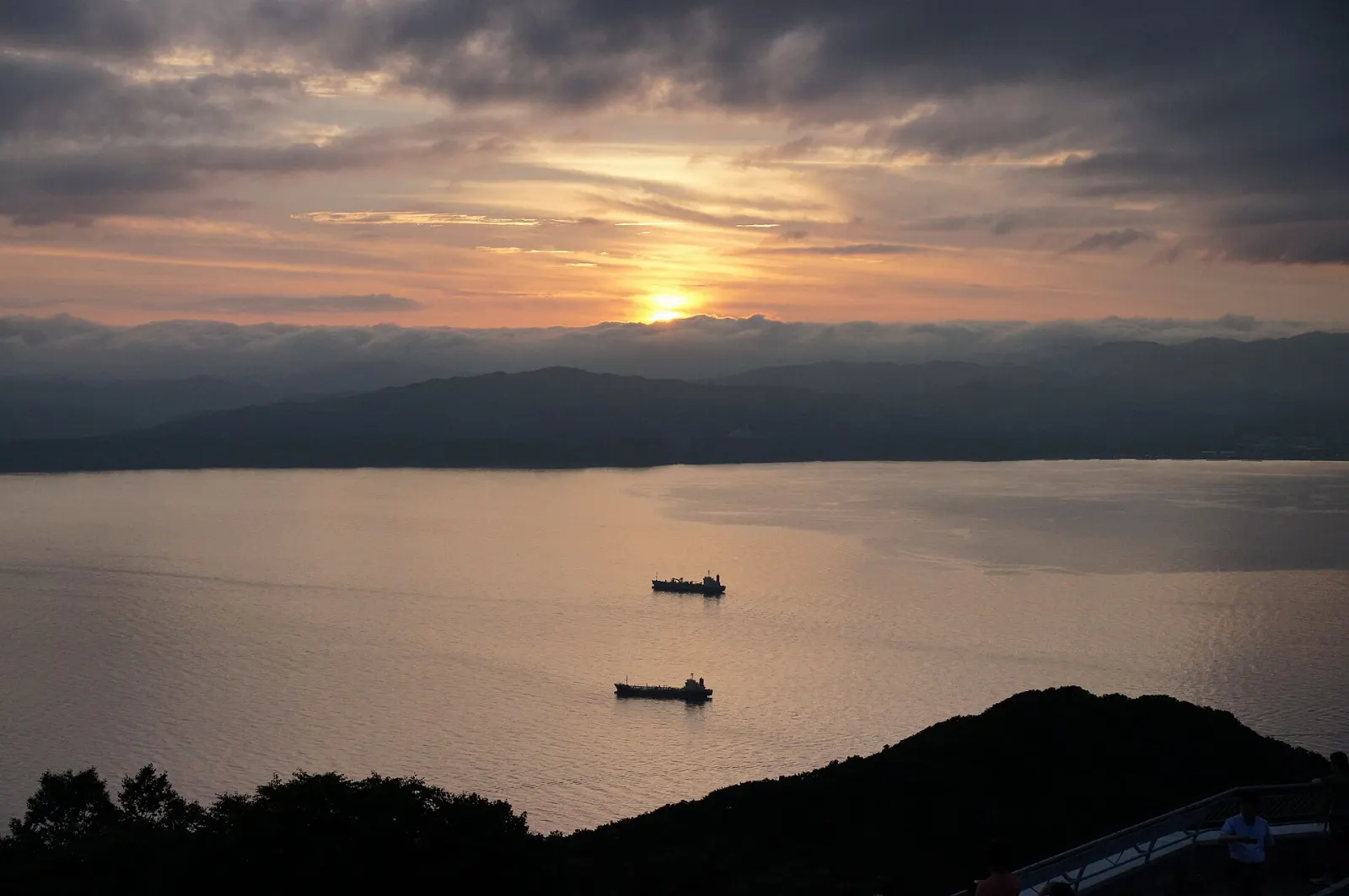
From Mount Hakodate, the city lights fill the narrow strip of land between two bays. Photo: 663highland, Wikimedia Commons, CC BY 2.5
Goryokaku is a star-shaped Western-style fort completed in the 1860s in Hakodate.Photo: MIKI Yoshihito, Wikimedia Commons, CC BY 2.0
Ad
Food and local flavors
Eating well is one of the main reasons to come.
Seafood is the other headline. Kaisendon, a bowl of rice heaped with sashimi, sea urchin and salmon roe, is the classic breakfast at the Hakodate Morning Market near the station and at Nijo Market in central Sapporo.
Leave room for dairy. Hokkaido milk goes into soft serve sold at almost every viewpoint, along with cheese, butter cookies and cheesecake.
Popular dishes to try in Hokkaido
Miso ramen Sapporo is the home of miso ramen, a rich bowl often topped with butter and corn; Hakodate is known for clear salt-based shio ramen; and Asahikawa for soy-based broth.Photo: Sashimiteishoku, Wikimedia Commons, CC0Soup curry Soup curry, a thin, spiced broth with large pieces of vegetables and chicken, started in Sapporo and is worth trying at least once.Photo: Otkoyg, Wikimedia Commons, CC BY-SA 4.0Jingisukan Jingisukan, grilled lamb and vegetables cooked on a dome-shaped skillet, is a local favorite, especially with beer.Photo: Yasu (talk), Wikimedia Commons, CC BY-SA 3.0Kaisendon Kaisendon, a bowl of rice heaped with sashimi, sea urchin and salmon roe, is the classic breakfast at the Hakodate Morning Market near the station and at Nijo Market in central…Photo: nesnad, Wikimedia Commons, CC BY 3.0
Where to stay
Sapporo works best as a base for your first few nights. Stay near Sapporo Station if you plan many train day trips, around Odori if you want shops and parks on your doorstep, or in Susukino if you want the city's densest cluster of bars, ramen shops and late dining.
For Furano and Biei, sleep in the area rather than day-tripping from Sapporo, so you can be in the fields in early light. Pension-style guesthouses and small inns suit couples and families with a car.
In the south, spend at least one night at an onsen inn in Noboribetsu or on the shore of Lake Toya, where dinner and breakfast are often included and the bath is the main event.
Where to stay in Hokkaido
Odori Stay near Sapporo Station if you plan many train day trips, around Odori if you want shops and parks on your doorstep, or in Susukino if you want the city's densest cluster of…Photo: contri, Wikimedia Commons, CC BY-SA 4.0Susukino Stay near Sapporo Station if you plan many train day trips, around Odori if you want shops and parks on your doorstep, or in Susukino if you want the city's densest cluster of…Photo: Ninosan, Wikimedia Commons, CC0Biei For Furano and Biei, sleep in the area rather than day-tripping from Sapporo, so you can be in the fields in early light.Photo: OKJaguar, Wikimedia Commons, CC BY-SA 4.0Sapporo Where to staySapporo works best as a base for your first few nights.Photo: Ermell, Wikimedia Commons, CC BY-SA 4.0
Ad
Best time to visit
Summer, from late June through August, is the most comfortable time for touring: days are warm but rarely hot or muggy, the flower farms bloom, and mountain trails are open.
Autumn arrives first in the mountains. Daisetsuzan turns red and gold in September, and color moves down to the lowlands and cities through October.
Winter, from December to March, brings heavy snow and cold, especially inland.
Getting there and getting around
New Chitose Airport, south of Sapporo, is the main gateway, with frequent flights from Tokyo, Osaka and other Japanese cities and international routes from across Asia.
By rail, the Hokkaido Shinkansen runs from Tokyo through the undersea Seikan Tunnel to Shin-Hakodate-Hokuto, and limited express trains continue to Sapporo.
Outside the cities, a rental car makes a big difference.
Ad
A suggested itinerary
First day
Arrive at New Chitose and take the train to Sapporo.
Second day
Start with breakfast at Nijo Market, then take the train to Otaru.
Third day
Pick up a rental car and drive to Furano.
Fourth day
Drive to Asahidake for the ropeway and loop walk, then continue to Asahikawa for Asahiyama Zoo and a bowl of soy ramen.
Fifth day
Return the car and head south by train or car to Noboribetsu.
Sixth day
Visit Lake Toya and Mount Usu, then continue to Hakodate in the evening for the night view from Mount Hakodate.
Seventh day
Eat breakfast at the morning market, explore Motomachi and Goryokaku, then take the Shinkansen back toward Tokyo or fly out of Hakodate.
Practical tips
Book summer and Snow Festival accommodation well in advance, especially in Furano, Biei and Sapporo.
Get an International Driving Permit before you leave home if you plan to rent a car; it cannot be issued in Japan.
Take bear safety seriously in national parks: follow posted closures, carry a bell or talk while hiking, and never leave food out.
Pack layers year-round. Mountain areas can be cold in summer, and winter temperatures inland drop well below freezing.
Learn basic onsen etiquette: wash before entering the bath, keep towels out of the water, and check tattoo policies in advance.
Carry some cash for markets, small inns and rural shops, though cards and IC transit cards are widely accepted in cities.