WiserMap — Choose wisely. Connect locally.Choose wisely. Connect locally.Add your business
Mallorca, Spain · Travel guide

Mallorca Spain Palma Cathedral and Tramuntana Villages

Mallorca is the largest of Spain's Balearic Islands, and it is far more varied than its reputation for package beach holidays suggests.

By WiserMap TravelUpdated October 2026 9 places11 min read
FacebookXLinkedIn

This guide covers the best places to visit in Mallorca, grouped by region, with advice on how long to allow, how to beat the crowds, where to stay, what to eat and how to get around.

At a glance Mallorca
  1. Best timeMay, June, September and October for warm seas and fewer crowds; February for almond blossom.
  2. How longA week lets you combine Palma, the mountains and the beaches; five days is a good minimum.
  3. Getting thereFly into Palma de Mallorca Airport or take a ferry from Barcelona, Valencia or Dénia.

Why visit Mallorca

The island packs a remarkable range of landscapes into a small space. The Serra de Tramuntana, a UNESCO World Heritage cultural landscape since 2011, runs the length of the northwest coast, its terraced olive groves and dry stone walls shaped by centuries of farming.

Mallorca also has deep history. Romans founded Pollentia near today's Alcúdia, Muslim rulers held the island for centuries, and King James I of Aragon conquered it in 1229, setting off the building of Palma's great cathedral.

Palma and its old town

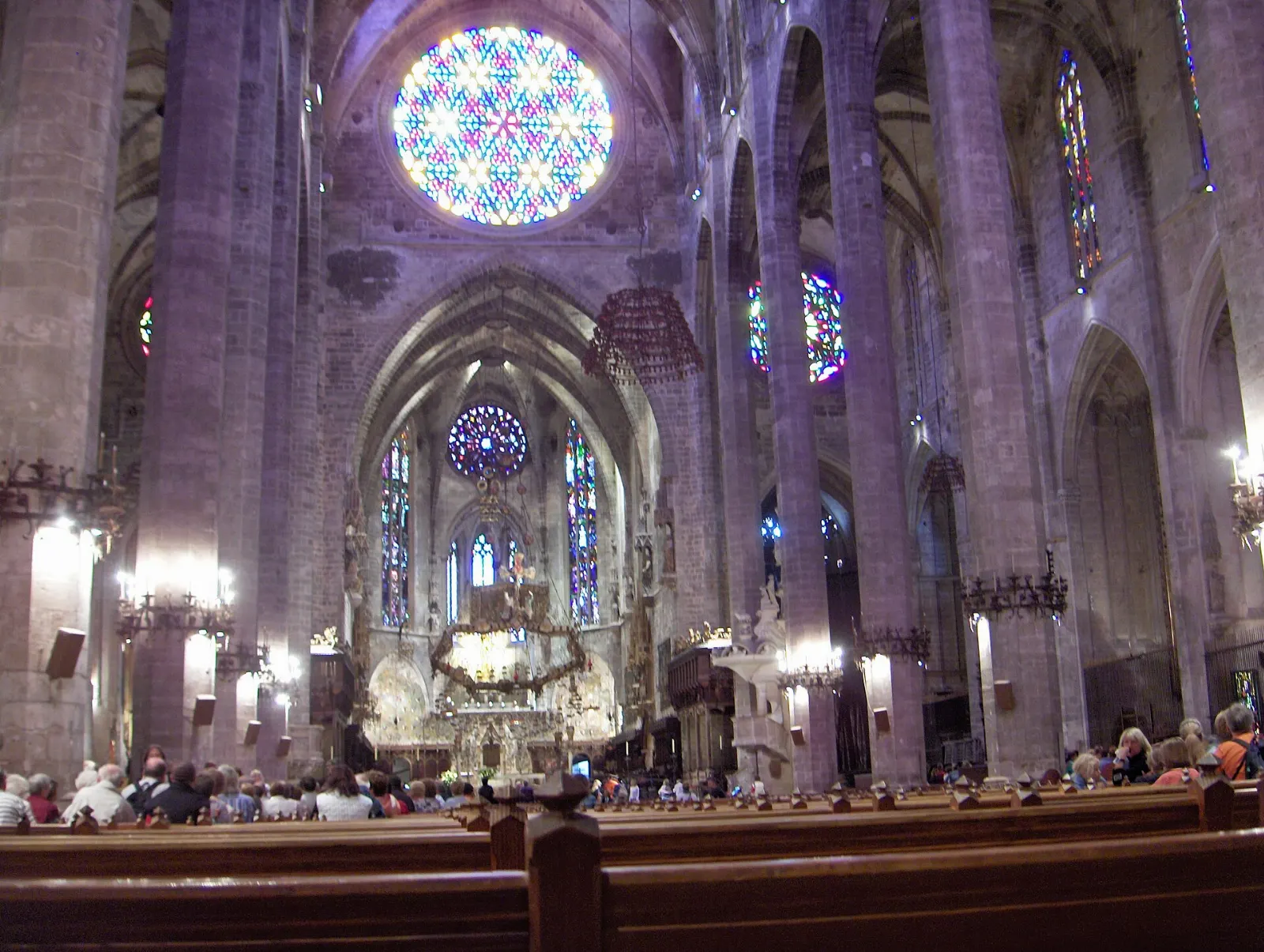
Tall slender columns and a great rose window inside Palma Cathedral, Mallorca, Spain

Palma Cathedral

La Seu, as locals call it, rises from the old sea walls of Palma and dominates every view of the city from the bay. Begun after the Christian conquest and built over several centuries, it has an exceptionally tall Gothic nave supported by slender columns and lit by an enormous rose window.

Right beside the cathedral, the Royal Palace of La Almudaina, originally an Islamic fortress, remains an official residence of the Spanish royal family and is open to visitors.

The nave of Palma Cathedral is lit by one of the largest Gothic rose windows in Europe. Photo: No machine-readable author provided. Streppel assumed (based on copyright claims)., Wikimedia Commons, CC BY-SA 3.0
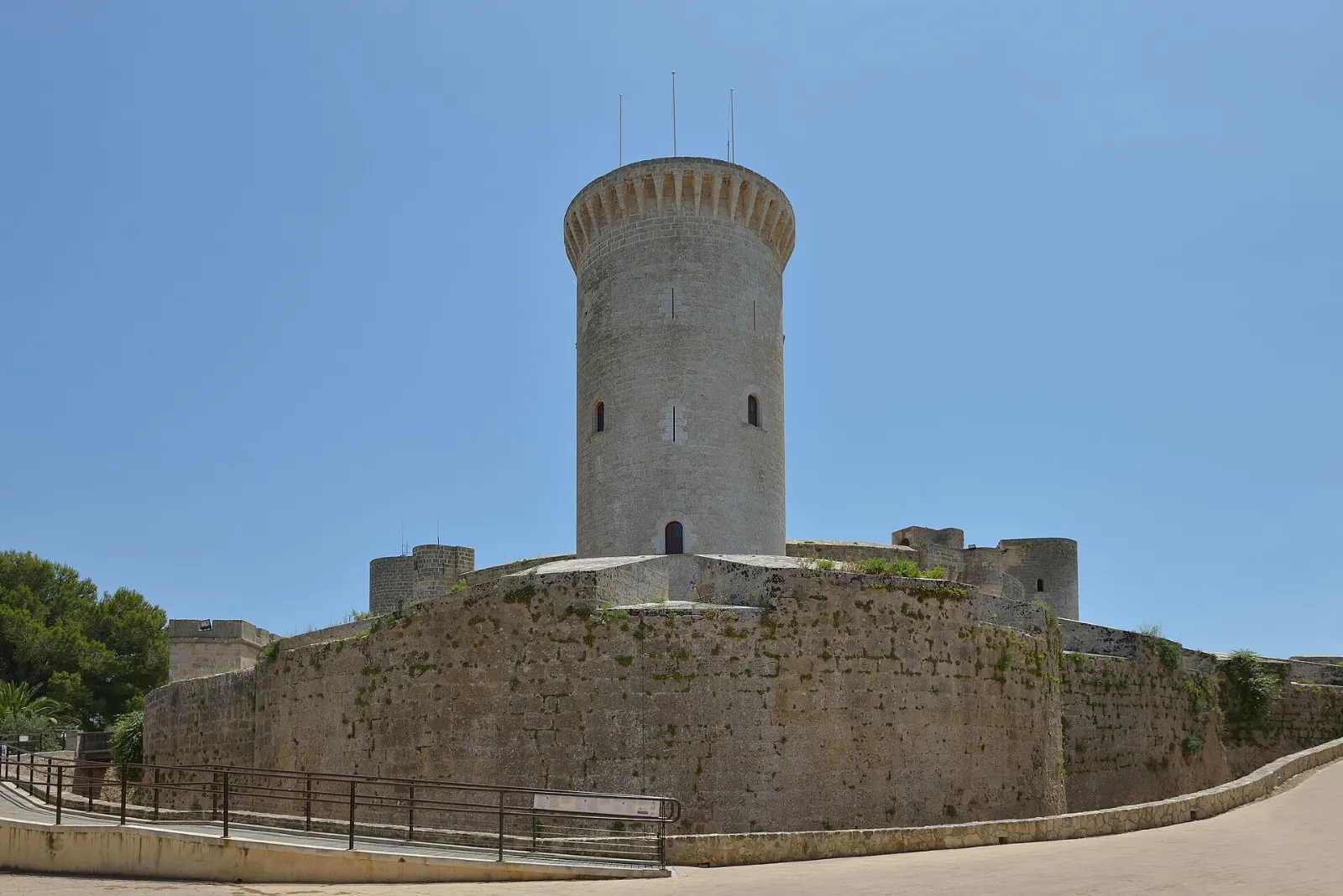
A round Gothic castle with a central courtyard on a wooded hill above Palma, Mallorca, Spain

Bellver Castle

On a wooded hill west of the center, Bellver Castle was built in the fourteenth century for King James II of Majorca and is one of very few circular castles in Europe. It surrounds a round two-story courtyard and houses the city history museum, and the rooftop terrace has wide views over the bay, the port and the mountains.

Bellver Castle, built in the fourteenth century, is one of the few circular castles in Europe. Photo: This Photo was taken by Wolfgang Moroder. Feel free to use my photos, but please mentio…, Wikimedia Commons, CC BY-SA 3.0

The Serra de Tramuntana

Stone houses and the bell tower of the Charterhouse in Valldemossa set against mountains, Mallorca, Spain

Valldemossa

Set in a high valley about half an hour from Palma, Valldemossa is one of the island's most beautiful villages, with stone houses, flower pots on every doorstep and views down to the coast.

The Charterhouse of Valldemossa hosted Frédéric Chopin and George Sand in the winter of 1838 and 1839. Photo: Isiwal, Wikimedia Commons, CC BY-SA 4.0

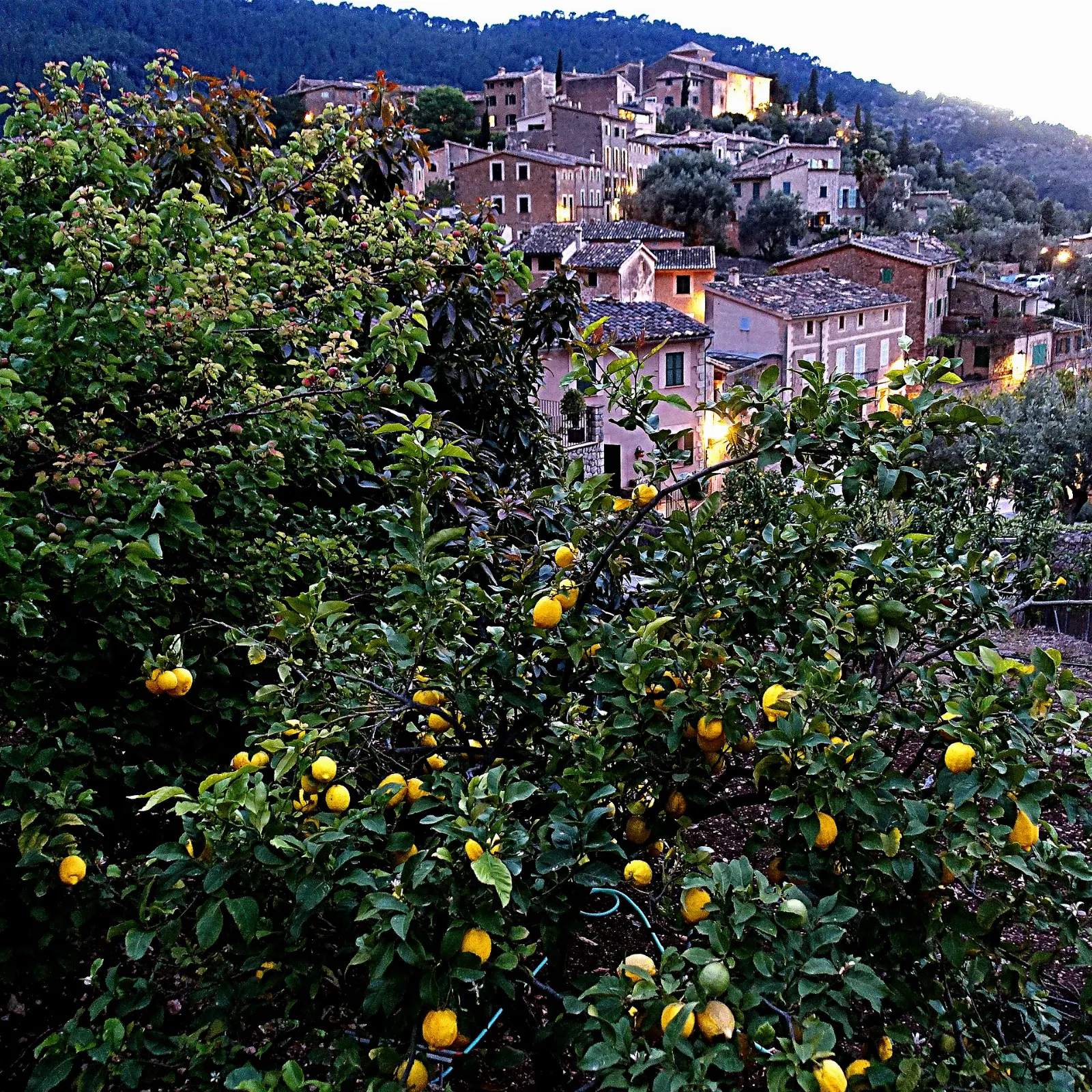
Honey-colored stone houses climbing a hill above terraced olive groves in Deià, Mallorca, Spain

Deià

A few kilometers along the coast road, Deià tumbles down a hillside above terraced olive groves. The English poet and novelist Robert Graves lived here for decades, and his home, Ca n'Alluny, is now a museum; he is buried in the small churchyard at the top of the village.

Deià climbs a hillside in the Serra de Tramuntana above terraced olive groves. Photo: Pom' from France, European Union, Wikimedia Commons, CC BY-SA 2.0

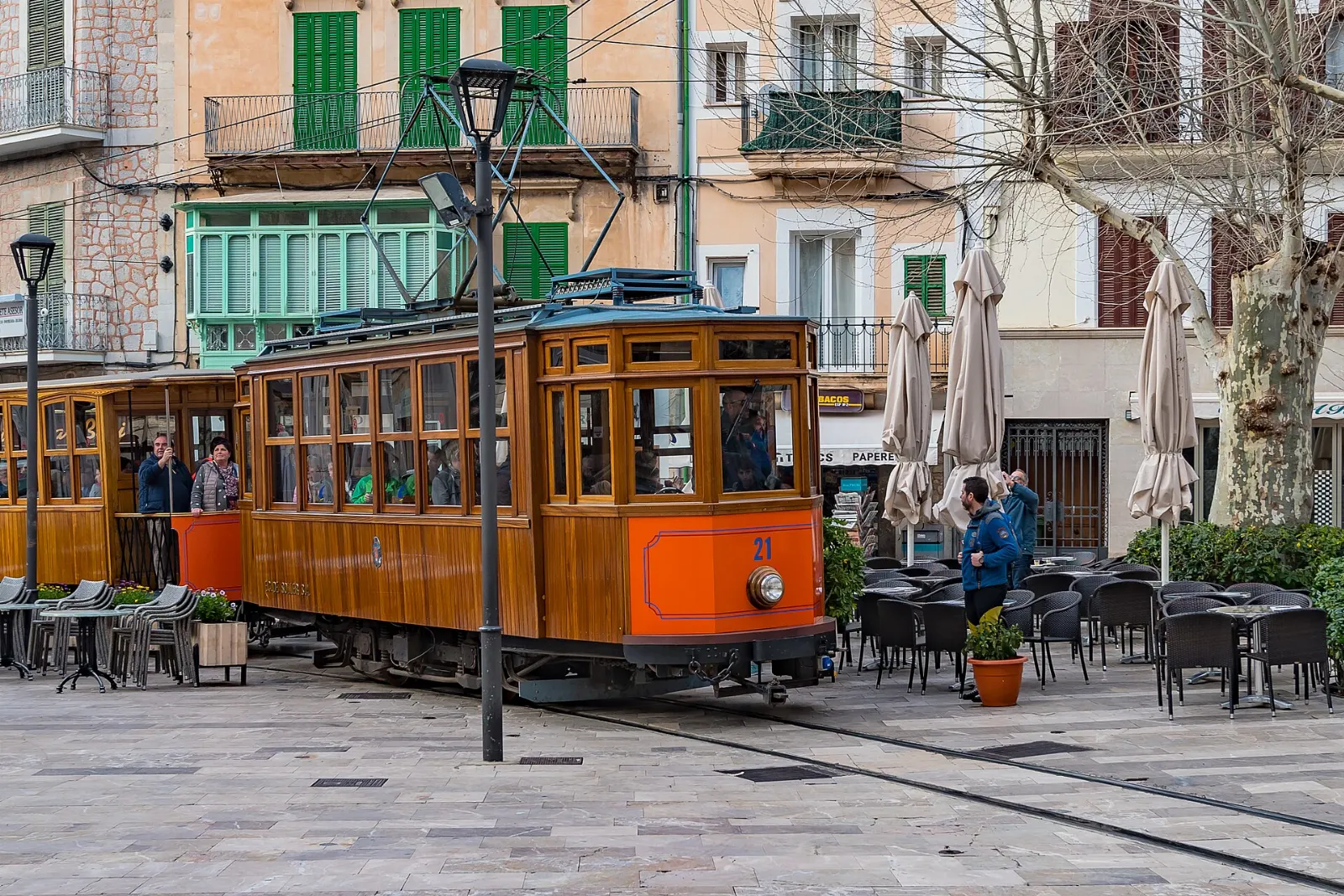
A vintage wooden tram running along the seafront at Port de Sóller, Mallorca, Spain

Sóller and Port de Sóller

Sóller lies in a valley of orange and lemon groves, and its prosperity from the citrus trade paid for the narrow-gauge railway to Palma, built between 1911 and 1912. The historic wooden electric train climbs through the mountains and thirteen tunnels before descending into the valley, and from Sóller a vintage tram rattles down to Port de Sóller, a horseshoe bay with a seafront promenade.

The Sóller tram links the town of Sóller with its harbor, connecting with the historic train from Palma. Photo: Isiwal, Wikimedia Commons, CC BY-SA 4.0

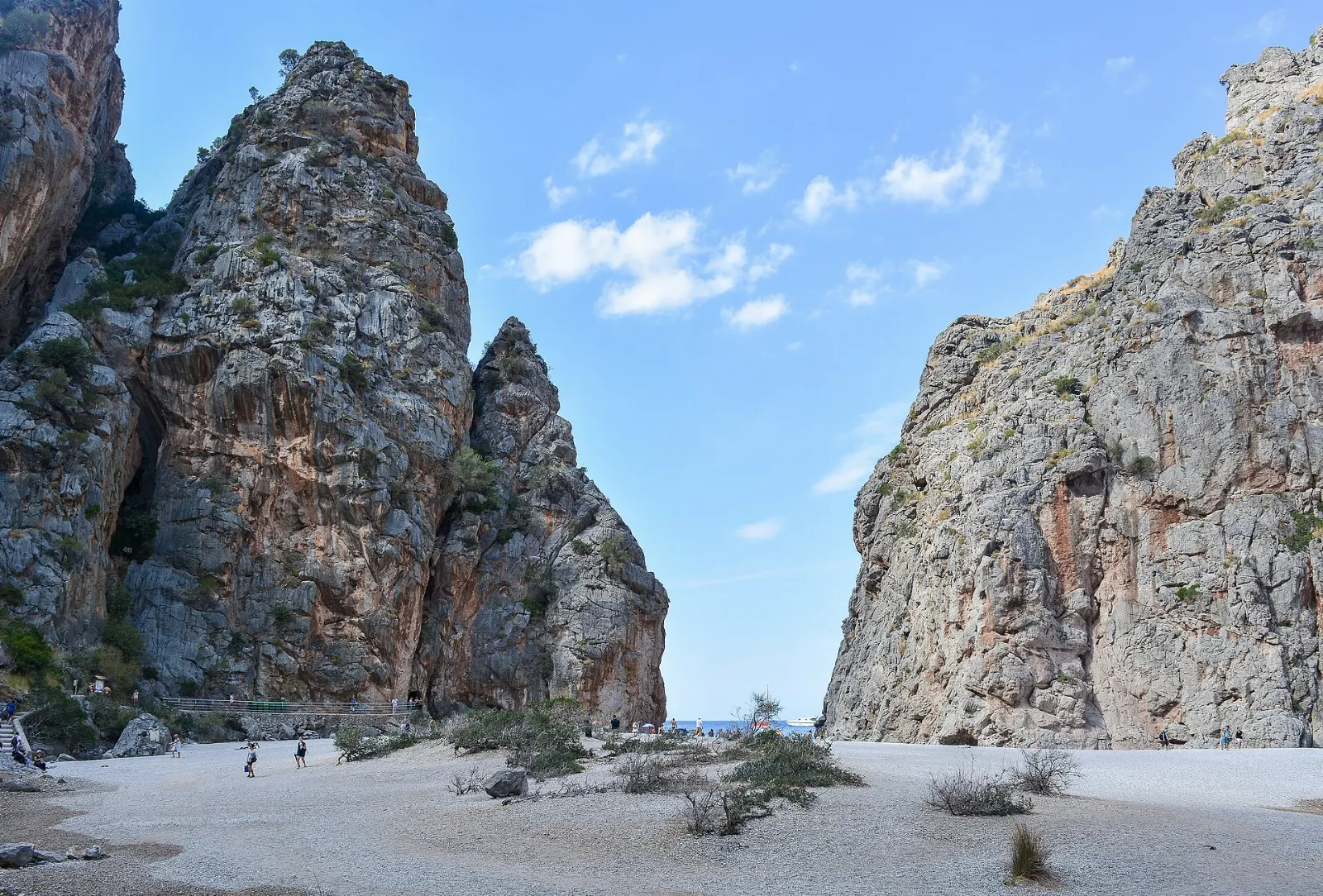
A pebble beach at the mouth of a towering limestone gorge at Sa Calobra, Mallorca, Spain

Sa Calobra and the Torrent de Pareis

The road down to Sa Calobra, engineered by Antonio Parietti in the early twentieth century, twists through a famous tangle of hairpins and a loop known as the Nus de Sa Corbata, the tie knot. At the bottom, a path through tunnels in the rock leads to the mouth of the Torrent de Pareis, where a towering gorge meets the sea at a pebble beach.

The Torrent de Pareis gorge reaches the sea through a narrow cove at Sa Calobra. Photo: Isiwal, Wikimedia Commons, CC BY-SA 3.0

The north and the east coast

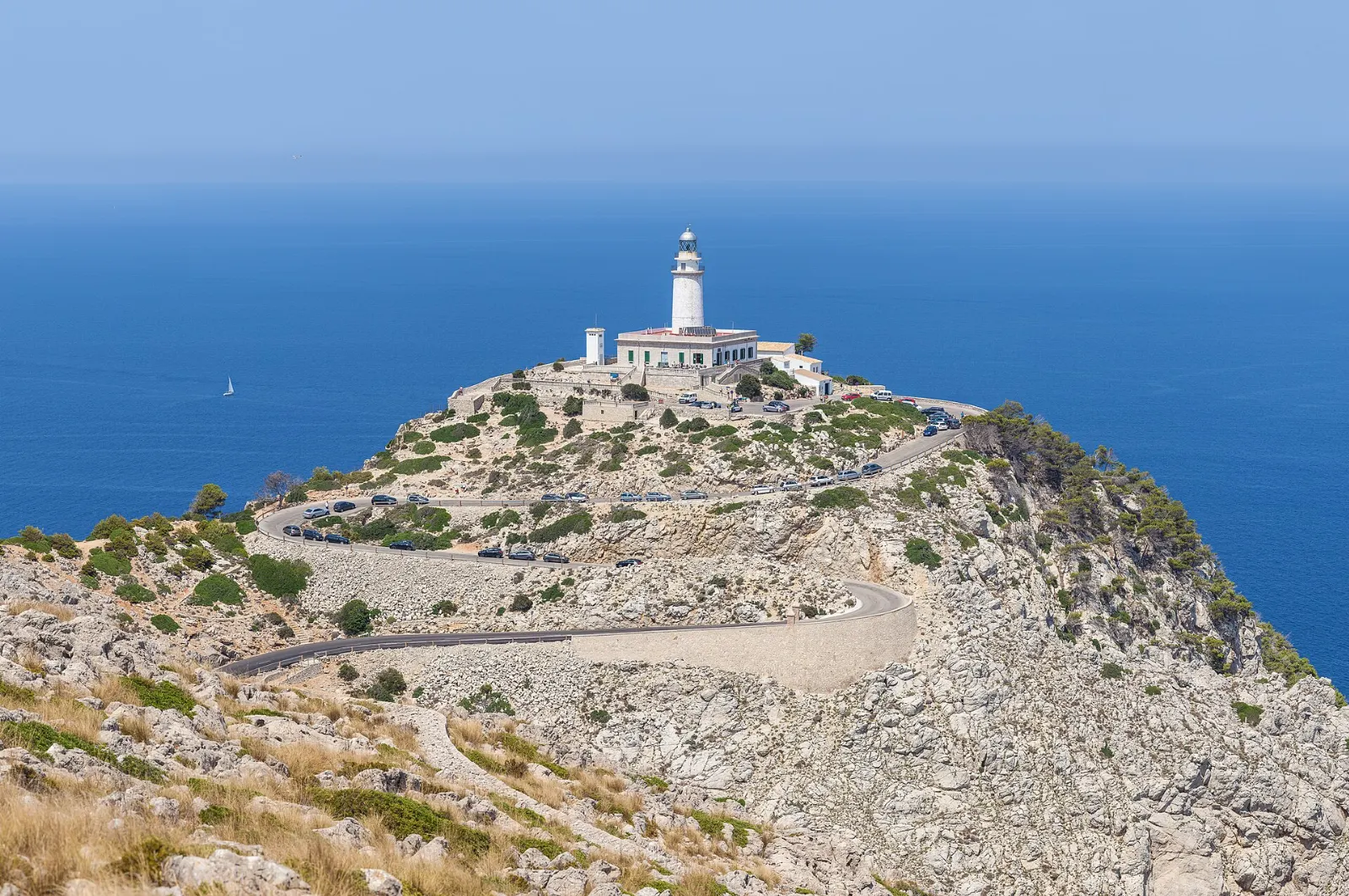
A lighthouse perched on the tip of a cliff-lined peninsula above the sea, Mallorca, Spain

Cap de Formentor

Mallorca's northernmost peninsula is a narrow ridge of cliffs reached by a spectacular road of about thirteen and a half kilometers from Port de Pollença, also built by Parietti.

Nearby Pollença is a handsome inland town where three hundred and sixty five stone steps lead up the Calvari to a small chapel with views across the bay. Its Sunday market is one of the liveliest on the island.

Formentor Lighthouse, opened in 1863, stands at the northern tip of Mallorca. Photo: Thomas Wolf, www.foto-tw.de, Wikimedia Commons, CC BY-SA 3.0 de

Medieval stone walls and a gateway around the old town of Alcúdia, Mallorca, Spain

Alcúdia

Alcúdia's old town is still ringed by medieval walls with gateways you can walk through, and just outside lie the excavated remains of Pollentia, the most important Roman city on the island, including a small theater.

Medieval walls still encircle much of the old town of Alcúdia in northern Mallorca. Photo: Adam Jones from Kelowna, BC, Canada, Wikimedia Commons, CC BY-SA 2.0

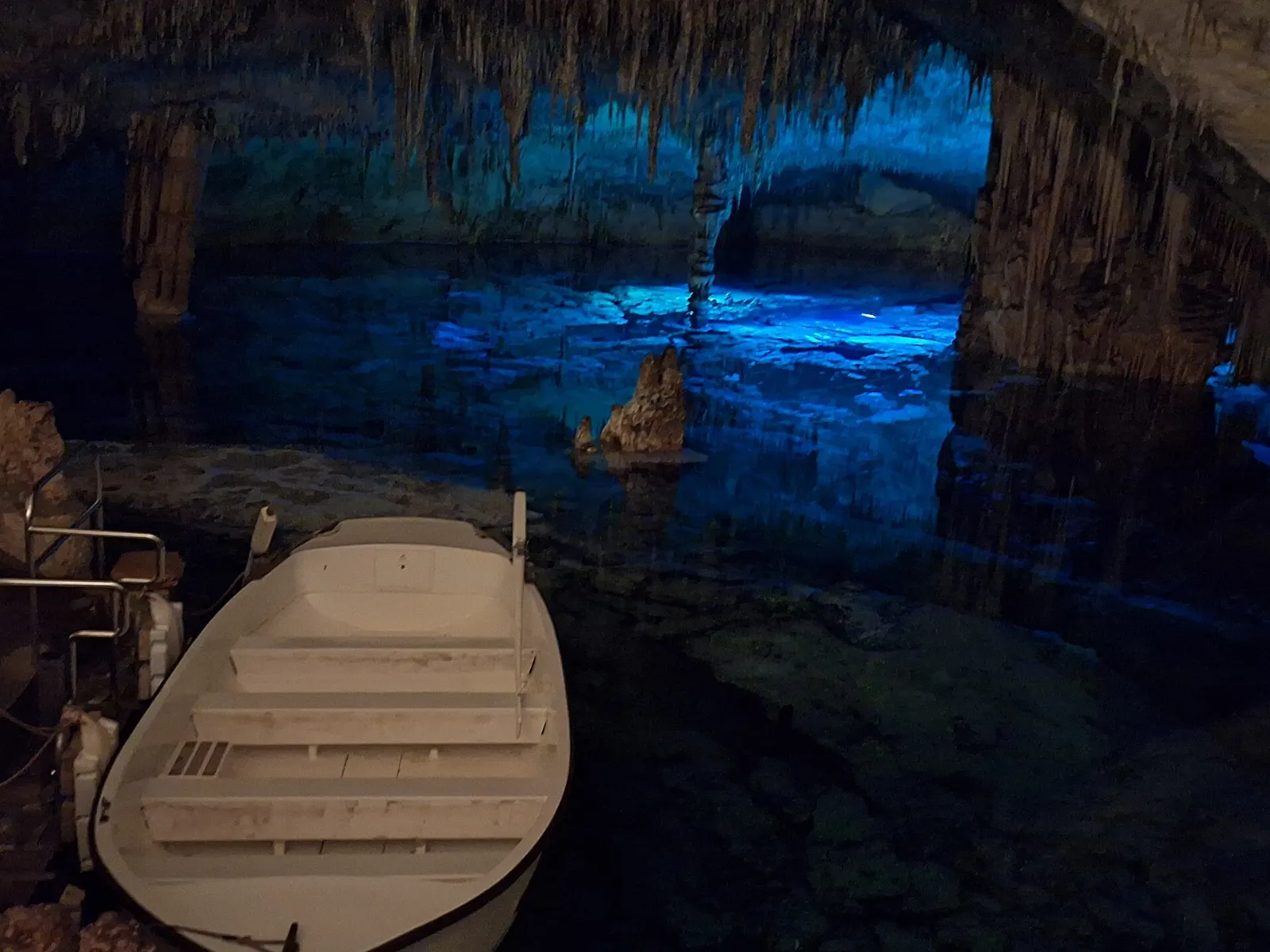
An underground lake reflecting illuminated stalactites inside the Caves of Drach, Mallorca, Spain

Caves of Drach

Near Porto Cristo on the east coast, the Caves of Drach are a chain of four connected caves stretching for over two kilometers, decorated with stalactites and stalagmites.

Further south, the coves of the east and southeast coast, such as Cala Mondragó in its natural park and the much-photographed Caló des Moro near Santanyí, offer some of the clearest water on the island. Go early, as small coves fill fast and parking is limited.

Lake Martel inside the Caves of Drach is named after the French cave explorer Édouard-Alfred Martel. Photo: Steffen Mokosch, Wikimedia Commons, CC BY-SA 4.0

Food and local flavors

Mallorcan cooking is hearty and rooted in the countryside. The ensaïmada, a spiral pastry made with lard and dusted with powdered sugar, is the island's signature breakfast, sold plain or filled with pumpkin jam or cream.

Look also for tumbet, layers of fried potato, aubergine and peppers with tomato sauce, frit mallorquí, a fry-up of offal or lamb with vegetables, and arròs brut, a rich rice soup with meat and spices.

Popular dishes to try in Mallorca

Ensaïmada in Mallorca, Spain
Ensaïmada The ensaïmada, a spiral pastry made with lard and dusted with powdered sugar, is the island's signature breakfast, sold plain or filled with pumpkin jam or cream.Photo: Zarateman, Wikimedia Commons, CC0
Sobrassada in Mallorca, Spain
Sobrassada Sobrassada, a soft cured pork sausage seasoned with paprika, is spread on bread or cooked with honey.Photo: Slastic, Wikimedia Commons, Public domain
Pa amb oli in Mallorca, Spain
Pa amb oli Pa amb oli, bread rubbed with tomato and drizzled with olive oil, comes topped with cheese or ham and a side of pickled samphire and olives.Photo: Rafael Ortega Diaz, Wikimedia Commons, CC BY-SA 3.0

Where to stay

Palma suits travelers who want city life, museums and restaurants year-round, with the old town best for atmosphere and Santa Catalina for food and nightlife.

Pollença, Port de Pollença and Alcúdia in the north suit families and cyclists, with long beaches, gentle water and easy access to Formentor. Rural estates and country houses known as fincas, scattered across the interior, are perfect for couples seeking peace and a pool.

Where to stay in Mallorca

Santa Catalina, Mallorca, Spain
Santa Catalina Where to stayPalma suits travelers who want city life, museums and restaurants year-round, with the old town best for atmosphere and Santa Catalina for food and nightlife.Photo: Chixoy, Wikimedia Commons, CC BY-SA 3.0
Port de Sóller, Mallorca, Spain
Port de Sóller Sóller and Port de Sóller are ideal for hikers and anyone wanting the mountains on their doorstep, with a quieter evening scene.Photo: Kritzolina, Wikimedia Commons, CC BY-SA 4.0
Alcúdia, Mallorca, Spain
Alcúdia Pollença, Port de Pollença and Alcúdia in the north suit families and cyclists, with long beaches, gentle water and easy access to Formentor.Photo: Kritzolina, Wikimedia Commons, CC BY-SA 4.0
Formentor, Mallorca, Spain
Formentor Pollença, Port de Pollença and Alcúdia in the north suit families and cyclists, with long beaches, gentle water and easy access to Formentor.Photo: Thomas Wolf, www.foto-tw.de, Wikimedia Commons, CC BY-SA 3.0 de

Best time to visit

The main season runs from April to October. July and August are hot, crowded and expensive, with the busiest roads and beaches.

Winter is mild and quiet, and many coastal resorts close, but Palma stays open, and from late January into February the almond trees across the island burst into white and pink blossom.

Getting there and getting around

Palma de Mallorca Airport, about eight kilometers east of the city, is the island's only commercial airport and has frequent flights from across Spain and Europe, especially in summer. City buses connect it with central Palma.

A rental car gives you the most freedom, particularly for the mountains and remote coves, but be ready for narrow, winding roads, heavy summer traffic and scarce parking in villages.

A suggested itinerary

First day

Explore Palma: the cathedral and Almudaina in the morning, the old town lanes and the Mercat de l'Olivar at lunch, Bellver Castle in the afternoon and dinner in Santa Catalina.

Second day

Ride the historic train to Sóller, take the tram to Port de Sóller for lunch by the sea, and return by bus or train in the evening.

Third day

Drive the Ma-10 to Valldemossa early, continue to Deià for Robert Graves's house and a swim at Cala Deià, then watch the sunset from a coastal viewpoint.

Fourth day

Head north to Sa Calobra and the Torrent de Pareis in the morning, then continue to Pollença and climb the Calvari steps.

Fifth day

Visit Cap de Formentor at the start of the day, then explore Alcúdia's walls and Roman Pollentia before relaxing on the beach.

Sixth day

Cross to the east coast for the Caves of Drach, then spend the afternoon swimming in the coves around Santanyí.

Practical tips

  • Book rental cars, the Sóller train in summer and the Caves of Drach well ahead.
  • Start sightseeing early to beat tour coaches at Valldemossa, Sa Calobra and the popular coves.
  • Use paid car parks in villages and never block narrow streets or farm gates.
  • Carry plenty of water and sun protection when hiking, and avoid the mountains in the midday summer heat.
  • Give cyclists generous space on mountain roads, especially on blind bends.
  • Cover shoulders and remove hats inside churches and the cathedral.
MallorcaWISERMAP PLACEMallorca: photos, reviews & things to doSee traveler photos and reviews, or share your own →

More places to visit

All travel guides →