Hopewell Rocks New Brunswick Sea Stacks and Low Tide Walks
Hopewell Rocks is where the Bay of Fundy shows off its enormous tides. Twice a day the sea drains away from tall, tree-topped sea stacks of red-brown rock, and visitors walk on the ocean floor between them. A few hours later the water returns and the same spot becomes a place for paddling. Hopewell Cape sits in Albert County, New Brunswick, close to Fundy National Park and the Cape Enrage coast, so the Rocks make an ideal base for a coastal trip.
By WiserMap TravelUpdated October 20269 places10 min read
Best timeSummer is the busiest season, so aim for shoulder months, and always check the tide table before you set out.
How longPlan a full day for the Rocks and nearby coast, or two to three days to add Fundy National Park.
Getting thereFly into Moncton or Saint John, then drive; Hopewell Cape has limited public transit.
Ad
Why visit Hopewell Rocks
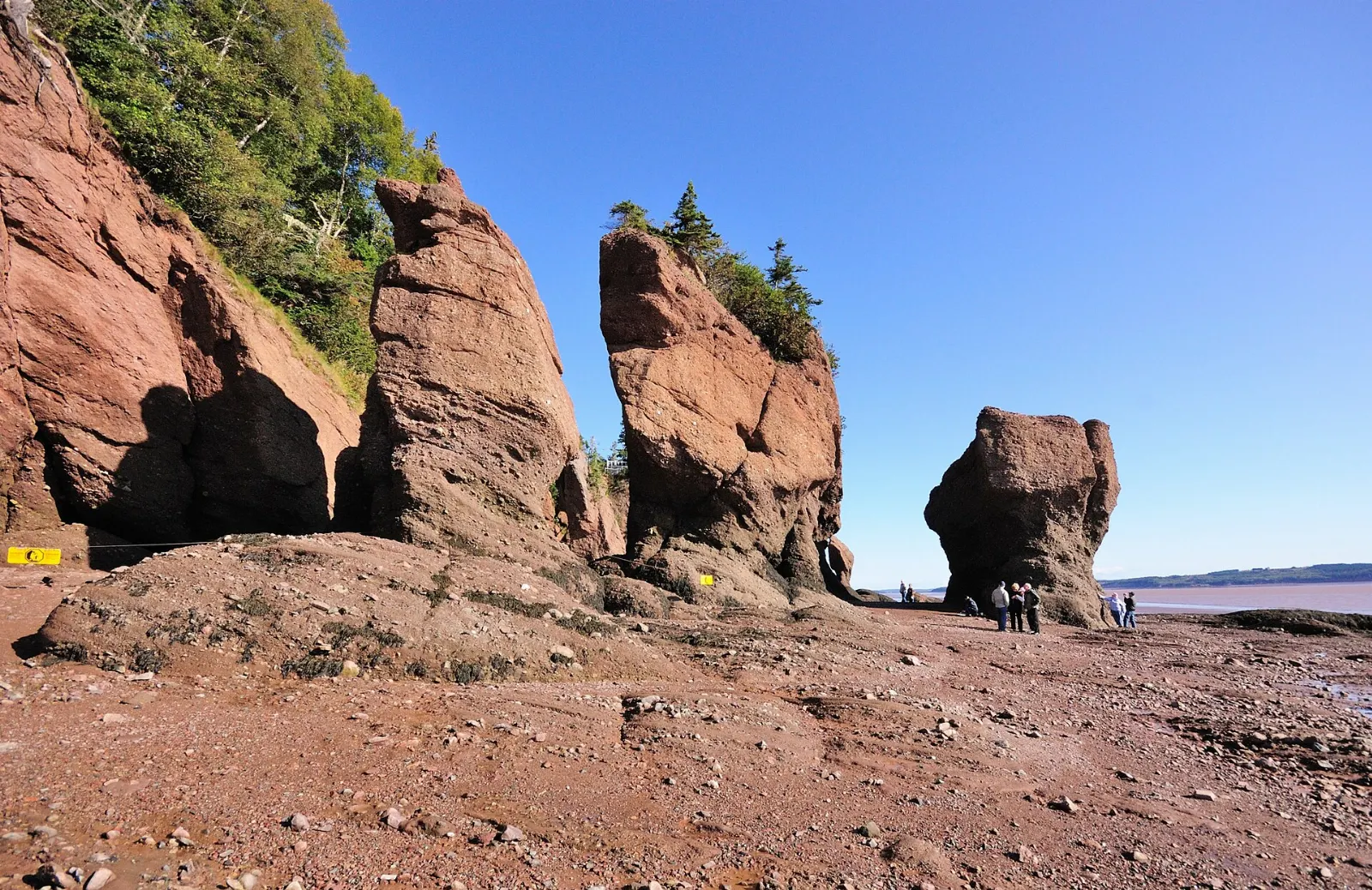
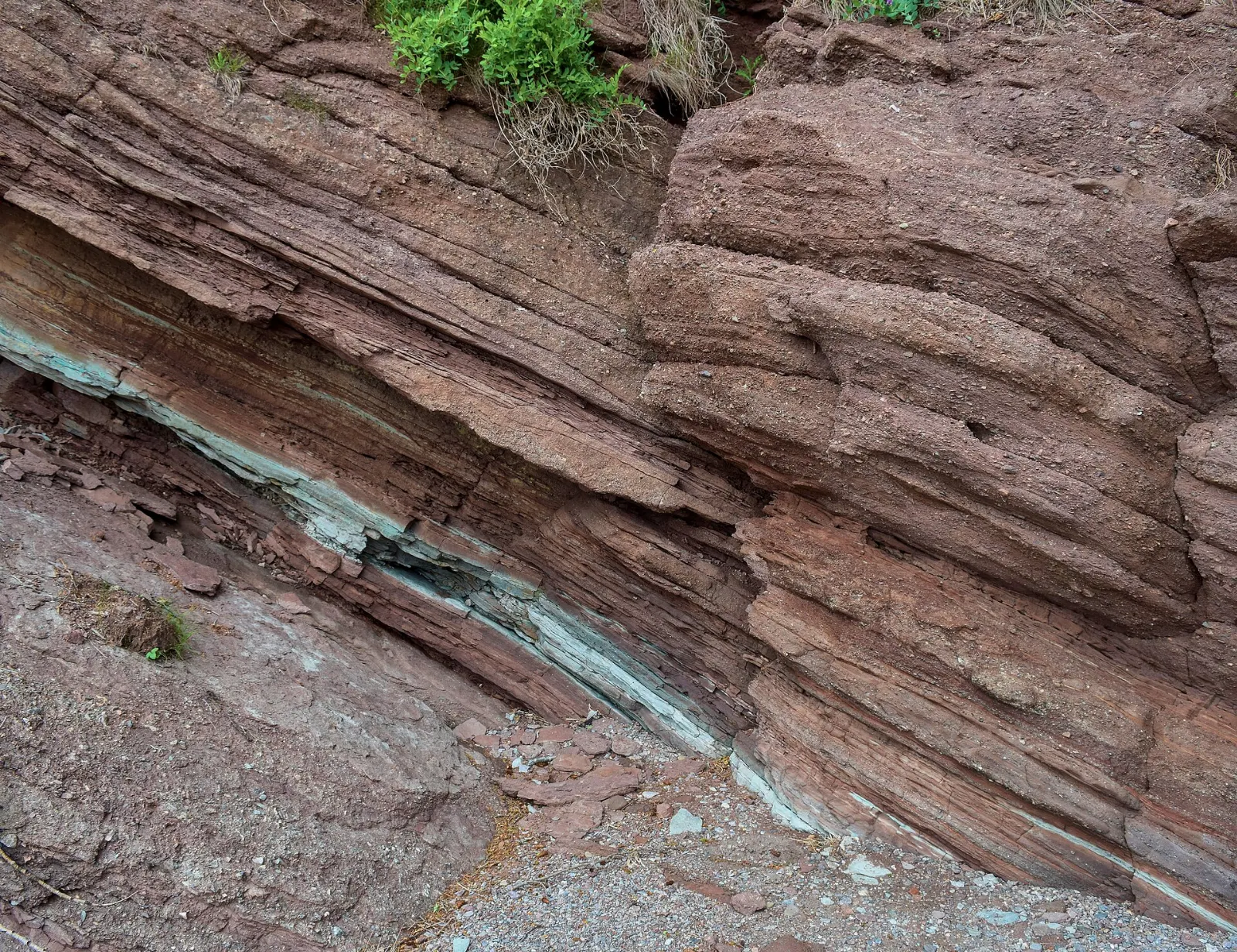
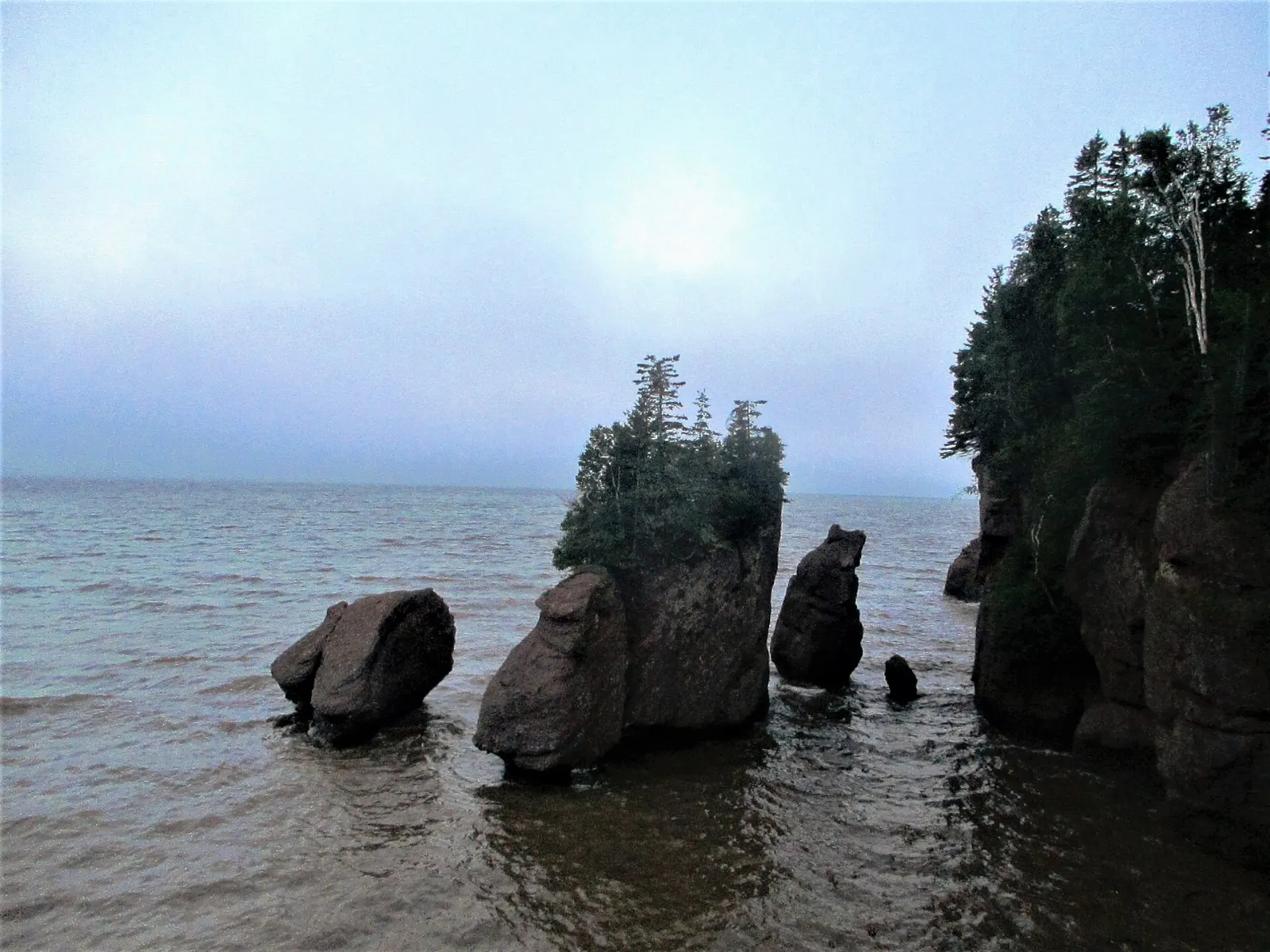
The Hopewell Rocks, also called the Flowerpot Rocks, are sea stacks that stand 12 to 21 meters tall. Tidal erosion carved them from sedimentary conglomerate and sandstone, and the sea has worn the bases faster than the tops, so the stacks flare out like flowerpots.
The Bay of Fundy has some of the highest tides in the world, and at Hopewell the high tide can reach about 16 meters. Few places let you see that scale of change so clearly, which is why the site is best enjoyed at both low and high water.
The Rocks and Hopewell Cape
Hopewell Rocks at low tide
At low tide you can walk down to the ocean floor and wander between the stacks, close enough to touch the layered rock. The sediment flats are rich in life, and shorebirds feed here. Allow two to three hours, wear shoes that can handle mud, and stay aware of the clock so you are back on the stairs before the water returns.
Hopewell Rocks at high tide
Park staff advise visitors to stay for a full tidal cycle to appreciate the change. At high tide the lower parts of the formations are underwater, and viewing is from the lookouts on the cliff above. The contrast with your earlier walk on the sea floor is the heart of the visit, so plan a lunch break between the two.
At high tide the bases of the formations are covered by the Bay of Fundy. Photo: Mhsheikholeslami, Wikimedia Commons, CC BY-SA 4.0
Elephant Rock and the changing coast
Elephant Rock was among the most photographed formations until part of it collapsed in March 2016. The loss is a reminder that the stacks are temporary, and that falling rock can alter paths without warning. Follow park signs and keep clear of cliff bases.
Elephant Rock lost part of its structure in a collapse in March 2016. Photo: The Cosmonaut, Wikimedia Commons, CC BY-SA 2.5 ca
Hopewell Cape village and Albert County Museum
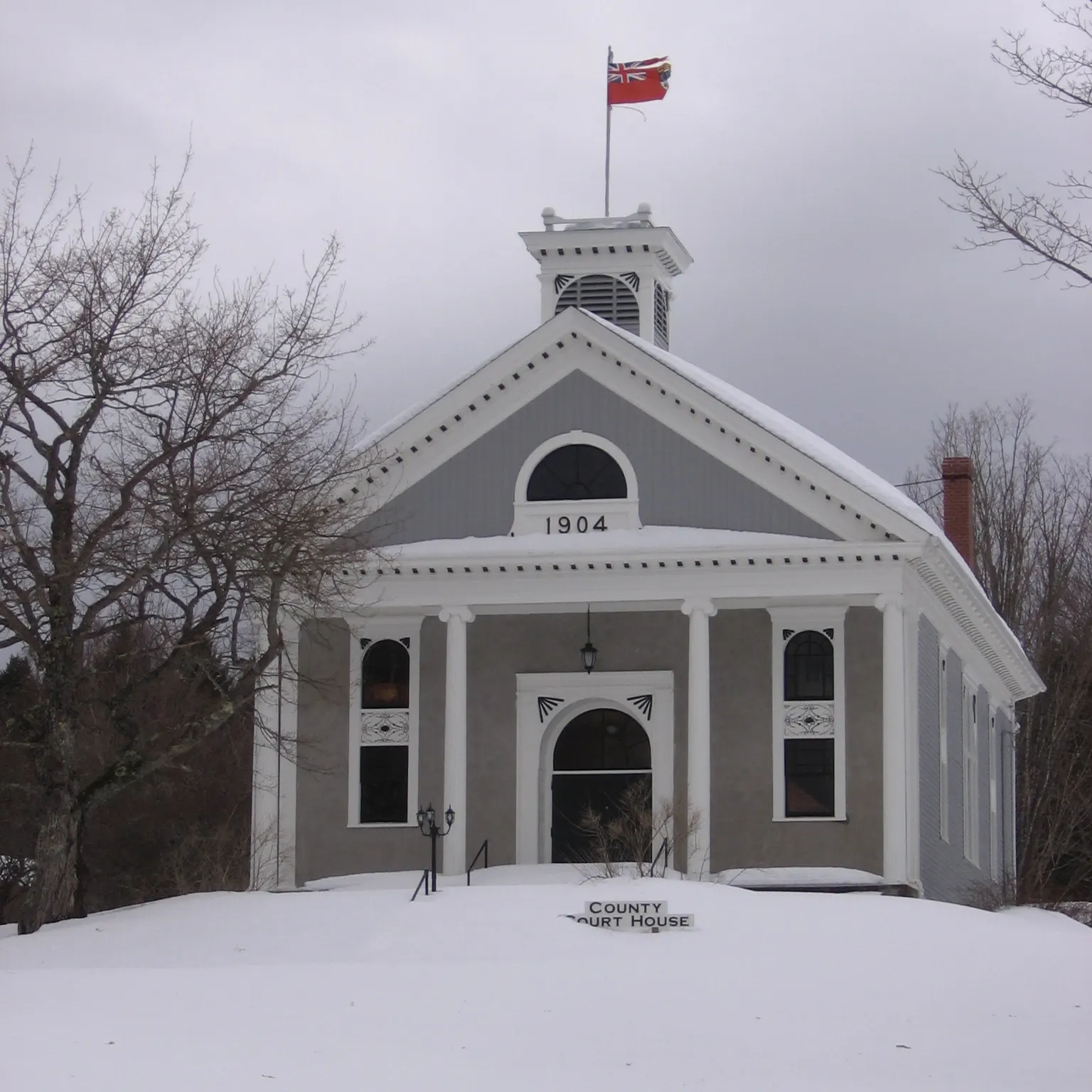
Hopewell Cape is a small village at the northern end of Shepody Bay and the mouth of the Petitcodiac River. Its Albert County Museum includes an original jail and courthouse, and it is a short, pleasant stop for a look at local history. Allow an hour.
The Albert County Museum in Hopewell Cape includes an original jail and courthouse. Photo: Verne Equinox, Wikimedia Commons, CC BY-SA 3.0
Ad
Along the Fundy coast
Cape Enrage
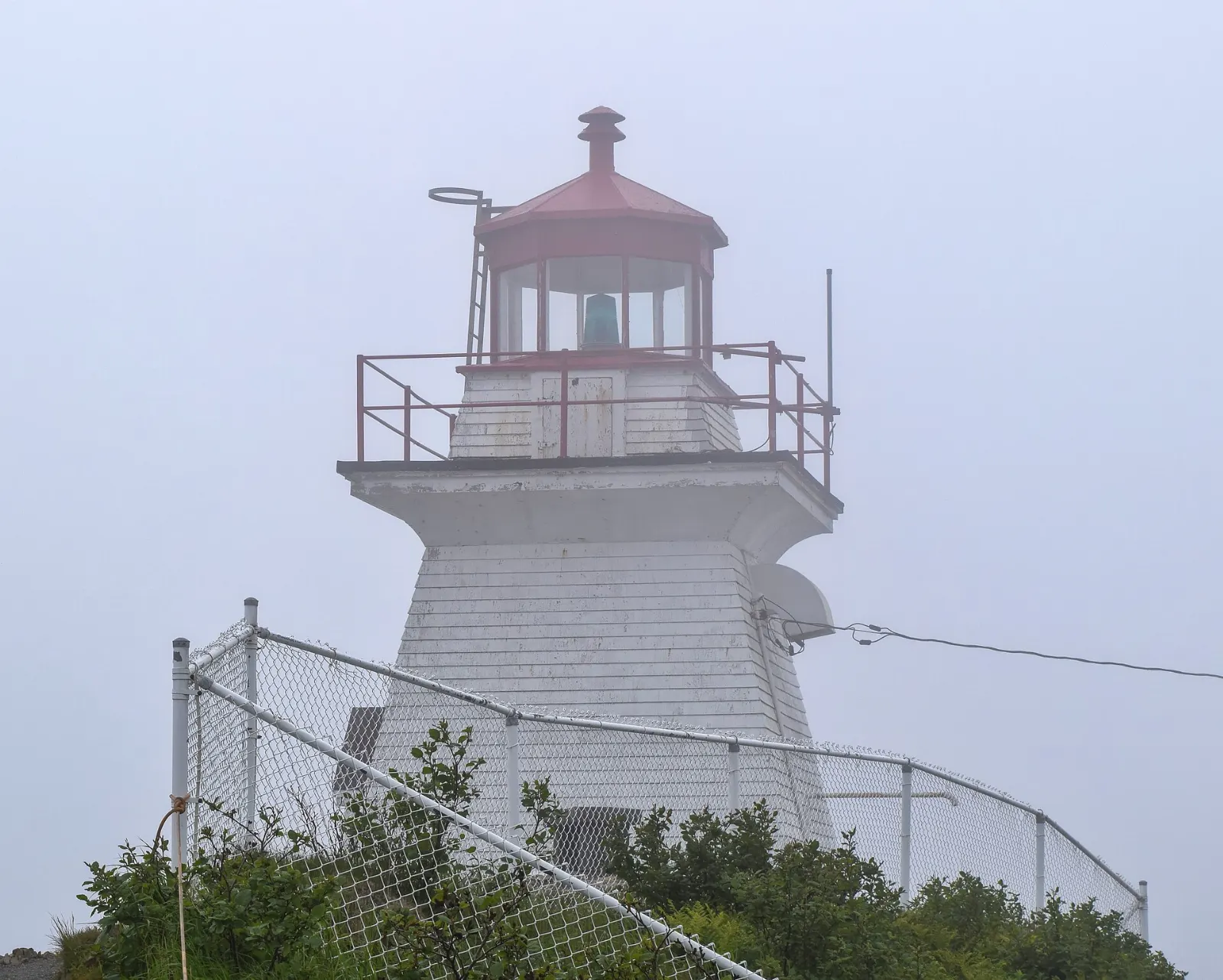
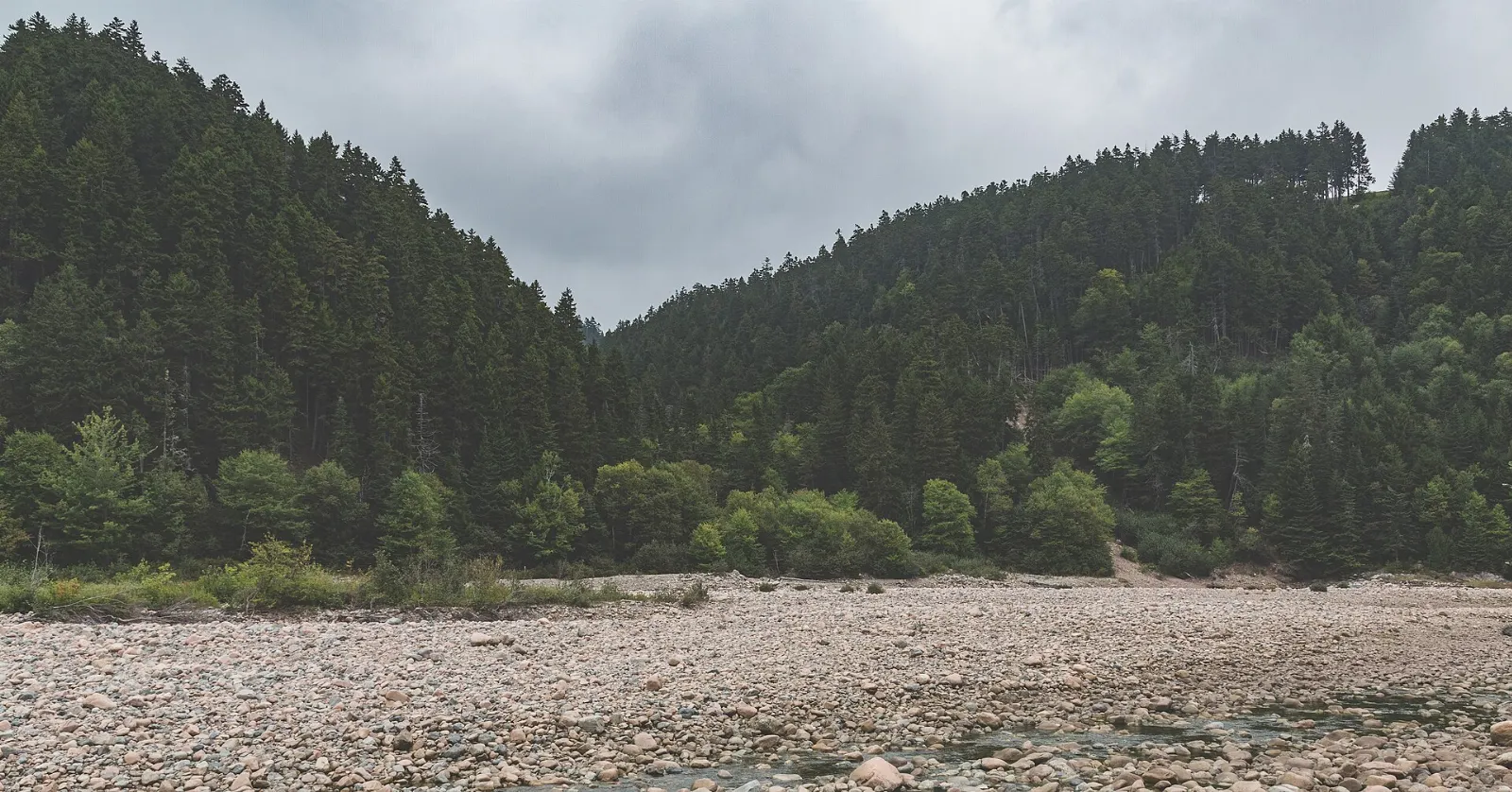
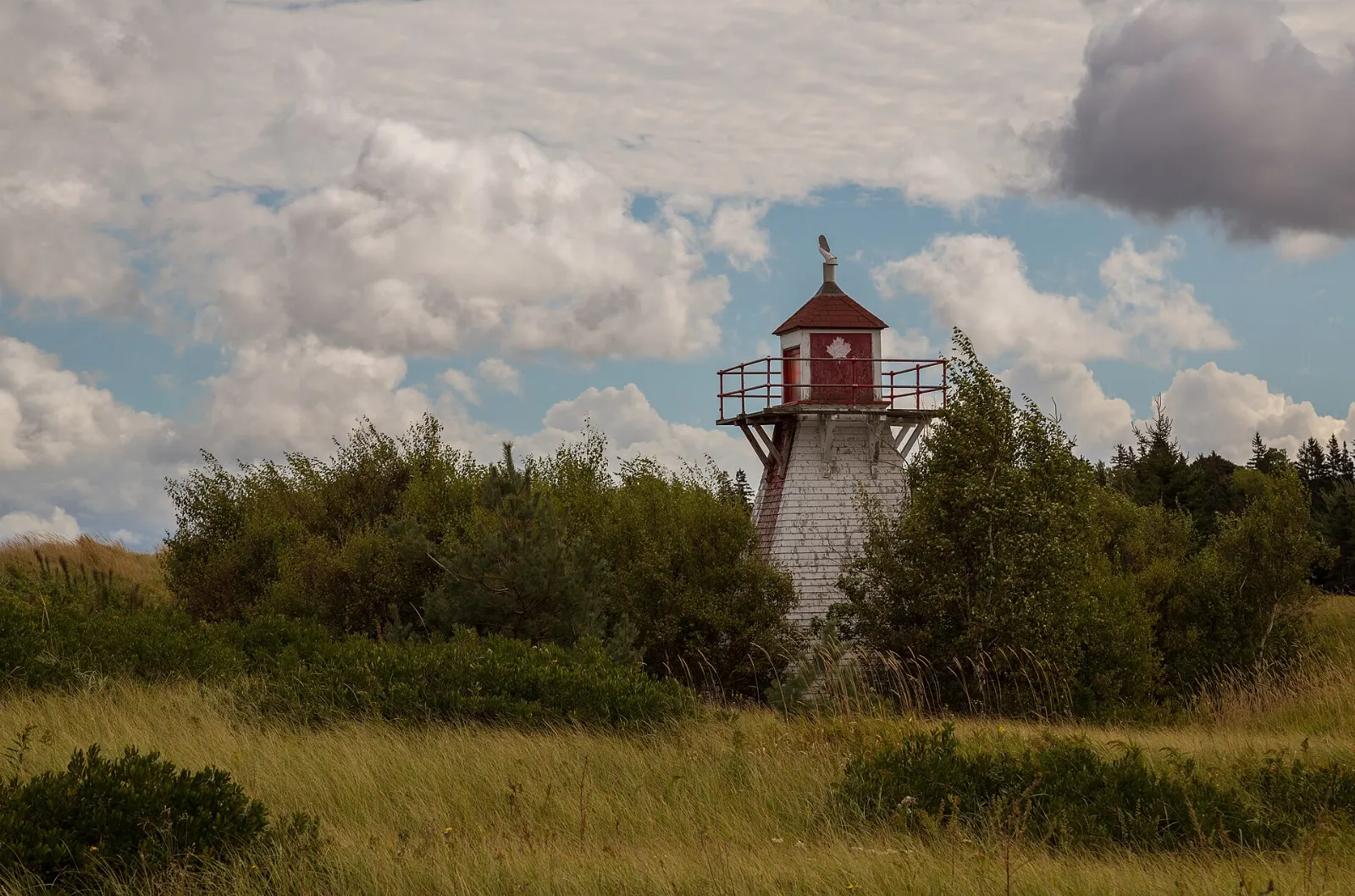
Cape Enrage is the southern tip of Barn Marsh Island, reached by Route 915 between Riverside-Albert and Alma. Sea cliffs more than 50 meters high surround it, and a reef offshore stirs the water into a violent churn at half tide. Come for the lighthouse and the views, and leave the beach stones where they are.
Cape Enrage sits at the southern tip of Barn Marsh Island, ringed by tall sea cliffs. Photo: The Cosmonaut, Wikimedia Commons, CC BY-SA 2.5 ca
Dickson Falls
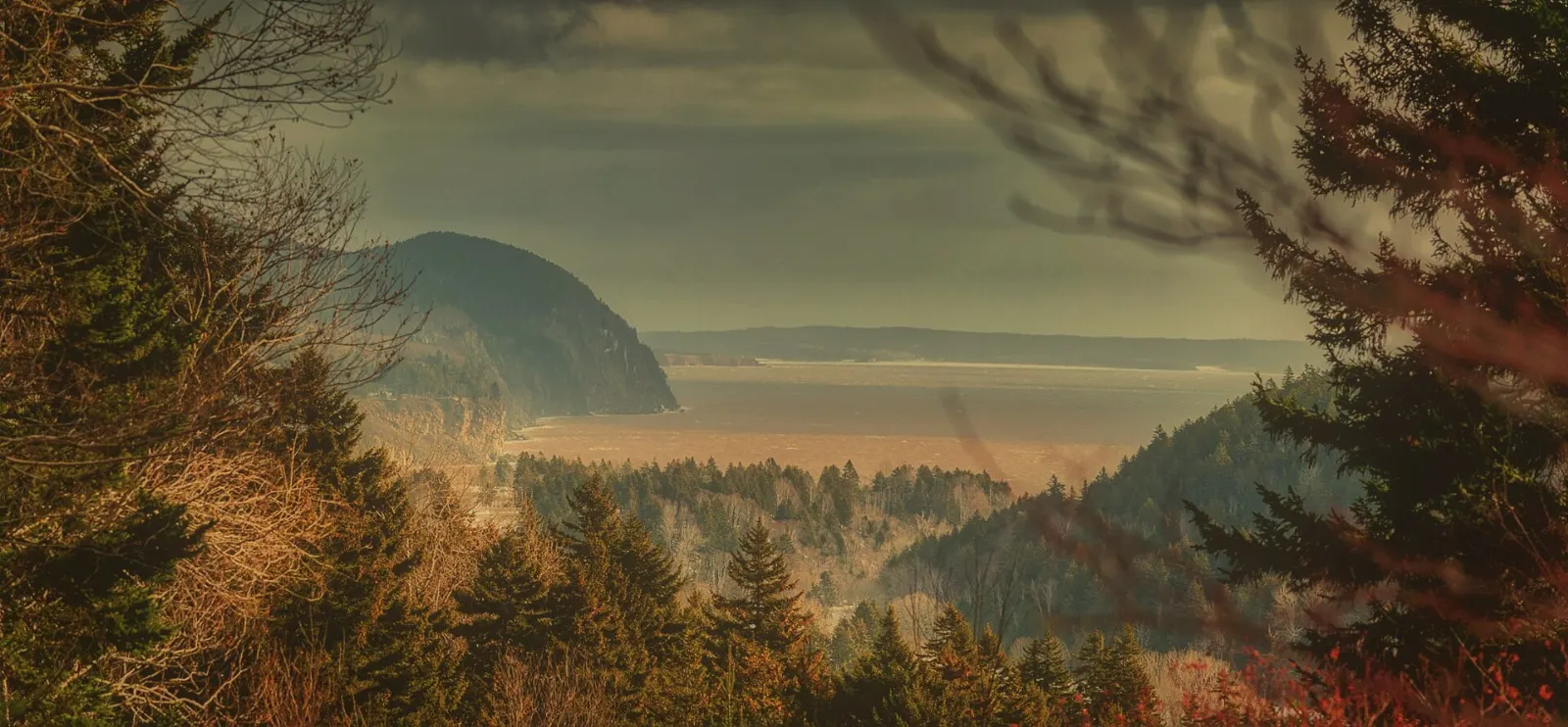
Dickson Falls is the most popular trail in Fundy National Park, which spans 207 square kilometers near Alma and holds more than 25 waterfalls. Allow about an hour and bring layers, as the forest is cool even on warm days.
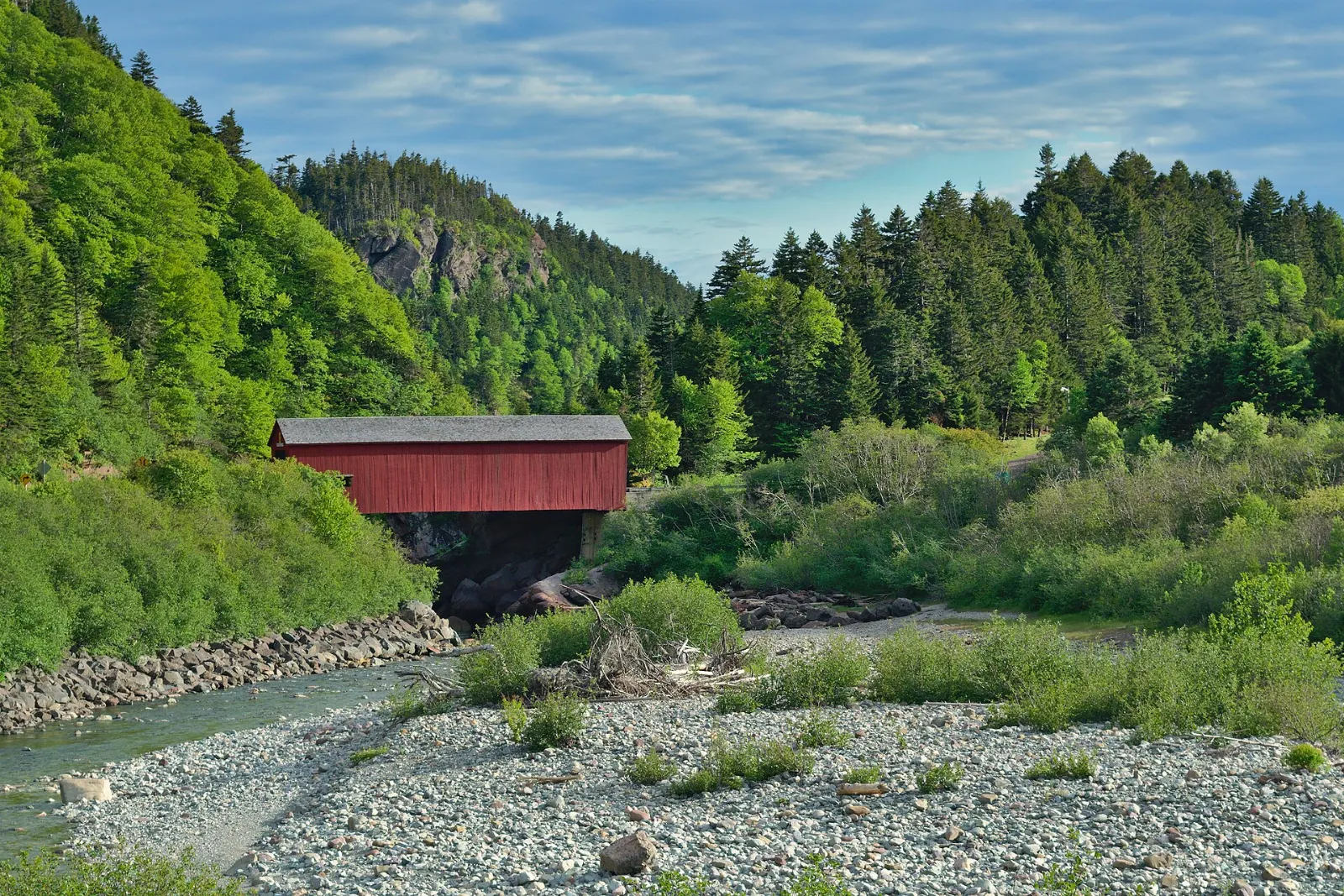
A red-painted covered bridge stands at Point Wolfe, once a busy village that lived from fishing, sawmills and small shipyards. It is one of the park's most photographed spots and a pleasant place for a short stop.
A red-painted covered bridge stands at Point Wolfe inside the national park. Photo: The Cosmonaut, Wikimedia Commons, CC BY-SA 4.0
Caribou Plains boardwalk
The Caribou Plains trail and boardwalk lead through upland forest and bog, where the park's carnivorous plants grow. It is a gentle, flat option for families or anyone who wants a break from the stairs and slopes.
Alma
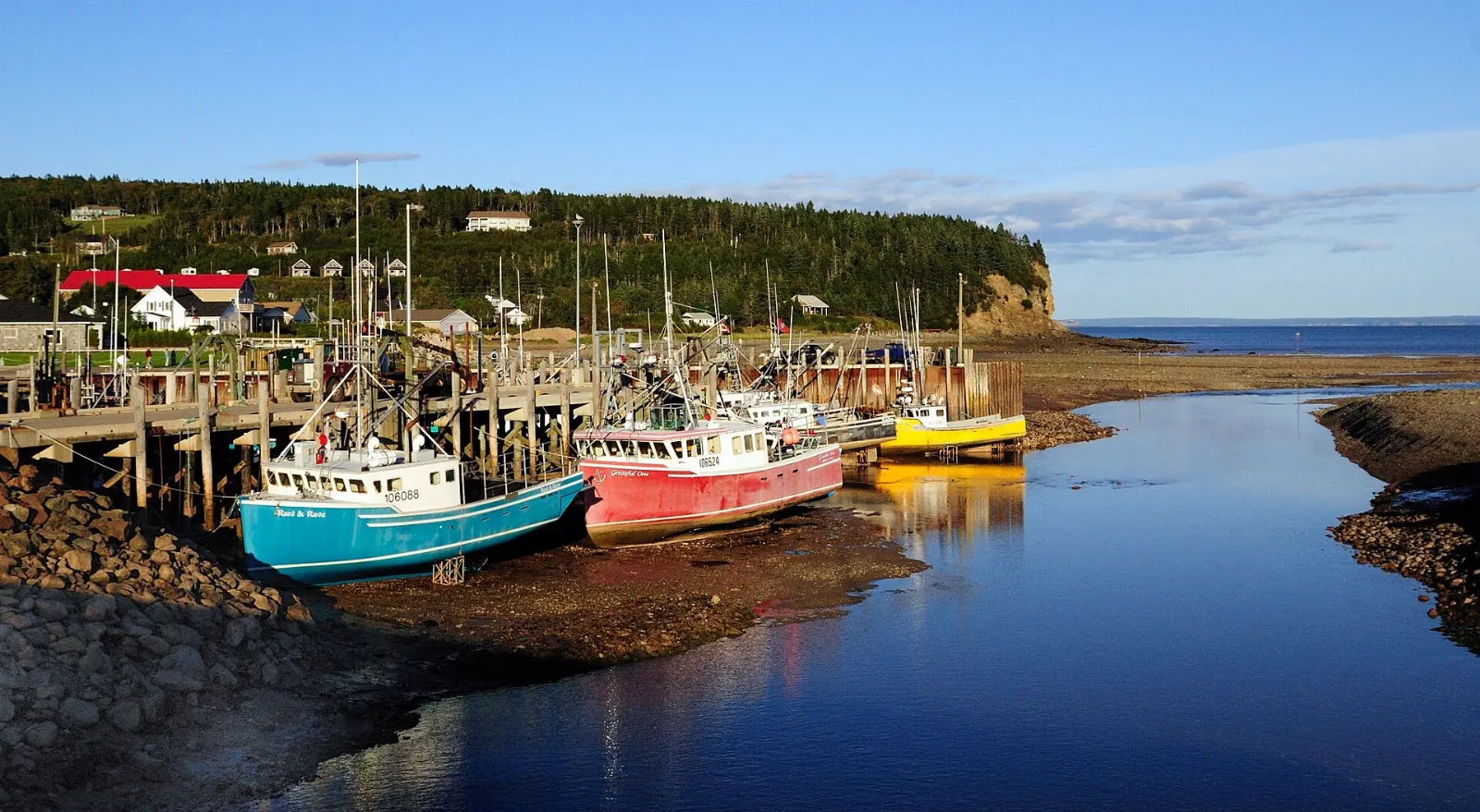
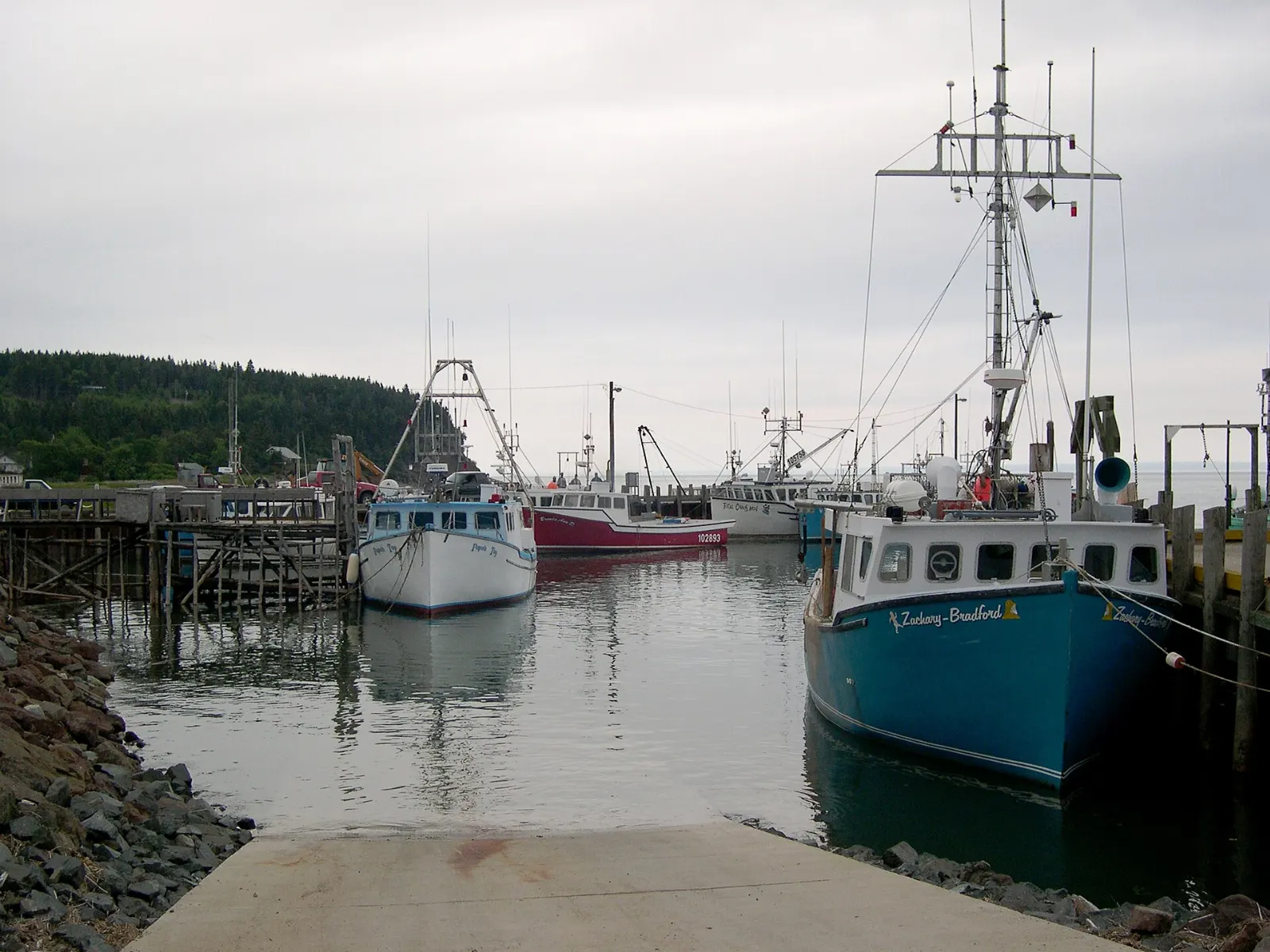
Alma is the park's gateway village, built around a tidal harbour where lobster and scallop boats work. Watch the boats rest on the mud at low tide, then float again as the water climbs. It is a good place to eat and refuel.
Alma is a fishing village on the edge of Fundy National Park where lobster and scallops are landed. Photo: Wladyslaw, Wikimedia Commons, CC BY-SA 3.0
Fundy Trail Parkway
West of Alma, the Fundy Trail Parkway runs 30 kilometers along the coast, with more than 20 lookouts, five beaches and four waterfalls. Long Beach stretches about 2.5 kilometers along the shore, and the Big Salmon River Suspension Bridge is a highlight. Set aside a separate day for it.
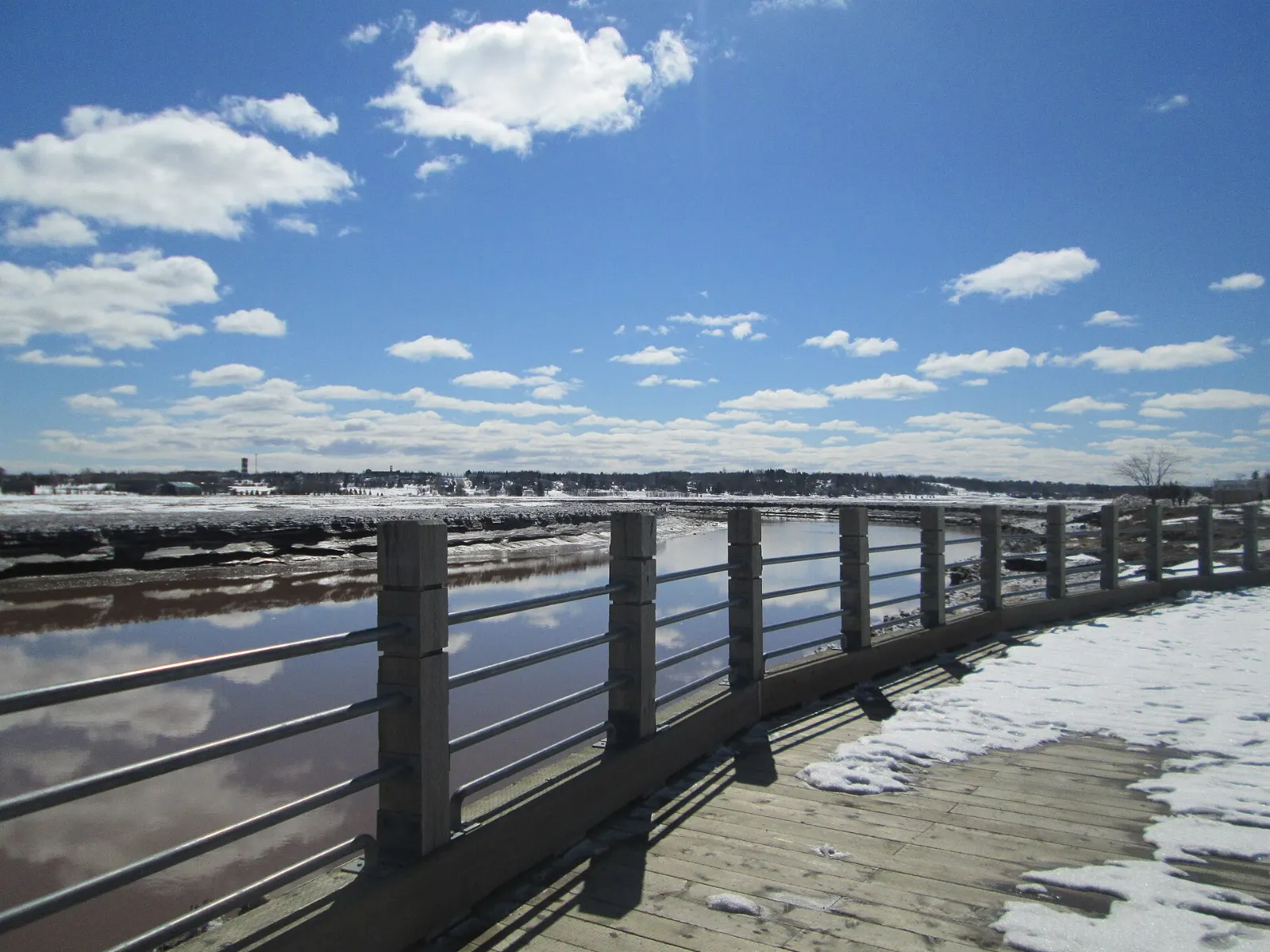
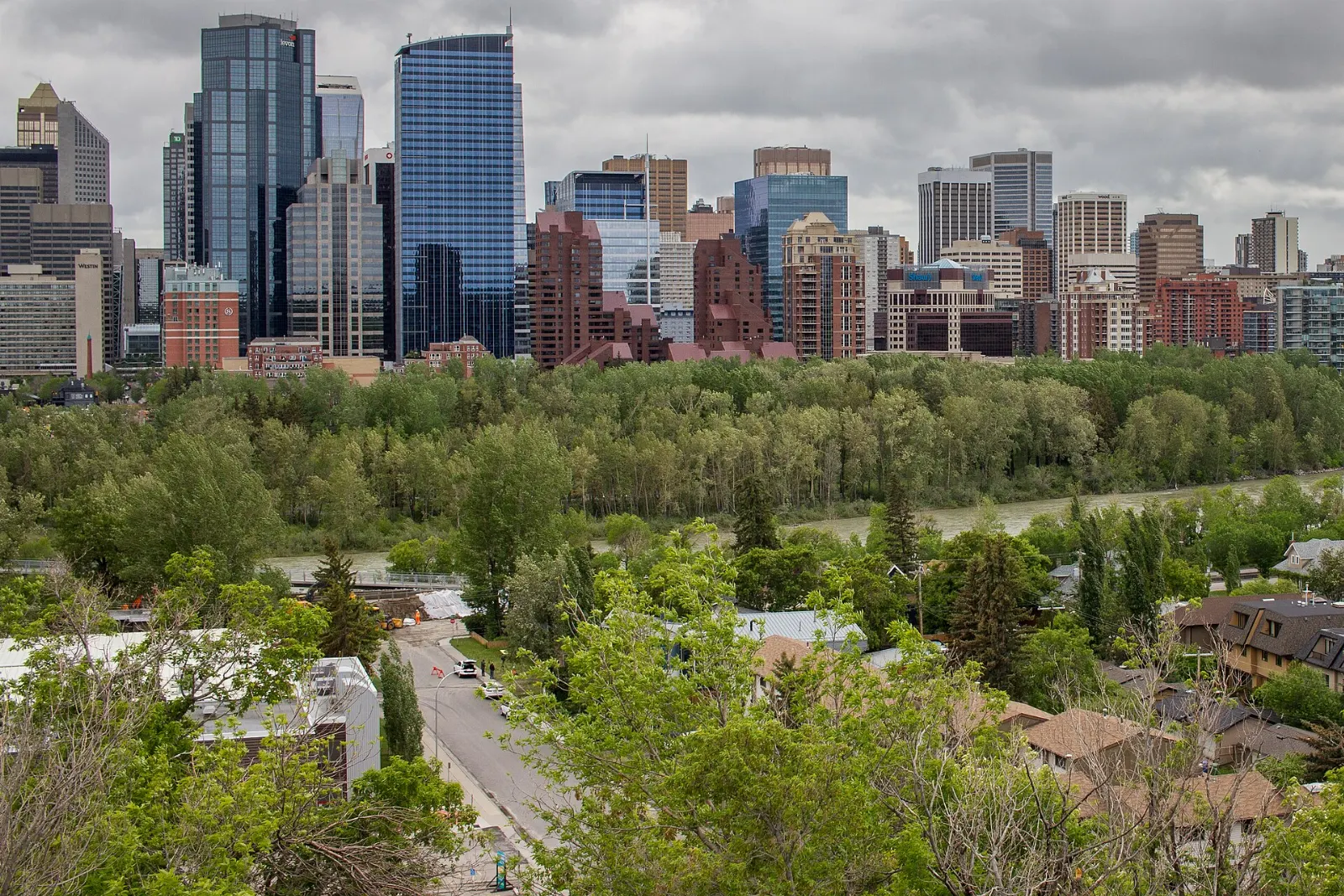
Moncton, nicknamed Hub City, is the largest city in New Brunswick and the usual gateway to the Rocks. It sits on the Petitcodiac River, and it works well as a base for restaurants, supplies and onward travel.
The Fundy coast eats from the sea and the forest. Lobster is the signature dish, and Alma's harbour lands both lobster and scallops, so look for scallops pan-seared or in chowder. Fresh seafood is best near the water, where menus change with the catch.
In spring, fiddleheads, the curled young fronds of ferns, appear on plates as a green vegetable, usually sauteed with butter. Dulse, a red seaweed, is sold as a salty snack and is a popular souvenir. Markets in Moncton and small shops in Alma are good places to look.
Popular dishes to try in Hopewell Rocks
Lobster Lobster is the signature dish, and Alma's harbour lands both lobster and scallops, so look for scallops pan-seared or in chowder.Photo: Nick Ares, Wikimedia Commons, CC BY-SA 2.0Scallops Lobster is the signature dish, and Alma's harbour lands both lobster and scallops, so look for scallops pan-seared or in chowder.Photo: James St. John, Wikimedia Commons, CC BY 2.0Fiddleheads In spring, fiddleheads, the curled young fronds of ferns, appear on plates as a green vegetable, usually sauteed with butter.Photo: Ross Dunn, Wikimedia Commons, CC BY-SA 2.0Dulse Dulse, a red seaweed, is sold as a salty snack and is a popular souvenir.Photo: Paulo O from Halifax, Canada, Wikimedia Commons, CC BY 2.0
Ad
Where to stay
Hopewell Cape puts you minutes from the Rocks, which matters on a tide-driven schedule. It suits visitors who want an early start and short drives, with small inns and cottages close to the park.
Alma suits hikers and anyone planning time in Fundy National Park. It has a harbour, small restaurants and campgrounds in the nearby park, and it makes a good base for Cape Enrage as well.
Moncton suits travelers who want a full range of restaurants, shops and flight connections. It is a short drive from the Rocks, so it works well for a one-night or two-night stay. Book ahead for summer weekends.
Where to stay in Hopewell Rocks
Hopewell Cape Where to stayHopewell Cape puts you minutes from the Rocks, which matters on a tide-driven schedule.Photo: The Cosmonaut, Wikimedia Commons, CC BY-SA 2.5 caAlma Alma suits hikers and anyone planning time in Fundy National Park.Photo: Diego Delso, Wikimedia Commons, CC BY-SA 4.0Moncton Moncton suits travelers who want a full range of restaurants, shops and flight connections.Photo: Bukky658, Wikimedia Commons, CC BY-SA 4.0
Best time to visit
Summer is the main season, with warm days and the most services open, but it is also the busiest. Late spring and early autumn bring fewer people, cooler weather and, in autumn, colored forests in Fundy National Park. Fog can roll in from the bay at any time.
The key factor is the tide, not the season. Tides shift daily, so check the official tide schedule and plan your arrival for low water, with a return at high tide if you can. Check the official site for the seasons when the Rocks park is open before you travel.
Ad
Getting there and getting around
The nearest large airport serves Moncton, and Saint John also has an airport with flights to major Canadian cities. From either, you will want a car. Hopewell Cape lies close to the Petitcodiac River and Shepody Bay, so drive from Moncton on local highways in under an hour.
Maritime Bus links Moncton and Saint John, and Moncton is on the Via Rail network, but public transit options to Hopewell Cape itself are limited, so check ahead. Cape Enrage is reached by Route 915, and the park gates at Alma are a straightforward drive. Gas up in larger towns, and check road and seasonal notices for the Fundy Trail Parkway, which has its own seasonal rules.
A suggested itinerary
First day
Check the tide table, then reach Hopewell Rocks near low tide. Walk the ocean floor, picnic on the cliff, and return for high tide. Finish with a look at the Albert County Museum.
Second day
Drive to Cape Enrage in the morning, then continue to Alma for lunch. Spend the afternoon on Dickson Falls and the Point Wolfe covered bridge in Fundy National Park.
Third day
Take the Fundy Trail Parkway for its lookouts, Long Beach and the suspension bridge, then return to Moncton or continue to Saint John.
Ad
Practical tips
Look up the daily tide times before you plan any day on the coast.
Wear sturdy shoes with grip for mud and wet rock.
Follow park signs on closures, since rockfall and stair changes happen.
Keep clear of cliff bases and do not climb the formations.
Bring layers, as the bay brings cool breezes even in summer.
Check official websites for seasons, ferries and parkway access.
Look for fiddleheads in spring and dulse as a snack at local markets.
Leave beach stones where they are, as removing them harms the shoreline.