This guide walks you through the best places to visit in Barcelona, grouped by area so you can plan efficient days. You will find what each spot is known for, how long to give it, and practical tips on tickets, timing and crowds, plus advice on Catalan food, where to stay, when to come and how to get around.
At a glance Barcelona
Best timeMay to June and September to October, when days are warm but not sticky and crowds are lighter than in high summer.
How longFour to five days covers the major sights at a relaxed pace, with time for a beach afternoon.
Getting thereFly into Barcelona El Prat airport or arrive by high-speed train at Barcelona Sants from Madrid, Seville or France.
Ad
Why visit Barcelona
Barcelona is the capital of Catalonia, a region with its own language, cuisine and strong sense of identity, and that character shows up everywhere you go. Street signs are in Catalan first, menus feature dishes you will not find in Madrid, and local festivals fill the squares with human towers, fire-running devils and giant papier-mâché figures.
The architecture is the headline. Gaudí's buildings, several of them listed together by UNESCO, sit alongside the work of Lluís Domènech i Montaner and Josep Puig i Cadafalch, the leading names of Catalan Modernisme.
Gaudí and the Eixample
Sagrada Família
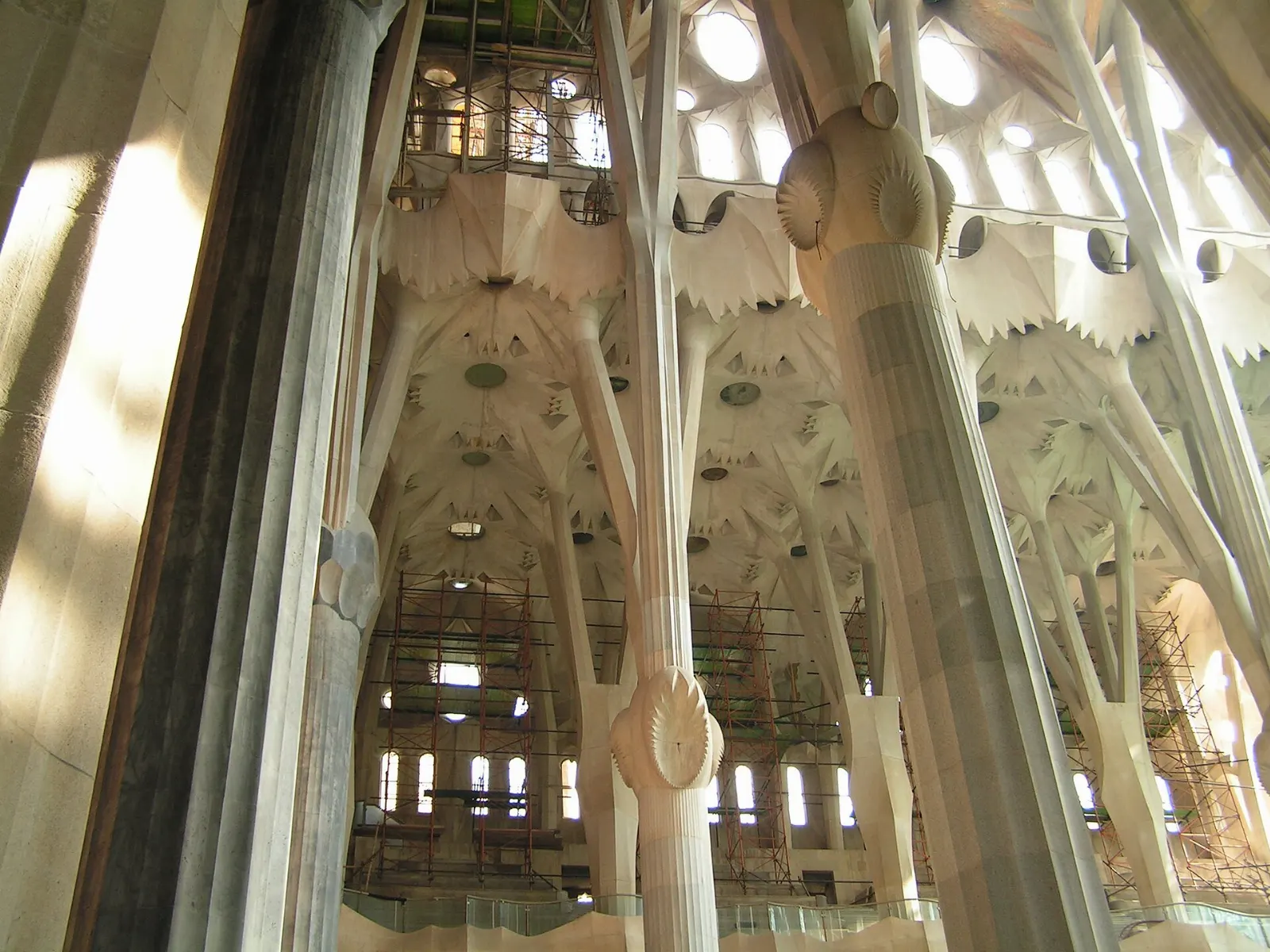
Gaudí took over the design of this basilica in 1883 and devoted the rest of his life to it; construction continues today, funded largely by visitors. The Nativity facade, covered in sculpted plants, animals and figures, is the part Gaudí saw built, while the stark Passion facade on the opposite side was completed later in a deliberately different style.
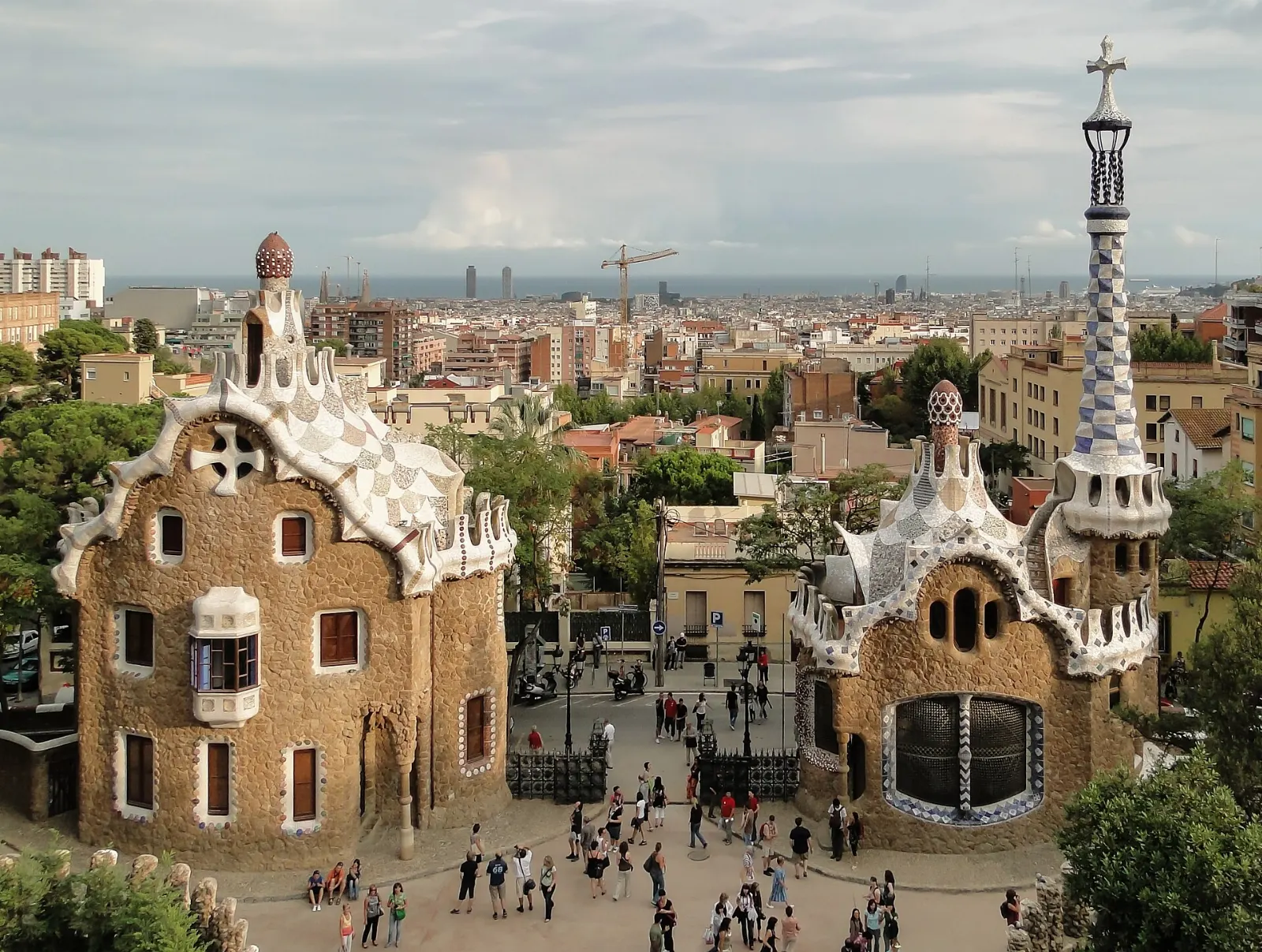
Originally planned as a garden suburb for wealthy families, Park Güell became a public park in the 1920s. Its most famous section, the Monumental Zone, holds the long serpentine mosaic bench, the dragon-lizard fountain on the main staircase and the gingerbread-like gatehouses.
The undulating bench on Park Güell's main terrace is covered in broken-tile mosaic known as trencadís. Photo: Bernard Gagnon, Wikimedia Commons, CC BY-SA 3.0
Casa Batlló and the Passeig de Gràcia
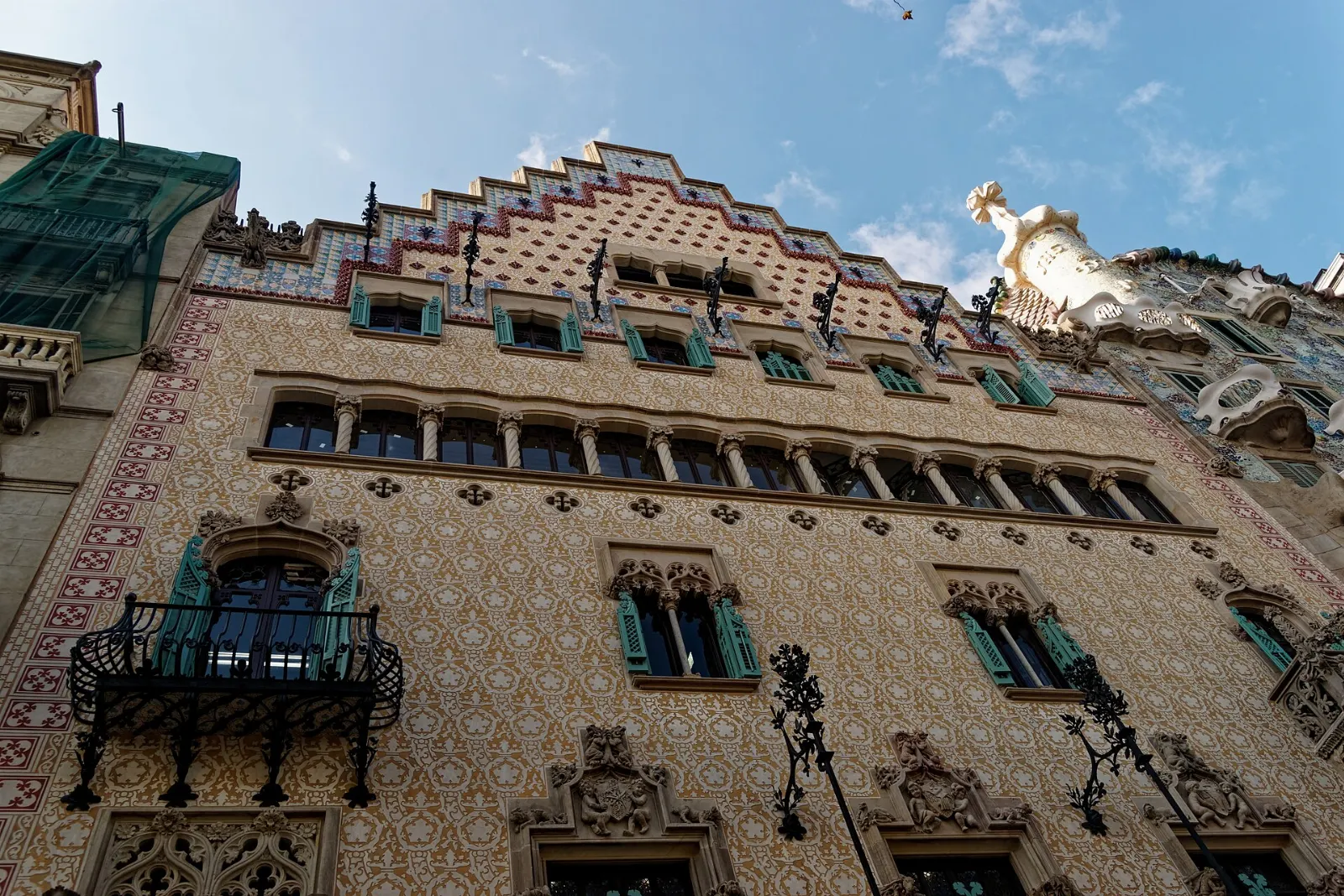
Barcelona's grandest boulevard is lined with Modernista mansions. On one block, often called the Block of Discord, you can compare Gaudí's Casa Batlló, with its bone-like balconies and scaled, dragon-back roof, with Puig i Cadafalch's stepped-gable Casa Amatller and Domènech i Montaner's Casa Lleó Morera next door.
Casa Batlló, remodeled by Gaudí in the early 1900s, stands on Passeig de Gràcia in the Eixample. Photo: Txllxt TxllxT, Wikimedia Commons, CC BY-SA 4.0
Casa Milà (La Pedrera)
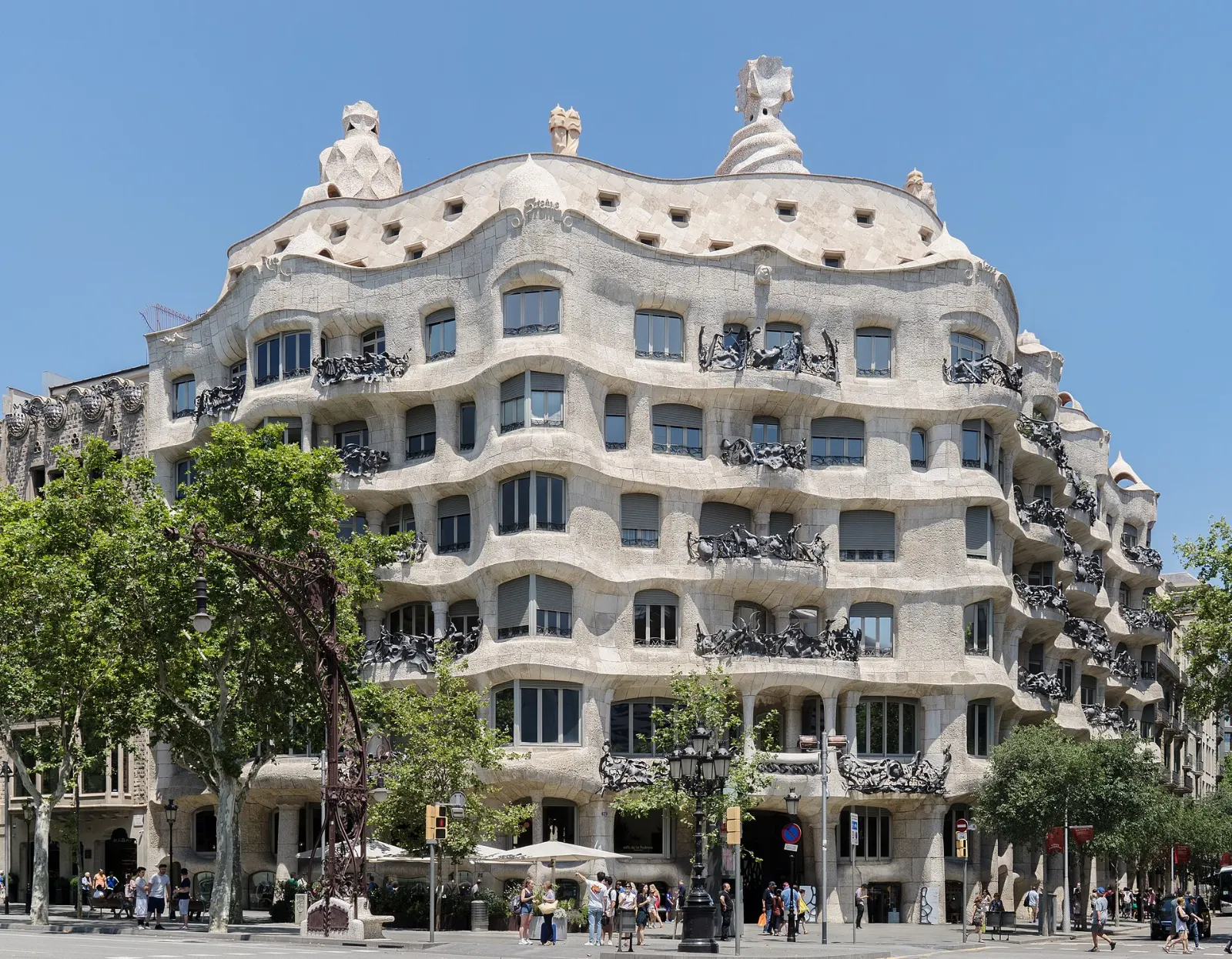
A few blocks up the same avenue, Casa Milà looks as though its wavy stone front was carved by the sea. Built between 1906 and 1912, it was nicknamed La Pedrera, the stone quarry, by unimpressed locals of the time.
The sculpted chimneys and ventilation towers on the roof of Casa Milà are among Gaudí's best-known forms. Photo: Thomas Ledl, Wikimedia Commons, CC BY-SA 4.0
Hospital de Sant Pau
Domènech i Montaner's former hospital complex, a short walk from the Sagrada Família along Avinguda de Gaudí, is a UNESCO-listed garden city of tiled domes and pavilions linked by underground tunnels. It is far calmer than the Gaudí sites and well worth an hour, especially if you have already seen the basilica that morning.
Ad
The Gothic Quarter, El Born and La Rambla
Barri Gòtic and Barcelona Cathedral
The Gothic Quarter is the oldest part of the city, a tangle of stone lanes built over the Roman town. Start at Barcelona Cathedral, whose cloister keeps a flock of thirteen white geese, a tradition linked to Saint Eulalia.
Barcelona Cathedral, dedicated to the Holy Cross and Saint Eulalia, anchors the medieval Gothic Quarter. Photo: Joe Mabel, Wikimedia Commons, CC BY-SA 4.0
El Born and Santa Maria del Mar
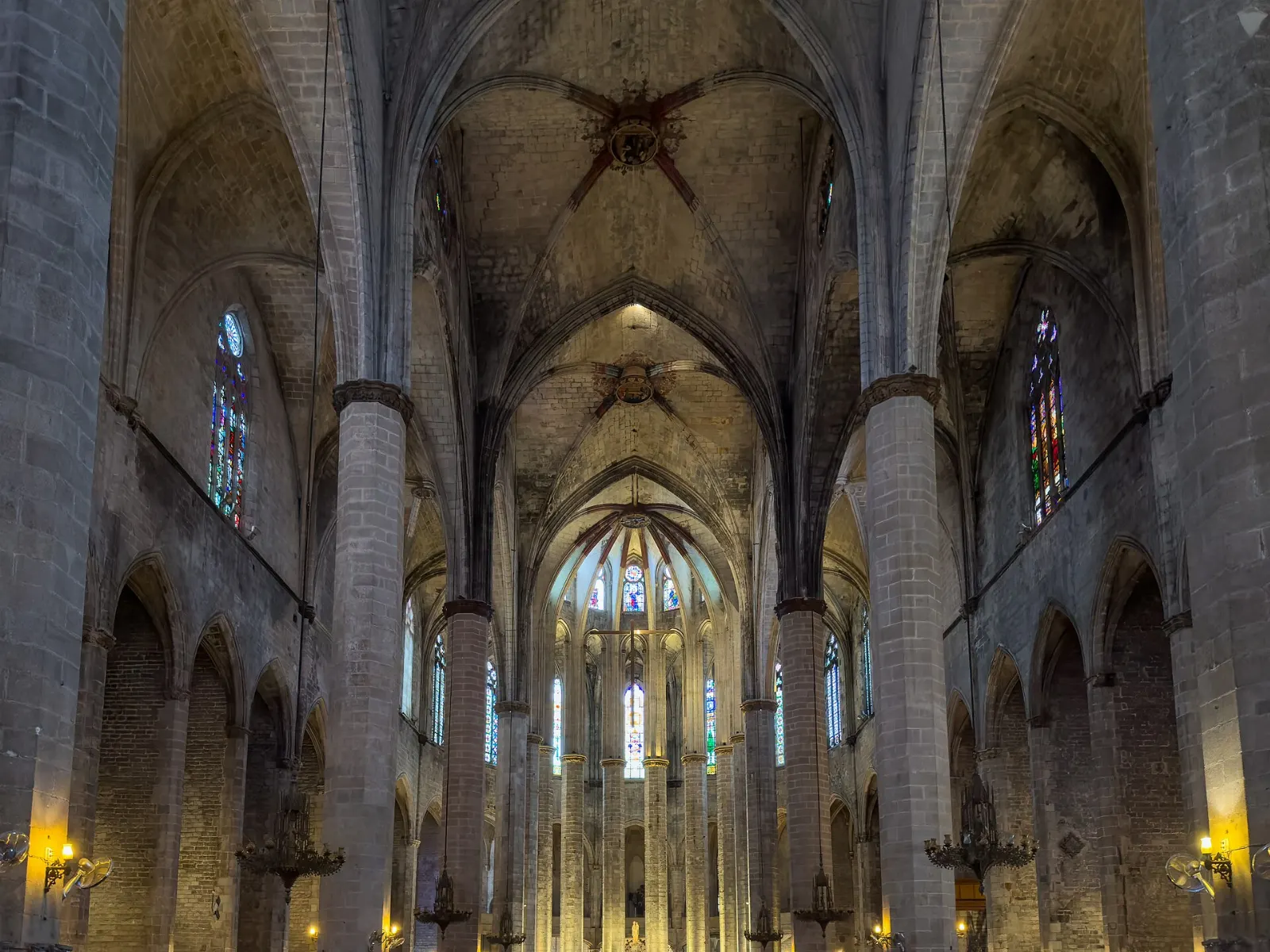
Across Via Laietana, El Born is a former merchants' quarter turned into one of the liveliest areas for boutiques, cocktail bars and tapas. Its centerpiece is Santa Maria del Mar, a fourteenth-century church built by the people of the waterfront parish, admired for its wide, uncluttered interior and slender octagonal columns.
Santa Maria del Mar in El Born is a celebrated example of fourteenth-century Catalan Gothic architecture. Photo: Kent Wang, Wikimedia Commons, CC BY-SA 4.0
Palau de la Música Catalana
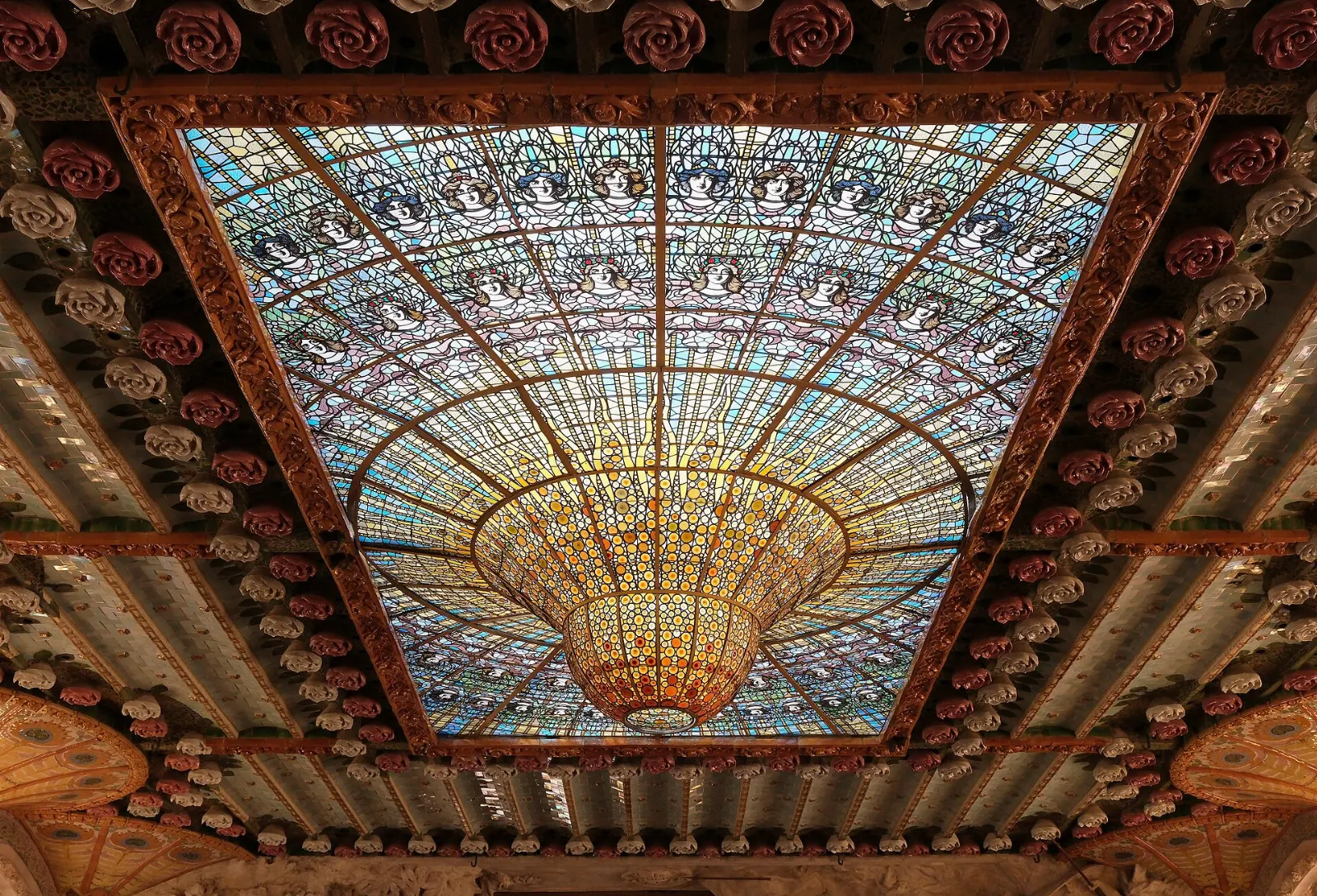
This concert hall in the Sant Pere neighborhood is a riot of mosaics, sculpted muses and stained glass, crowned by an inverted dome of colored glass that floods the auditorium with daylight.
The Palau de la Música Catalana, designed by Lluís Domènech i Montaner, is a UNESCO World Heritage Site. Photo: Alvesgaspar, Wikimedia Commons, CC BY-SA 4.0
La Rambla and La Boqueria
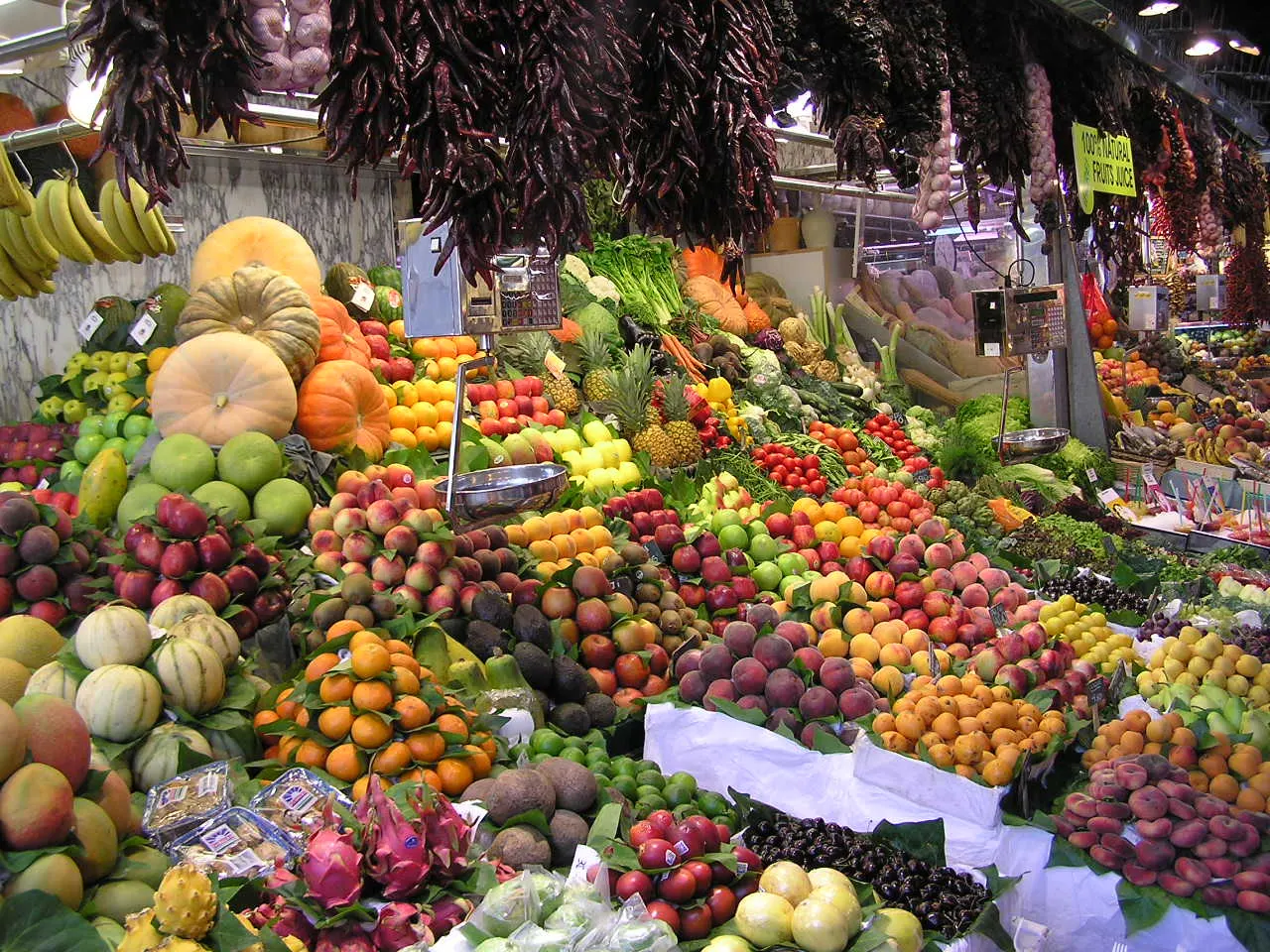
The tree-lined promenade running from Plaça de Catalunya to the old port is touristy, but a single walk along it is part of the Barcelona experience. Halfway down, step into the Mercat de la Boqueria for fruit stalls, cured hams and counter bars serving grilled seafood.
Montjuïc, the waterfront and the viewpoints
Montjuïc
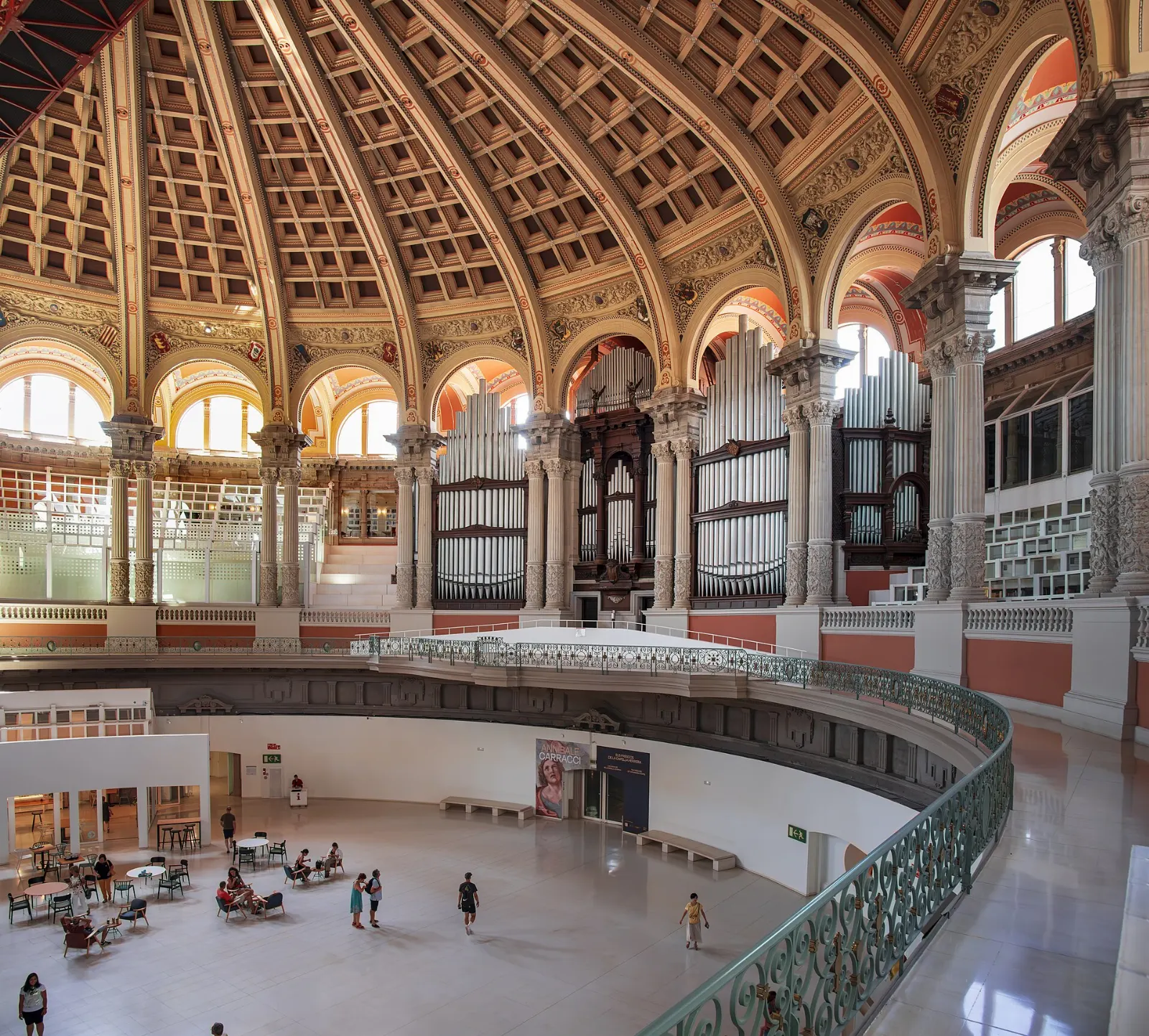
The hill above the port was the main site of the 1929 International Exposition and the 1992 Olympic Games, and today it is a cluster of museums and gardens. The Palau Nacional houses the National Art Museum of Catalonia, whose Romanesque collection, with church murals rescued from Pyrenean villages, is exceptional.
The Palau Nacional on Montjuïc houses the National Art Museum of Catalonia above the Magic Fountain. Photo: Didier Descouens, Wikimedia Commons, CC BY-SA 4.0
Barceloneta and the beaches
The old fishermen's district of Barceloneta sits on a triangle of narrow streets ending at the city's best-known beach. Walk the seafront promenade north toward the Olympic Port and the quieter beaches of Poblenou, or rent a bike. The beaches are lively and convenient rather than pristine.
Bunkers del Carmel and Tibidabo
For the classic panorama, climb to the Bunkers del Carmel, Spanish Civil War anti-aircraft positions on the Turó de la Rovira hill. Sunset is popular, so arrive early and respect the neighbors.
Ad
Food and local flavors
Catalan cooking is built on what the Mediterranean and the surrounding farmland provide, and the simplest dish says it best: pa amb tomàquet, bread rubbed with ripe tomato, olive oil and salt, served with almost everything.
Beyond La Boqueria, the neighborhood markets of Santa Caterina, with its wavy multicolored roof near the cathedral, and Sant Antoni, reopened after a long restoration, show how locals actually shop. Sunday-midday vermut, a glass of vermouth with olives, chips and canned seafood, is a beloved ritual, especially in Gràcia, Poble Sec and Sant Antoni.
The Mercat de Sant Josep de la Boqueria is Barcelona's best-known food market, just off La Rambla.Photo: Dungodung, Wikimedia Commons, Public domain
Popular dishes to try in Barcelona
Pa amb tomàquet Food and local flavorsCatalan cooking is built on what the Mediterranean and the surrounding farmland provide, and the simplest dish says it best: pa amb tomàquet, bread rubbed…Photo: Jennifer Woodard Maderazo from Barcelona, Spain, Wikimedia Commons, CC BY 2.0Paella Look for escalivada (smoky roasted peppers and aubergine), esqueixada (salt-cod salad), fideuà (a paella-style dish made with short noodles), botifarra sausage with white beans…Photo: patano, Wikimedia Commons, CC BY-SA 3.0Crema catalana Look for escalivada (smoky roasted peppers and aubergine), esqueixada (salt-cod salad), fideuà (a paella-style dish made with short noodles), botifarra sausage with white beans…Photo: Javier Leiva (www.moverelbigote.com) from Vic, Barcelona, Wikimedia Commons, CC BY 2.0
Where to stay
The Eixample is the most practical base for first-time visitors: central, well connected by metro, with wide streets, the Modernista sights on your doorstep and a huge choice of accommodation.
The Gothic Quarter and El Born put you in the medieval heart within walking distance of most sights.
Gràcia, a former village absorbed into the city, has a local, bohemian feel with small squares full of terraces. It suits repeat visitors and anyone who prefers neighborhood life over landmarks.
Where to stay in Barcelona
Passeig de Gràcia The Dreta (right) side near Passeig de Gràcia is more upscale; the Esquerra (left) side feels more residential.Photo: DimiTalen, Wikimedia Commons, CC0El Born The Gothic Quarter and El Born put you in the medieval heart within walking distance of most sights.Photo: Philipp Ramseier from Schweiz, Wikimedia Commons, CC BY 2.0Poblenou Barceloneta and Poblenou work well for beach lovers, with Poblenou offering a quieter, more modern setting.Photo: Timothy E Baldwin, Wikimedia Commons, CC BY-SA 3.0Montjuïc Poble Sec, at the foot of Montjuïc, is good value and lively with tapas bars.Photo: Isiwal, Wikimedia Commons, CC BY-SA 3.0
Ad
Best time to visit
Late spring (May and June) and early autumn (September and October) bring the most comfortable weather, generally around the low twenties Celsius, and the sea is warm enough for swimming by June and into October.
Festivals add a reason to time your trip. On 23 April, Sant Jordi fills the streets with stalls of books and roses.
Getting there and getting around
Barcelona El Prat airport lies southwest of the city.
Once in the city, the metro is fast and easy, and multi-journey cards such as the T-casual cover the metro, buses, trams and local trains within the zone. Most of the old town is best explored on foot, and the flat Eixample and waterfront suit cycling.
Ad
A suggested itinerary
First day
Spend the morning in the Gothic Quarter, from the cathedral roof to Plaça del Rei and Plaça Reial, then walk La Rambla to La Boqueria for lunch at a counter.
Second day
Visit the Sagrada Família at your booked time, then walk to the Hospital de Sant Pau.
Third day
Start early at Park Güell, then explore the squares of Gràcia for lunch.
Fourth day
Devote the day to Montjuïc: the National Art Museum of Catalonia, the Fundació Joan Miró and the castle, returning by cable car.
Practical tips
Book the Sagrada Família, Park Güell, Casa Batlló, Casa Milà and the Museu Picasso online in advance, and check the official websites for current hours and fees.
Pickpockets target La Rambla, the metro, the beaches and crowded viewpoints; use a zipped bag worn in front and keep phones off café tables.
Dress modestly in churches and keep swimwear for the beach.
Learn a few words of Catalan and never describe it as a dialect of Spanish.
Adjust to local meal times: lunch from about two, dinner from nine.
Many hotels and rentals add a city tourist tax, charged on top of the room rate.